
There are three somewhat popular expressions I notice myself using often. These sayings are not bad, mind you, but I find it interesting how my brain just goes there. “Aha.” ”Go figure.” “Who’d thought?” They all do hold space in various dictionaries. I checked. And surely, it is not just me who resorts to this practice.
Now you ask, “why is she starting this week’s writing about sayings?” Well, I’ll tell you. This week we embark on a little journey south of Schwenksville, only about fifteen minutes, to the riverside community of Parker Ford. Once a part of the historic Girard Canal, it is the final resting spot of a controversial but relatively unknown anti-religious zealot. It is a story that I have been fascinated with for years.
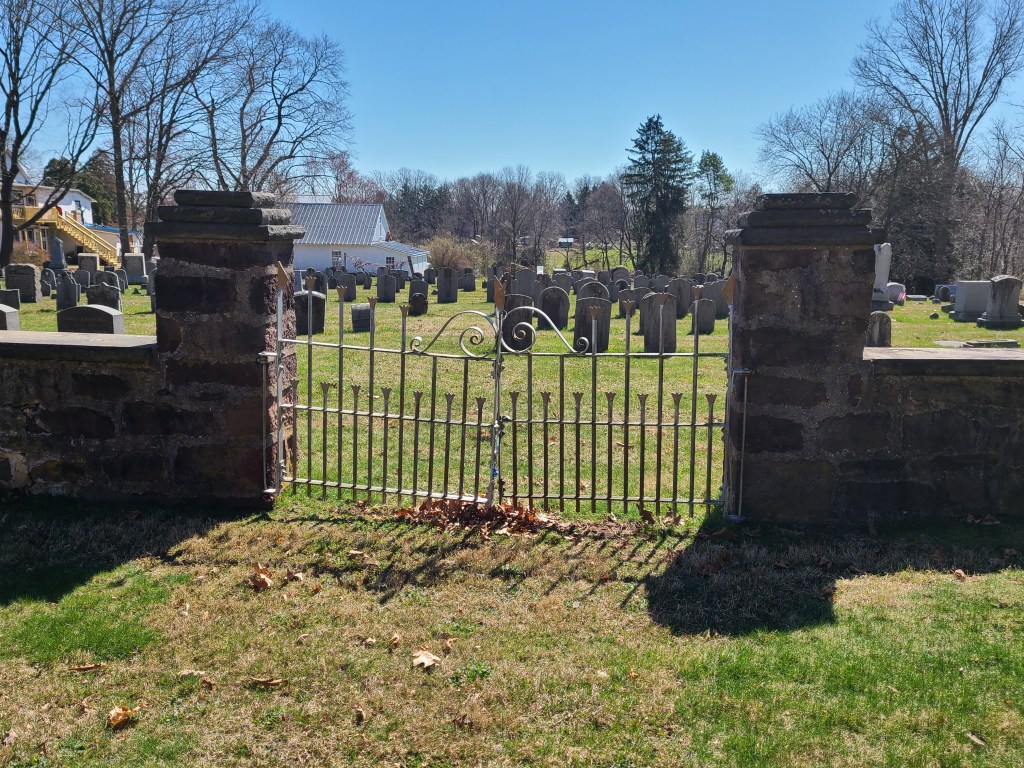
Brower Cemetery, now a part of Oak Grove Cemetery, is just off Old Schuylkill Road. It is one of the oldest burial grounds in the Schuylkill area of Chester County, with the oldest stone dating back to 1744. Nestled among the numerous markers is one for Theophilus Ransom Gates (1787-1846). The stone is inscribed with a hymn penned by Charles Wesley that begins “happy soul, thy days are ended.” For many living in North Coventry Township in 1846, that happy day could not have come soon enough.
Gates was the founder of a small, devoted group that shocked area residents of the once sleepy region just west of Pottstown. Although their numbers were modest, some say no more than thirty-five members, the area in which this group resided became known as Free Love Valley. And so we begin this bizarre story of lust, intrigue, and murder.
Born in Connecticut, Gates’ family history dates back to the Mayflower. His autobiography describes disturbing childhood visions, and a ceaseless state of depression and anxiety. Gates pursued a multitude of roles throughout his life, from a traveling school teacher to a legal scholar, and eventually as a preacher of religious prophecies.
On his arrival in Philadelphia, Gates encountered the writings of radical religious philosopher John Humphrey Noyes (1811-1886). At the time, Noyes had founded a semiregular periodical called The Perfectionist, with Gates noted in some accounts as an early contributor. In 1837, Gates would strike out on his own, publishing Battle Axe and Weapons of War, Vol. 1, No. 1, a title he combed from the Book of Jeremiah. He sold his publication for five cents. It was dismissed by most, but curiosity, as Einstein once wrote, has its own reason for existing.
Gates would find an ally in young, high-spirited Hannah Williamson, a prostitute at the time. She came from a good Quaker family who owned a substantial farm in rural Chester County. Together, Gates and Williamson eventually made their way to North Coventry, some forty miles northwest of Philadelphia. Here, they culled together a petite group of followers, attracted to Gates’ unwonted writings.
Local historians recount that the “Battle Axes,” convened at each other’s houses for “services.” These services involved, among other things, nudity, as that was the original state of Adam and Eve. Their beliefs were rooted in the notion that conventional marriage was flawed; they advocated for the freedom of individuals to engage in relationships of their choosing, unrestricted by societal norms. Rev. John C. Gulding of Shenkel United Church of Christ, a locale that will return later in our saga, regularly preached out against the group; their response being the much cited 1843 account of the group parading up and down the church aisles, in the nude.
Local citizens and law enforcement were, no doubt, displeased with their antics and in time brought charges against various members. A sensational West Chester trial in 1844 resulted in four convictions, though Gates got away without a blemish.
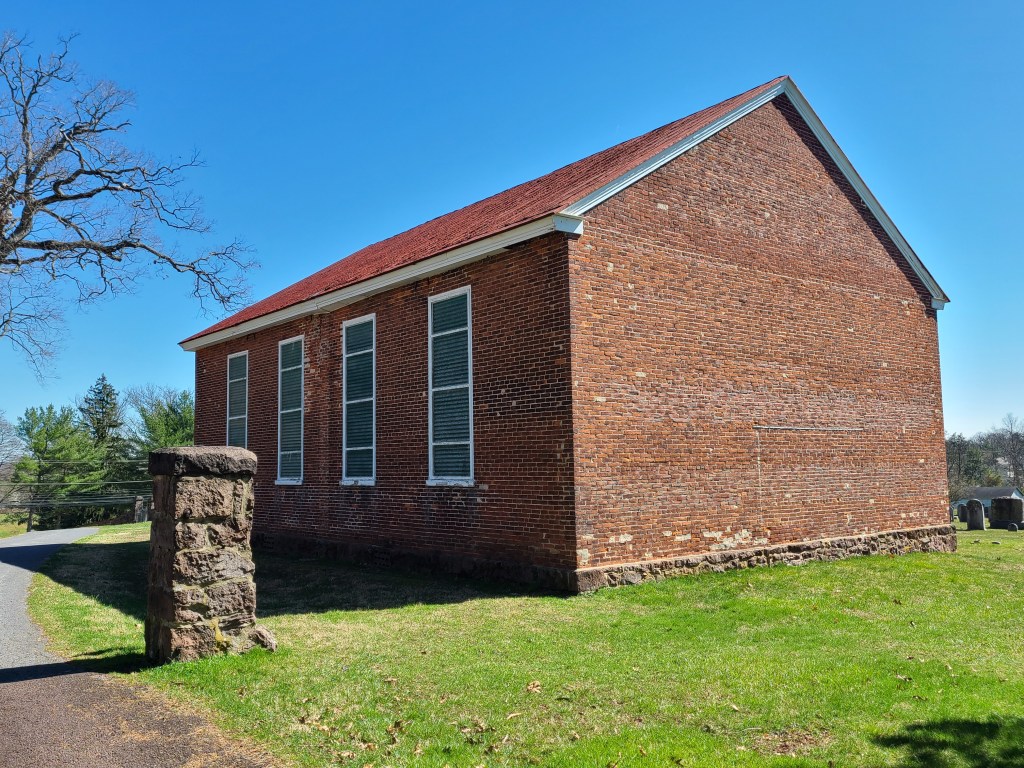
Murder jolted the community when eccentric spinster Hannah Shingle (aka Shenkel), a noted Battle Axe member, was found nearly decapitated in her upstairs bedroom on October 21, 1855. The blood-splattered walls were the result of the upward motion of the axe that was used to rip Hannah’s throat. Among the suspects were three individuals, one of whom was the local constable. The case was never solved. Today, Hannah’s home sits on the hill across the road from Shenkel United Church of Christ. The two-story stone structure, with a southern exposure, still includes the large barn and spring house; suggested locations for illicit Battle Axe gatherings.
During its short existence, the Battle Axes would weave unforgettable stories. One of the more popular anecdotes is that of William Stubblebine (1798-1871). William took up with the much younger Magdalena Snyder (1815-1897), removing his wife Mary (Garber Stubblebine, 1806-1903) and their six children from the family home. William and Magdalena would live together for thirty-one years. On his death, William left his belongings, including the family abode registered at 1690 Shenkel Road, to Magdalena. His estate became the subject of legal action. Mary, his legitimate wife, prevailed. Despite their long separation, William and Mary are buried together at Shenkel United Church of Christ.
The Snyder family, including Magdalena and her sister Elizabeth, lived on a homestead next to the Kirlin family along the River Road in Douglassville. The Kirlin’s are the second owners of what is now known as Brinton Lodge. “Aha!” I am a tour guide at Brinton Lodge. Join me for a trip through history, including details of Theophilus and his Battle Axes, on April 27. Tickets are available here.



 Keystone Wayfarer
Leave a reply to Mosquitos On The Arc – Keystone Wayfarer Cancel reply