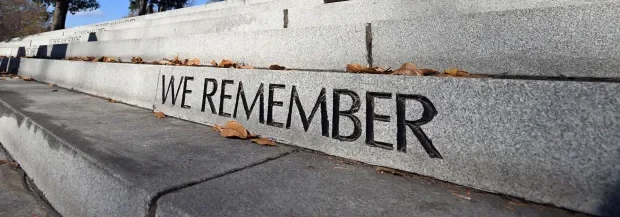
War changes lives in ways that don’t always end when the fighting does. For many who served in Vietnam, coming home was not the end of their wartime experience. The memories, the losses, and the challenges of returning to civilian life became part of a story that would continue long after they left the battlefield. And some never came home at all.
Over the past three years, I’ve spent countless hours researching and sharing stories from our past. Along the way, I’ve learned that there’s always more to discover than the dates, places, and events that first catch our attention. I find myself drawn to the people, their experiences, and the lives they led. That ongoing discovery is one of the most rewarding parts of this work, and one of the reasons I remain so excited and proud to bring a new story to readers each week.
I find myself thinking about those personal stories when I encounter veterans in everyday life. When I see someone at the grocery store, anywhere really, wearing a veteran’s hat, I feel compelled to stop and say, “Thank you for your service.” More often than not, I’m met with a smile and a humble “thank you” in return. It takes only a few seconds, but it’s my way of acknowledging something much bigger than that brief exchange. I may know nothing about the story behind that hat, but I can take a moment to recognize the person wearing it.

Earlier this year, I was invited to speak to the Limerick Township Historical Society and given the opportunity to choose my own topic. I chose the Vietnam War, a subject I had wanted to understand more fully. As I prepared for that presentation, I found myself looking beyond the military campaign to the experiences of those who served, the families and communities left to carry on at home, and the lasting effects of a war that reached far beyond the battlefield.
But to understand what those Americans encountered, we need to go back a little further, to a country whose struggle had begun long before the United States committed combat troops.
Vietnam has a long history of resisting outside rule, including centuries of Chinese influence and, later, French colonial control. During World War II, Japan occupied the region. When the war ended, Vietnamese independence leader Ho Chi Minh formally proclaimed Vietnam’s independence on September 2, 1945, announcing the establishment of the Democratic Republic of Vietnam.
But declaring independence did not mean Vietnam was free. France had no intention of giving up its former colony without a fight. The two sides tried to reach an agreement, but negotiations failed and tensions continued to grow. By December 1946, the disagreements had given way to open warfare. The First Indochina War had begun, and it would last nearly eight years.

France’s defeat at Dien Bien Phu in 1954 brought its colonial rule in Vietnam to an end, but it did not bring the peace many Vietnamese had hoped for. Under the Geneva Accords, Vietnam was temporarily divided near the 17th parallel, with a communist-led government in the North and a separate, noncommunist government in the South. The agreement called for nationwide elections in July 1956, with the hope of reuniting the country. But those elections never took place. South Vietnam refused to participate, arguing that free elections could not be guaranteed under Ho Chi Minh’s communist government in the North. As American support for the South Vietnamese government increased, the division deepened, and the prospect of reunification grew more distant.
Even with the country divided, the fighting did not stop. In South Vietnam, communist-led insurgents, commonly known as the Viet Cong, continued their attacks against the South Vietnamese government. Many were South Vietnamese themselves, while others received support from the North. In 1959, North Vietnam began developing a network of supply routes through neighboring Laos and Cambodia to move men, weapons, and supplies into the South. Known as the Ho Chi Minh Trail, the network would become an increasingly important lifeline for the growing insurgency.
Vietnam’s struggle for independence had become part of a much larger struggle, shaped by the Cold War. For the Vietnamese people, it meant more fighting, more uncertainty, and a country far from being whole. For the Americans who would eventually be sent there, it was the beginning of a war whose history and human cost would prove far more complicated than many could have imagined.
Initially, the American role was largely one of advising and supporting South Vietnamese forces. By the end of 1963, approximately 16,000 American military personnel were serving in the country. Most were not combat troops, but the United States was becoming increasingly involved in a conflict that showed little sign of ending.

All the while, the situation in South Vietnam was growing increasingly unstable. In November 1963, President Ngo Dinh Diem was overthrown and killed in a military coup. Weeks later, President John F. Kennedy was assassinated in Dallas. His successor, Lyndon B. Johnson, inherited a conflict that was becoming increasingly difficult to contain.
The following year brought another turning point. In August 1964, the American destroyer USS Maddox was involved in an encounter with North Vietnamese patrol boats in the Gulf of Tonkin. A second attack against American ships was reported two days later, although it was later determined that the attack had not occurred. The reports prompted President Johnson to seek congressional authority to expand American military operations. On August 7, Congress passed the Gulf of Tonkin Resolution, giving Johnson broad authority to use military force in Southeast Asia.
On March 8, 1965, approximately 3,500 U.S. Marines landed near Da Nang in South Vietnam. They were the first American ground combat troops deployed to the country, with the immediate task of protecting the American airbase there. Their arrival marked a turning point. Now, American combat units were on the ground, and the United States was moving into a much more direct military role.
But Vietnam was unlike the kind of battlefield many Americans might have imagined. There were no clearly defined front lines, and the enemy was often difficult to identify. Viet Cong guerrillas and North Vietnamese Army troops operated across dense jungles, rice paddies, and small villages, often in terrain unfamiliar to the Americans sent to fight them. A patrol could move through seemingly ordinary countryside one moment and find itself under attack the next. For American service members, the danger was difficult to anticipate, and there was often little warning before a routine day in the field turned into a fight for survival.

By November 1965, the realities of that battlefield were becoming painfully clear. At the Battle of Ia Drang, American troops faced North Vietnamese Army forces in the first major battle between U.S. ground forces and North Vietnamese regulars. The fighting was intense, casualties were heavy, and the battle demonstrated just how costly the war could become.
Combat was not the only ordeal facing American service members in Vietnam. For some, the war brought a different kind of hardship. Shot down over enemy territory, they found themselves in captivity, facing years of confinement, interrogation, and uncertainty without knowing when—or even whether—they would see home again.
Among the best-known places of confinement was Hoa Lo Prison in Hanoi, which American prisoners nicknamed the Hanoi Hilton. Navy pilot Everett Alvarez Jr. was the first American aviator shot down over North Vietnam. Captured in August 1964, he spent eight and a half years as a prisoner. John McCain, who would later serve as a U.S. senator and presidential candidate, was captured in October 1967. He spent five and a half years as a prisoner of war, including time at Hoa Lo and other prison camps, before finally returning home in 1973.

I have a personal connection to the McCain family through his eldest daughter, Sidney. We know each other through our work in the music industry, and over the years, we occasionally spoke about her dad. When he died in 2018, I reached out to share my thoughts. I remember watching Sidney as she spoke during his national memorial service at Washington National Cathedral. It was a powerful reminder that behind a name known around the world was a father whose absence was felt by the people who loved him.
In 1968, the Tet Offensive brought coordinated attacks to cities and towns across South Vietnam. While the offensive failed to achieve its major military objectives, it shook public confidence in the assurances that the United States was making progress. The scale of the attacks, including fighting in places previously considered relatively secure, made it increasingly difficult for Americans to reconcile what they saw with what they had been told about the war.
Television brought the fighting into living rooms across the country. Americans watched images of wounded soldiers, burning villages, and fighting in places many could not have located on a map just a few years earlier. Casualty figures appeared in the news, followed by weather reports, sitcoms, and the familiar routines of evening television. The war had become part of everyday life, even for people whose only connection to it was through a television screen.
For some families, the news was anything but abstract. A report about fighting or a new list of casualties might bring to mind a son, brother, husband, or friend serving halfway around the world.
As American involvement continued, opposition grew. Students, clergy, veterans, and peace activists took to the streets. Demonstrations in Washington and other cities became larger, while the confrontations outside the 1968 Democratic National Convention in Chicago brought the country’s deep divisions into full view.
Americans argued over why the United States was in Vietnam, whether the war could be won, and whether it should continue. And those disagreements didn’t stay on the streets or in the headlines. They entered homes and strained friendships, sometimes putting people who cared about one another on opposite sides of a painful divide.

There was no single Vietnam War story. There was the soldier trying to survive in the field, the nurse caring for the wounded, the prisoner waiting to come home, the family watching the evening news, and the protester marching in the streets. Each experienced the conflict from a distinct perspective, and each would carry its effects in a different way.
Here in Pennsylvania, the debate over Vietnam was playing out on college campuses and in communities across the state. At the University of Pennsylvania and Temple University, students organized demonstrations, teach-ins, and other forms of protest. At Ursinus College in nearby Collegeville, students and faculty took part in the nationwide Vietnam Moratorium on October 15, 1969. Hundreds attended a nighttime procession, bringing the national protest against the war to a campus just miles from home.
But the debate didn’t end when students left campus. It followed people home, into workplaces, around kitchen tables, and into neighborhood gathering places. Friends and relatives who had once agreed on most things could suddenly find themselves on opposite sides of an issue that had become deeply personal.
For young men facing the draft, those disagreements carried an especially heavy weight. They weren’t simply debating American policy or the future of a war being fought thousands of miles away. For some, the possibility of being called into military service meant that Vietnam was no longer a distant conflict. It was something they might soon have to face themselves.
In December 1969, the first Vietnam-era draft lottery assigned numbers based on birth dates, establishing the order in which eligible men could be called for military service. The drawing was televised, and families watched as ordinary birthdays suddenly took on a new meaning.
Not everyone faced the same choices. Medical exemptions, family circumstances, and access to other options meant that some young men had more opportunities to avoid military service than others. The ability to remain in college, for example, often favored those who could afford higher education. For many working-class families, the draft was not an abstract political debate. It was a very real possibility that could alter the course of a young man’s life.
In Royersford, Pottstown, Schwenksville, and Limerick, families faced the same questions and fears as families across the country. Young men left for training and deployment. Parents, siblings, wives, and girlfriends waited for letters and news, hoping each day would bring reassurance that their loved one was safe.
Some came home. Others did not.
More than 300,000 Pennsylvanians served during the Vietnam War. The Pennsylvania State Archives reports that 3,417 were killed in action. In Norristown alone, twenty-two residents lost their lives. At Thomas A. Edison High School in Philadelphia, 64 former students died during the war, a toll the school identifies as the highest of any school in the nation.
Numbers, yes.
But behind each number, a name. A face. A family.
These were classmates, neighbors, teammates, brothers, and sons. They were young men with lives ahead of them, with plans and possibilities their families could only imagine. When they died, their absence became part of the communities they left behind.
And for some families, the waiting never ended. According to a 2025 Commonwealth proclamation, 89 Pennsylvanians who served during the Vietnam War remain unaccounted for. Decades have passed, but their families still have no definitive answers.


For those who survived and returned, the war did not simply end when they stepped off the plane. It followed them home. In memories. In silence. In the difficult work of building a life after war.
Ralph W. Galati was one of those who came home. An Air Force officer and F-4 Phantom weapons systems officer, he was shot down over North Vietnam on February 16, 1972. He spent 406 days as a prisoner of war before his release on March 28, 1973, as part of Operation Homecoming.
While Galati was held captive, his wife was expecting their first child. He had no way of knowing what his family had been told or what was happening back home. When he finally returned, he was reunited with his wife and met his daughter for the first time. Following hospitalization, he returned to Air Force service, eventually becoming an instructor. After leaving the military, he moved into civilian life and devoted considerable time helping other veterans, including establishing the Office of Veterans Services at Saint Joseph’s University.
Others never had that chance.
Major Robert F. Ronca of Norristown was a career Air Force officer whose service spanned World War II, Korea, and Vietnam. On February 19, 1965, he was leading an air strike over Laos when his aircraft came under intense enemy ground fire. Despite the danger, he continued the mission. He was killed during the operation and later awarded the Air Force Cross posthumously for his extraordinary heroism.
Private First Class John E. Scheetz and Private First Class James A. Watson, both from Norristown, were among those whose lives were cut short during the war. Scheetz died of wounds in May 1967. Watson died in November 1967 from a non-hostile illness or injury. Their circumstances were different, but both deserve to be remembered. They, too, had families, friends, and futures that would never unfold as anyone had imagined.

The consequences of war took forms that couldn’t be captured in a photograph or measured by the names on a memorial. One of the most enduring was Agent Orange, a herbicide used by the U.S. military to remove trees and dense vegetation that provided cover for enemy forces. Its use left lasting damage to Vietnam’s landscape. Exposure would later be linked to serious health problems among American veterans, while Vietnamese people also continued to live with the effects of contamination and its consequences for their health and environment.
Here in our own community, the Vietnam War isn’t just a distant chapter of history. We have a connection to it through the life of Martin Witte.
Born in 1943, Martin served in the U.S. Army from January 1963 to January 1965. As a specialist assigned to the Third Radio Research Unit, he worked in military intelligence operations supporting South Vietnamese forces. His service came during the early years of America’s growing involvement, before the arrival of large numbers of American combat troops and the television images that would eventually bring the war into millions of American homes.
What stayed with Martin most, however, wasn’t the political ideology driving the conflict. It was the people he encountered: ordinary Vietnamese trying to get by amid poverty and the turmoil surrounding them, often with little control over the forces shaping their future.
When I spoke to the Limerick Township Historical Society about the Vietnam War, I had no idea that someone in the audience had experienced it firsthand. That someone was Martin, the very man who had invited me to speak. In that way, a chapter of world history came full circle, connecting his experience to the community we call home.
Martin’s military service ended a decade before the fall of Saigon. By then, American combat troops had withdrawn following the Paris Peace Accords of 1973, but the fighting between North and South Vietnam continued. On April 30, 1975, North Vietnamese forces entered Saigon, marking the end of South Vietnam and the conclusion of the war.
For Americans watching from home, the fall of Saigon marked the end of a long chapter, but not the end of the war’s consequences. Veterans, families, and communities would continue to live with its effects for years to come.


Even after the fighting began to fade from the headlines, the Vietnam War remained very much a part of American life. In the years that followed, books, memoirs, television programs, and documentaries explored the experiences of those who had lived through the conflict. Novels such as Karl Marlantes’s Matterhorn and Kristin Hannah’s The Women, among countless others, brought readers closer to the physical and emotional burdens of military service. They also helped give greater recognition to experiences that had received less attention, including those of the women who served in Vietnam as nurses.
The Vietnam War is often remembered for its politics, its protests, and the divisions it created. But those things tell only part of the story.
Nearly three million Vietnamese people died. Tens of thousands of Cambodians and Laotians lost their lives. More than 58,000 Americans never came home.
And the cost did not end in 1975.
It remains in the memories of those who served, in the families who endured loss and uncertainty, and in the veterans who carried the burdens of war home. It lives on in the names etched into memorials, the stories shared by those who served, and the communities that still remember them.
Here in Pennsylvania, those stories belong to us, too. They belong to the towns where young men left for war, the families who waited for their return, and the neighbors who still carry their names.
This Veterans Day, as we pause to honor those who served, may we remember the people behind the history. Their stories deserve to be told. Their sacrifices deserve to be acknowledged. And their names deserve to be remembered.
In the words of Maya Angelou: “We are braver and wiser because they existed, those strong women and strong men. We are who we are because they were who they were. It’s wise to know where you come from, who called your name.”
I would like to dedicate this story to all veterans, and especially to my good friend Sharon Magnifico, in memory of her father, Robert P. Magnifico, Lieutenant Colonel, U.S. Army (Retired), who passed away on Tuesday, November 3, 2026, at the age of 74. May this story honor his memory and recognize all those who have served.

Leave a Reply