Two weeks ago, temperatures climbed above 100 degrees, forcing many of us to rethink our daily routines. We put off what could wait until cooler hours, looking for small moments of relief—a cool room, a cold drink, or simply a break from the sun. For most of us, those adjustments were enough to make the day more manageable.
Thankfully, the heatwave lasted only a few days, but it offered a quiet reminder of just how much comfort shapes our lives. Now imagine a world where those comforts weren’t always within reach. Think of life fifty years ago. One hundred. Two hundred and fifty.
This is one of the greatest challenges we face when trying to understand the past. It is easy to judge people by the standards of our own time. Harder is remembering that they lived in a world profoundly different from the one we know. History is not simply about what happened. It is about understanding how people experienced it.
The Philadelphia Campaign is often remembered today through places like Brandywine, Germantown, and Valley Forge. Yet between those well-known sites stretched a vast network of roads, farms, mills, ferries, and villages where ordinary people felt the effects of the conflict firsthand.
For the people of the Perkiomen Valley, the American Revolution was not a distant conflict taking place somewhere else. It was not measured by battles alone. It came one road at a time.

After his defeat at Brandywine on September 11, 1777, General George Washington faced one of the greatest challenges of the American Revolution. The British had opened the road to Philadelphia, putting the Continental Army—and with it, the fight for independence—at risk.
Rather than risk another devastating defeat, Washington withdrew his army, maneuvering across southeastern Pennsylvania. Though he yielded ground, he kept the army together, determined to challenge the British once again.
The retreat tested the Continental Army in ways combat had not. Days of relentless rain soaked tents, blankets, and gunpowder alike. Boots wore out on muddy roads until some soldiers wrapped their feet in rags just to keep marching. Hunger became a constant companion, as familiar as exhaustion itself. Still, the army pressed on.
For nearly three weeks, thousands of Continental soldiers moved through the countryside, staying just beyond the reach of the British as Washington looked for a chance to regain the initiative. The army rarely remained in one place for long, and wherever it passed, everyday life changed. Churches, homes, and barns became makeshift hospitals. Fields ready for harvest gave way to military necessity as families found themselves feeding strangers, caring for the wounded, and wondering what the next day would bring.
The march brought the Continental Army through communities that surround us today, from Schwenksville to East Coventry and countless places in between. They were never meant to become landmarks of the Revolution. They were simply the next miles beneath tired feet.

On September 19, the army reached Parker’s Ford in present-day East Coventry and West Vincent. Lieutenant James McMichael left behind one of the simplest descriptions of the campaign.
“We had to strip to wade.”
Just seven words. Yet they reveal the hardship of the campaign more clearly than pages of official reports. McMichael did not describe the cold water, the exhaustion, or the uncertainty. He did not need to. In those few words, he captured the experience of thousands of soldiers driven onward by the demands of the campaign.
As the army pushed on, the war settled over communities that had never expected to become part of it. One day, a column of soldiers appeared. Then another. Soon there were thousands.
Children stopped their chores to watch columns disappear over the next hill. Dogs barked as unfamiliar voices filled the lane. Every sunset brought the same question: Would another army arrive tomorrow?
For many families, the answer came in the demands of the campaign. The blacksmith worked deep into the night repairing wagons and shoeing horses. Winter stores of hay disappeared into an army that had little choice but to keep moving. Officers knocked on farmhouse doors asking for flour, blankets, livestock, or directions. Barns became hospitals, and families cared for strangers whose names they would never know. Some recovered. Others never made the journey home.

This is the side of the Philadelphia Campaign we rarely remember. Beyond the movements of armies and the clash of battles, it was a time of rain, exhaustion, disease, sacrifice—and of ordinary people whose lives were forever changed when the war reached their communities.
One such story unfolded on the farm of Captain John Hiester, a Chester County militia officer whose land lay along the route Washington’s army followed after crossing Parker’s Ford. Local tradition has long identified this area as the site of a temporary Continental Army hospital, on land later associated with both the Hiester and Prizer farms. Though ownership changed over time, the story remained tied to this landscape.
No surviving military record identifies the hospital with absolute certainty. Yet later accounts consistently point to this area as the place where soldiers too sick or too badly wounded to continue the march were left behind. If those accounts are correct, the Revolution arrived here not with the thunder of cannon, but with weary men seeking shelter, care, and a chance to survive.
A barn became a hospital. A farm became a place of healing—and, for some, a final resting place.
Inside, there were no modern medicines, no electricity, and no sterile operating rooms. There was only straw spread across the floor, candlelight after sunset, and surgeons working with the simplest of instruments. Some recovered. Others slipped away far from the homes they would never see again.
Those soldiers were buried nearby, on a hillside that, nearly 250 years later, still overlooks the surrounding countryside.


Today, that hillside is known as Ellis Woods Revolutionary Cemetery. Tucked away along a remote road, it is easy to pass without realizing what lies beyond the trees. There are no elaborate monuments or rows of marble headstones—only a small clearing where seventeen Revolutionary War soldiers are believed to rest.
Now birdsong replaces the sound of marching feet. Sunlight filters through mature trees onto a quiet clearing marked by a single row of flags. Nothing about this peaceful landscape hints at the desperate weeks that once unfolded here—until you begin to know its story.
When those soldiers were buried in 1777, no one knew this place as Ellis Woods. It was simply a corner of a Pennsylvania farm. Over time, the surrounding woodland became associated with the Ellis family. By the end of the nineteenth century, local newspapers recognized this burial ground as a place connected to the Ellis family, describing it as “a small wooded area belonging to John Ellis, Esquire.” Even as the landscape changed, the memory of the soldiers endured.
At first glance, it appears to be a simple country cemetery. Spend a little time here, however, and the story becomes something else entirely. Some of these soldiers likely died not from musket fire, but from disease, infection, exposure, or wounds suffered during the campaign. During the American Revolution, illness claimed far more lives than combat. Ellis Woods preserves a kind of sacrifice that rarely appears in paintings or history books.
The cemetery holds another mystery as well.
Accounts from the late nineteenth century suggest that additional graves once lay nearby before the construction of a public road leveled the original burial mounds. Whether those graves were truly lost to time may never be known. Yet the 1897 newspaper account reveals something just as important: more than 125 years ago, residents were already recognizing the significance of this place and making sure the story of those soldiers continued.
The years that followed brought new chapters to this landscape. The Revolution became history. New generations settled the countryside. Later generations would see this same place transformed again as the Underground Railroad and the Civil War became part of its story. Roads were rerouted, farms changed hands, and even the names attached to the land evolved. Yet the little cemetery beneath the trees remained.


Not far away, the Sheeder-Hall Bridge would rise across French Creek in 1850. Though built decades after the Revolution, it stands as another reminder that this landscape continued to change while the stories of 1777 endured.
Among those who helped preserve the story of this countryside was local historian Frederick Sheeder, who understood that small places often hold the biggest stories. His work helped ensure that Ellis Woods would not fade from memory.
According to local tradition, two young girls began placing flowers on the forgotten graves of soldiers whose names they never knew. They could not tell visitors who rested beneath each grave. They simply believed someone should remember.
Their simple act of remembrance inspired others. Veterans of the Grand Army of the Republic carried the tradition forward, decorating the graves each Memorial Day. Around the turn of the twentieth century, veterans of the United Spanish War helped establish the Ellis Woods Memorial Association, ensuring the cemetery would be protected for generations to come.
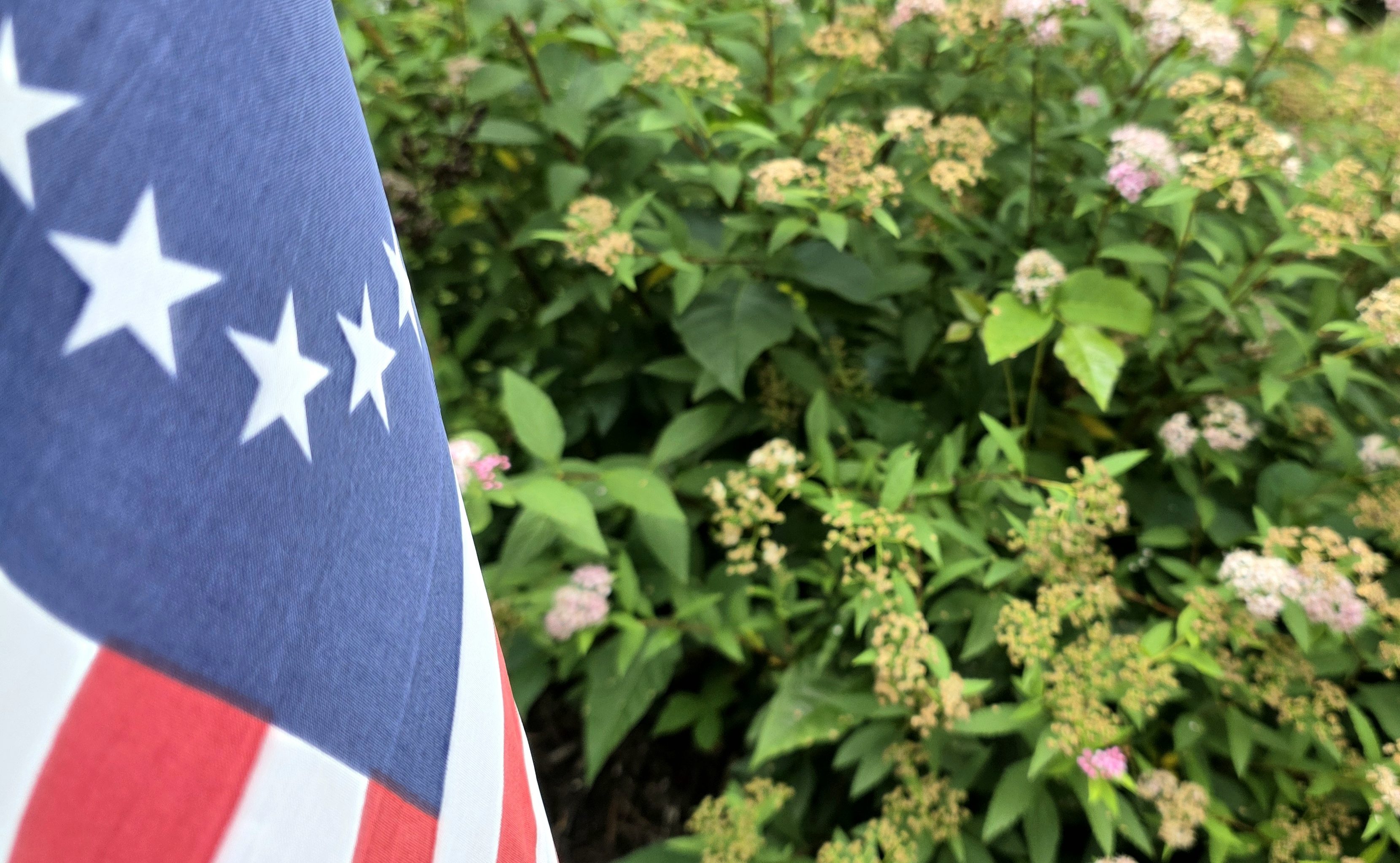
That responsibility continues today. Local veterans, Scouts, volunteers, township officials, and community members still gather to care for the cemetery, place flags beside the graves, and honor seventeen men whose names have largely been lost to history.
For nearly two and a half centuries, one generation has handed the responsibility of remembrance to the next.
Ellis Woods reminds us of something easily overlooked. The Philadelphia Campaign was never confined to Brandywine, Germantown, or Valley Forge. It lived here—in these roads, these fields, and these streams that still shape the landscape today.

Perhaps the greatest lesson this hillside has to offer is this: the names of those who served are not always preserved. Sometimes, all that remains is a place that asks each generation to honor those whose names have been lost, but whose sacrifices helped shape the nation that followed.
In the end, the story of Ellis Woods is not simply that seventeen soldiers rest beneath its trees. It is that, for nearly two and a half centuries, generation after generation has chosen to carry their memory forward. The mysteries remain. Some names have been lost forever. Yet the hillside still asks the same question: Will we remember?
As long as the answer is yes, the story of Ellis Woods—and of the men who rest there—will continue.

Leave a Reply