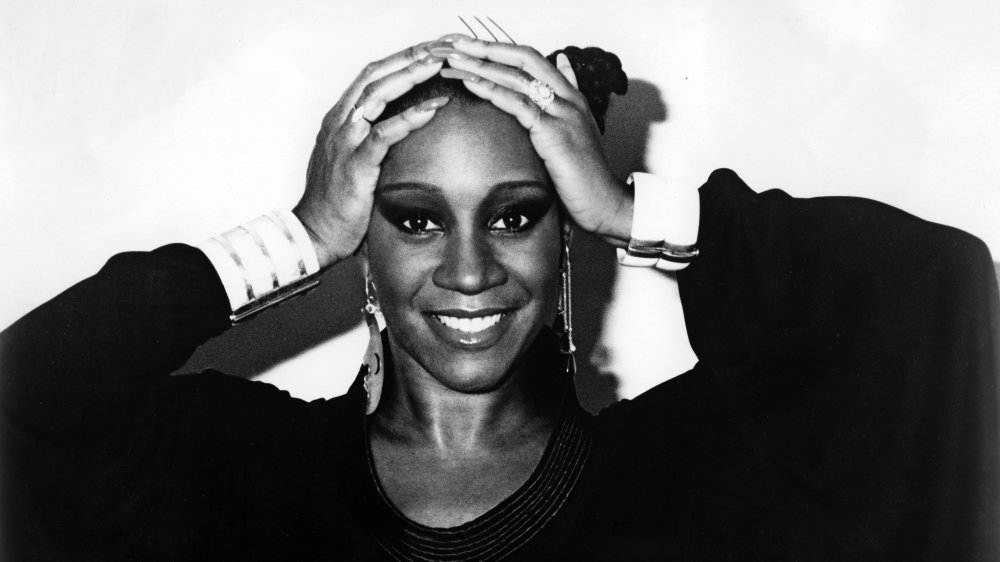
When we were kids, if my brother and I were ready in time, we could catch a ride with our mom instead of walking nearly two miles to school. On freezing New England mornings, her warm car felt nothing short of a miracle. By the time she dropped us off, we’d drift through the halls before the first bell, half-awake and waiting for friends. We had no idea those ordinary mornings would one day slip away.
In the time capsule of my memory, the winter of 1984 comes back easily. I’m a newly minted sixteen-year-old sophomore, already deep in a Duran Duran obsession—Roger Taylor, naturally, my favorite.
In December, Beverly Hills Cop arrived in theaters. It felt like just another movie everyone was talking about. Eddie Murphy was everywhere that year, and Axel Foley already felt like a character you didn’t need to be introduced to—you just recognized him.

The film opens in Detroit with Foley running an undercover sting that immediately falls apart, the kind of controlled chaos that becomes his signature. By the time he lands in Beverly Hills, the rules are already starting to disappear.
And then there’s the hotel.
Axel checks into a luxury suite and almost immediately turns his attention to the detectives assigned to follow him. From his room, he watches them parked outside, bored, outmatched, and barely hiding it. He picks up the phone and delivers one of the film’s most memorable moments:
“Hello, room service? This is Axel Foley in suite 1035. I’d like to order from your supper menu, but I want it delivered to a car parked on Wilshire just outside the hotel.”
It keeps going—shrimp salad sandwiches, cold poached salmon with dill sauce, beer, dessert—an entire meal delivered not to him, but to the men watching him sweat through surveillance duty. And then comes the line—casual, tossed off, almost unnecessary.
“And tell Patti LaBelle I want her to come by here and sing something.”
Even then, you knew the name—not because you understood her career in any real detail, but because it already carried weight. Patti LaBelle wasn’t introduced so much as referenced, as if you were expected to already know exactly who she was.
Decades later, that moment lands differently. And for Keystone Wayfarer’s ongoing series on the Pennsylvania women who shaped the culture around them, she feels less like a choice than a necessity.
Patricia Louise Holt was born May 24, 1944, in the Eastwick neighborhood of Philadelphia. She grew up in a home shaped by hardship, so music became both comfort and escape. The church choir became a place where she found something steadier than the world around her. She began singing there at ten, and it quickly became clear: her voice didn’t just belong there—it rose above it.
Before she became a name spoken casually in film dialogue, she left high school just shy of graduation in 1960 and stepped fully into music with her friend Cindy Birdsong. They were the Ordettes at first—local girls singing wherever they could. But something about their sound wouldn’t stay local.

By the early 1960s, they had become The Blue Belles and found their first national success with “I Sold My Heart to the Junkman.” It wasn’t just a hit—it was a signal that something larger was forming.
Like so many groups of the era, they changed as they went—members shifting, names evolving, sound expanding. By the early 1970s, they had become LaBelle. What emerged didn’t sit neatly anywhere. It was soul, rock, gospel—something theatrical and defiant all at once. When “Lady Marmalade” arrived, it felt more like a declaration.
In 1975, LaBelle became the first Black female group to appear on the cover of Rolling Stone. But even that moment was fleeting. By 1976, LaBelle had broken apart. Patti LaBelle didn’t disappear. She simply started again.
Her solo career began in 1977, and at first, it looked less like reinvention and more like persistence. The early years weren’t immediate superstardom, but they revealed something essential: Patti LaBelle didn’t just perform songs—she lived inside them. “You Are My Friend” wasn’t a chart hit, but it became something else entirely. It stayed with people, felt personal, like it had been carried in rather than produced. Over time, that became the defining quality of her work—the ability to make every song feel like it was being sung directly to someone.

By the early 1980s, her career widened again. She moved between Broadway stages, studio sessions, and collaborations that stretched her voice into unfamiliar spaces without ever breaking its center. “The Best Is Yet to Come,” recorded with Grover Washington Jr., brought her first Grammy nomination and marked a shift in how she was being heard—not just as a singer, but as someone shaping emotional tone itself.
Then came the songs that defined the breakthrough. “If Only You Knew” didn’t announce itself. It arrived quietly, with restraint and control, and then stayed. It became one of those records that doesn’t demand attention—it earns permanence. By the time I’m in Love Again arrived, the scale of her presence had caught up to what had been building for years.
And then, in 1984, she crossed into something else entirely. Beverly Hills Cop didn’t introduce Patti LaBelle—it placed her name inside a moment where she was already understood to be significant.
“New Attitude” wasn’t just a soundtrack placement. It was a second wave, expanding her visibility without redefining her. Her voice no longer moved between categories—it moved through them.
That expansion continued into 1986 with Winner in You and “On My Own,” her duet with Michael McDonald, which became her first No. 1 pop hit. Everything aligned at once—voice, timing, visibility—but it felt less like arrival and more like confirmation of what had already been building for years.

Outside the stage lights, her life carried its own weight. In 1994, she collapsed during a performance and was diagnosed with Type 2 diabetes. It could have slowed everything down, but instead it became something she learned to live alongside. She adjusted her routines, her travel, her discipline—never stepping away from performing, only changing how she carried it.
She later spoke openly about it, using her platform to raise awareness, particularly in communities where health education and access are uneven. Not as messaging, but as lived experience.
She lost three sisters to cancer before the age of 50, a series of losses that shaped her advocacy around early screening and prevention. Family has always remained central in her life—especially her son, Zuri Kye Edwards, and the children she later adopted.

In 2008, she launched Patti’s Good Life, a food brand that began with sauces and grew into desserts, frozen meals, and comfort foods that eventually reached grocery aisles across the country. It was, in its own way, another kind of performance—just in a different register. The same sensibility carried into a completely different space.
Patti LaBelle’s influence has carried across generations. Her voice has been sampled and reinterpreted, appearing in songs like Nelly and Kelly Rowland’s “Dilemma,” and her work has been cited by artists who followed her path. Later generations—from Jill Scott to Mariah Carey—have pointed to her as a key inspiration.
What defines her career is not a single peak, but continuity. From church pews to Broadway stages, from concert halls to grocery aisles, Patti LaBelle has moved through every space as if it were part of the same line—shifting form, but never losing its center. It moves like someone continually answering the same calling in different rooms, different decades, different versions of herself. Somehow, through all of it, it still sounds like the same voice.
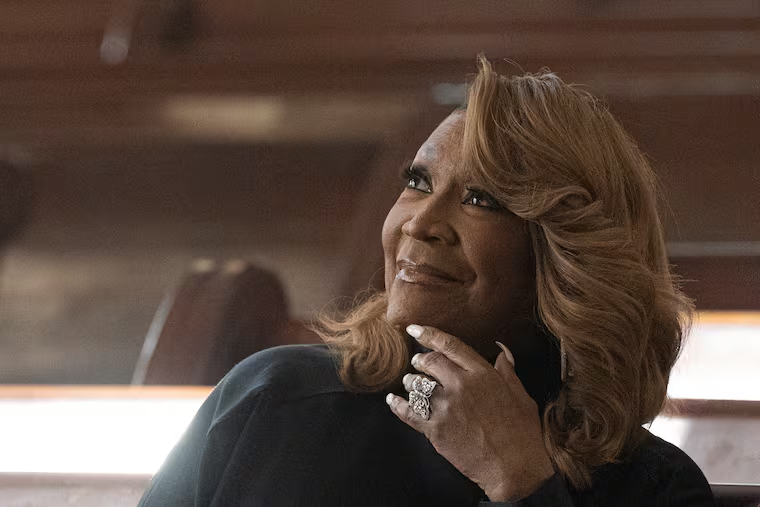
Today, Patti LaBelle continues to perform with the same restlessness that has defined her career for decades. This month, she will perform dates rescheduled from February, joining Chaka Khan, Gladys Knight, and Stephanie Mills for The Queens Tour. She returns to Philadelphia on July 9 at the Dell Music Center.
Her story has never been about arrival—it has been about endurance, about what it means to keep showing up fully across time.
And somehow, even now, she still does.
Beverly Hills Cop was released by Paramount Pictures in 1984 and directed by Martin Brest (Midnight Run, Scent of a Woman, Meet Joe Black). The film stars Eddie Murphy as Detroit detective Axel Foley, alongside Judge Reinhold, John Ashton, Lisa Eilbacher, Ronny Cox, Steven Berkoff, Jonathan Banks, and Paul Reiser.
It became the highest-grossing film in the United States that year, earning approximately $316.4 million worldwide and helping cement Murphy as one of the defining stars of 1980s comedy. The film earned an Academy Award nomination for Best Original Screenplay and a Golden Globe nomination for Best Motion Picture – Musical or Comedy, and won the People’s Choice Award for Favorite Motion Picture.
Its soundtrack became a major hit in its own right, reaching No. 1 on the Billboard 200. Featuring tracks like “The Heat Is On” by Glenn Frey, “Neutron Dance” by The Pointer Sisters, and Harold Faltermeyer’s iconic “Axel F,” it also included Patti LaBelle’s “New Attitude” and “Stir It Up,” which helped extend her reach into pop crossover success. The film launched a franchise beginning with Beverly Hills Cop II (1987) and was later selected for preservation in the U.S. National Film Registry for its cultural, historical, and aesthetic significance.


Leave a Reply