My love of horses goes back a long way. One of the first reports I remember writing in grade school was about Willie Shoemaker, the legendary American jockey. His quiet smile and crouched, almost comical posture belied an extraordinary talent. Even though most of his major wins came before I was born, I couldn’t help being completely captivated. Over the course of his four-decade career, he amassed nearly 9,000 victories, including four Kentucky Derbys and five Belmont Stakes—an astonishing record in American horse racing that stood until 1999.
And that fascination never faded. The awe I first felt learning about Shoemaker came alive every time I saw a horse thunder across a field or prance down Main Street during the parades I loved so much as a kid. I’m sure many would agree, there are few sights more heart-stopping than seeing a horse break into a full gallop, muscles coiling and stretching, mane flying like fire in the wind. Even from a distance, the raw energy radiating from them—power and elegance combined—can make your chest tighten with wonder. Watching them, it’s easy to understand why humans have been drawn to horses for centuries, not just for work or sport, but for a glimpse of something untamed and magnificent.
It turns out my love of horses wasn’t entirely my own. Over the years, my mom told me stories of my grandfather and his passion for horses, including the time he owned harness racing horses—trained not to carry a rider on their back, but to pull a lightweight, two-wheeled cart called a sulky, with the driver seated behind. The races tested speed, endurance, and the perfect partnership between horse and human.
My aunt Nancy inherited that same love. It was because of her that I first climbed into a saddle. For years, she had a horse named Seneca. Sitting astride him felt like scaling the top of a skyscraper—thrilling, a little scary, and totally unforgettable. I can still feel the rhythm of those steps, my aunt leading me gently around the small arena just a short drive from her house.
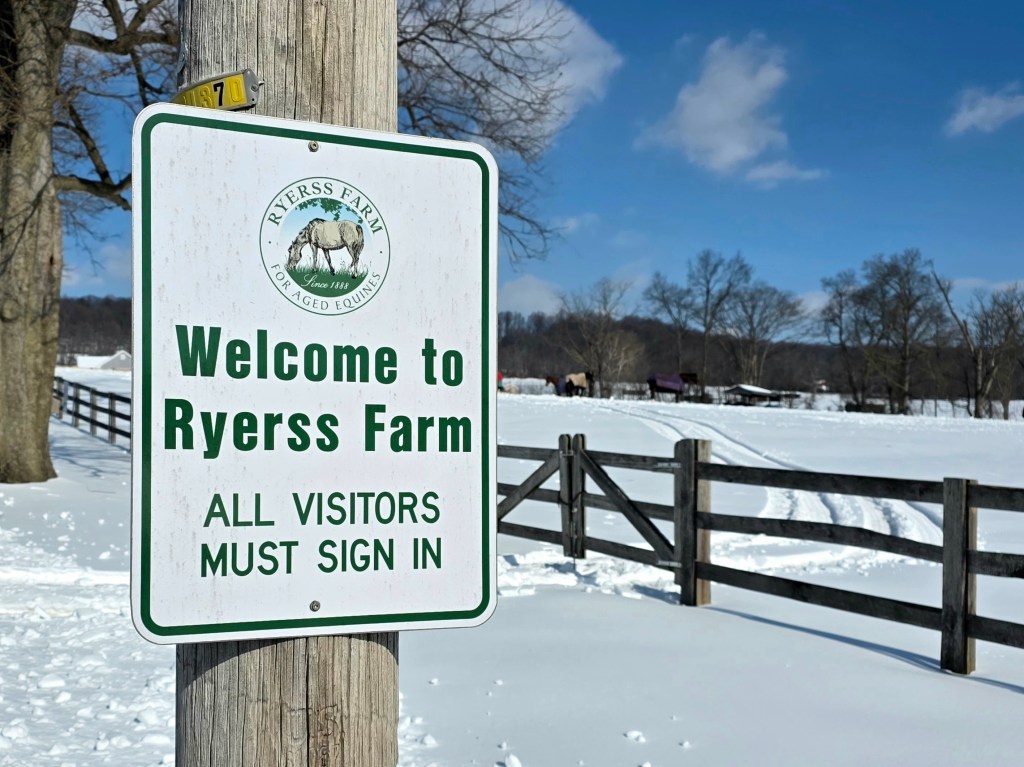
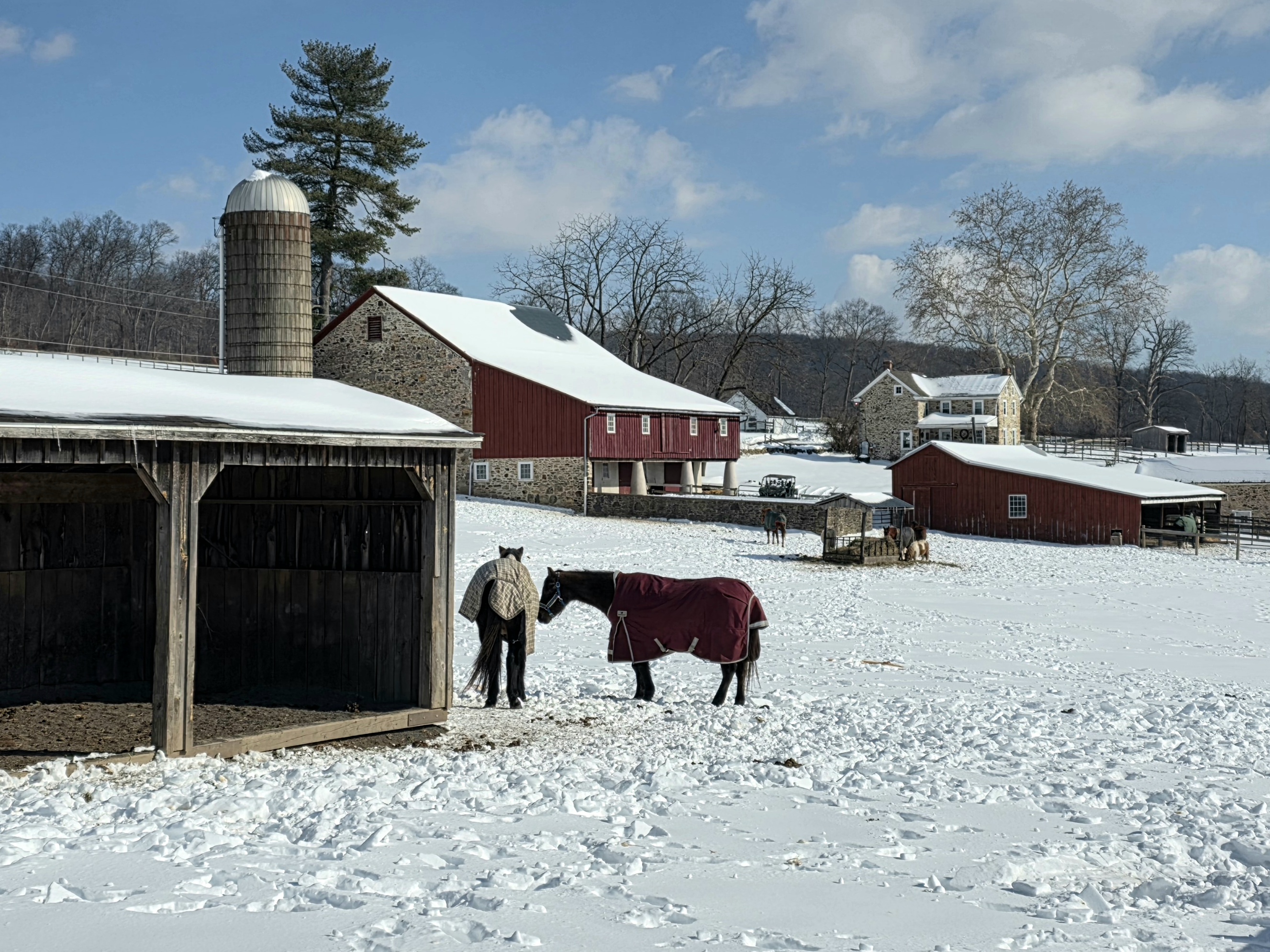
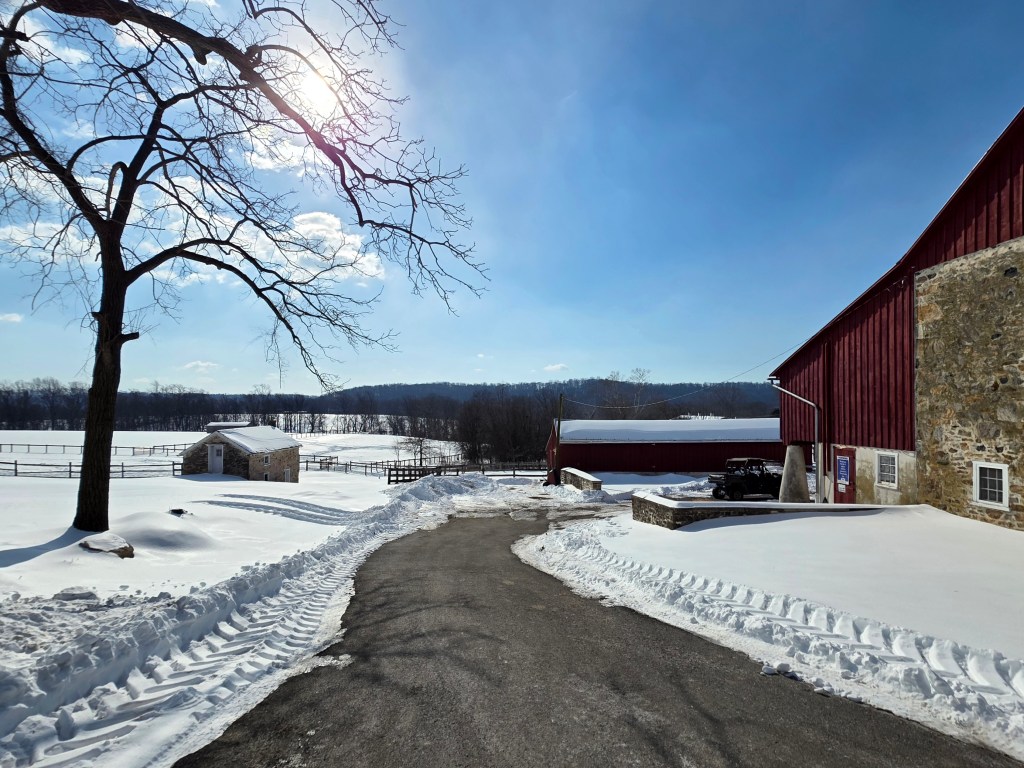
Those early experiences make it easy to appreciate the quiet dedication of places like Ryerss Farm for Aged Equines. Tucked along Ridge Road in South Coventry Township, just outside Pottstown, it is a place intentionally removed from hurry. Rolling pastures, shaded lanes, and horses grazing against a backdrop of woods and open sky create an immediate sense of calm. For more than 135 years, this nonprofit sanctuary—the oldest of its kind in the United States—has quietly offered senior, abused, and rescued horses a peaceful retirement, where they are free to roam, play, and simply be.
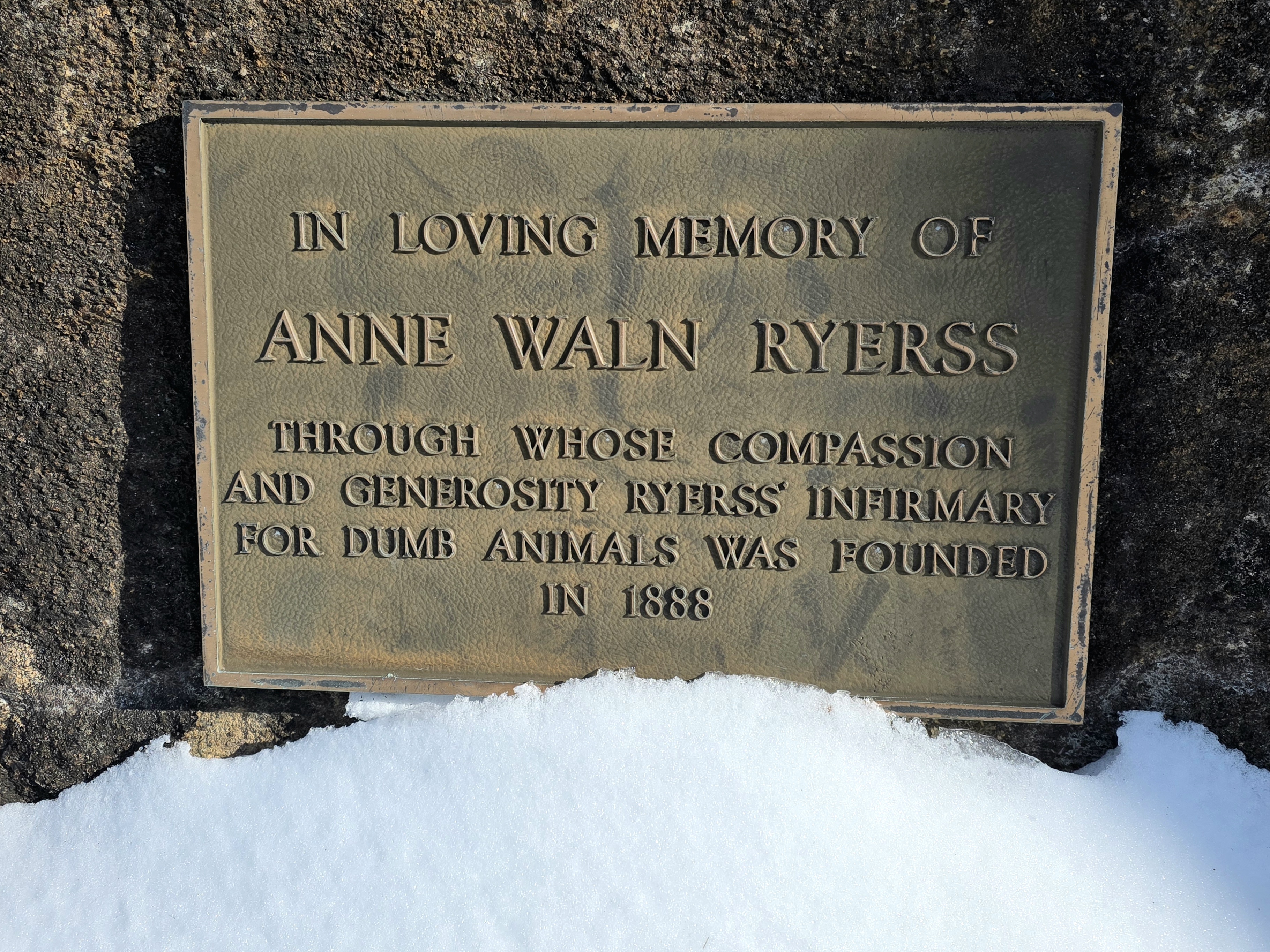
The farm’s story begins in 1888 with Anne Waln-Ryerss, a Philadelphia philanthropist deeply moved by the plight of the city’s horses. Horses were everywhere then—hauling carriages, moving goods, working farms—but far too often they were overworked or neglected, with no protections in place. Anne could not stand by. She rescued struggling horses and other animals, sheltering them at her Burholme estate in Northeast Philadelphia. Her compassion laid the groundwork for a philosophy of animal welfare that still guides Ryerss today.
When Anne died, she left a bequest of $30,000 to establish the Ryerss Infirmary for Dumb Animals. Her stepson, Robert Waln Ryerss, carried out her vision, formally founding the infirmary and serving as its first president. The farm welcomed its inaugural resident in 1889: an old, blind, frail horse who perfectly embodied the mission of providing sanctuary and dignity to animals that had faithfully served humans. By June 1891—just two years after opening—the farm had welcomed roughly fifty-six residents. Some recovered enough to return to work; others passed away despite careful attention. Those who remained found a permanent home, living out their days in safety and comfort.
The story of Ryerss Farm cannot be told without its roots in the place where Anne Waln Ryerss lived and first put her compassion into action. High above what is now Burholme Park in the Fox Chase neighborhood, along Philadelphia’s border with Montgomery County, stands the Ryerss Mansion—also known as Burholme. The Italianate villa was commissioned in 1859 by Anne’s husband, Joseph Waln Ryerss. He descended from the prominent Waln family, Philadelphia Quakers whose roots traced back to one of William Penn’s original settlers in 1682.
Joseph was a successful importer of Asian goods, a world traveler, and president of the Tioga Railroad Company. When the railroad crossed his property, he insisted on a stop—now Ryers Station—allowing him to travel easily between Burholme and the family’s winter home in the city. The estate took its name from the Waln ancestral home in England, “Burholme,” meaning a house set in the woods.
Anne brought her own distinguished lineage to the marriage as the daughter of Robert Waln, a United States Congressman. She and Joseph moved comfortably among Philadelphia’s social elite, dividing their time between city life and their breezy summer retreat overlooking eighty-five acres, one of the city’s highest natural vantage points. Joseph had first married Anne’s sister, Susan, who died in 1832 after the birth of their son, Robert Waln Ryerss. When Joseph later married Anne, she became Robert’s aunt, stepmother, and cousin—an arrangement not uncommon in prominent families of the era.
Robert trained as a lawyer but never practiced, preferring travel and collecting art and artifacts that filled Burholme. In 1896, eight months before his death, he startled Philadelphia society by marrying his longtime housekeeper, Mary Ann Reed. Childless and in failing health, Robert left Mary Ann a comfortable annuity and Burholme for her lifetime, directing that the estate become a public park, museum, and lending library upon her death. Mary Ann honored that request, transferring the property to the City of Philadelphia in 1905. The Ryerss Museum and Library opened to the public in 1910.
Over the years, Ryerss Farm relocated several times before settling in 1987 on its current 363-acre property. Another 20 acres were added in 2000, much of it preserved through agricultural and conservation programs. In 1991, the organization adopted the name Ryerss Farm for Aged Equines, reflecting its mission more clearly than ever.
From its earliest days, the farm has focused on giving horses a comfortable retirement. Some residents arrive as a reward from devoted former owners; others are rescues brought by organizations such as the SPCA (Society for the Prevention of Cruelty to Animals) or LAPS (Large Animal Protection Society). With hundreds of horses on the waiting list, openings are rare. Every horse at Ryerss receives full care—farrier services, veterinary and dental care, vaccinations, and medications. Walking among the pastures, it’s impossible not to notice the attention and affection poured into every resident.
Advocates like Linda Adkins have carried a similar mission of horse welfare. I first met Linda years ago while volunteering—scanning documents to support her work rescuing abandoned and abused horses. Growing up on a working farm, she went on to build a formidable career competing in show jumping and eventing, an exacting discipline that combines dressage with cross-country jumping.
For more than fifty years, Linda has dedicated herself to riding, coaching, training, and volunteering, helping to inspire programs that retrain homeless horses and dogs for adoption. In 1998, she spoke before the Pennsylvania House Judiciary Committee in support of House Bill 2127, which strengthened protections for horses during transport—changes that directly affected the safety of horses entering sanctuaries like Ryerss. The bill passed, becoming the strongest law in the United States affording this type of protection. The result was a series of arrests that helped force meaningful change within the equine industry.
“It was my honor to speak on behalf of the horses who can’t, and who suffer abuse as a result,” Linda said. “These animals are magnificent. All deserve our support—and especially a safe place to live as they finish out their golden years.”
Running Ryerss is no small task. Daily needs include dozens of bags of grain and shavings, bales of hay, buckets of water, and straw for 80 stalls—much of the hay grown on-site. The farm has faced its share of challenges over the years. In 2009, a fire destroyed the winter supply of roughly 4,000 bales of hay, though no horses were harmed. A decade later, in 2019, the main barn’s electrical panel caught fire. Thanks to the quick response of local fire companies, every horse was evacuated safely, even as parts of the barn sustained damage.
It’s the good stories, however, that truly showcase Ryerss and its dedicated, largely volunteer staff. In 1999, as Hurricane Floyd struck the East Coast, the farm took in about 25 foals from pregnant‑mare‑urine (PMU) facilities. These young horses, born to mares kept for hormone‑replacement production, often faced uncertain futures once weaned. Amid the storm, Ryerss provided them safety, care, and a chance to thrive—a testament to the farm’s commitment to rescue work even in the most challenging circumstances.
And then there is the story of Sunny. This Belgian draft horse had spent nearly twenty years in isolation on a small, concrete slab with minimal care before advocates and local supporters intervened to secure his rescue. In 2018, Sunny arrived from Philadelphia and joined the herd at Ryerss, where he could stretch his legs across open pastures and finally experience the peaceful retirement every resident deserves. Stories like his—of rescue, care, and community dedication—continue to reinforce Ryerss’ reputation as a sanctuary.
Today, Ryerss continues to grow, offering programs that bring the community closer to the horses. In 2017, the farm received the Lavin Cup from the American Association of Equine Practitioners, honoring decades of pioneering care. More recently, it was awarded $7,500 through the Pennsylvania Farm Bill Agriculture & Youth Grants program to support its youth summer camps. Over the years, the farm has also benefited from private grants—from the Berks County Community Foundation, the Tally Foundation, and the American Anti‑Vivisection Society—which help fund veterinary care, pasture maintenance, and programs that give horses a second chance. These awards reflect the trust and admiration of the equine and philanthropic communities, ensuring that every horse enjoys a safe, peaceful home in its later years.
Current Ryerss President Samuel W. M. Griffin has served on the Board of Managers for 15 years, including 14 as president. A lifelong equestrian and former President of The Radnor Hunt, Griffin brings deep experience to guiding the farm. Under his leadership, Ryerss has remained steadfast in its founding mission.
“After a lifetime of working to meet human demands, we allow horses to fully retire and just get back to being horses,” Griffin explains. “We remove their shoes, let them live in herds, and allow them to choose their own companions. The horses can never be sold, worked, or experimented upon. They come here to retire, recoup, and enjoy their golden years—exactly the humane retirement Mrs. Ryerss envisioned.”
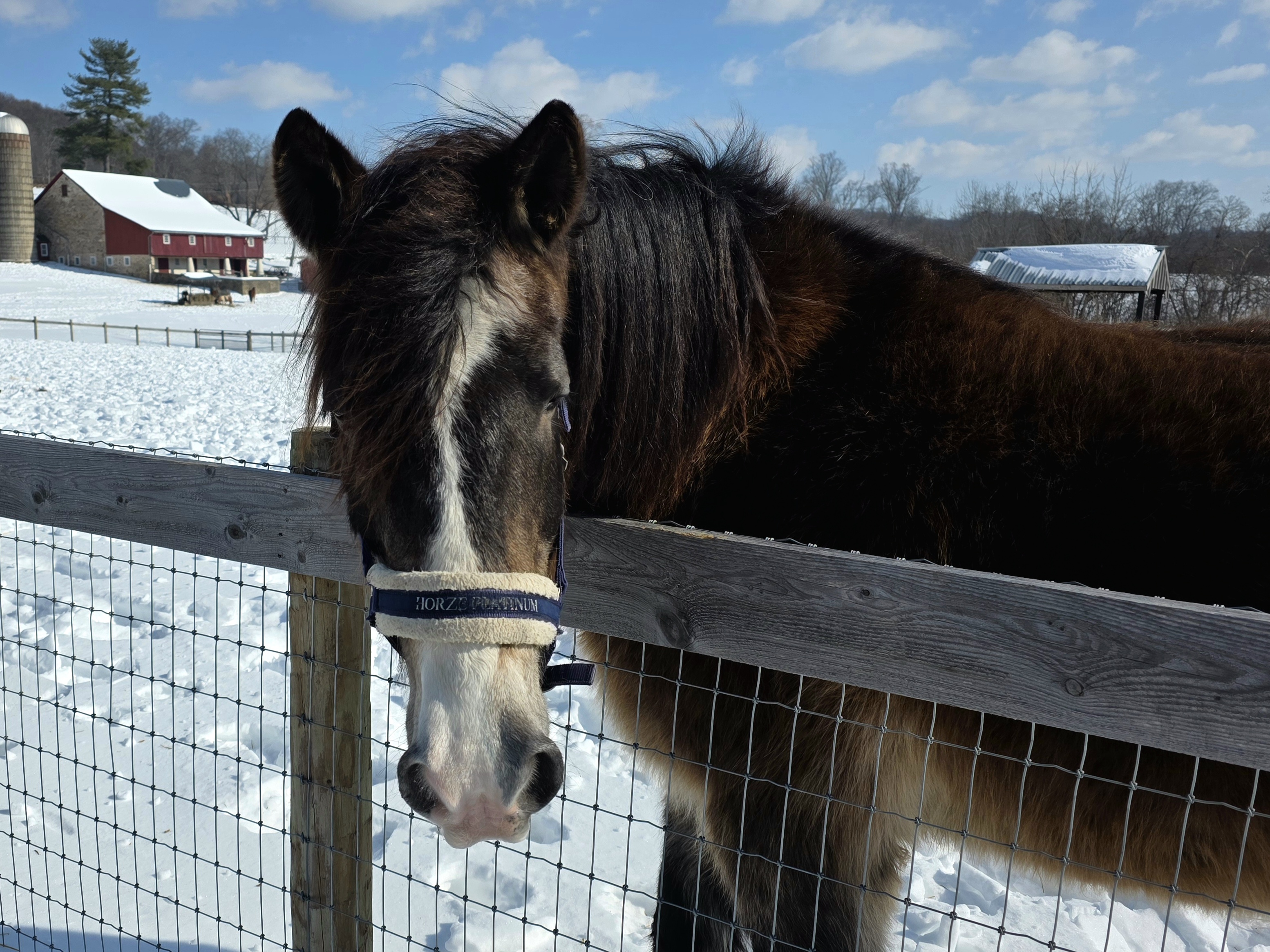
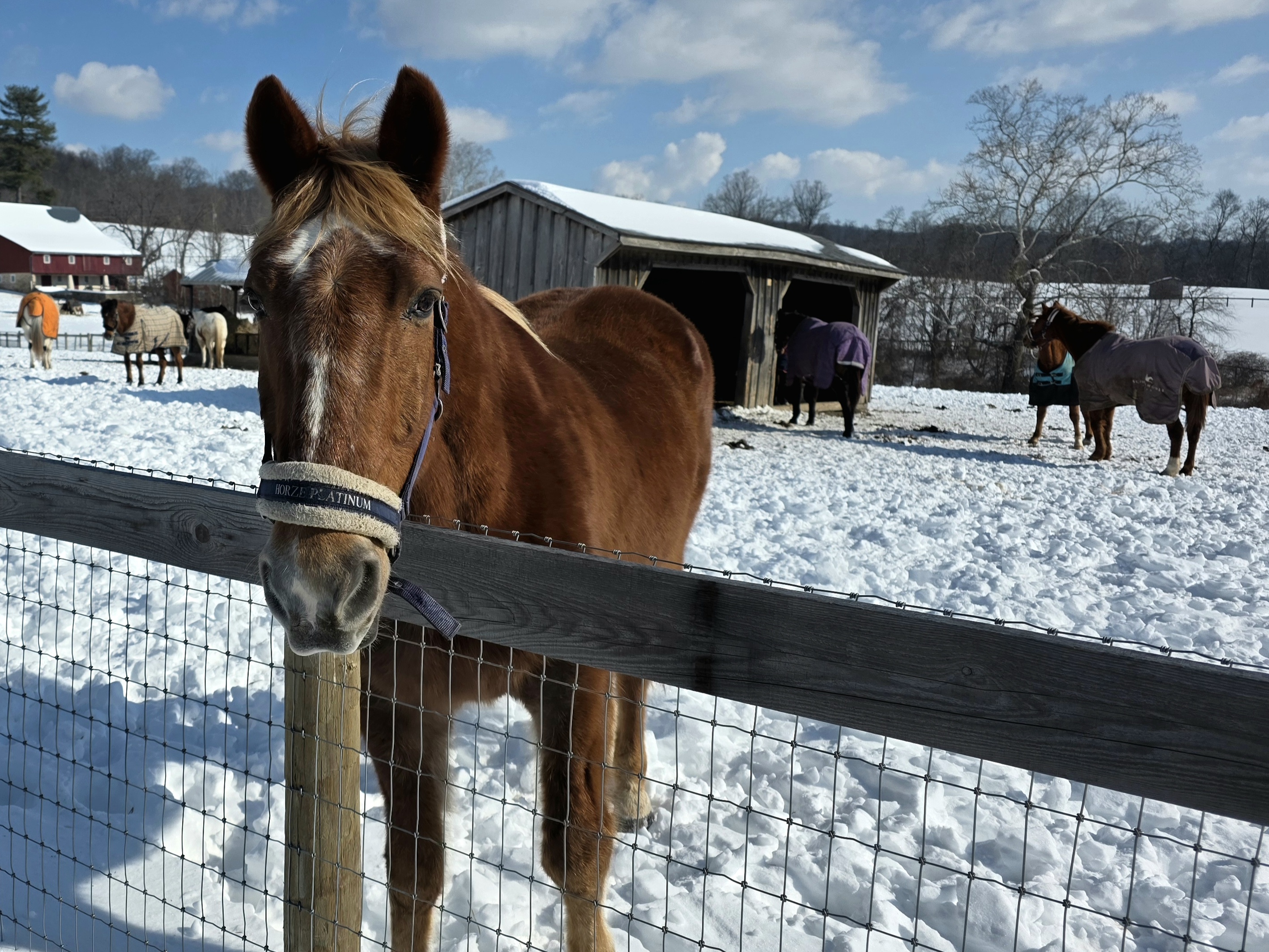
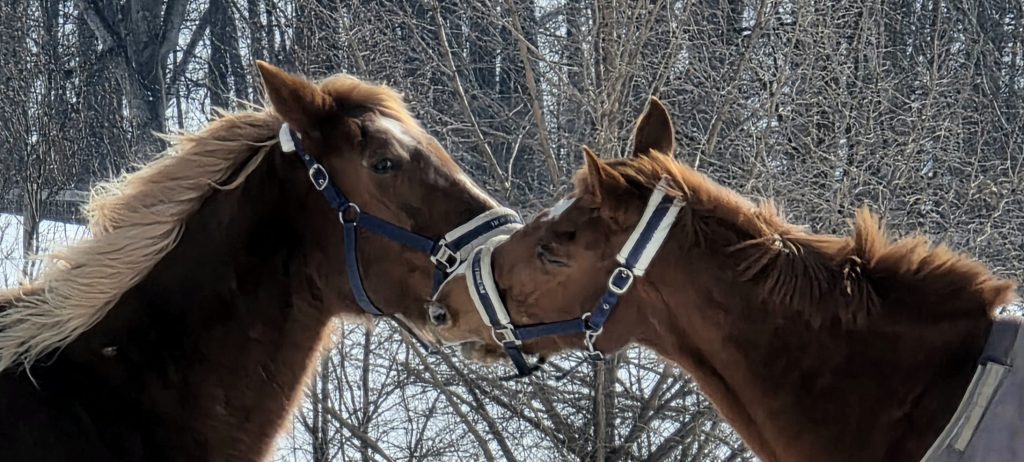
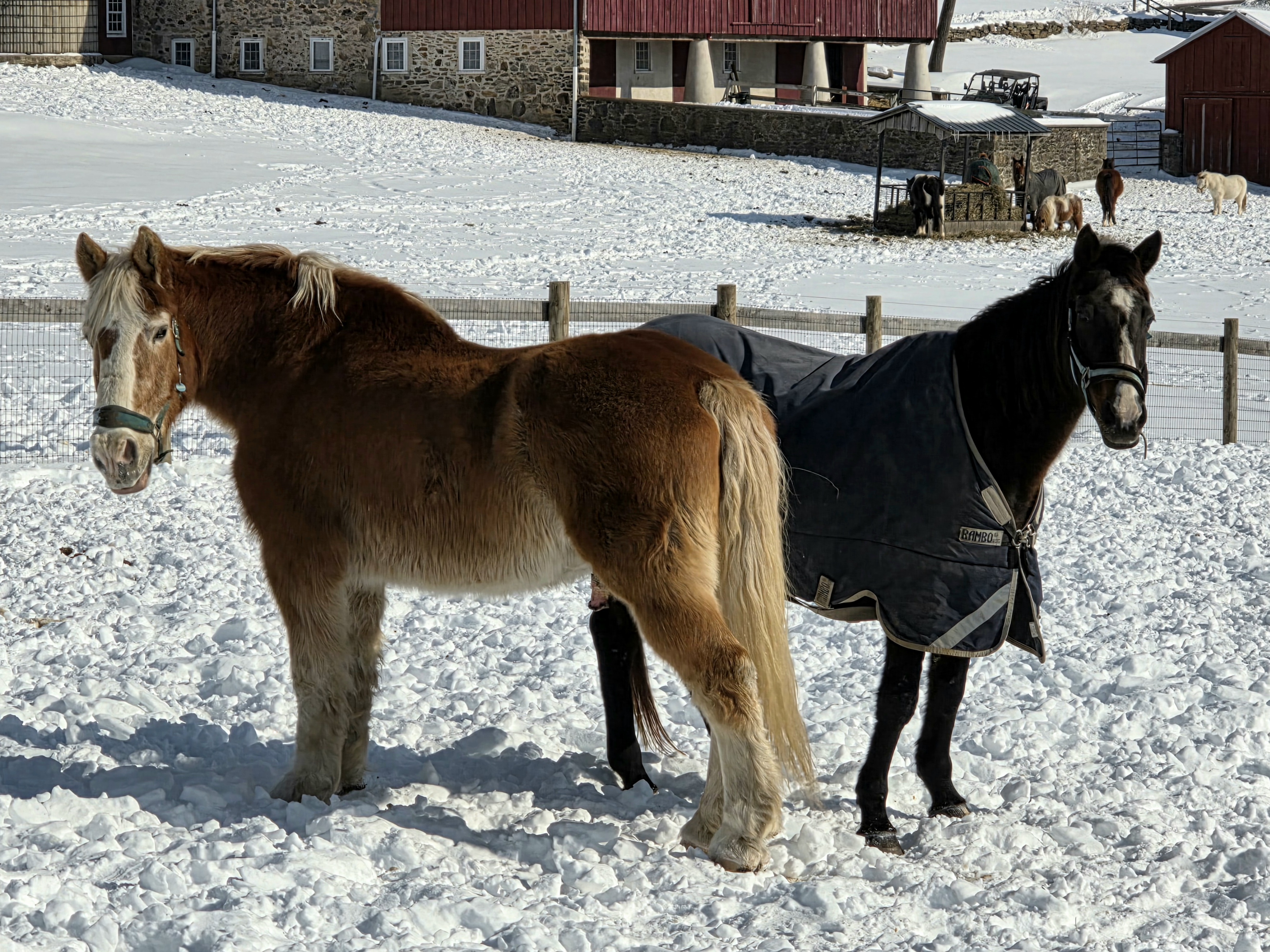
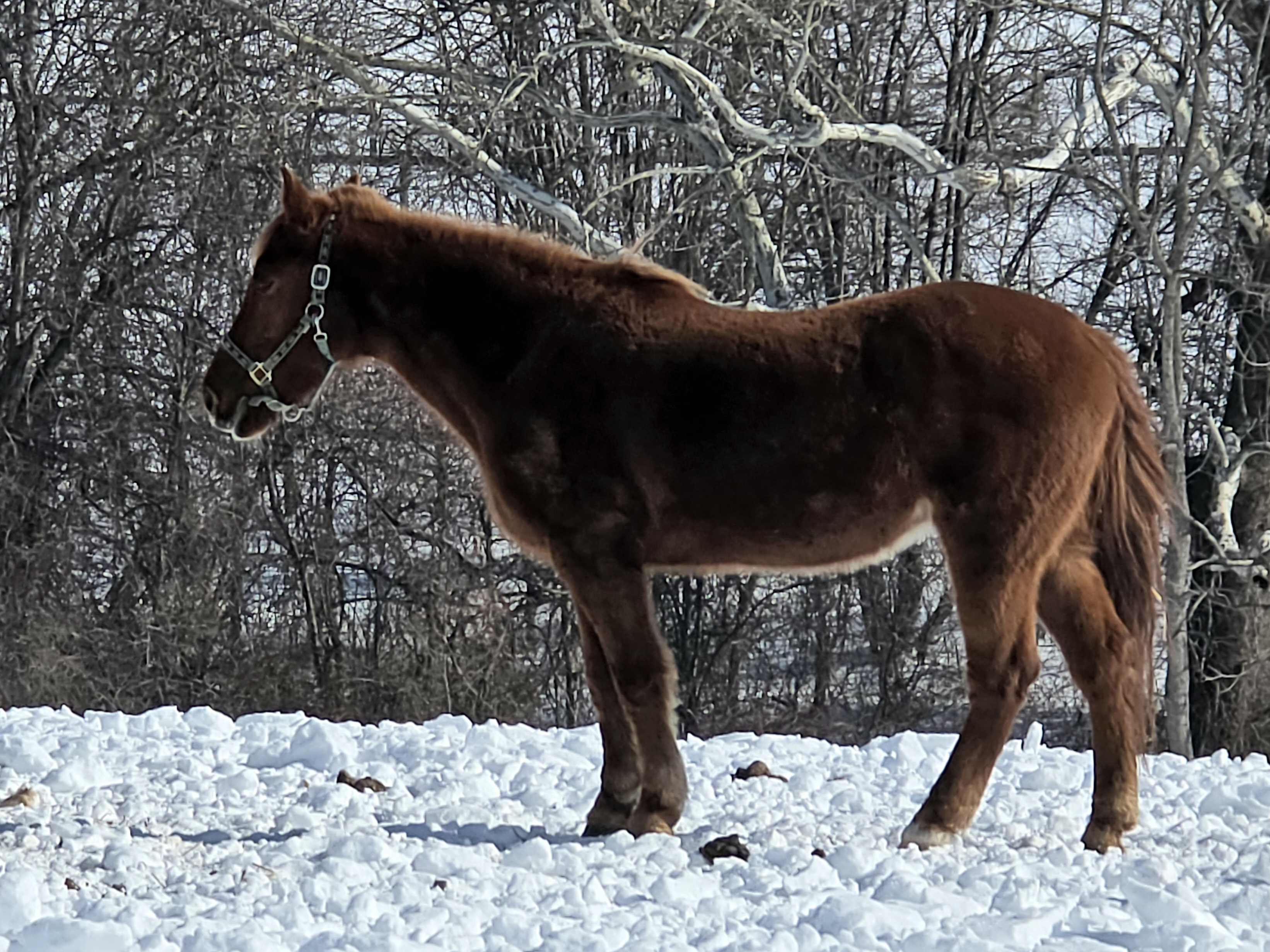
During my recent visit, I spent time with residents Chief and Colton, both of whom walked alongside me as I made my way up the hill. Even on a frigid day, the warmth and purpose of Ryerss was unmistakable. In those quiet moments, I was that same wide-eyed kid again, completely captivated by the strength, grace, and untamed beauty of horses.
From Anne Waln-Ryerss’ vision in the late 19th century to the Ridge Road pastures of today, Ryerss stands as a testament to compassion—a living history where kindness outlasts utility, and every creature is allowed to live its final years in peace.
Anne Waln Ryerss is buried at Laurel Hill Cemetery in Philadelphia. Founded in 1836, it predates Central Park and helped inspire Philadelphia’s own park system. In 1998, it became the first cemetery in the United States designated a National Historic Landmark—a fitting resting place for a woman whose legacy continues to shape humane care.
Visitors are welcome at Ryerss Farm year-round. The farm is open daily from 10 a.m. to 4 p.m. Admission is free, though donations are appreciated. A small on-site gift shop offers simple mementos; I left with two magnets featuring my beautiful new friends, Chief and Colton. Group tours are available by calling (866) 469-0507.
Ryerss Farm isn’t just a place to visit horses—it’s a community, and there are many ways to be part of it. On Saturday, February 22, from noon to 2:30 p.m., the farm will participate in Raise the Roof for Ryerss at Hares Hill Brewing Company in Pottstown, with 10% of food sales benefiting the horses. Spring brings another favorite tradition: the Easter Egg Hunt, held Sunday, April 12, from 10:00 a.m. to 12:30 p.m. Families are invited to explore the pastures, celebrate the season, and experience firsthand the calm, caring world of Ryerss Farm.


 Keystone Wayfarer
Leave your thoughts