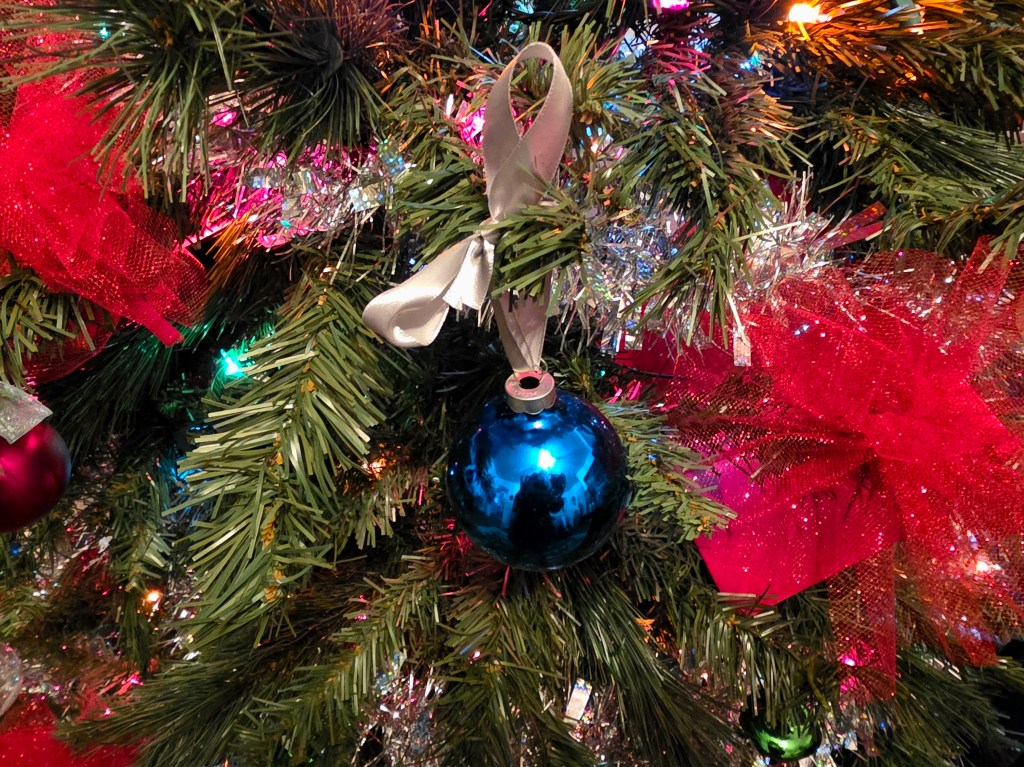
While my house is nearly two centuries old, there is no chimney from which to hang stockings with care. The house has its quirks—squeaky floorboards, stubborn doors, and absolutely no exact right angles—details familiar to anyone who lives in a home of similar age. For as long as I’ve lived here, and surely for the family who called it home for more than twenty years before me, a proper fireplace was never part of the plan. My husband doesn’t really do stockings, so everything works out just fine. Still, he happily digs into the one I fill for him each year.
In my family, stockings were essential. As kids, my brother and I would make a beeline for them first thing on Christmas morning—well, second only to hunting for the famed Christmas pickle, cleverly hidden somewhere in the tree by my stepfather, Jeffrey. Those oversized stockings held small but meaningful treasures, carefully chosen and faithfully replenished by my mom each year. There were snacks to tide us over until breakfast, little toys that felt surprisingly special in the quiet early morning, and always a fresh supply of Chapstick—practical, yes, but comforting in its dependable presence.
What I loved most about those Christmas stockings was the sense of continuity. The contents might change slightly from year to year, but the ritual stayed the same. It was a gentle way to ease into the day, a pause before the larger spectacle of wrapped gifts and family gatherings. And it wasn’t the size of the gifts that mattered, but the familiarity of the moment and the care behind it.
For many, the holiday season brings hustle and bustle—shopping, parties, and the start of the year-end checklist. But for just as many, it brings sorrow, a time to reflect on what we’ve lost over the past twelve months. 2025 has certainly held its share of heartbreaking moments for me and for many of my dear friends. I recently lost my beloved dog, Floyd, after a wonderful ten years. His wagging tail could lift my spirits even after a night of restless sleep, and his strikingly handsome face is one I miss seeing every single day. It truly hurts not having him here—to feel his sweet kisses, watch him do his “flipper” when excited for a treat, or see him drop and roll to show his belly if he hoped for a good rub. I take comfort in imagining him once again running and playing with his “sister,” Sable, and I find peace in the belief that the two earthly friends are reunited in the great beyond.

This year, I also lost my stepmother, Sandra B, as my dad always lovingly called her. I was working a show at the theater when I received a late-night call from my brother. That doesn’t happen often, so I immediately knew something was wrong. The next morning, I was in my car for the first of many trips up and back to Boston to be there for my dad. I have always known him as a man of strong resolve. No matter what he faced, you could never know the struggle he carried within. The day of her service was sunny, with a wind that blew my hair as I read the eulogy I had carefully written to celebrate and remember her. Each week since, my dad returns to her resting place to give her updates on how he is doing, surely always departing with a simple but meaningful, “I love you.”
Reflecting on these moments—losses, joys, and small rituals—reminded me of why Christmas has held such a special place for so many across the centuries. The holiday we celebrate tomorrow is the result of overlapping customs, beliefs, and cultural shifts. Its origins are both religious and secular, and its development tells a fascinating story of how people have long sought light, hope, and connection during the darkest days of winter.
At its heart, Christmas began as a commemoration of the birth of Jesus Christ, with early Christians observing the occasion in varying ways across the Roman Empire. By the fourth century, December 25 was officially recognized as the date of Christ’s birth, chosen in part to align with preexisting European winter festivals.
These festivals were rich with symbolism. The Romans celebrated Saturnalia, a week of feasting, gift-giving, and merrymaking in honor of the god Saturn. Meanwhile, Northern European cultures marked the winter solstice with Yule, bringing greenery into homes to represent life amid the cold and dark. Over time, these traditions gradually merged with Christian celebrations, leaving echoes of their joy in customs that still persist today.
Last year, I wrote about the history of Christmas trees, which first became popular in Germany during the 1500s, when families decorated small firs to symbolize life and hope during the dark winter months. By the Victorian era, these traditions had spread widely and began to take on the form we recognize today.
Among all these traditions, one figure has captured the imagination of children and adults alike for generations: Santa Claus. His story begins with Saint Nicholas, a 4th-century bishop from Myra, in what is now modern Turkey. Known for his generosity and secret gift-giving, Saint Nicholas became a beloved figure across Europe, particularly in the Netherlands, where he was called Sinterklaas. Dutch settlers brought the tradition of Sinterklaas to America in the 17th century, keeping the spirit of giving alive.
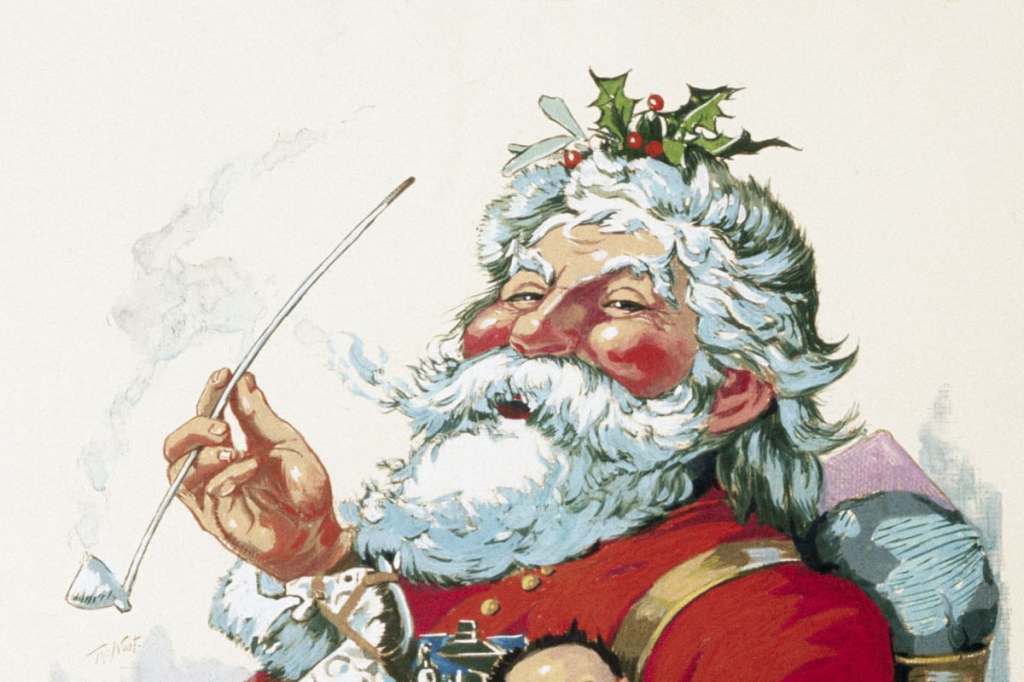
Over time, Sinterklaas merged with other European folklore figures. In Germany and surrounding regions, children were sometimes warned by tales of Krampus, a horned, mischievous figure who punished misbehavior, while the benevolent Christkind brought gifts to the well-behaved. In England, Father Christmas symbolized the joy and merriment of the season. In America, these various threads came together during the 19th century, particularly through literature and illustrations. Clement Clarke Moore’s 1823 poem A Visit from St. Nicholas and 19th-century illustrations by one of my favorites, Thomas Nast, gave Santa many of his iconic traits: a jolly man in red, a sleigh pulled by reindeer, and a home at the North Pole. By the early 20th century, Santa Claus had become the central figure of Christmas gift-giving in the United States, further popularized by department store promotions and advertisements, most famously the Coca-Cola campaigns of the 1930s.
Today, Santa embodies generosity, joy, and the magic of the holiday season, bridging centuries-old traditions and the personal celebrations that make Christmas meaningful.

This year, I reflected on what Christmas—and Santa—means to me personally. I didn’t send a letter, even though the Sellersville Post Office I visit often has a special mailbox marked “Santa Mail.” Instead, I found a photo and a few simple sentences for a dog named Rudy, looking for his forever home. The moment brought back memories of the day I bought this old house and, months later, drove to Pittsburgh to bring my Sable girl home after seeing her picture on Petfinder. I’m happy to say I’m making plans to meet halfway between my Pennsylvania home and that of Carol, a wonderful woman from Tennessee. In its own way, this feels like a Christmas miracle—Carol is the same woman who brought Floyd into my life. By giving Rudy a home, perhaps I am beginning a new holiday tradition, one that brings a smile to my face even after the losses of this past year.
From Keystone Wayfarer, we wish subscribers, casual readers, family, and friends a happy holiday. May you celebrate it in whatever tradition brings joy and peace to your heart.

 Keystone Wayfarer
Leave your thoughts