Most Mondays, you’ll find me elbow-deep in restoration work—trading the soft glow of my computer screen for dirt, lichen, and stone. By midday, I meet my good friend Rick Detweiler at Salford Schwenkfelder Cemetery, a short drive up Fretz Road just past the Kriebel farm in Souderton. Together, we move along the carefully aligned rows, spending hours scrubbing away decades of accumulated grime. Slowly, the names and inscriptions etched into these centuries-old markers reappear, as if they’ve been waiting patiently to be remembered.
The work is demanding, yet every stroke of the brush feels worthwhile—not only for the sake of cleaning, but because we’re reclaiming fragments of history. At first glance, this quiet roadside cemetery might seem ordinary, but it is far from it. Salford stands as one of the last surviving connections to the Schwenkfelders, a small Protestant sect that fled persecution in what is now modern-day Poland during the mid-1700s. Many of its modest stones, carved in fading German script, still bear witness to families who faced the unknown with courage.
I have to admit, emotion often rises to the surface during our visits. A humbling awe rushes in as names and dates come back into view. I like to think their struggles, triumphs, and quiet days are etched into the stones themselves—a reminder of how much history surrounds us in this corner of Pennsylvania, and how easily it can be overlooked.
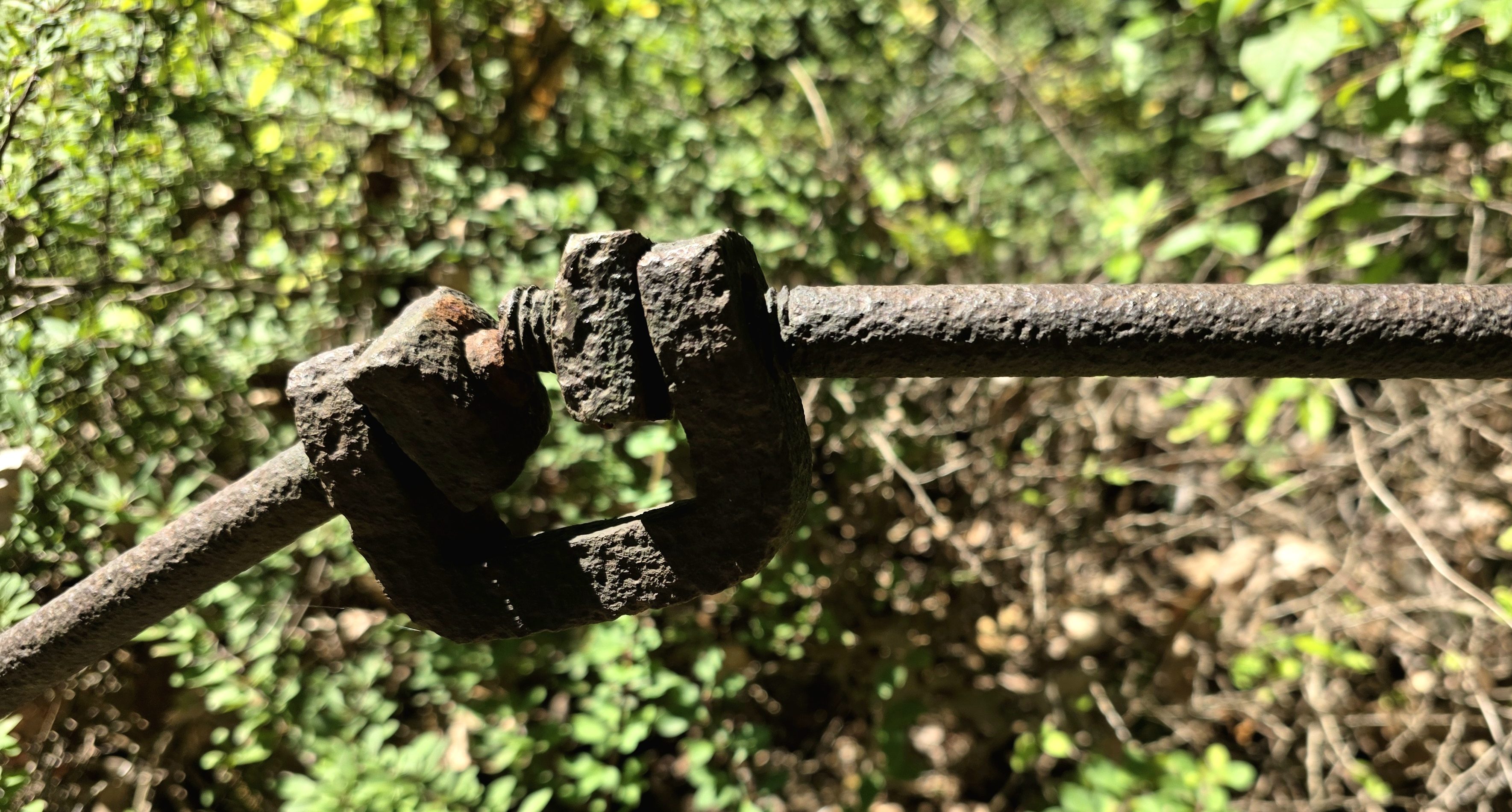
But not all cemeteries speak as clearly as Salford. Some whisper in legend, like the Hollowbush Burial Ground, a secluded plot tucked away on private wooded property in Zieglerville. At its center stands a solitary monument, guarded by twelve stone pillars linked with iron rails. Rising an impressive five feet, it commands quiet reverence. Its inscription tells a gripping tale: a courageous mother fleeing religious strife, crossing the ocean with her two sons after her husband was beheaded for his faith.
For years, this dramatic tale was widely accepted as truth. But, as with many legends, the real events were far different.

“In memory of Mother Hollowbush & sons Peter & Christian, Emigrated from the Palatinate Germany 1730 settled on this tract where they and relatives lie buried. Mother died 1745 Peter 1768 Christian 1778. Erected 28 Aug 1902 by descendants of nine generations.”
The Hollowbush story begins in the Palatinate region of Germany, a rugged landscape of small farming communities. Brothers Peter and Christian Hülpüsch—whose surname would later evolve to Hollowbush, Hollenbush, or Hilbish—immigrated in 1749 aboard the ship Two Brothers. Peter was born around 1699, Christian around 1701. That much is certain. Contrary to legend, their mother had died decades before they set sail, and their father lived and died peacefully. There was no persecution, no execution, and no courageous widow leading her sons across the ocean. The real journey was quieter but no less remarkable: two brothers venturing to a new land to build a life from scratch.
So how did such a vivid yet inaccurate tale become the family’s official history? As so often happens, the gaps of the past were patched with imagination and embellished memory. Many believe it was popularized by family historian Rev. John Allen Mertz, who helped erect the Hollowbush monument in 1902, and Rev. H. M. M. Richards who later cast it in even more dramatic tones in 1916. With little more than a Bible note or a half-remembered story to go on, early historians leaned heavily on oral tradition—which has a way of favoring the dramatic.
The story of “Mother Hollowbush” became a symbol of courage and perseverance, even if the tale itself had been embellished. The shaping of family histories into heroic or tragic narratives was common among early immigrant families, offering later generations a strong sense of identity and pride. After all, a grieving mother fleeing religious strife makes for a far more memorable story than the quieter reality of two brothers immigrating in midlife to start anew.


The Hollowbush monument reminds us how easily family stories can drift from fact into fiction. Despite good intentions, the memorial preserves a version of history that strays from the evidence—but also reveals something just as important: the stories families choose to tell often reflect their values, hopes, and sense of identity as much as the facts themselves.
Even with its inaccuracies, the monument holds power. It invites reflection on how stories—true or embroidered—shape our understanding of the past. And it raises questions: which details were chosen, which were exaggerated, and why? Could other secrets of this family still lie hidden in letters, deeds, or long-forgotten diaries?
Known to only a few locals and descendants, the Hollowbush monument illustrates how history blends fact, memory, and imagination. While its inscription contains inaccuracies, it still honors family perseverance. Each week, as Rick and I brush away layers of dirt at Salford Schwenkfelder, the Hollowbush story reminds me that legends can obscure as much as they preserve. Both fact and fable are part of the inheritance we carry forward, shaping memory and our connection to those who came before.
In the cemeteries where Rick and I work, these discrepancies echo all around us. They remind me that history is rarely pure fact—it is a weaving of memory, lore, and the stories families tell to make sense of the past. The markers we tend carry more than names; they hold echoes of forgotten truths, bridging memory and reality.
In the end, separating fact from fiction doesn’t diminish these stories—it enriches them. Legends reveal how families wanted to be remembered, while records show how they truly lived. Together, they create a fuller, more honest picture of the past—a deeper connection to those who came before us.
Do you have a unique memorial or sacred spot on your property? Share its story with us—we’d love to help uncover the history it carries.
The actual Hollowbush Story
The real Hollowbush story begins with two brothers, Peter and Christian Hülpüsch, sons of Johann Heinrich Hülpüsch and Anna Magdalena Schmidt. In September of 1749, after stopping in Rotterdam, they arrived in Philadelphia. They chose to settle in what was then Philadelphia County—now Montgomery County—where they quickly became part of the Lutheran and Mennonite communities as recorded in the books of Old Goshenhoppen Church. Over time, their descendants spread across the county and beyond, with some eventually reaching Snyder County and the town of Freeburg.
Peter’s life was marked by both joy and loss. He married Maria Christina Stroder in 1735, and together they had four children before tragedy struck. In 1744, Maria Christina died in childbirth with their fifth child. Later that year, Peter remarried Maria Dorothea Finckler, and five years later he brought his family across the Atlantic to Pennsylvania, where they settled on a farm near Zieglerville.
Christian married Anna Maria Reiffner in 1742 and also made his home in the same region. He died in August 1778, just one month after his wife. While records are silent on their exact burial places, it is generally believed the brothers and their families were laid to rest on their farms. The only exception appears to be Peter’s second wife, Dorothea, who was buried instead on her daughter’s farm in Marlborough Township.
In time, their descendants connected the family to “Mother Hollowbush,” believed to be Barbara Bickhart, the wife of Peter’s son Adam Hilbush. Adam had married Barbara in 1762 at Old Goshenhoppen Lutheran Church, and together they raised several children—Peter, Heinrich, and Christian among them. Later generations of the family are buried at Augustus Lutheran Church Cemetery in Trappe.
As historians Annette Kunselman Burgert and Henry Z. Jones Jr. note in Westerwald to America: Some 18th Century German Immigrants (1989), Christian’s line ended with his four daughters, meaning that all Hollowbush and Hilbish descendants in America trace their roots to Peter. When Peter died in 1768, he left behind five sons and four daughters, establishing the foundation for the generations that followed.
Every stone tells a story—and your support helps us preserve them. To contribute to our ongoing restoration work at Salford Schwenkfelder Cemetery, click HERE.


Leave a Reply