We think of heroes as larger-than-life figures, standing boldly in the spotlight. In popular books and movies, they wear badges, capes, or snazzy uniforms. Real heroes? They often pass us by unnoticed. Sometimes they’re neighbors or coworkers. Maybe it’s even the stranger behind you in line for morning coffee—until everything changes. In that instant, they rise. I’ve seen them. Chances are, you have too. Firefighters charging into burning buildings. Police officers holding steady beside crash victims. Nurses, teachers, and everyday people stepping forward when it matters most. In those moments, the ordinary become extraordinary—and the course of someone’s life is profoundly changed.
One image that will stay with me forever is from a day those of a certain age will never forget: September 11, 2001. As the towers burned and the city—the world, really—stood frozen in shock, first responders ran toward the devastation. They climbed smoke-filled stairwells to reach those trapped inside. They dug through rubble with bare hands. They gave everything—some, their lives—so others might live.
That day didn’t just change Manhattan—it reshaped the very meaning of bravery for an entire generation. More than twenty years later, it still reminds us that real heroes rarely seek attention. They simply show up.
Sometimes, they’re celebrated—like Captain Chesley “Sully” Sullenberger, whose calm leadership during the “Miracle on the Hudson” saved 155 lives. He was rightly honored not only for that day, but for a lifetime devoted to aviation safety and service. His actions changed the course of history—just like so many heroes do.
Today, as part of Keystone Wayfarer’s year-long series honoring remarkable Pennsylvania women, we remember one whose courage and choices embody the true meaning of heroism: Mary Johnson Ambler.
Mary was born on March 24, 1805, just outside Quakertown. Her parents, Benjamin and Abigail Johnson, belonged to the Richland Friends Meeting—a close-knit Quaker community grounded in faith, simplicity, and equality. Growing up, Mary spoke the “plain tongue,” using words like thee and thou, and referred to Wednesday as “Fourth Day,” following Quaker tradition to avoid pagan-derived names. If you’ve seen Robert Eggers’ 2015 film The Witch (one of my personal favorites), you might recognize that kind of language—authentic, old-fashioned English that lingers in the ear.
In 1829, Mary married Andrew Ambler, a young weaver with big ambitions. Soon after their wedding, she left her family home and moved to Montgomery Square to live with Andrew’s parents. When Andrew completed his weaving apprenticeship, he purchased a fulling mill along with 83 acres of land—laying the foundation for their new life together.
If you’re not familiar with fulling (don’t worry—most people aren’t), it’s an essential but unglamorous step in wool-making. The process cleans and shrinks woven wool using heat, moisture, and pressure, turning it into a warmer, more water-resistant fabric.

The Ambler mill had quietly served the community since 1731, but under Andrew’s care, it was brought back to life—with costly repairs, modern machinery upgrades, and a renewed role in the local economy. The mill would become the center of Mary and Andrew’s life together.
Mary and Andrew raised a large family—seven sons and one daughter. When Andrew died in 1850, Mary, in her mid-40s and weighing barely 100 pounds, stepped up to run the mill with her son Lewis. She was a force of nature—balancing the business, teaching preschool, leading religious education, and staying deeply involved in the Gwynedd Friends Meeting.
Then, on a sweltering July morning in 1856, everything changed.
Just a few miles from her home, two passenger trains collided head-on in one of Pennsylvania’s deadliest railroad accidents. Nearly 1,500 passengers were aboard—mostly Sunday school children and parishioners from St. Michael’s Roman Catholic Church, many of whom were headed to a picnic near Wissahickon Station.
At 6:18 a.m., joy turned to horror when boilers exploded on impact, unleashing a fireball that engulfed the first few wooden cars. Many victims weren’t killed by the crash itself but were trapped inside and burned. Those in the rear coaches—mostly women and children—were spared the worst. Fifty-nine people lost their lives, and more than a hundred were badly injured—most of them children.

When word reached Mary, she didn’t hesitate. She gathered what medical supplies she could find and walked the two miles to the wreck. There were no doctors, no emergency crews—only chaos, smoke, and desperate cries for help.
Without waiting for direction, Mary began tending to the wounded. She tore up sheets and petticoats for bandages. She organized other women to care for the injured and directed men to form a bucket brigade from a nearby creek. She had the presence of mind to turn wooden shutters into makeshift stretchers. And later, opened her home to the hurt and grieving, working tirelessly until every last person was cared for.
Firefighters from Chestnut Hill eventually arrived, but Mary’s calm and determined leadership had already made all the difference. Her efforts amid the chaos saved many lives, though the tragedy still claimed many others. Among the dead were Reverend Daniel Sheridan, one of the picnic’s organizers, and engineer Henry Harris, who was initially blamed for the accident. The other engineer, William Vanstavoren, survived but tragically took his own life days later. A coroner’s jury ultimately blamed conductor Alfred Hoppel for “gross carelessness,” though he was acquitted of manslaughter.
The Great Train Wreck of 1856—also known as the Camp Hill Disaster or the Picnic Train Tragedy—occurred between Camp Hill and Fort Washington stations. It was near a place I once called home. At the time, the North Pennsylvania Railroad was still young, having extended a new line to Wissahickon just the year before. This route opened the countryside to city dwellers, brought local farm goods to urban markets, and carried weekend crowds to popular picnic spots.
That July morning, the “Picnic Special,” pulled by a locomotive named Shakamaxon, left Philadelphia behind schedule and struggled to gain speed under its heavy load of passengers. A few miles up the track, the Aramingo train waited on a siding near Wissahickon, expecting to let the Special pass. But without telegraph communication and with delays mounting, the Aramingo crew assumed the track ahead was clear. After a fifteen-minute wait, they set out.
The Shakamaxon conductor hoped to make up lost time at another siding near Edge Hill, but fate had other plans. Both trains rounded a blind curve near Camp Hill at the same moment. Whistles screamed warnings, brakes slammed—but there was no time.
In the days following the crash, the North Pennsylvania Railroad offered financial assistance to victims’ families—mostly in company stock that later yielded modest dividends. In an unusual gesture of mourning, the railroad suspended operations the following Sunday.


Mary’s steady leadership and compassion made a profound difference that day. Her selfless response didn’t just save lives—it left a lasting legacy. She wasn’t looking for recognition; she simply did what was needed.
Life eventually returned to its rhythms. Mary kept running the mill, stayed active in her Quaker meeting, and even produced blankets for Union soldiers during the Civil War. She died in 1868, but her courage was not forgotten.
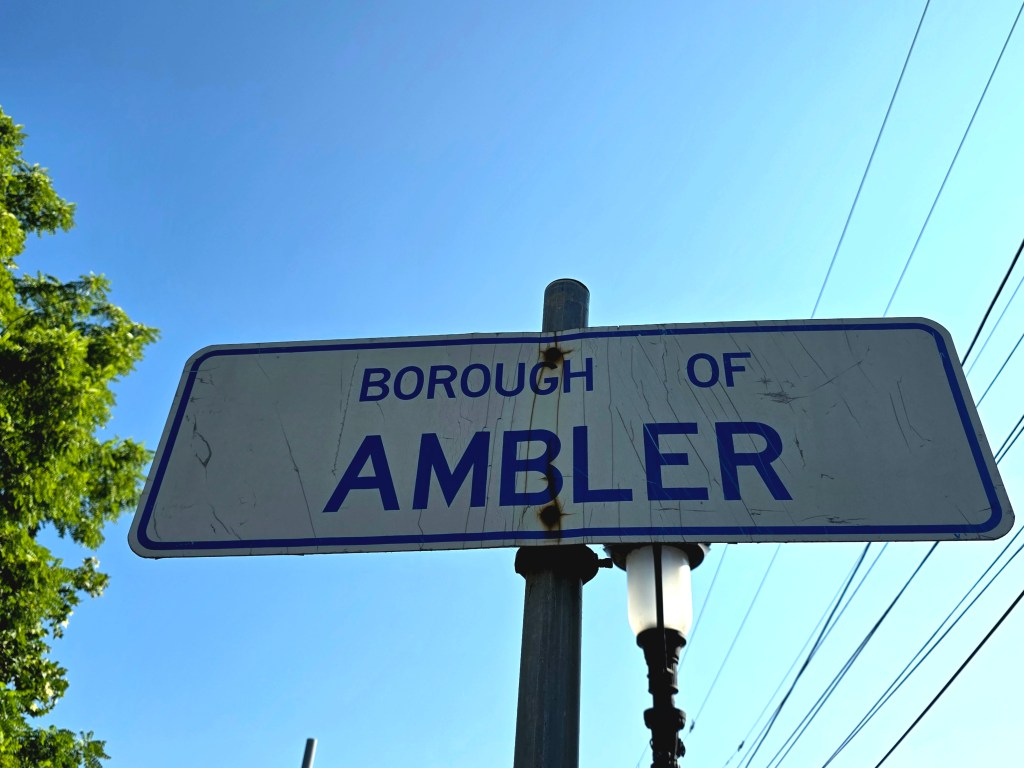
On July 20, 1869, the North Pennsylvania Railroad renamed Wissahickon Station “Ambler” in her honor. When the village officially incorporated in 1887, the townspeople kept the name.
Today, the town of Ambler stands as a living memorial—not just to a tragedy, but to the extraordinary woman whose strength rose above it all. Mary Johnson Ambler may have been small in stature, but her legacy is anything but. Her story reminds us that heroism isn’t always loud or visible. Most often, it’s found in the quiet strength and compassionate action of those around us.


Gwynedd Township’s Historical Advisory Committee has approved a marker to be placed at the intersection of Sumneytown and DeKalb Pikes. Once known as The Great Road and The State Road, this crossroads was called Gwynedd Corners during the 18th and 19th centuries. At the northwest corner stands the Gwynedd Friends Meeting, established by Welsh Quakers in 1699, where Mary Ambler—hero of the Great Train Wreck of 1856—is buried. On the southwest corner is the William Penn Inn, established in 1714 and recognized as Pennsylvania’s oldest continuously operating inn.
Thanks to the wonderful members of Gwynedd Friends Meeting for graciously welcoming Keystone Wayfarer to tour their historic grounds.


 Keystone Wayfarer
Leave a reply to James Adams Cancel reply