Progress is exciting, isn’t it? A new phone drops, and suddenly the old one feels like a relic. A medical breakthrough hits the news, and the future instantly feels brighter. A new app launches, anticipating your needs before you even name them. We crave that momentum — faster, smarter, easier. But beneath the buzz, there’s another story.
Progress rarely comes free. Every leap forward leaves something behind. Maybe it’s the time we once had — for real conversation — now replaced by the tapping of keys. Or the quiet space to be simply still.
These losses don’t come with fanfare. They’re never in the flashy promo video. Instead, they surface quietly — after the applause fades. And that’s when we notice what’s missing.
Sometimes, what progress erases isn’t just moments or attention — it’s entire communities. The flooding of towns to create lakes or reservoirs has always struck me. Places like Galena, Nockamixon, and Wallenpaupack — my personal favorite — now draw visitors for fishing, boating, or basking in the sun. But beneath those calm, shimmering surfaces lie silent remnants of once-thriving places: homes, schools, churches, even graveyards. Entire lives uprooted, landscapes altered forever — all in the name of progress.
Industry tells a similar story. In the rush toward economic growth, whole towns have vanished. Ghost towns are abandoned, hollowed out by collapse or change. Lost towns, in contrast, are swallowed whole — by water, concrete, or city sprawl. What’s left is absence, and for some, a half-remembered past.
Which brings us to this week’s story.
Port Kennedy is a town few remember, yet it holds the echoes of something more unsettling: deliberate erasure. Its name lingers in maps and memories, but the town itself is gone — not lost to disaster or neglect, but removed by design.
If you drive along the eastern edge of Valley Forge National Historical Park, near the intersection of Routes 422 and 23, it’s easy to overlook what once stood there. Few realize the stretch between the Welcome Center and the Schuylkill River was once a bustling industrial village.
Before the Revolutionary War, the area was quiet farmland. That changed in 1803 when Mordecai Moore sold a large tract to Irish immigrant Alexander Kennedy. Kennedy discovered that his 128-acre farm sat atop rich limestone deposits. He built small kilns — first to improve his own soil, then to sell lime to neighbors. Industry took root. The area became known as Kennedy Hollow.
Alexander died in 1824. With no will, his wife Margaret sold the land to David Zook, a successful lime merchant who saw its potential. Meanwhile, Alexander’s youngest son, John Kennedy, was still a boy. As he came of age, John tried different ventures, but eventually turned back to the family land — and transformed it.
By 1850, John had become the region’s top lime dealer. Under his leadership, Kennedy Hollow grew into a true industrial village: Port Kennedy.
At its peak, Port Kennedy had more than sixty houses and an equal number of lime kilns. Local businesses employed over 400 men. A large three-story hotel anchored the town, alongside shops, factories, and lumber and coal yards. It was a self-sufficient industrial hub.
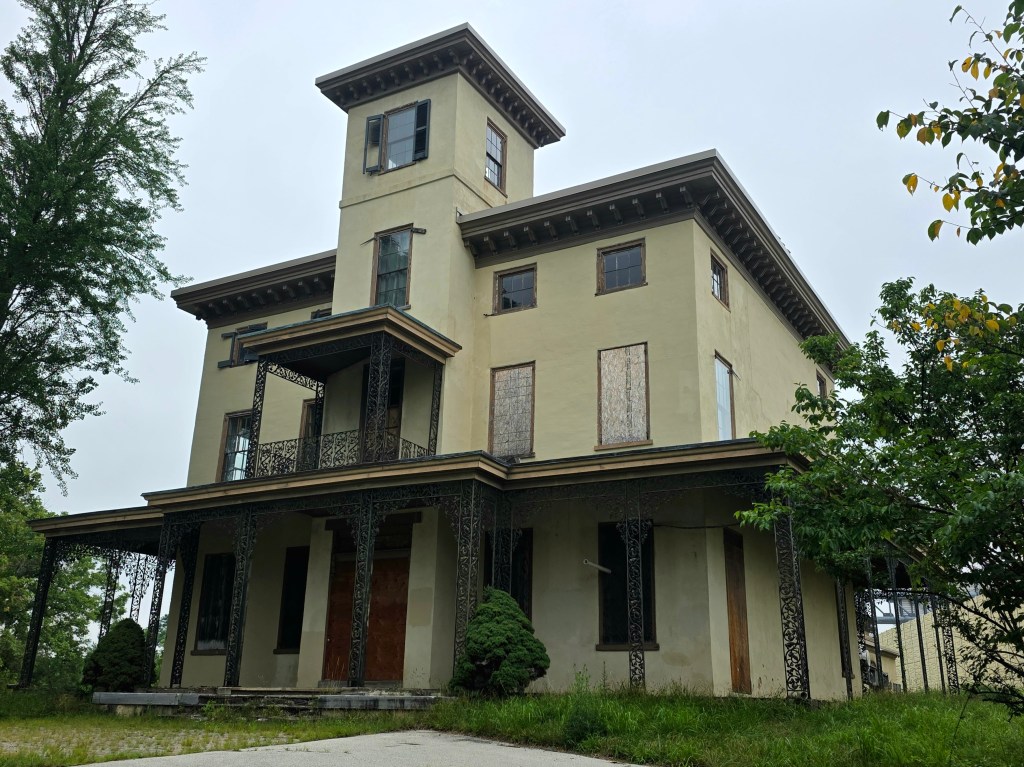
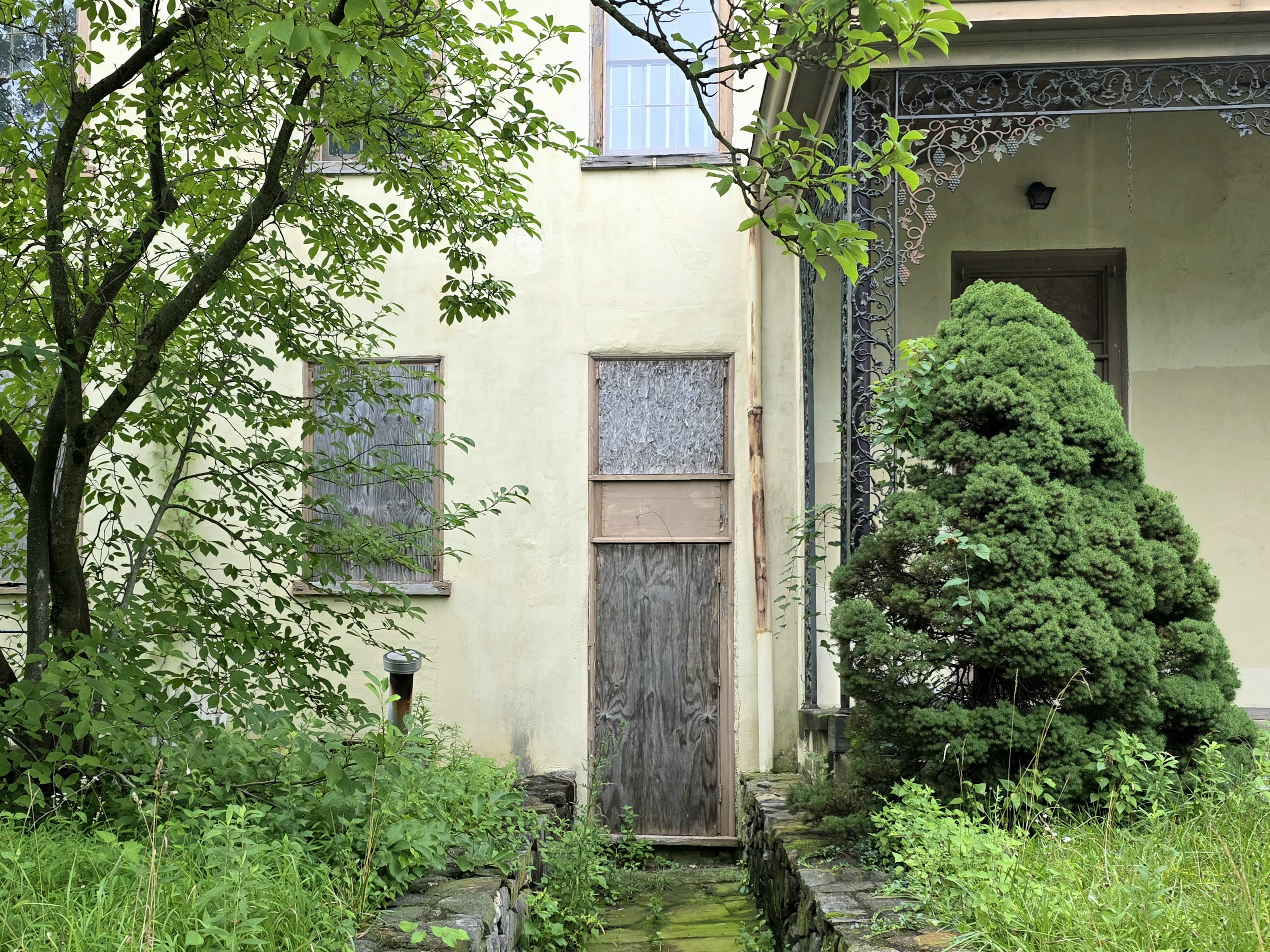
In 1852, John built a grand Italian Villa–style mansion called Kenhurst. Perched on a rise with sweeping river views, the hipped roof, ornate tower, and exquisite details made it a rare architectural gem — not a country estate, but the heart of a working community.
In 1911, the mansion passed to the Supplee family — local bankers with ties to the dairy industry. J. Henderson Supplee, a Civil War veteran who had fought at Antietam and Gettysburg, lived there until his death in 1936. He was said to be one of Montgomery County’s last surviving Civil War veterans.
Around this time, the Valley Forge Park Commission began reshaping the region. Backed by a $250,000 state appropriation, they started condemning homes, businesses, and even the hotel. Countless locales were slated for demolition.
In the years that followed, especially after World War I, additional funding accelerated the teardown. In 1929, eighteen of the town’s lime kilns — once the engine of its economy — were demolished. The transformation was nearly complete.
By May 26, 1937, even more land had been condemned to expand the park and modernize local roads. Gradually, Port Kennedy was being wiped from the map.
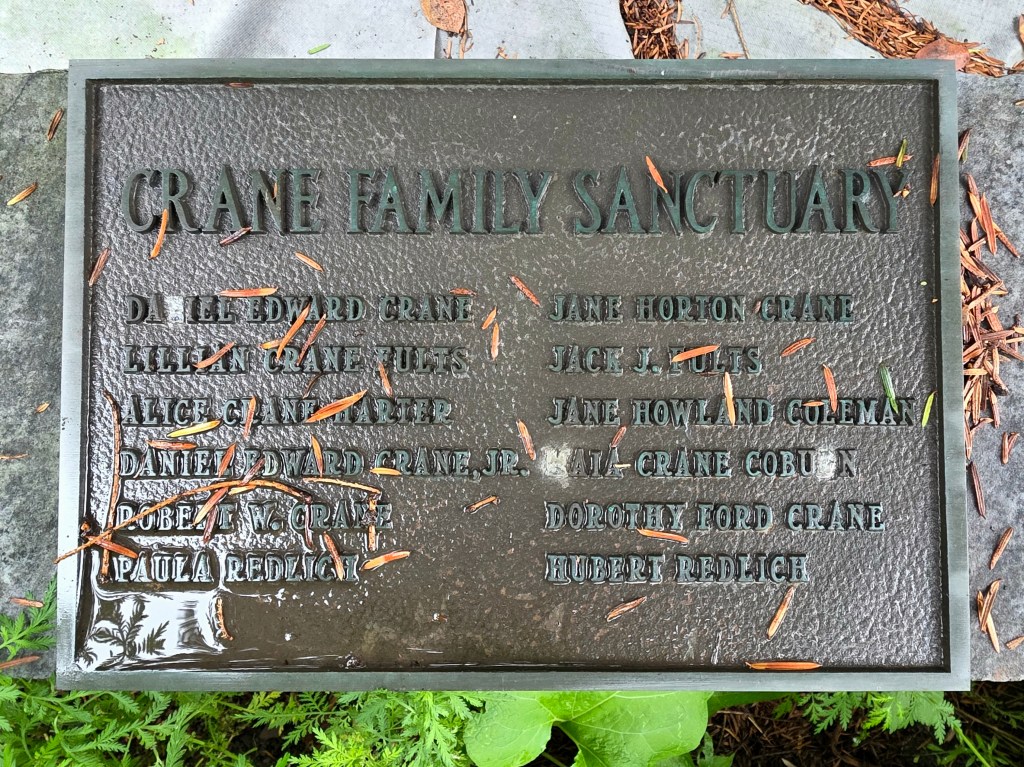
In 1947, the Crane siblings purchased the mansion. Maia Crane, an avid horticulturist, cultivated a nursery specializing in pink dogwoods. Her brother, Daniel Crane, a designer for Wanamaker’s department store, converted part of the mansion into his studio.
In 1956, tragedy struck. Jane Howland Coleman, daughter of Alice Crane, was killed in a car accident. In her memory, the family donated five acres to the nearby Presbyterian church for a burial sanctuary. Ten family members are said to be buried there.
Eventually, the Cranes sold the estate to the Commonwealth of Pennsylvania to make way for Route 422’s expansion. The new expressway cut straight through what remained of Port Kennedy, physically dividing the mansion from the church that had served the village for generations.
Though Port Kennedy still appears on maps, it no longer exists. Its post office officially closed on October 26, 1973 — a quiet administrative decision that symbolically closed the book on a once-thriving town. All that remains are records, ruins, and memory.
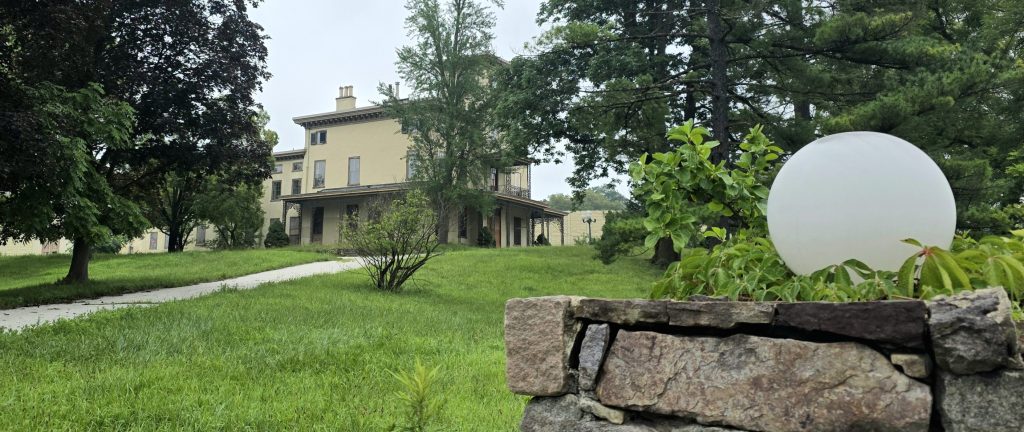
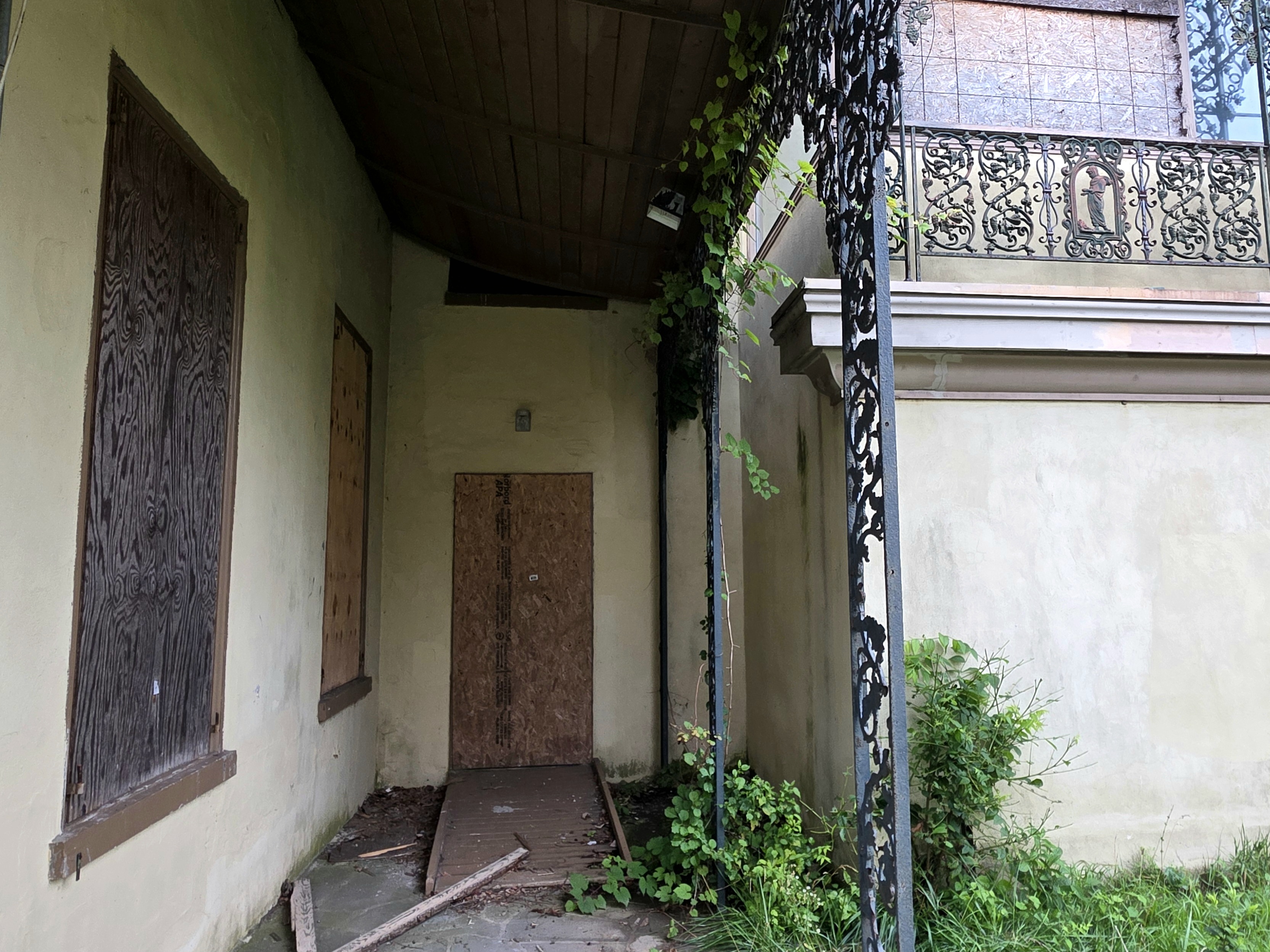
Today, the Kennedy-Supplee Mansion stands as one of the last physical traces of Port Kennedy’s past. Vacant for over two decades, its graceful silhouette and exquisite craftsmanship endure — a rare survivor of an erased community.
But now, there’s a new chapter.
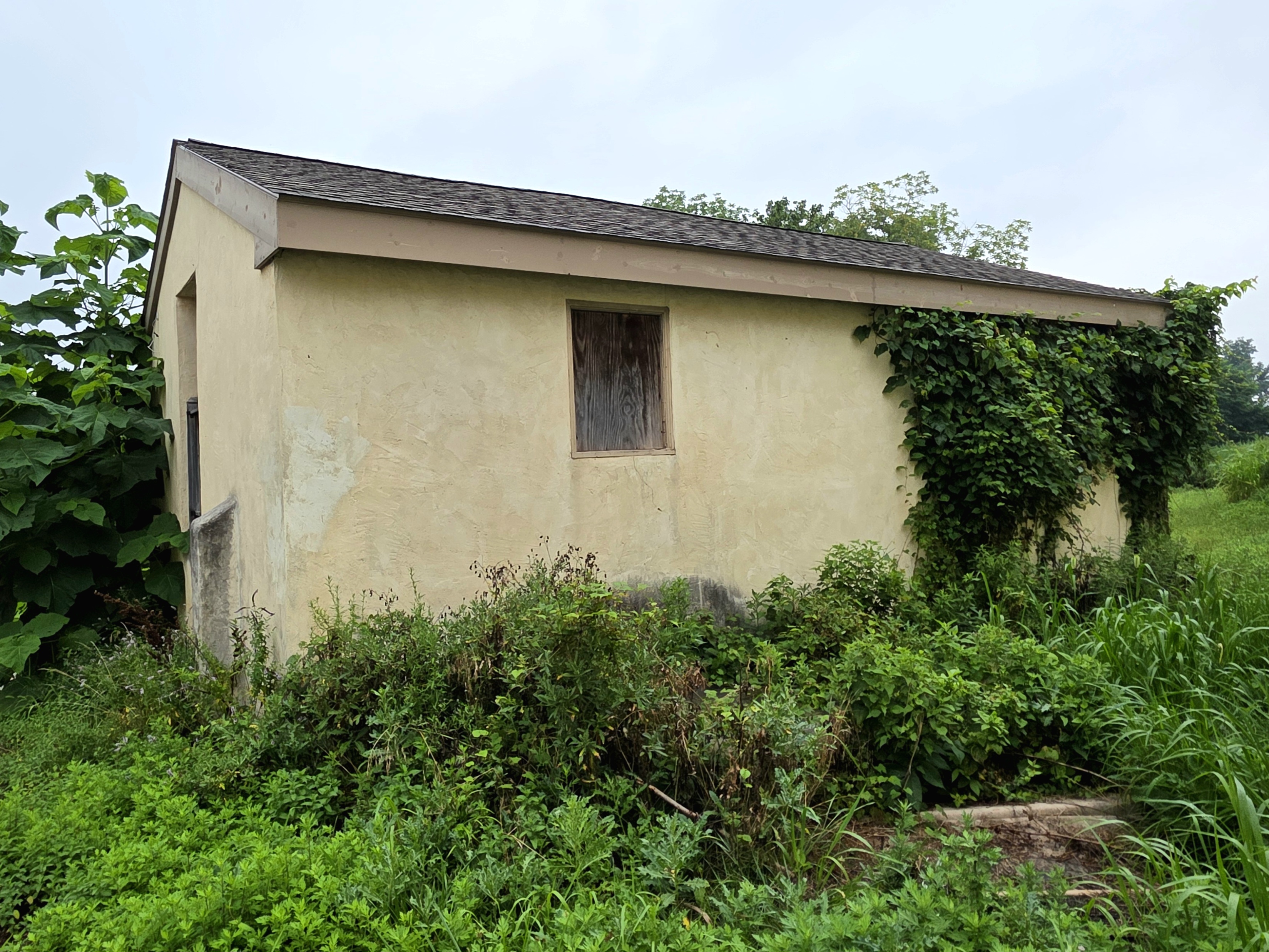
Last month, the National Park Service began seeking a new tenant. A 10-year lease is on offer for the 8,000 square foot mansion, carriage house and its 4.5-acre grounds. Proposed uses include a restaurant, event space, or coworking hub — and this time, there’s real investment behind it. A $10 million federal grant, part of the Great American Outdoors Act, is funding the restoration, with Valley Forge receiving a total of $32.5 million.
It’s a twist of fate: the very institution that once oversaw the town’s erasure now works to preserve one of its last landmarks.
Maybe, in restoring this place, we find more than just history. We find a way to honor the people, communities, and stories that progress too often forgets — a reminder that moving forward doesn’t have to mean leaving everything behind.


 Keystone Wayfarer
Leave a reply to Cox ® Cancel reply