
Most of the time, we pass through towns without ever truly seeing them. A name flashes by on a roadway sign, a row of storefronts slips past the car window—and just like that, we’re gone. We don’t stop. We don’t wonder what lives were lived there, or what still lingers behind.
But something felt different the first time I drove down Main Street in Schwenksville. I didn’t know then that I’d one day call it home. Even just passing through, I felt something stir—a quiet sense of belonging, like the town had been waiting to be noticed.
Sometimes, as I walk through this small town, I imagine the people who came before me stepping along these same paths. Their voices seem to ride the breeze—whispers of a time long past, yet somehow still present.
As I’ve come to learn, in Schwenksville, history isn’t tucked behind glass or buried in archives. It’s out in the open—etched into the street names, pulsing through the buildings, and carried in the lives of neighbors who’ve lived here for generations.
If you’re like me, you’re not just drawn to the charm of this place—you’re drawn to its stories.
To truly understand Schwenksville, we have to go back—way back—to 1640, when England was gripped by religious conflict. King Charles I had borrowed heavily from many, including Admiral Sir William Penn of the Royal Navy. But before he could repay those debts, Charles was executed.
Years later, his son, Charles II, settled the debt by granting land in the American colonies to Penn’s son—also named William. That land became Pennsylvania.
William Penn arrived in 1682 with a radical vision: to build a colony where people of all faiths could live and worship freely. He welcomed settlers from across Europe—including Germans and Swiss—who would go on to establish communities like Germantown and, eventually, the early roots of Schwenksville.

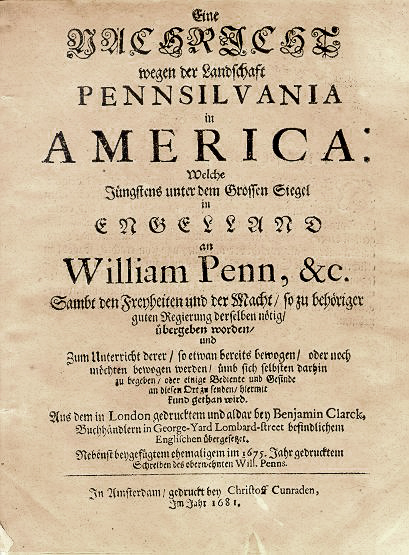
Among those settlers was George Schwenk, brought to America in 1739 by his parents, Hans Michael and Mary Elizabeth. The area—then divided between Frederick Township to the north and Skippack Township to the south—attracted early immigrants with its rolling hills, fertile soil, and the steady bounty of the Perkiomen Creek. These families planted deep roots and gradually shaped the foundations of the town we know today.
Back then, towns weren’t named for prestige but for the people who left their mark. That kind of naming—organic, grounded in presence—is something I’ve always loved. It speaks to connection.
Now it’s unlikely George Schwenk ever imagined a place bearing his family name, but the legacy fits. He and his family helped shape not just the economy and physical landscape, but the spirit of resilience and belonging that still defines this place.
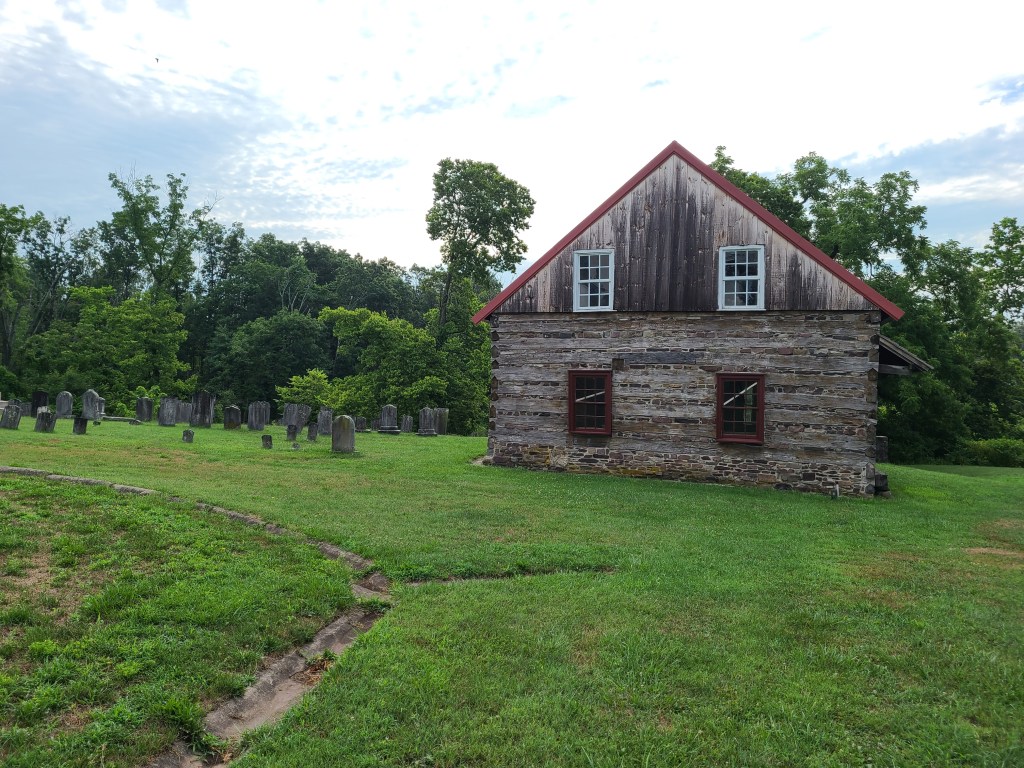
Like William Penn, the Schwenks were a faithful family. Local accounts note that The Schwenks were key members of the Old Goshenhoppen Lutheran Church in Upper Salford Township. Like many churches of the time, Goshenhoppen was a Union Church—shared by Lutheran and Reformed congregations. The original log gemeinhaus, serving both as church and schoolhouse, still stands today behind the current stone church. It’s the oldest surviving building of its kind in North America. Hans Michael died in 1773 and is believed to be buried there.
On April 30, 1751, George married Veronica—“Fronica”—the daughter of Major Jacob Markley. They raised seven children: five sons—John, Jacob, Abraham, Daniel, and George—and two daughters, Maria and Elizabeth.
A few years later, on September 24, 1755, George was officially naturalized during a session of the Pennsylvania Supreme Court in Philadelphia. In that moment, he formally embraced the country he and his family would help shape for generations to come.
The Revolutionary War tested the young nation—and its communities. Religious and cultural lines splintered. Pacifist Quakers refused to fight, and even Lutheran and Reformed congregations struggled to remain united. But others joined the cause. Volunteer groups called “military associators” began forming, and by 1775, they were officially organized by township.
As the British advanced on Philadelphia, the Continental Congress created the Pennsylvania Militia, requiring all able-bodied white males aged eighteen to fifty-three to enroll. George Schwenk—listed as “Swanck” in Benjamin Bertolet’s Camp Pottsgrove—served in Captain Michael Dotterer’s 6th Company, alongside 43 other men from Frederick Township, including his son Jacob.

“As I’ve learned about my family lineage, especially about my ancestors who settled in the Schwenksville area, I’m amazed at how well they thrived in America,” says descendant Melissa Schwenk Weinstein. “They became successful tradesmen, businessmen, politicians, and farmers. They rubbed elbows with other movers and shakers of that time—Muhlenberg, Markley, Krauss, Ziegler, Bromer, Antes, Pennypacker, Hartranft. When I drive through Schwenksville and other local municipalities and see buildings that were built by or lived in by family ancestors, I feel proud.”
That pride—that enduring legacy—resonates deeply with those of us who call this place home today.
Over the years, George Schwenk’s landholdings stretched from Frederick Township to Norristown. The original family property, on the west side of Old Goshenhoppen Creek, was purchased by his father in 1747 and passed to George in 1752. George later sold that land to Henry Boyer.
In 1765, George bought 200 acres from David Heebner. The deed described it as adjoining “other lands of said George Schwenck”—likely referring to the original homestead. Nestled in the gentle curve of the creek, he farmed the land and ran his blacksmith shop. I like to imagine George, day after day, repairing tools and crafting implements—many made for the men laboring in the nearby copper mine, the first of its kind in the state.
“I often think about my ancestors who made their living as tradesmen,” shares Weinstein. “They had valuable skills that helped them prosper in America. I reflect on how my love of gardening has been passed down through the generations—stories of my great-grandfather’s farm, wandering through my grandparents’ vegetable and flower gardens, and helping my father plant, weed, and harvest our backyard garden. While I may not have the skills of a blacksmith, my passion for creating useful things with my hands—quilts and baskets—has been passed down. I like to believe those seeds were planted long ago by George Schwenk and his wife, carried forward through the generations.”

By the time Schwenksville was officially incorporated in 1903, it was already a modest but thriving hub. The Perkiomen Creek powered local mills and carried goods downstream. The town’s early trades—milling, tanning, farming—shaped not only its economy but its identity: self-reliant, grounded, quietly strong.
The farm that once belonged to George Schwenk left the family’s hands long ago. By 1913, the land belonged to Samuel Faust. But even as ownership changed, traces of the past remained. Out beyond the fields, tucked near the creek, lay a small family cemetery—the final resting place of George and Fronica Schwenk, their children, and later generations.
By 1929, it was nearly forgotten. Weeds crept in. Tombstones cracked. The family legacy was at risk of vanishing.


To save it from destruction, members of the Schwenk family stepped in, preserving a vital piece of their legacy before it could be erased. Founded in 1906, the Schwenk Family Association preserved the burial ground. They restored headstones, carefully placing the original stones flat on the ground where they had rested for so long—a quiet tribute to history and memory.
Today, people walk the Perkiomen Trail. They circle for parking at Snoozy’s Café. They browse handmade gifts at The Olde Country Cupboard. Life moves a little faster now, but the town’s heart hasn’t changed. That quiet strength—first kindled by George Schwenk and carried through generations—still pulses through Schwenksville.
And now, every time I drive down Main Street, I feel that same gentle pull—the one that first whispered, You’re home.
This is the first in a three-part series exploring the legacy of the Schwenk family.


 Keystone Wayfarer
Leave a reply to dawnslade Cancel reply