
I was never the typical little girl. While others played with dolls and hosted tea parties, I found joy in a different world. Sure, I had my Charlie’s Angel Hideaway House tucked in the corner of my childhood bedroom, but that was more of a novelty than the rule.
My adventures unfolded outside, alongside my brother and neighborhood friends. We were a creative bunch, spending summer’s transforming scrap wood and discarded materials into secret lairs. As those precious days sprinted toward autumn, we’d often turn our driveway into a roller hockey rink—racing around on skates, dodging makeshift cones, and taking amateur hook shots at nets made from old crates.
Goalie pads? Forget store-bought gear. We scavenged foam from a local carpet store’s dumpster, shaping it into crude but functional armor. Those days were pure, unfiltered joy.
My brother, two years younger in both age and wisdom—though he’d argue otherwise—spent countless hours with me. He had his toys, like a collection of gleaming Matchbox cars. He had the occasional toy train, though it never caught his interest the way it did for other boys. While they eagerly set up tracks, he preferred to create his own worlds, where the rules were his own and where the trains could never go.
Today, he’s a site supervisor for an independent general contractor. Before this relatively new position, he worked as a public works water specialist, ensuring clean water flowed to homes. The same hands that once lined up those tiny cars were now used to maintain something far greater: the lifeblood of his community.
As I’ve grown older, those childhood adventures with my brother have faded into memory. Still, I often find myself chasing the same sense of wonder I knew as a child. It isn’t always easy to find—but sometimes, the universe surprises me.
Take last autumn, for instance, when I finally took a chance on a roadside attraction that had always caught my eye. I’d passed it countless times, wondering what lay beyond its locked gates—but I never stopped to find out. Until one day, when I saw that the gates were open.
A surge of excitement shot through me, and in that moment, I felt like a kid again. I nearly forgot to check the road—if someone had been behind me, I could’ve caused a pile-up. Shaking the thought away, I turned around, parked, and grabbed my phone.
As I walked toward the gates, a rush of cautious excitement swept over me. Was I really allowed to be here? Then I saw them—two men walking toward me. My heart raced. Was I trespassing? I called out, “I’m probably not supposed to be here, right?” One of the men smiled, his eyes twinkling with amusement. “Kind of, but come on in.”
With a grin so wide it felt like it might split my face, I stepped into the world of Pennsylvania Live Steamers. My tour guide, Jim Adams, radiated excitement as he welcomed me, his eyes lighting up with every mention of steam whistles and iron wheels. He led me between the multiple buildings scattered across the property, each housing meticulously maintained mini locomotives—each one a piece of living history.
As he spoke about the club, it was clear this was more than a hobby. Founded in 1946, Pennsylvania Live Steamers is an all-volunteer organization devoted to preserving the tradition of railroads. Their mission? To educate the public on the design, construction, maintenance, and operation of live steam railroads.
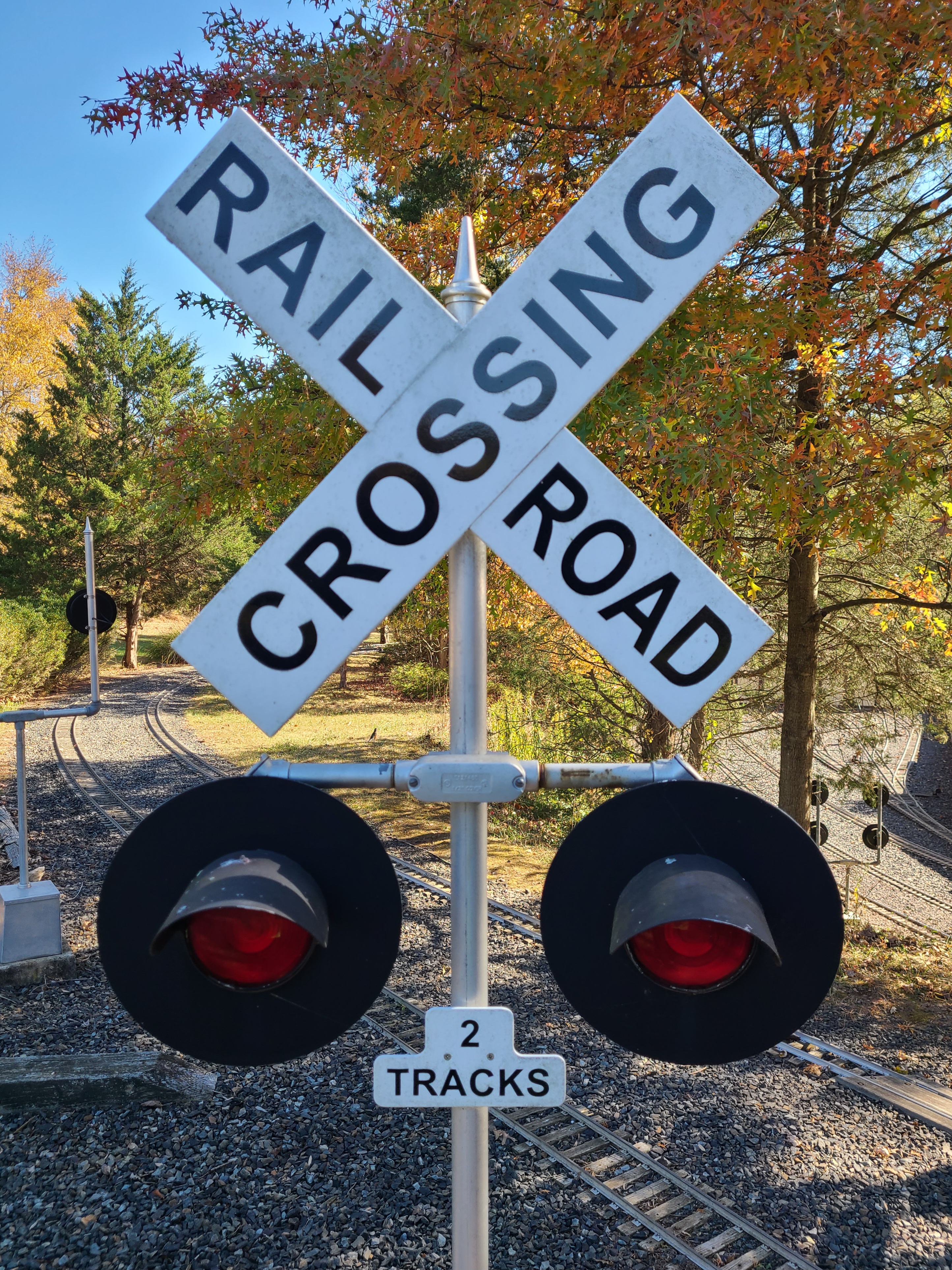
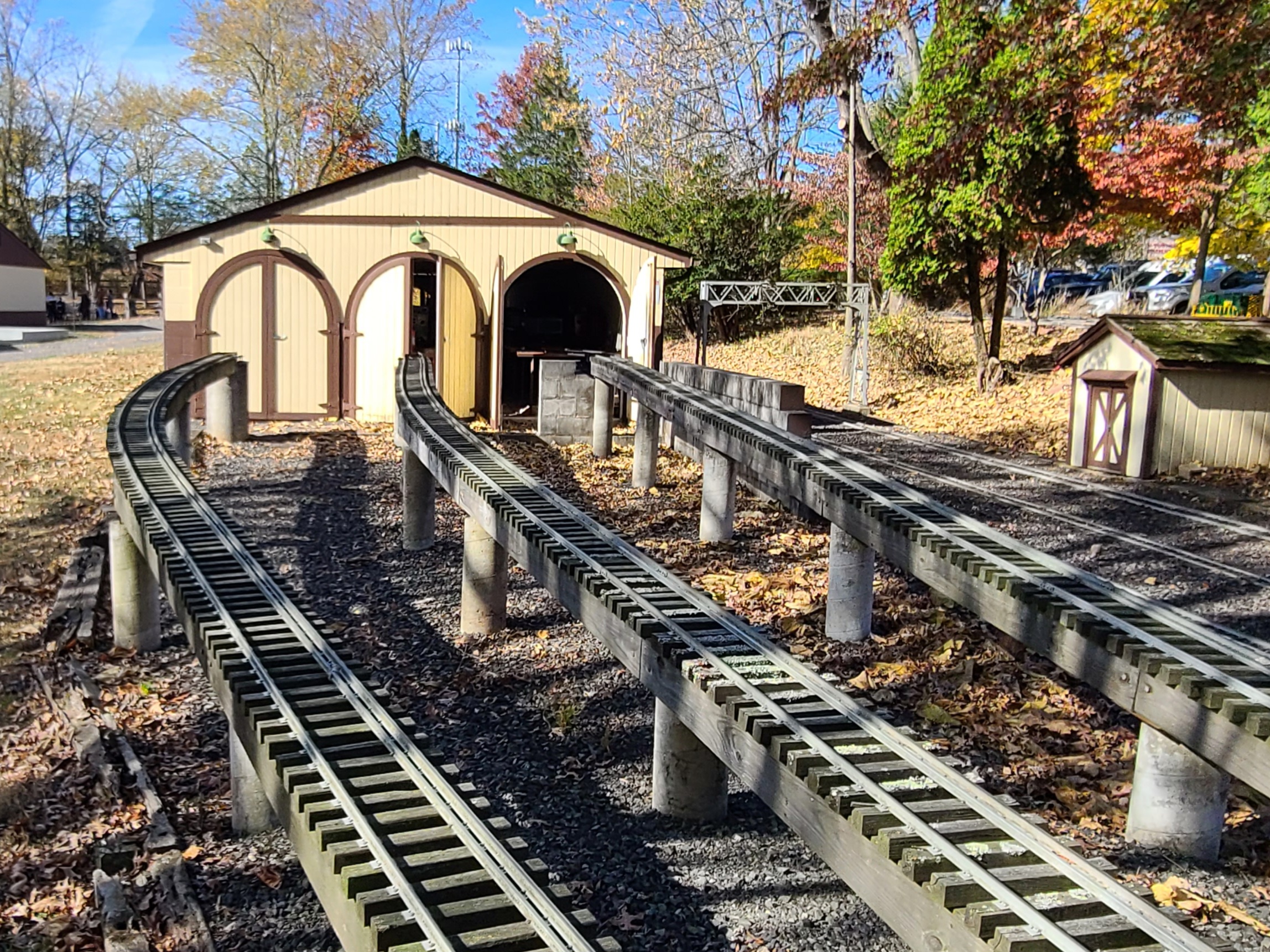

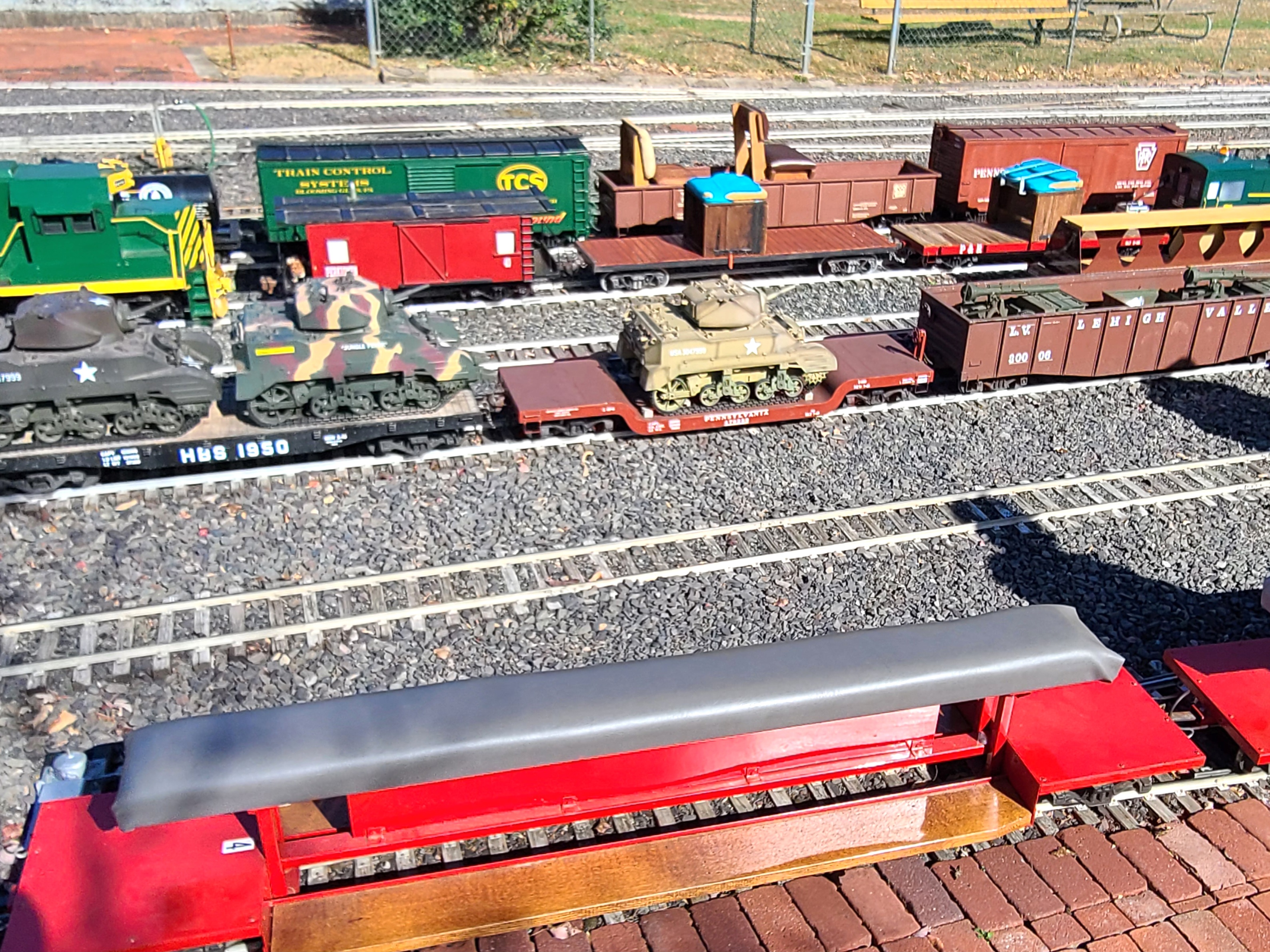
Jim’s enthusiasm was contagious, especially as he described the expansive five-acre site nestled beside PECO’s local service building and across from the Perkiomen Township Fire Company—another all-volunteer organization committed to community service. That day, Jim was busy painting, touching up various parts of the club’s grounds. His brushstrokes seemed to breathe new life into the place, making it look as cared-for as the trains themselves.
Though he’s only been with the club for three years, Jim’s impact has been transformative—reshaping tracks, revitalizing landscapes, and improving walkways. “One of my first tasks was to strip out and reinstall about thirty-five feet of track at the road crossing near the entrance,” he explained. “A tree root had grown in one side of the trench and tilted the track, causing the trains to derail. Since then, I have replaced all the ties of the two lines coming in and the one line going out of the turntable area, wire-brushed and painted the turntable and thirteen steaming bays, and worked on the station and walkways.”
The meticulously maintained grounds feature a total of 6,500 feet of usable track, primarily focused on three different scales: eighth, twelfth, and gauge-1. Each scale caters to a variety of railroad enthusiasts, providing a diverse experience. On run days, a portable “O” scale track for model trains is occasionally set up for special events, adding even more variety to the club’s offerings.
While all this technical detail might seem overwhelming, there’s a certain charm in the diversity of gauges. As Jim explains, “The standard gauge for most railroads is 4 feet 8.5 inches, which actually traces back to the ruts left by Imperial Roman chariots—look it up, it’s true!” He continues, “1-inch to the foot scale, or 1/12 size, uses a 4¾-inch gauge, while 1½ inches to the foot, or 1/8th size, comes out to a 7 ¼ gauge track.” His easy, conversational tone makes all the particulars just a bit more digestible—yes, it’s okay to chuckle.
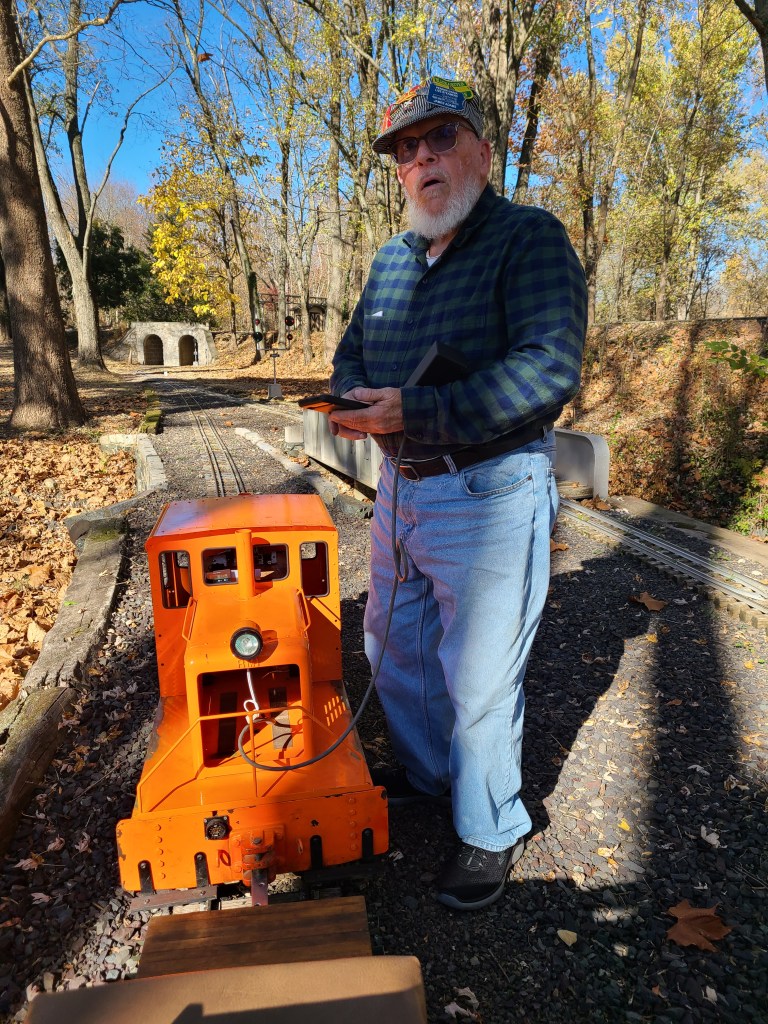
Jim’s technical know-how, honed during his years as a sonar technician in the Navy, shines through in his work at Pennsylvania Live Steamers. From meticulous track maintenance to the preservation of the club’s historical structures and signage, his attention to detail is unmistakable. Stationed in Massachusetts from 1968 to 1971, Jim operated and maintained sophisticated sonar systems critical to the Navy’s underwater operations. The role demanded not only advanced technical skill, but also a deep understanding of subtle environmental cues—an instinct for precision that now serves him just as well on dry land. This experience has translated seamlessly into his work at the club, where precision and attention to detail are paramount.
The love of trains has been a constant in Jim’s life. Growing up just around the corner from Frankford Junction, he witnessed the Pennsylvania Railroad in its final days of steam and the early days of diesel. He affectionately recalls, “My first, and fondest, memory is of my father in Kensington, sitting in our living room with pencil and paper, sketching. He’d draw, assess the part, then either keep it or toss it until he had exactly what he wanted. Once satisfied, he’d declare the basement off-limits. After hours of banging and cutting, he’d let us downstairs to play with the new Lionel layout for a couple of months. Then the process would start all over again.” Those early experiences with trains were foundational to his lifelong passion.
Pennsylvania Live Steamers has endured Mother Nature’s wrath over the years due to its location. Hurricane Ida derailed the club in 2022 when water from the Perkiomen Creek breached its banks due to excessive rainfall and debris gathering under the various bridges that span it. “Water rose as high as the bottom of the third storage rack in Building 3, flooding engines, rolling stock, and ruining electrical systems,” Jim recalls. “The club engine got water in the hydraulic system and needed a complete rebuild. Steam engines had to be blown out, and mud had to be washed out of all the cars. The clubhouse got so wet that the walls had to be stripped down to the bare studs and rebuilt with new drywall. Gas engines on the locos, lawn mowers, and trimmers had to be flushed and cleaned up too.” This resilience is part of the spirit that keeps the club alive, even in the face of adversity.

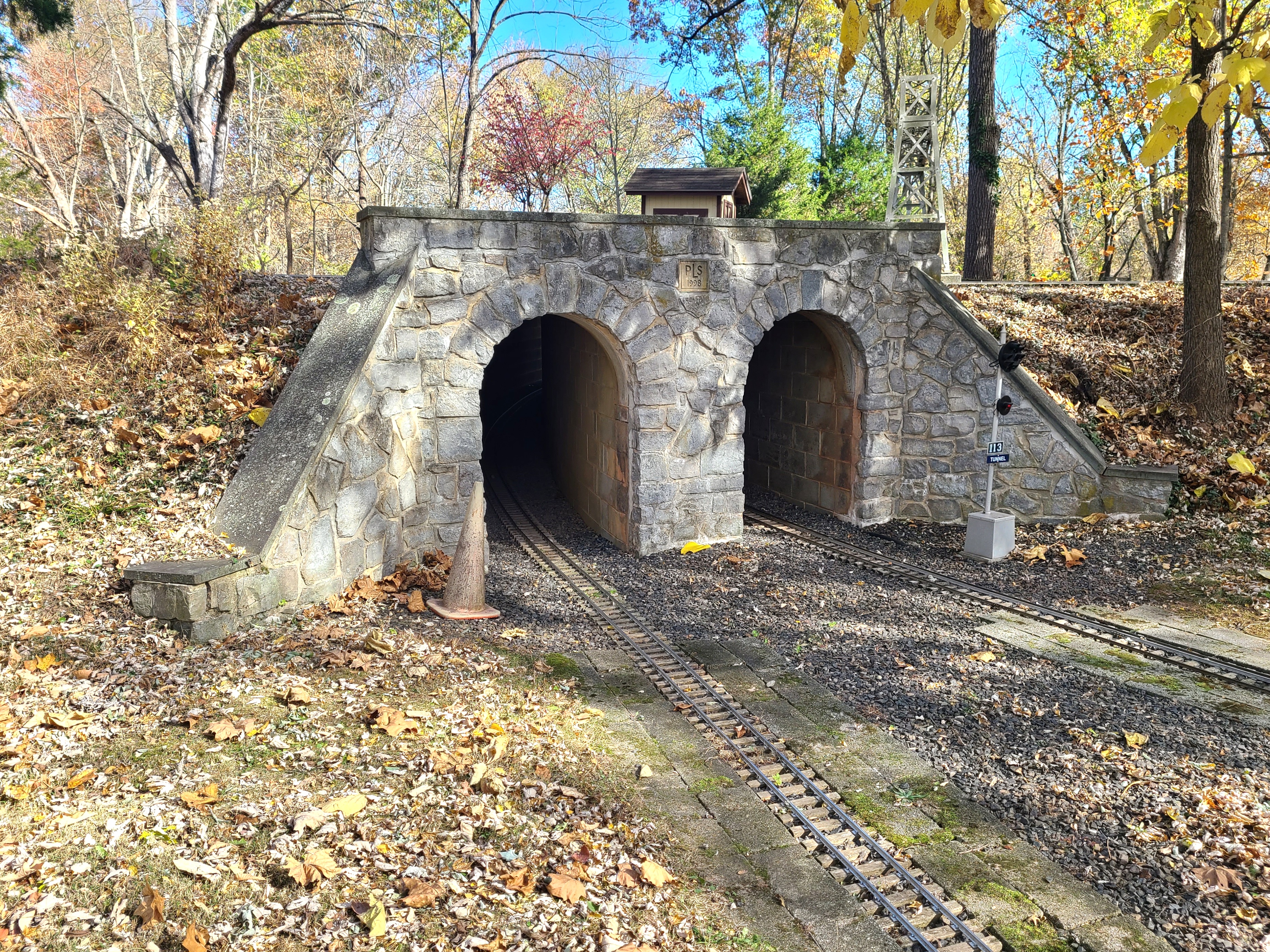


Jim, who over the past half year has become a dear friend, was recently on the ballot for club elections. His first-time bid was unsuccessful, but he plans to try again next year. I look forward to seeing him continue his work there, and I plan to join him on the back of his orange engine nicknamed “The Flaming Pumpkin” during the first run day of 2025. Set for April 27, this event marks the season’s opening and offers an exciting opportunity to witness—and even ride on—four types of locomotives that call Pennsylvania Live Steamers home: live steam, mechanical, hybrid models, and pure electric or battery-powered engines. Non-members interested in attending can contact the PLS secretary at secretary@palivesteamers.org for more information. Additionally, township residents are invited to join the fun on May 31st during the Perkiomen Community Days.
As for Lionel, the company was founded in 1900 and reached its peak in the 1950s for its model trains. After selling to General Mills in 1969, it has continued to produce trains under the Lionel, LLC name. In 2006, Lionel’s electric train was inducted into the National Toy Hall of Fame.


 Keystone Wayfarer
Leave a reply to Cox ® Cancel reply