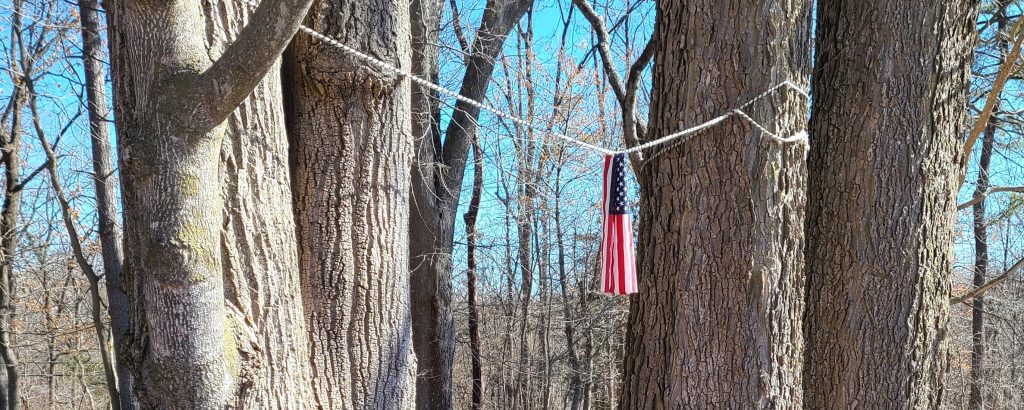
Faith is a word that takes on different meanings depending on who you ask. Its definition is deeply personal and, for many, constantly evolving. For me, faith has always been more than a set of religious teachings or an abstract concept. It’s been an ongoing journey of learning how to trust, persevere, and hope through life’s uncertainties.
In my youth, faith felt like a sturdy anchor, tightly bound to religion. It offered assurance and a deep sense of belonging—something I could always count on. Most Sundays, I sat in church next to my brother and father, enveloped in the familiar hum of hymns that filled the nave and the rituals that marked the steady passage of time. Faith was something I could touch in the rhythm of the hymns, something I could breathe in the quiet moments of prayer. It was tangible.
But as I grew older, doubt began to creep in. It started with simple questions—small cracks in the once-solid foundation of my beliefs. Debates about religion—its merits and flaws—planted seeds of skepticism. The teachings that once felt certain began to unravel, and the sense of security I once took for granted began to slip away.
With each passing year, my weekly church visits grew more infrequent, and with them, much of the certainty that faith had once provided. The rituals that used to comfort me started to feel distant, as if they no longer spoke to the person I was becoming. Yet, even as the structure of my faith shifted, I began to realize that it wasn’t gone—it had simply changed, one that was less certain but perhaps more honest.
Historically, faith has been a driving force in shaping the decisions of those whose actions have influenced what and how we believe today. One such example is William Penn, whose vision for Pennsylvania was deeply rooted in his faith. A devout Quaker, Penn embraced principles of religious tolerance, equality, and peaceful coexistence—values that were radical in his time. When King Charles II granted Penn the land that would become Pennsylvania in 1681, he saw it not just as a gift, but as an opportunity to create a “Holy Experiment”—a sanctuary where people of all faiths could worship freely, without fear of persecution.
Penn’s faith wasn’t just in God; it was in the possibility of building a society rooted in fairness, compassion, and mutual respect. The settlers who joined him—Quakers, Mennonites, Lutherans, and others—shared his faith in these ideals, and together, they built communities that valued hard work, cooperation, and trust. Despite facing harsh winters, economic difficulties, and challenges with Indigenous tribes, their shared faith allowed them to persevere.
Similarly, another poignant historical example of faith is the story of the Funkites, a small group of Mennonites who broke away from the mainstream community during a time of political and social upheaval. Amid the American Revolution, Bishop Christian Funk of Franconia Township took a controversial stance: he argued that Mennonites—who had fled Europe to escape religious persecution—should actively support the revolution against European rule and, crucially, pay the revolutionary war tax. Funk believed that if Mennonites remained passive, they risked losing the very religious freedom they had fought so hard to secure. This directly contradicted the Mennonite doctrines of non-violence, pacifism, and refusal to swear oaths, including oaths of allegiance.

Funk’s position challenged the very core of his community’s beliefs. His advocacy created an irreparable rift, leading to his excommunication in 1778. Undeterred, Funk and about fifty followers formed a separate group—the Funkites—who worshipped in separate congregations near Evansburg, located just a short distance from Schwenksville.
Despite Funk’s death in 1811, the Funkite congregation endured for several decades. The last known interment at Funkite Cemetery, also known as Funkite Providence Mennonite Cemetery, was Rev. Frank Schell Ballentine in 1936. Notably, FindAGrave.com lists only fourteen markers at the cemetery, while other inventories note as many as thirty-two. Birthdates of those interred range from 1749 to 1859.
Among the individuals buried at Funkite are Revolutionary War Private 3rd Class Heinrich “Henry” Snyder Gotwals (1749-1832), his wife Elizabeth Funk Gotwals (1756-1817), their sons John Funk Gotwals (1777-1823) and Christian Gotwals (1780-1835), and their grandson Isaac Gotwals (1802-1819). Maria Croll (1789-1817), whose husband Zebulon Croll served in the Tenth Company of the Pennsylvania Militia during the War of 1812, is also buried there. Zebulon later remarried Margaret after Maria’s death. These graves mark not only the faith of the Funkites but also their deep involvement in the shaping of American history.


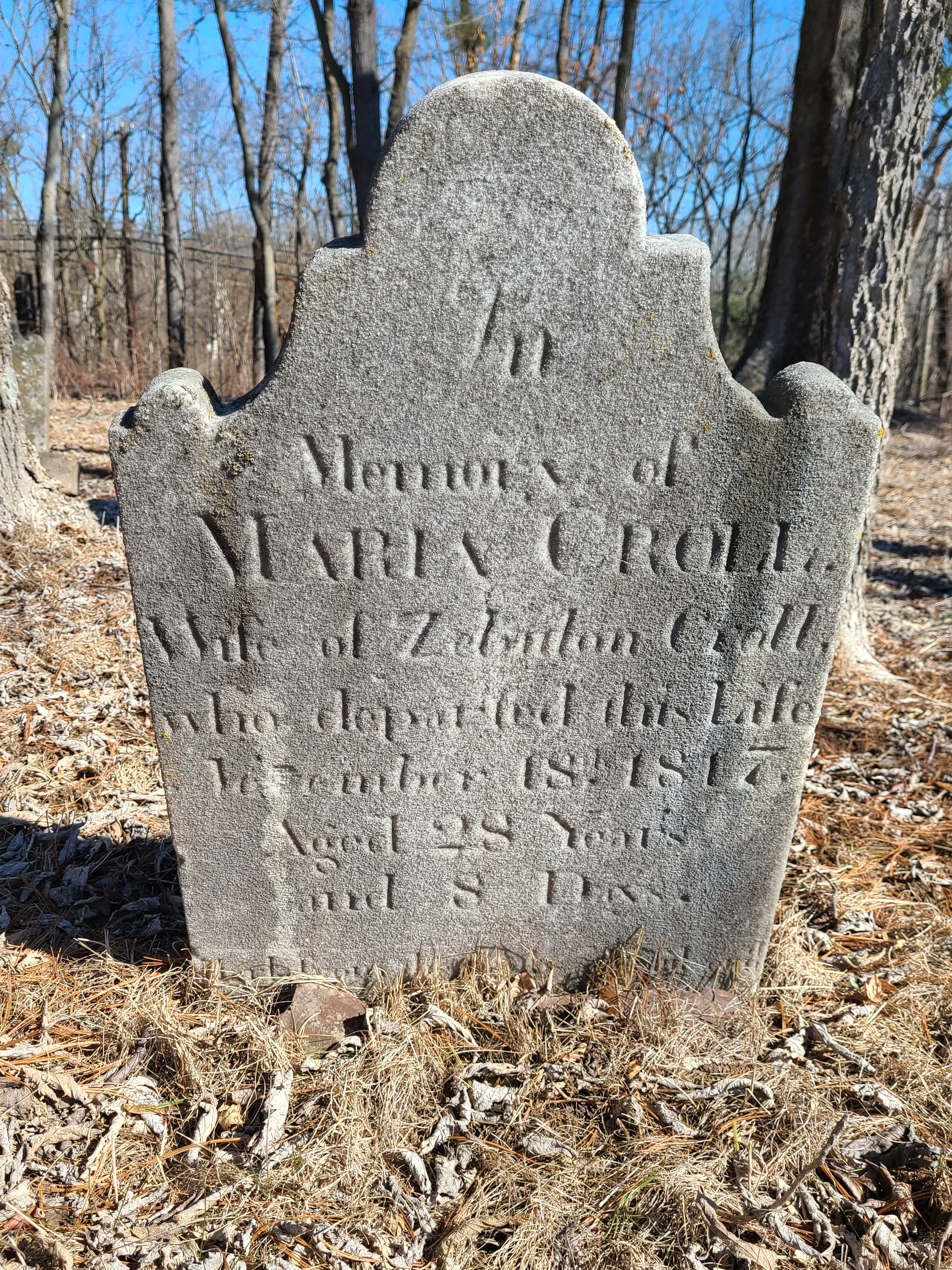
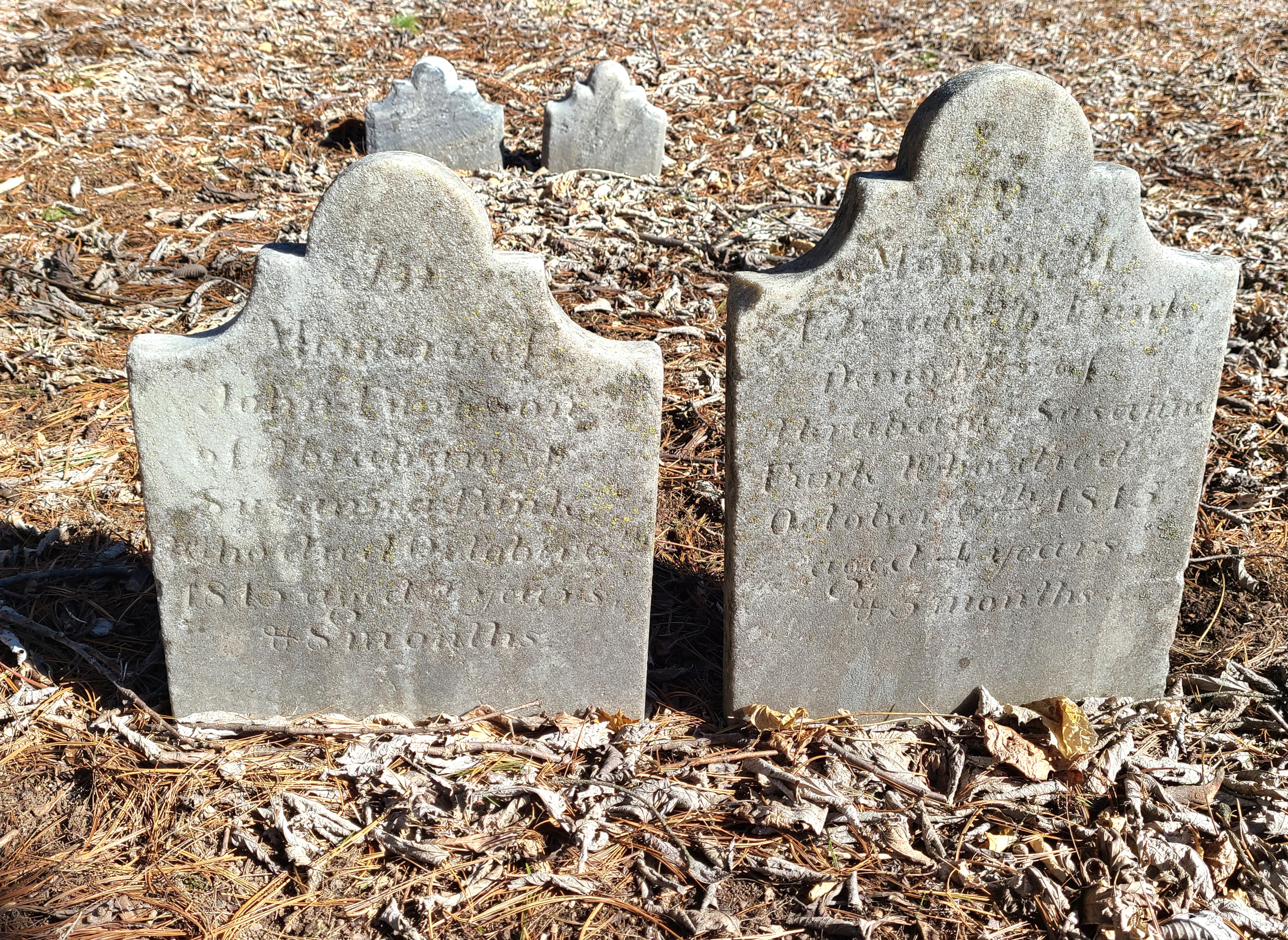

A memorial to Christian Funk still stands at Funkite Cemetery, a somber tribute to a man who chose conviction over conformity and whose faith ultimately led him down a path of separation. Although hidden in plain sight from those driving along Germantown Pike, the cemetery lies in a field enclosed by a hand-stacked stone wall, remnants of a Funkite church that once stood nearby.
Reflecting on the stories of Penn and Funk, I realize that faith, in its truest sense, is not a static belief but a dynamic force—one that evolves, challenges, and shapes the course of history. In my own life, I find that faith is about more than just holding on; it’s about finding the courage to keep moving forward, even when the road ahead is unclear. As I continue my journey, I draw inspiration from those who have used their faith as a tool for resilience, hope, and action. Faith is not passive. It’s an active, sometimes guiding force that shapes lives, communities, and history—including in my own.
In memoriam: Sandra Beahm Hogan, beloved stepmother (1941–2025).


 Keystone Wayfarer
Leave a reply to jackleit57 Cancel reply