
Music has always been a part of my life, evolving from childhood band practice to a decades-long career in the industry. Through it all, one constant has remained—music, like life, is ever-changing, often driven by tragedy and loss. One such loss that still haunts me is the death of my friend Michael Gonsalves in the Station Nightclub fire, twenty-two years ago. Michael had been at the popular club that night, and the fire that followed not only changed my life but also the lives of the ninety-nine other victims, their families, and other attendees that were present that ill-fated night. The deadly event demanded a broad response from lawmakers, as stricter building and fire regulations soon followed, a response all too familiar after a disaster shakes a community to its core.
As I reflect on that tragedy, I’m reminded that the echoes of such events are not confined to one place or time. Nearly a century before the Station Nightclub fire, another devastating blaze took place in Boyertown, where the Rhoads Opera House fire reshaped the community and immediately ignited calls for reform in the country’s early safety standards.
Yesterday, January 13, 1908, marked one of the deadliest fires in American history as flames ravaged the once treasured community theater, located fifty miles outside Philadelphia. That evening, much of the town gathered for a stage play by religious dramatist Harriet Earhart Monroe (1842-1927), the aunt of famed aviator Amelia Earhart. The event—a lecture on the Scottish Reformation—was meant to raise money for the local parish, St. John’s Lutheran Church. In mere minutes, roughly ten percent of the town’s population was dead, trapped helplessly inside. As people gathered outside, their hearts filled with dread as they heard the agonizing screams of loved ones within.
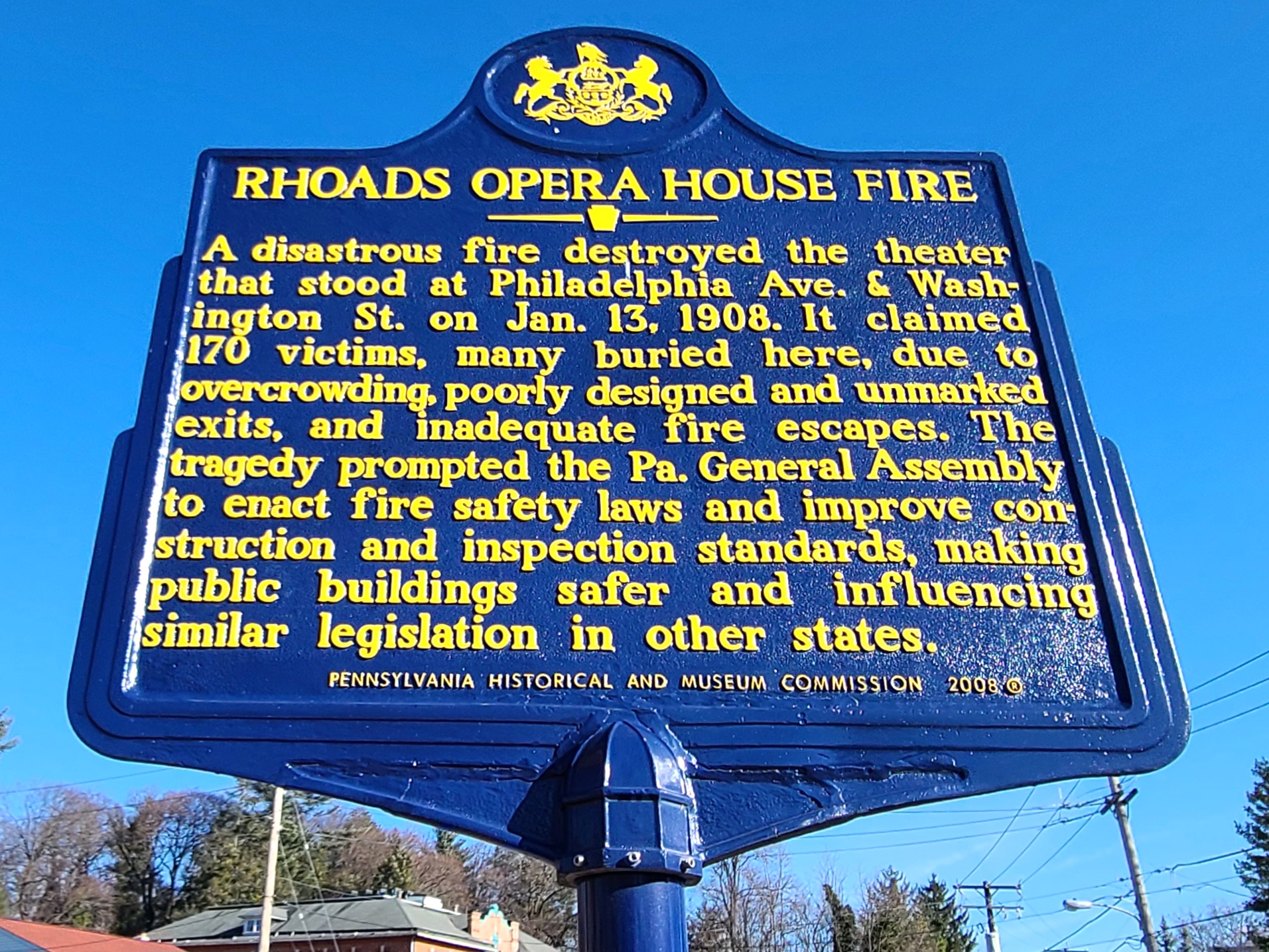

The Rhoads Opera House, located at the corner of Washington Street and Philadelphia Avenue, was not a traditional opera house by any means, but a versatile venue for public events. Built in 1885 by Dr. Thomas J. Boyer Rhodes (1837-1919), a civil war veteran, the three-story building housed the town’s national bank and several stores on the first floor. The second floor was dedicated to a large auditorium while the third floor contained meeting rooms. Despite its ability to host large crowds, the design provided limited escape routes in the event of an emergency. The building’s fire escapes were located too high for people to reach, and many exits were blocked or unmarked, leaving the trapped audience with few options for escape as the devastating fire spread.
The fire began during an intermission, about three-quarters of the way through the play, when a kerosene lamp used for stage lighting was accidentally knocked over, igniting the stage curtains. As the flames quickly engulfed the building, panic spread. Despite the suffocating smoke and intense heat, more than half of the audience and cast found their way to safety. But in only fifteen minutes, 171 people perished, two-thirds were women and children. The scene was one of horror, with entire families lost to the flames. Even some firefighters, including John A. Graver (1887-1908), lost their lives while responding to the inferno.
Harriet Monroe was subpoenaed during an inquest several weeks later, accused of hiring an inexperienced projectionist that kicked off the sequence of events blamed for the blaze. She refused to appear. The jury eventually cleared her of responsibility, though private lawsuits were later filed against her by the victims’ families, the results of these suits unclear from surviving accounts. Monroe’s sister, Isabella “Della” Earhart Mayers (1857-1908), was among those killed and interred alongside many of the victims at Boyertown’s Fairview Cemetery.
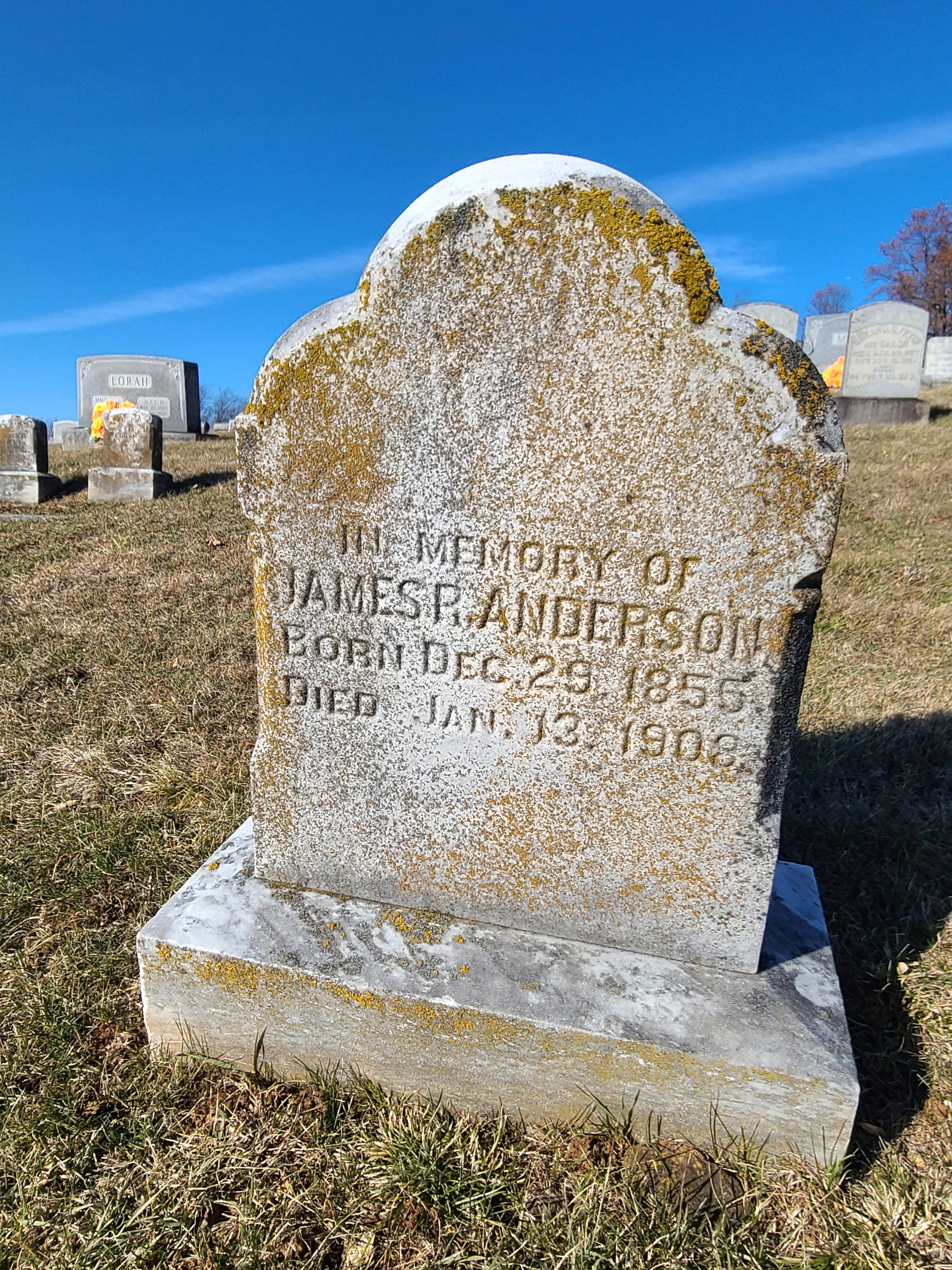
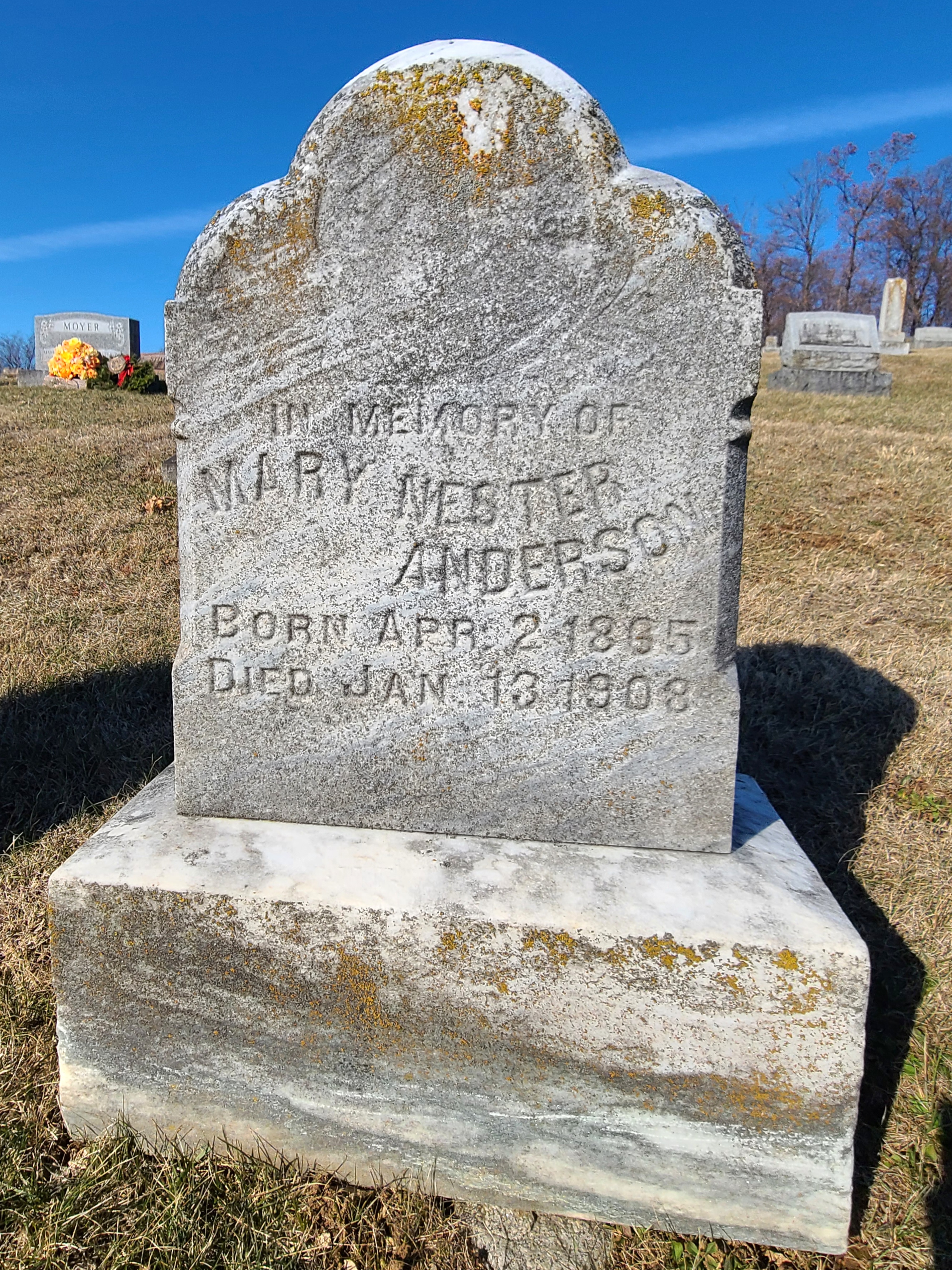
Dr. Rhoads vowed to rebuild, using fire insurance proceeds to finance the reconstruction. The new structure, completed two years later, still dominates the intersection of Washington Street and Philadelphia Avenue. The building, which today houses a real-estate office, a fitness center, and apartments that eerily resembles the original 1885 design.
The deaths of the Rhoads Opera House fire became a catalyst for change. The Pennsylvania legislature was spurred into action, passing new fire safety laws, which served as a model for other states. These laws created standards for doors, landings, exits, and other features of public buildings. They also banned combustible stage curtains and kerosene lighting from theaters. Many of these fire safety standards and building regulations are now taken for granted: marked exits, doors that open outward and easily accessible fire escapes. The first fire law in Pennsylvania was signed by Governor Edwin Stuart on May 3, 1909.

The New York Times reported that many of the men who perished worked for the Boyertown Casket Company, some of whom had likely crafted their own coffins. In response, Philadelphians raised $18,000 in relief funds, and approximately 15,000 people attended the funerals, which were held on a single day. Each victim rode in a horse-drawn hearse, accompanied by an honor guard of four white-gloved pallbearers. The twenty-five bodies, which had been burned beyond recognition, were buried together in a common grave.
Today, the site of the former Rhoads Opera House is adored with a plaque commemorating the tragedy. It reads: “Dedicated to the 171 people who perished within these walls in the tragic fire of January 13, 1908.” Another memorial to the victims stands in Boyertown’s Fairview Cemetery. Many claim the remnants of the tragedy still haunt Boyertown, contributing to its reputation as one of the most haunted small towns in America.
For those seeking to learn more, Mary Jane Schneider’s Midwinter Mourning: The Boyertown Opera House Fire (1991) offers a deeper understanding of the disaster, and WFMZ TV’s documentary The Rhoads Opera House Fire: The Legacy of a Tragedy won the Pennsylvania Association of Broadcasters’ Best Documentary award in 2008.
Dedicated to the memory of Michael James Gonsalves (1962-2003).


 Keystone Wayfarer
Leave your thoughts