
On the surface, Schwenksville looks like any other small town. With only a few businesses occupying its main street, most that visit here are either exploring the popular Perkiomen Trail or literally just passing through. But if one were to stop and look under the covers, so to speak, volumes of interesting stories lived by people from both the past and present would be found.
Now some may think I’m a little crazy in that I know there are more than sixty structures on just over a one-mile stretch of Schwenksville’s Main Street that were built before the year 1900. And perhaps they would be correct. My unusual passion, however, should not diminish just how special this area is.
Departing on a quick walk from my house, you will encounter one of Schwenksville’s early grist mills, now serving as a multi-unit apartment building. The first copper mine in the state had its entrance not far down the road on which I live. Remnants of one of many ice houses that kept Philadelphia residents cool all those years ago can be seen in beloved Meadow Park. There was even a stagecoach robbery and a train derailment. The list goes on.
When thinking about what location I wanted to write about first, I didn’t have to think very long. I have always loved old cemeteries. The headstones, simple or ornate, just fascinate me. There are six cemeteries located in Schwenksville. The one I find myself visiting most often is the one with a view.
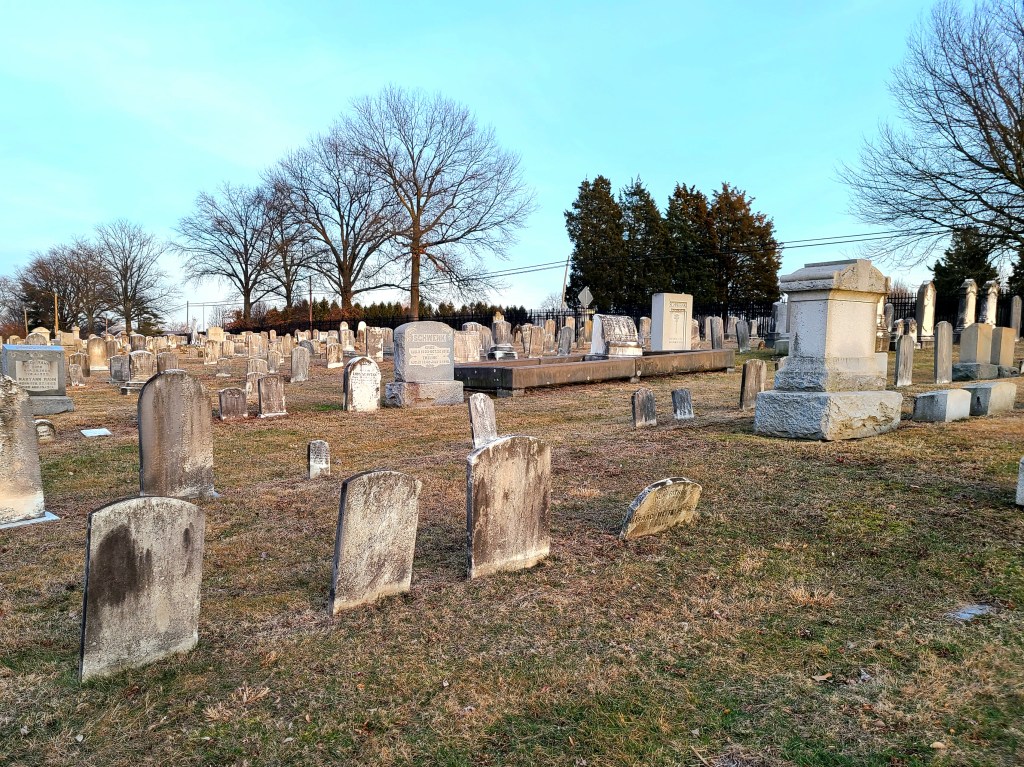
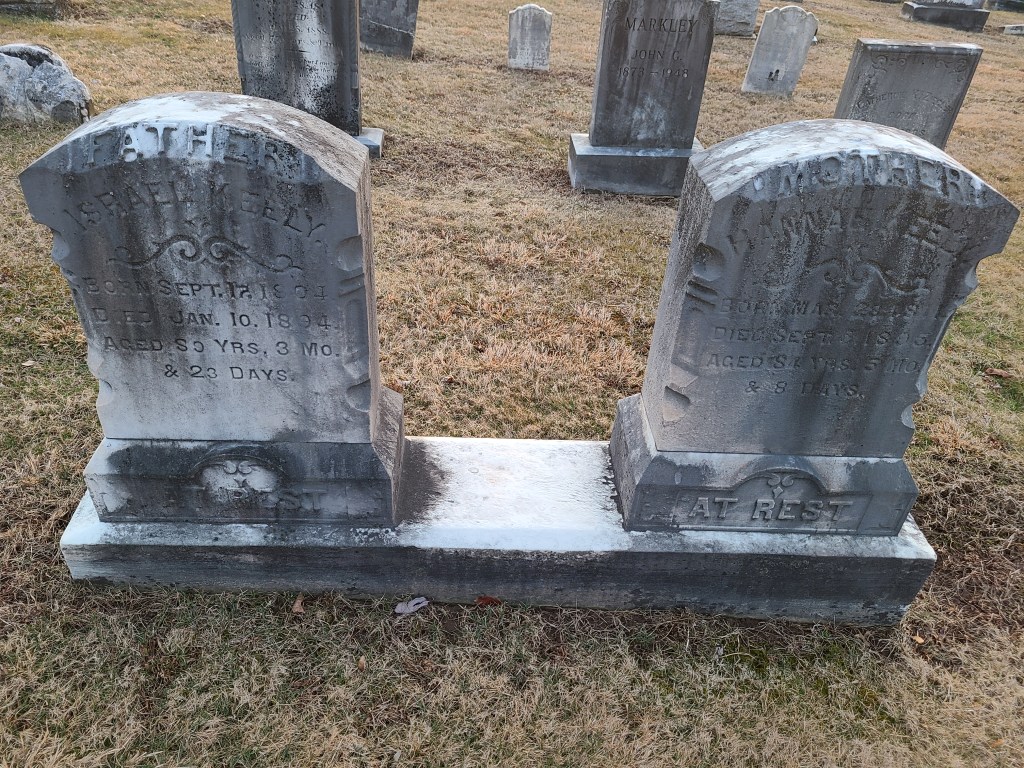
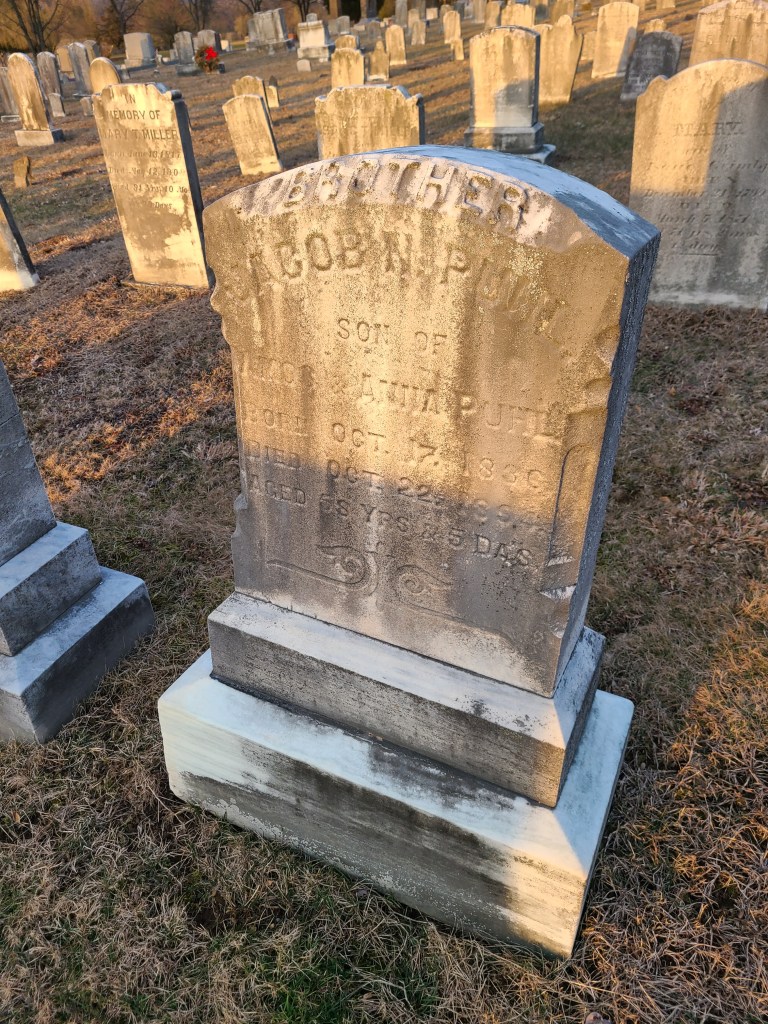
Keelys Church Cemetery is situated on Schwenksville’s highest western point. Its history, like most in this area, is long with a footprint that traces back to the origins of this country. Headstones date to the mid-1700s, including several people that lived in my house. While no buildings can be seen on the parsonage today, the relatively large cemetery remains.
Local history confirms that Keelys is named for pioneer settler Valentine Kiehle (1691-1771). Records indicate that the Palatine native arrived in Pennsylvania aboard the ship Mortonhouse in late August 1728 and settled on land he and his wife Susanna (1699-1809) acquired in then Perkiomen Township. In 1756, Kiehle conveyed about an acre of land on which a school and church were to be built. Much of the history of the original buildings has been lost to time, including most photographs.
There are two sides to the cemetery; the old section is found to the right of North Limerick Road while driving up the hill from Schwenksville’s high street. Many graves along this tract are marked with only a stone harvested from neighboring fields; most without any kind of inscription. Many of these are thought to be memorial sites of Revolutionary War soldiers that served in General George Washington’s Continental Army. It is noted that, during the autumn of 1777, Keelys was used as a hospital for those injured during the bloody Battle of Germantown.
Early on, Keelys was shared by Reformed, Lutheran, and Mennonite denominations. A story – taken from a booklet prepared by the Bicentennial Committee of the Borough of Schwenksville – tells that on one particularly cold Sunday morning in 1818, Mennonites were preparing a regular service. After the church stove was lit, worshipers noticed the building quickly filled up with smoke. Upon investigation, it was discovered that the stove’s pipe had been stuffed with wet rope. The Mennonites took this as a sign that they were no longer welcome at Keelys, resulting in the building of their own meetinghouse.
Keely’s would continue to be used until 1834, when the buildings on Kiehle’s donated ground were torn down. Today, Keelys Church Cemetery, also known as Schwenksville Cemetery, includes over 600 headstones… and counting.





 Keystone Wayfarer
Leave a reply to Joe Kamnik Cancel reply