
In just two days, fireworks will light up the night skies as Americans celebrate Independence Day. For over two centuries, July 4th has commemorated the adoption of the Declaration of Independence, the cornerstone document of the American experiment. From its inception, fireworks have been integral to these euphoric festivities, a tradition that continues to this day.
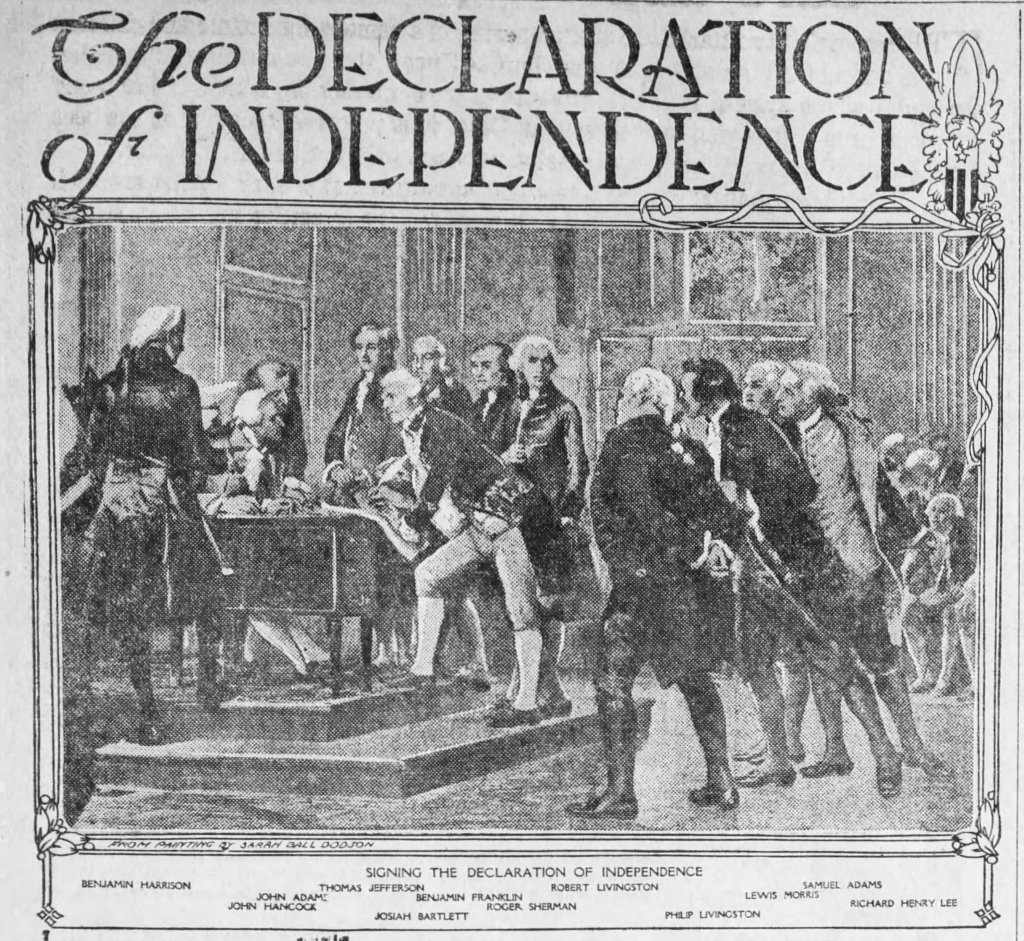
The legal separation of the original thirteen colonies from King George III’s Great Britain occurred on July 2, 1776, followed swiftly by the unanimous adoption of the Declaration of Independence. Penned by Thomas Jefferson, with input from the Committee of Five, this daring 32-paragraph document continues to symbolize America’s foundational ideals of liberty, equality, and self-governance.
America’s earliest settlers brought their enthusiasm for fireworks to the United States, using them to celebrate significant events even before the country’s founding. The tradition of incorporating fireworks into Independence Day celebrations dates back to the first observances in Boston and Philadelphia. By 1870, Independence Day had become the most important non-secular holiday on the calendar and a federal holiday when Congress passed legislation marking the occasion.
Originally invented in China, fireworks evolved from simple bamboo tubes packed with gunpowder into sophisticated pyrotechnic spectacles. These displays produce four primary effects: noise, light, smoke, and floating materials, including confetti. The colors in fireworks are generated by “pyrotechnic stars,” which produce intense light when ignited. These stars are meticulously crafted with a mix of fuel, oxidizer, colorant, and binder, igniting vibrant hues of red, orange, yellow, green, blue, purple, and silver. While most of the chemicals used in the manufacturing process are non-toxic, some have a heightened degree that can cause skin sensitivity or exist in dust form, becoming an inhalation hazard.
Pennsylvania played a pivotal role in the development of American fireworks manufacturing. New Castle, known as the “Fireworks Capital of America,” saw Italian immigrants like Leopold Fazzoni and Antonio Zambelli establish the industry in the late 19th and early 20th centuries. Their companies, including Zambelli Fireworks Internationale and Pyrotecnico, continue to innovate and dazzle audiences worldwide.
Despite their cultural significance, fireworks pose environmental and safety concerns, leading to stringent state and federal regulations overseen by bodies like the Consumer Product Safety Commission (CPSC) and the National Fire Protection Association (NFPA). Recent years have seen a surge in fireworks’ popularity, with sales doubling and industry projections suggesting continued growth.
As families prepare for this year’s July 4th celebrations — whether attending parades, enjoying picnics, or gathering for barbecues — one event remains a quintessential part of the festivities: the fireworks display.
Area July 4th Fireworks displays (at dusk)
Waltz Golf Farm – 303 West Ridge Pike, Limerick
Palmer Park – 4022 Heckler Road, Collegeville (Skippack)
Eagleville Park – 100 Parklane Drive, Norristown (Lower Providence)
Sutcliffe Park – 300 Washington Street, Conshohocken
Memorial Park – 75 West King Street, Pottstown
Interesting July 4 Trivia
The first organized July 4 celebrations took place in Philadelphia and Boston in 1781.
Thomas Jefferson and John Adams are the only two signatories of the Declaration of Independence that later served as presidents of the United States. Both died on July 4, 1826.
James Monroe, elected president in 1816, died on July 4. He was aged 73 at his death in 1831.
Calvin Coolidge is the only U.S. president born on July 4.
Author Nathaniel Hawthorne was born in Salem, Massachusetts on July 4, 1804. His novels, The Scarlet Letter and The House of Seven Gables are two of my favorite reads.
Stephen Foster, known as “the father of American music,” was born on July 4, 1826.
French physicist and chemist Marie Curie died on July 4, 1934.
Barry Eugene Carter, better known as Barry White, died of a heart attack on July 4, 2003. He was nominated for eleven Grammy Awards, winning twice.
Henry David Thoreau moved to Walden Pond on July 4, 1845.
Construction of the Erie Canal began on July 4, 1817. It took eight years to complete.
The first Mars Pathfinder landed on Mars on July 4, 1997.
The first week of July consistently ranks among the busiest travel periods of the year, as many people take advantage of the official holiday for extended vacation trips.
The largest fireworks show in the United States is the Macy’s 4th of July Fireworks over the Hudson River. Now in its 43rd year, the show includes more than 40,000 shells.

 Keystone Wayfarer
Leave your thoughts