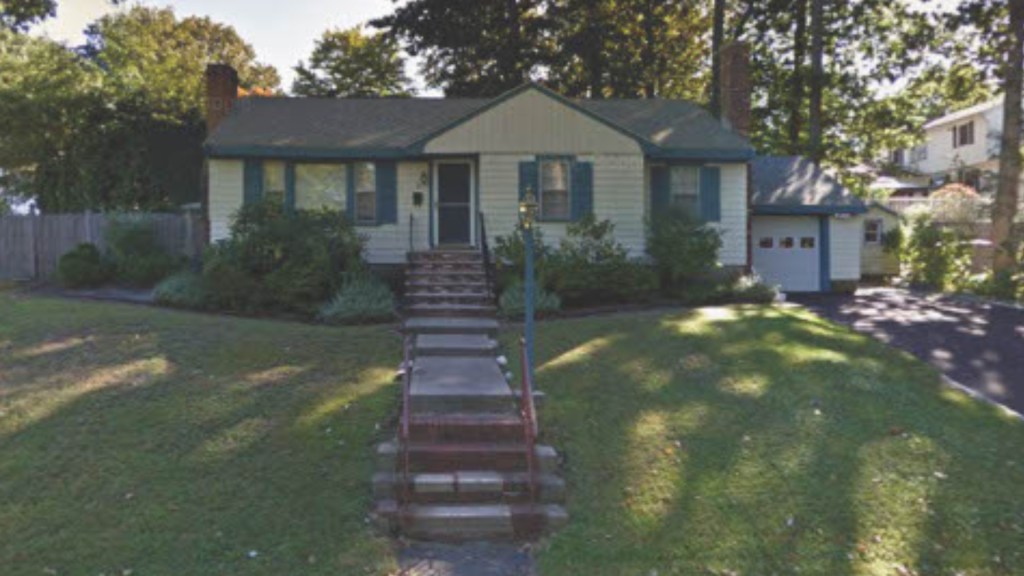
Growing up, I lived in three houses. The first was on Avon Court. What I remember most isn’t the layout of the rooms or the color of the walls, but a flicker of light in the distance. Anton’s Dry Cleaner sat along the high street on the other side of the train tracks. At night, its neon sign would flash steadily through my bedroom window.
Then we moved to a bigger house on Woodbriar Road. In the backyard, purple and white lilac trees separated our property from the neighbors. In the spring, the air filled with their scent—thick and sweet. I remember pulling a baby tooth out while sitting between them, just so the tooth fairy would come and leave money I could use to buy baseball cards.
This is the first house where life begins to feel clear in memory—the place where moments start to take shape. Snow days became something more than a break from school. My brother and I would wake early, not for rest, but for opportunity. Shovels in hand, we’d race out the door, trying to claim the best driveways before anyone else in the neighborhood. It’s also where I learned to ride a bike—wobbling down the street until balance gave way to confidence. Not long after taking off the training wheels, I leaned too far on a turn, fell, and skinned my finger. The scar is still there.
Back then, if you hurt yourself, you went to the emergency room. There wasn’t much in between. Today, there is. That in-between space is called urgent care.
It didn’t arrive all at once. It came gradually, almost quietly, filling a gap the system hadn’t quite figured out. In the 1970s, physicians began opening small clinics—somewhere between a family doctor’s office and a crowded emergency room. Through the 1980s and 90s, those clinics multiplied as healthcare grew harder to navigate and people looked for something simpler: a place where you could just walk in and be seen.
By the 2000s, urgent care had become a familiar part of the healthcare landscape. By the time COVID emerged, it was already well established—positioned between home care and hospital medicine. But the idea of “in-between” care is not new. Medicine has always existed in the space where individual need meets the limits of whatever system surrounds it.
For centuries, when medicine was still sorting itself into separate professions, that responsibility often fell to apothecaries. In England, the Worshipful Society of Apothecaries, founded in 1617, attempted to impose order through apprenticeships, standards, and early forms of regulation. On the ground, however, practice remained far less tidy—apothecaries often diagnosed and treated illness as well as compounded medicines. When these traditions crossed the Atlantic, the boundaries became even looser.

That looseness is especially visible in colonial Philadelphia, where apothecary shops were cramped, multipurpose rooms where diagnosis, preparation, and dispensing unfolded side by side. Shelves were stocked with familiar remedies—Peruvian bark for fevers, laudanum for pain, and senna for digestion. Some treatments proved effective, others ineffective or even harmful. Many were shaped more by tradition and trial-and-error than by dependable medical knowledge.
There’s a diary by Christopher Marshall, a Philadelphia apothecary and merchant, who recorded daily life during the Revolutionary War. His entries capture the texture of the time—shortages, illness, constant uncertainty. Medicine, in that moment, is not a system. It’s something assembled daily under pressure.
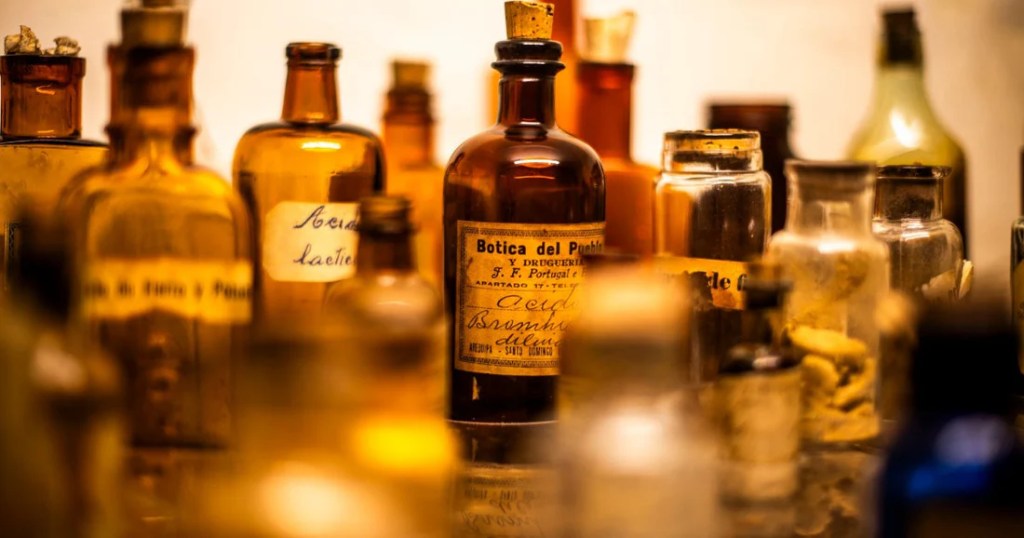
Even the bottles left behind from that period—many of which I’ve uncovered in the dirt around the back of my home—reflect it. The bottles were often hand-blown glass, uneven at the seams and stamped with initials or simple symbols. They were early attempts at trust: proof that something had been made, measured, and meant for use. When you hold them, they feel less like artifacts than objects that once moved continuously between hands.
Then a different kind of place enters the picture: Pennsylvania Hospital.
It began with Thomas Bond’s proposal for “the reception and cure of the sick poor,” an effort to organize care around need rather than status. On May 11, 1751, the Pennsylvania Assembly approved the plan, creating one of the earliest public hospitals in the American colonies. Benjamin Franklin helped secure funding by pairing private donations with public support through legislation in Philadelphia. He later described the hospital as one of the projects he valued most.
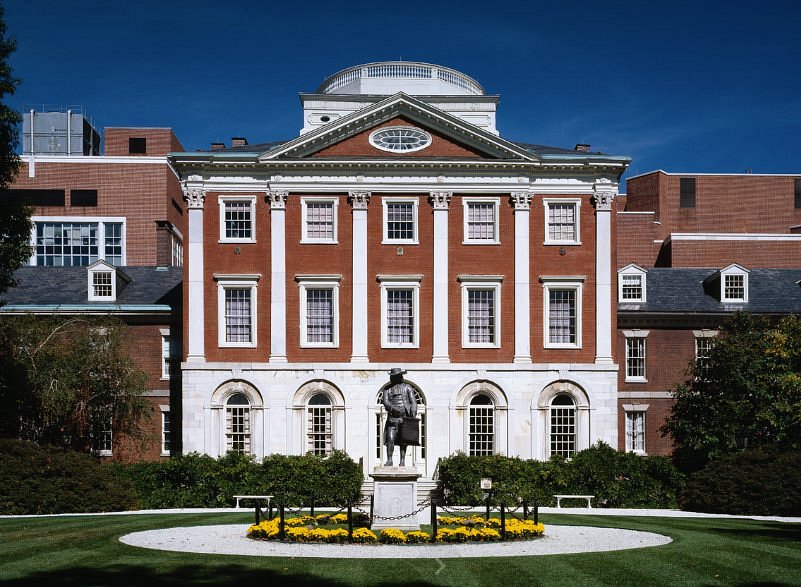
When it opened on Market Street in 1752, it was still uncertain what it would become. Patients and physicians shared the same rooms. There were no clear separations between learning and treatment. Students observed bedside cases, and physicians taught as they worked. Illness—once scattered across homes, shops, and individual practitioners—began to gather in one place, where it could be seen repeatedly, compared, and recorded.
Still, it did not replace what came before it. Apothecaries continued working in the older rhythm of care—one patient, one encounter, one set of decisions. But inside the hospital, a different structure began to take shape. Diagnosis here, preparation there—not cleanly, and not all at once, but enough that the outline starts to show.
Inside that space, a hospital apothecary—names like Jonathan Roberts appear in the records—prepared medicines under a physician’s direction. It was not yet a new profession, but the early shape of pharmacy forming in practice before it had a name.
Outside the hospital, however, nothing disappeared.
Elsewhere in Pennsylvania, similar systems were taking shape. In Bethlehem, the Moravian community built a tightly organized model where herb cultivation, preparation, and record-keeping functioned as a single system of care—a kind of coordination before coordination had a name, held together by discipline rather than professional boundaries.
Over time, these parallel approaches began to converge. By the early 1800s, formal pharmaceutical education arrived with the Philadelphia College of Pharmacy. Apprenticeship alone was no longer enough; training became structured, standardized, and taught in classrooms as well as shops.
Then, in 1878, pharmacists in Pennsylvania met in Harrisburg and formed a statewide association to bring organization and professional standards to the field. What had once been a scattering of individual shops was beginning to resemble a unified profession—still in formation.
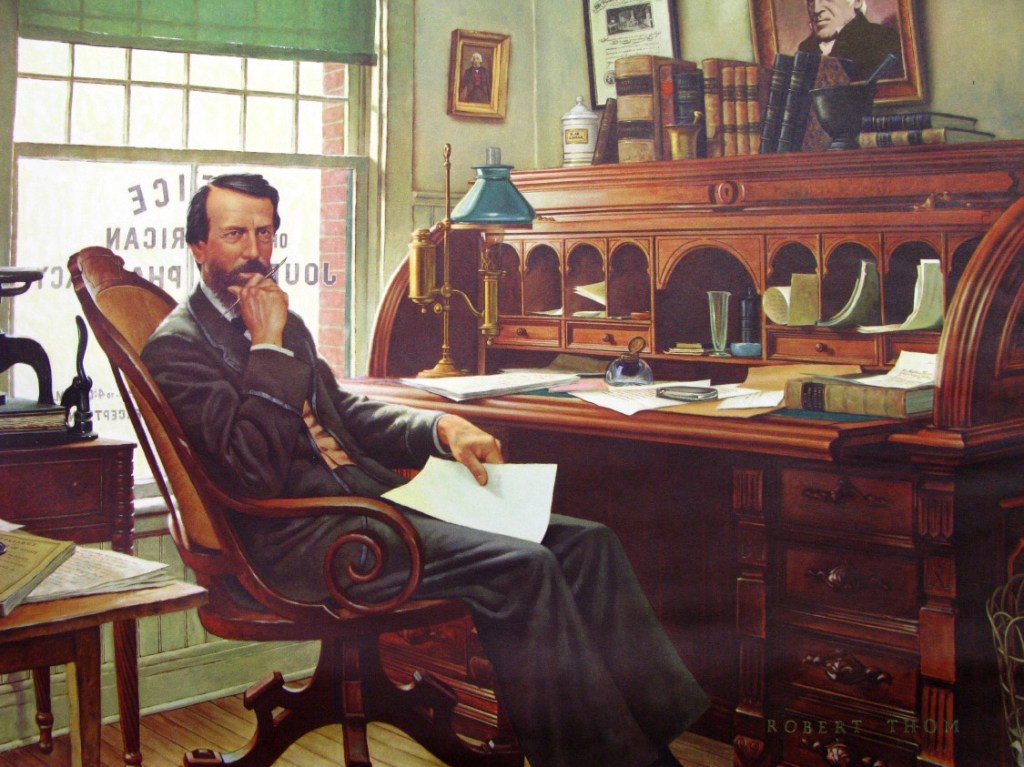
That shift carried tension. William Procter Jr.—often called the “father of American pharmacy”—spent much of his career arguing that pharmacy should remain grounded in science and education rather than drift into commercial trade. He was editor of the American Journal of Pharmacy and a professor at the Philadelphia College of Pharmacy. He pushed for formal training at a time when drugstores were multiplying and increasingly shaped by retail demand.
He had reason to notice the shift. In Philadelphia, pharmaceutical manufacturing was expanding rapidly. Albert C. Barnes began his career in that environment, working with antiseptic compounds and developing Argyrol, a silver-based antiseptic widely used before antibiotics. What began as small-scale formulation soon became industrial production. Barnes eventually built a fortune in pharmaceutical manufacturing before turning to art and founding what would become the Barnes Foundation.
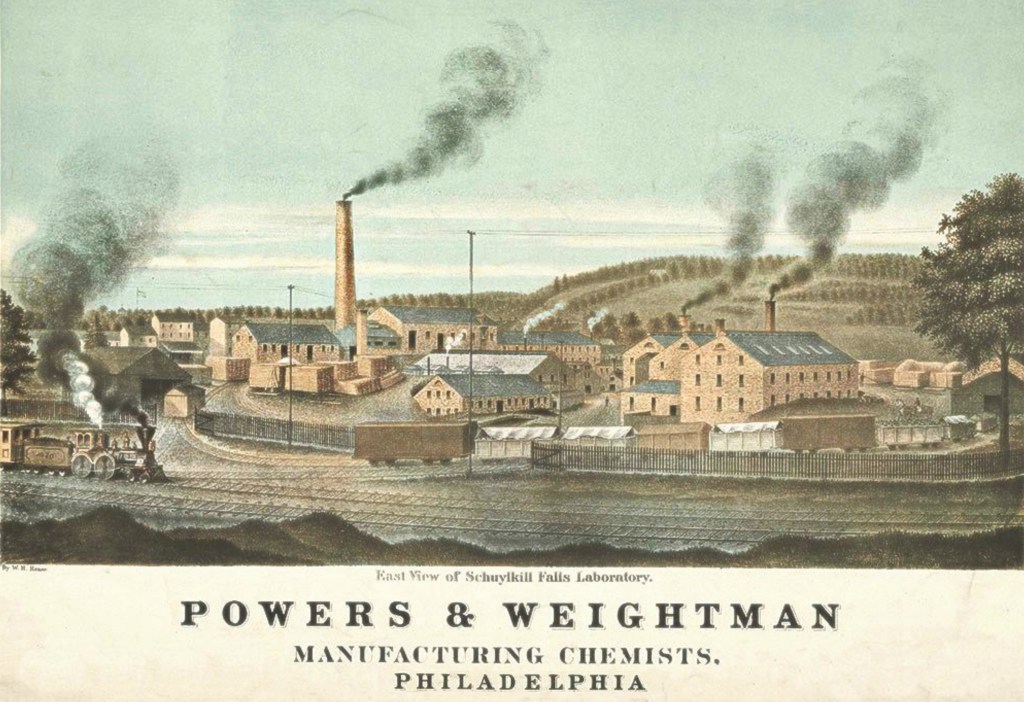
Companies such as Powers, Weightman & Rosengarten pushed the change further. Based in Philadelphia, they grew into major chemical and pharmaceutical manufacturers in the nineteenth century, producing standardized drugs and compounds at industrial scale for distribution far beyond individual prescription preparation. What had once been mixed and dispensed for specific patients was increasingly produced in bulk, packaged, and shipped as finished products.
By the twentieth century, even the language had shifted. Apothecary gave way to pharmacy. Medicine became increasingly manufactured and regulated, and it moved further away from the hands that once prepared it directly.
Montgomery County carries its own quieter version of this history. In places like Ambler, pharmacists such as Oscar H. Stillwagon, a graduate of the Philadelphia College of Pharmacy, ran drugstores that functioned as both medical providers and community anchors—places where prescriptions were filled, advice was given, and care often began before anything formal.
From similar roots, figures like Robert McNeil would later expand that local model into something much larger. What began as neighborhood pharmacy work grew into pharmaceutical manufacturing, most notably through McNeil’s company, becoming part of the broader shift from counter-based preparation to industrial production.
The same movement, scaled outward.
The Pennsylvania Hospital did not disappear into this transformation. It grew beyond its original building on Market Street and helped establish one of the earliest American models of organized care—where treatment, observation, and training occurred in the same space. Illness could be gathered rather than scattered across households and practitioners. Once gathered, it could be compared, recorded, and gradually systematized.
Over time, it continued to modernize, but it remained linked to that original shift: care moving from isolated encounters into shared, structured environments.
The third house was on Gould Street. Moving there happened around fifth grade. A lot of life unfolded in that house in ways that only really make sense in hindsight—boy crushes, Duran Duran in the background, SATs, and the slow shift into adulthood. It was the house that didn’t just hold life—it required participation in it.
Looking back, I’ve spent very few moments in emergency rooms, hospitals, or late-night urgent care visits. That absence isn’t taken for granted—only noticed—and, in its own way, something worth holding onto still.
Emergency departments and urgent care centers move in cycles that follow the calendar. The winter months—especially January through March—consistently bring the highest volume, as influenza, pneumonia, and other seasonal respiratory illnesses place steady pressure on the system. Certain days stand out as well. New Year’s Eve and July Fourth often bring sharp spikes in visits tied to travel, gatherings, and preventable injury. As spring and summer arrive, the pattern shifts rather than disappears: more time outside means more movement, and with it, the kinds of injuries that come with living in motion.

 Keystone Wayfarer
Leave your thoughts