If you’re anything like me, you’ve picked up a book for no better reason than its cover. Sometimes it pays off. Other times… not so much. But that split-second choice can change everything. Two books that have stayed with me over the years—though I might be dating myself—came from the young adult section, even if they never truly felt confined to it.
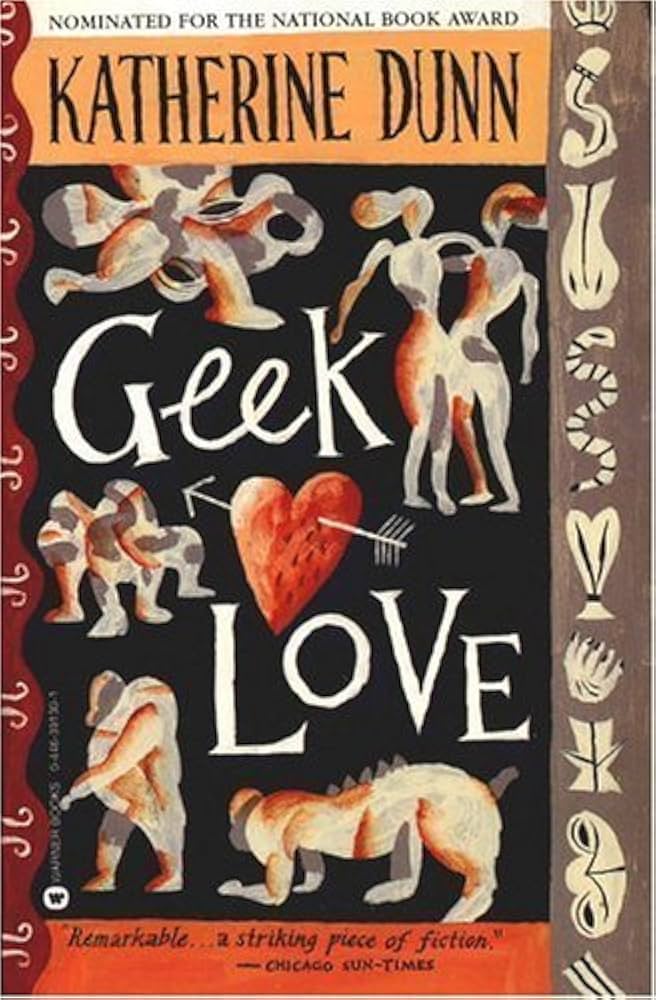
The first is Geek Love by Katherine Dunn. The premise is grotesque—a carnival family deliberately breeds children to be sideshow attractions. It’s unsettling at first, but that feeling doesn’t linger. What really sticks is the family itself. The Binewskis are strange, even disturbing. Yet their love, jealousy, and need to belong feel completely real. Over the years, the book has quietly become a cult favorite, passing from hand to hand like a treasured secret.
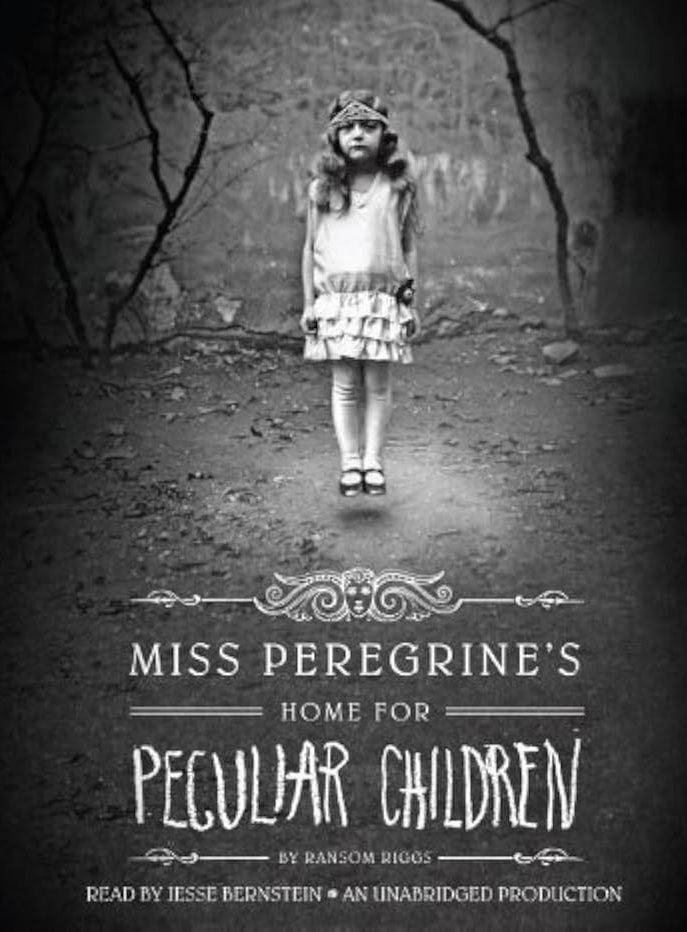
The second is Miss Peregrine’s Home for Peculiar Children by Ransom Riggs. From the moment I picked it up, it felt different. A quiet unease lingers, like piecing together something that doesn’t want to be understood. Built around haunting vintage photographs, the story feels dreamlike, eerie, and real all at once. It became a publishing phenomenon, reaching #1 on the New York Times Best Seller list, launching a series that blends fantasy and the uncanny.
I don’t remember exactly which library I was in when I found these books. I moved around a lot back then. But I’ll never forget how their covers caught my eye. I might have walked right past them otherwise. And that’s the magic of books and of libraries. They can pull you in unexpectedly, sparking ideas and experiences you never saw coming.
I was reminded of this magic recently when my mom talked about my childhood library—Melrose Public Library—reopening after a $21 million, nearly two-and-a-half-year renovation. The building, dating to 1904 and funded by Andrew Carnegie, was added to the National Register of Historic Places in 1988. She described the feeling of walking back inside—the same library I remembered, now updated and ready to inspire a new generation of readers. That sense of possibility, of stumbling onto something unexpected, is exactly the spirit that guided the first volunteers in Schwenksville.
Our town’s library got its start in 1934, tucked into the basement of a home on Main Street owned by Jacob Bromer. He was the son of Albert Bromer, a prominent Schwenksville businessman whose enterprise helped shape the town’s early commercial life. William, Jacob’s older brother, carried on the business until it was sold in 1924.
Volunteers Eva and Edna Meng, Estelle Kline, and Mildred Reed transformed that tiny basement into the area’s first free public library. I like to imagine a tiny, low room with wooden shelves tall enough even for a child to reach. Because I’m me, I can’t help but imagine the quiet buzz of neighbors flipping through books, whispering about their latest finds. Even in those early moments, these women believed knowledge should be available to everyone. And with that simple idea, they created a space that would grow into a hub of learning, community, and imagination.
That spirit of sharing stretches back to America’s earliest libraries. In those days, books were rare, costly, and often locked away, accessible only to the wealthy. Benjamin Franklin recognized the problem and envisioned a different approach—one where knowledge could circulate freely, moving from hand to hand and mind to mind. So, in 1731, he founded the Library Company of Philadelphia. Members bought “shares,” pooling their fees to purchase books no one could afford alone. They could then borrow them in turn. Franklin’s idea was radical: it opened doors for tradesmen, farmers, families, and dreamers alike.
As a result, Philadelphia quickly became a hub for early reading centers, including the Darby Free Library. Founded by Quaker farmers in nearby Delaware County, it still operates today as the oldest in the country. Nearly 150 years after Franklin’s pioneering idea, Carnegie funded hundreds of these institutions across Pennsylvania and the U.S., investing over $40 million to expand access to books and learning. And that love of discovery didn’t stay in the cities. In small towns like Schwenksville, it welcomed generations of readers.

Gifted to the Valley Forge Audubon Society in her will in 1994.
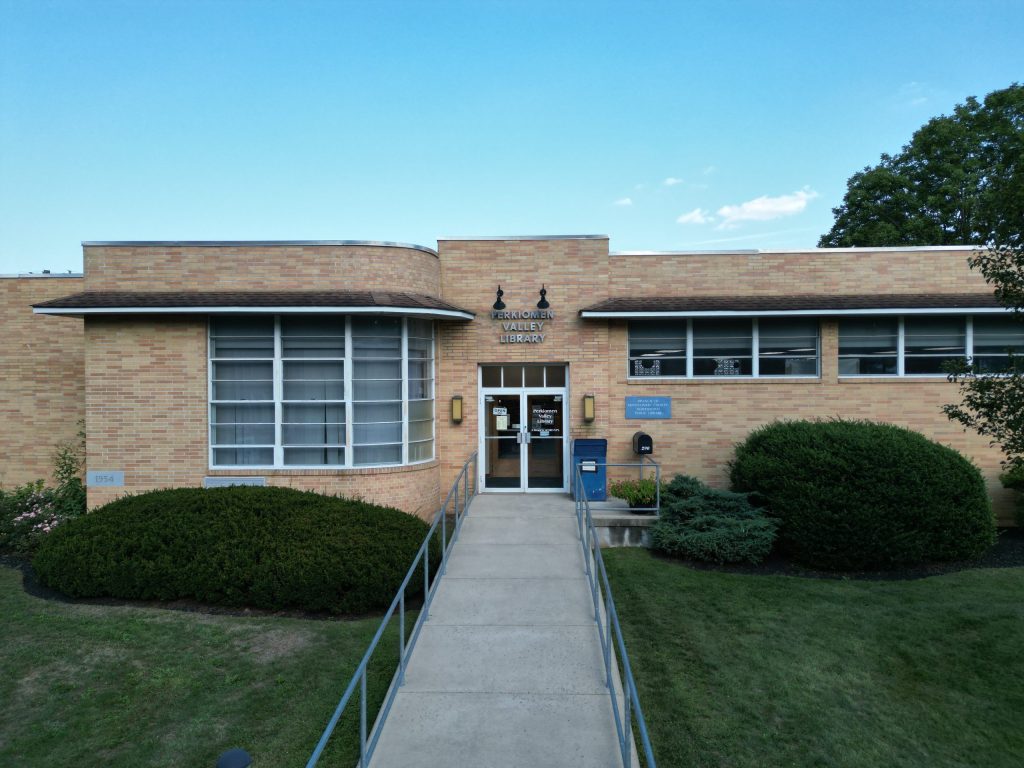
About twenty years after that basement installation, the Schwenksville library was ready to stretch its legs and move into a bigger, permanent home. On March 29, 1954, the Library Corporation officially formed and elected its first officers. That November, the cornerstone was laid for a new building at Second and Church Streets. It was designed by Edgar W. Kehs of Kehs Family Memorial Works, a local craftsman whose work still bears quiet beauty in cemeteries and memorials across the region.
The building itself was the work of architect Alfred Panepinto, a Harvard-trained designer who had served as chief architect for Sun Oil Company and earned a Bronze Star in World War II. Overseeing construction was Eva and Edna’s younger brother, Wayne Meng, also a World War II veteran.
Building the library cost more than seventy thousand dollars—a small fortune at the time. It was worth every penny. On January 5, 1957, the doors finally opened to the public. From that day on, the library welcomed everyone to explore, learn, and imagine.
For decades, volunteers were the heart of the library, particularly the Schwenksville Women’s Civic Club. Led by Elinor Edmonson and Kit Piotrowski, the club offered a thoughtfully organized series of programs that helped create a welcoming space for reading, learning, and connection. Much of the library’s character today stems from the vision and dedication of these early leaders. “I’ve been told the Meng sisters were very strict,” says Branch Manager Aileen Johnson. “Children could only check out one book at a time for many years. Their vision set the foundation for what the library is today.”
As the library grew, its name evolved to reflect the wider community it served. In 1985, it became the Perkiomen Valley Library. In 1996, it joined the Montgomery County–Norristown Public Library system (MC-NPL), unlocking resources it could never have offered on its own. Through this partnership, patrons could request materials from libraries across the county and have them delivered straight to Schwenksville. “Through MC-NPL, we can offer audiobooks, e-books through Libby, and online resources like Ancestry, Mango Languages, and PressReader,” says Meredith Glodek, President of the Advisory Board. “We would never have the funds to offer so many extras without that added support.”
The library serves everyone, from toddlers to seniors. Young children can explore colorful board books designed for little hands. Older readers—teens and adults—enjoy fiction and nonfiction, while seniors have access to large-print materials. Free computers and Wi-Fi make it easy to check email, search for jobs, conduct research, or simply play a game or two. Programs still play a vital role. Initiatives like Tail Waggin’ Tales give children the chance to read aloud to friendly, certified therapy dogs, building confidence and making storytime fun and stress-free. STEM workshops spark curiosity through hands-on experiments, engineering challenges, and creative problem-solving, bringing science, technology, engineering, and math to life. And the always-popular summer reading program keeps young readers engaged all season long.
“Libraries aren’t just about books anymore,” Johnson says. “They’re a place for learning, community, and connection.” Its impact is deeply personal. “I know one patron who grew up here and eventually became a librarian, managing a large library of their own,” Johnson recalls. “And our Youth Services Coordinator, Lizzie, brought children she cared for as a nanny to our programs—helping them develop a love of reading before they even started school.”
The Perkiomen Valley Library is undergoing a major renovation funded by the Commonwealth Financing Authority. “We applied for this grant to update and beautify the building,” Glodek says. When finished, the work will allow for tutoring rooms, improved ADA access, and quiet study areas, all while keeping the space open and welcoming. The children’s area will move to a larger back room, where a special corner will continue to honor Kenneth G. and Raymond G. Kratz, who tragically died young—Raymond at 13 in 1949, and Kenneth at just 5 after a fall from a truck. Their parents, Claude and Mary Kratz, contributed a plaque that reads, “who miss what other children now enjoy,” creating a living tribute that lets other children experience the joys their boys never had. While the building is closed, the passionate staff remain active in the community, offering programs at the Daily Bread Food Pantry, Schwenksville Borough Hall, and PV Woods Story Walks.
For staff and volunteers, the library is deeply personal. “Reading for enjoyment has always been my primary hobby, something passed down from my mother,” Glodek says. “The library taught my children—and me—that learning is a lifelong adventure. My kids got their first library cards as soon as they could write their names—I still have them. It’s a fun reminder of those early library visits.” Johnson echoes the sentiment: “I couldn’t afford to buy all the books I wanted, but I didn’t need to. I had free access to thousands of books. Every day is different, but it’s all about helping people learn and grow.”
Today, the library serves over 41,000 residents across Schwenksville, Collegeville, Trappe, and surrounding townships. Originally built to house 12,500 books, the library now offers roughly 33,000 items. Beyond its expanded collection, it provides highly sought-after perks, including museum passes, hotspots, DVDs, and a selection of popular magazines. “The library isn’t just a building—it’s a space that inspires curiosity, creativity, and a lifelong love of learning,” Glodek says. Johnson adds, “Seeing children, teens, adults, and seniors all finding something meaningful here—that’s the magic of this place.” That magic often starts with the unexpected: the cover that calls to you, the story that finds you, and the library that quietly opens doors to worlds you never imagined.
During construction, residents can still visit the library at its temporary location in Schwenksville Borough Hall, 300 Main Street. Hours are limited: Tuesdays from 5 to 7 p.m., and Wednesdays and Fridays from 9 a.m. to 1 p.m. The library’s blue book return box has been relocated there and is available 24/7. Staff remain reachable by phone at 610-287-8360 or via email at askpvl@mclinc.org. Renovations are expected to be completed by the end of July.
Curious what all the fuss was about? Hear the song that first sparked my obsession with Geek Love—Seed’s “Kids… This Is Fabulon.” I worked with the Austin‑based alternative rock band back in the ’90s, when their melodic hooks and guitar‑driven energy were making waves on college and commercial radio. They even appeared on MTV’s 120 Minutes, the Jon Stewart Show, and Late Night with Conan O’Brien.
National Library Week 2026, observed April 19–25, reminds us that libraries continue to transform lives, just as they have for centuries. This annual celebration recognizes the vital role libraries, librarians, and library workers play in transforming lives and strengthening communities. Its origins date back to the mid-1950s, when the American Library Association and the American Book Publishers formed the National Book Committee to promote reading and library use. The first official observance took place in 1958 under the theme “Wake Up and Read!” and has continued annually, evolving into a broader celebration of libraries’ contributions to education, connection, and discovery.

 Keystone Wayfarer
Leave your thoughts