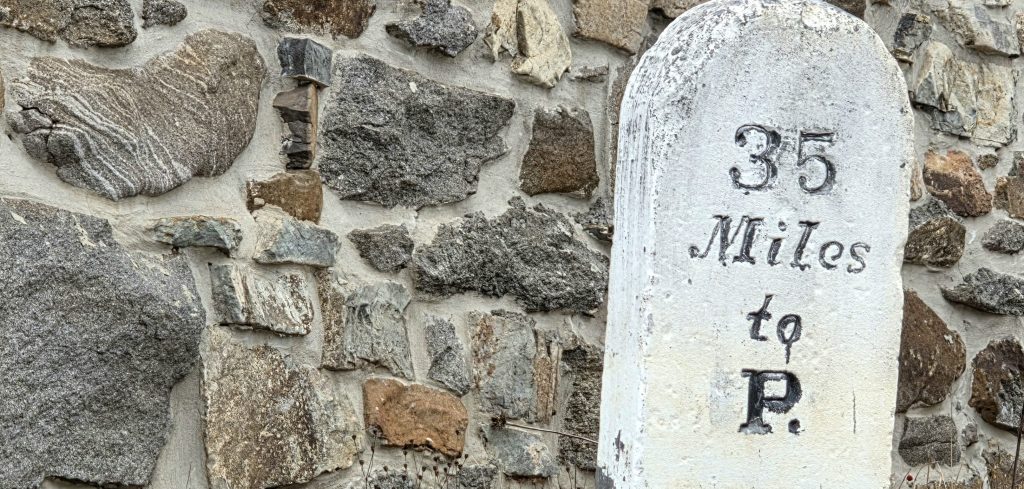
I have this habit of driving around and getting lost on purpose. Taking lefts when logic says right, wandering down narrow lanes instead of main roads. I’m never searching for anything in particular—you could call it curiosity getting the best of me. And yet, every so often, this randomness delivers something unexpected.
You see, the old roads of the Perkiomen Valley don’t just lead somewhere—they remember somewhere. Along them stand houses that are sentinels of another time: some fading in gentle surrender, others immaculate and deliberate. Survival takes many forms, and so does pride. On these drives, I keep my eyes open for the places that make me stop—the ones that quietly insist on being noticed.
At the corner of Main Street and Gravel Pike in Green Lane, I found such a place: a large colonial stone house with powder-blue shutters and a low iron fence. Nearly two centuries old, it holds more than its façade suggests. It whispers of fire and water, of industry and endurance, patiently waiting for someone like me.
This was once the ironmaster’s house for the long-vanished Green Lane Forge. Stand there long enough and you can almost feel it: the creek harnessed and bent to purpose, the smoke lifting from charcoal pits in the surrounding hills, the forge fires burning against the dark Pennsylvania night.
Long before railroads and mercantile shops, the Perkiomen Valley pulsed with the rhythm of Pennsylvania’s early iron industry. Iron forged here became plowshares that cut fields, nails that held homes together, wagon fittings that carried goods to market, and hardware that built growing communities.
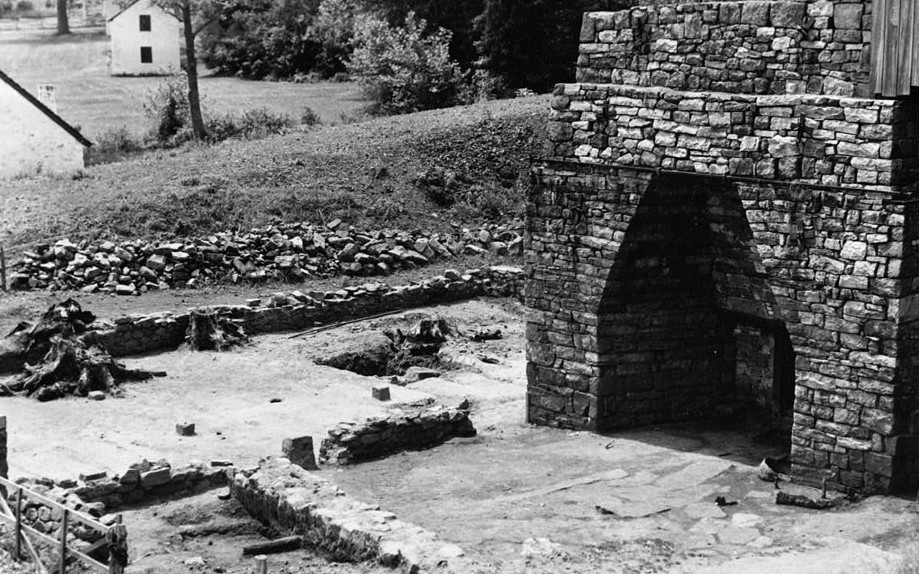
Iron-making in North America did not begin easily. Virginia’s first furnace in 1622 ended in disaster. New England fared better; Massachusetts lit its first forge in 1644. Pennsylvania followed in 1716, when Thomas Rutter built a small forge on Manatawny Creek in Berks County. It was a quiet beginning, but one that would ripple outward through the countryside in ways no one could yet imagine.
By the mid-18th century, the Perkiomen Valley pulsed with iron. Rutter’s forge was only the beginning. Soon Colebrookdale, Hereford, Mt. Pleasant, Salford and Green Lane rose across the valley. These were not merely places to hammer and shape metal. Many included sawmills and gristmills, forming small hubs of work and life in an otherwise rural landscape.
Ironmaking was grueling and dangerous. Men cut wood for charcoal, hauled pig iron from furnace to forge, and tended fires so hot they could melt both metal and flesh if mismanaged. Women, though less often mentioned, sustained the enterprise in other ways—managing households, gathering hay, and performing the steady, necessary work that kept everything moving.
The labor itself was complex. Ironmasters depended on a patchwork of lives and circumstances: free white laborers, indentured servants, and enslaved and free Black workers. In the forge’s daybooks, men like a free Black worker appear alongside white laborers—a reminder that the textures of history were always more intricate than broad narratives suggest. Over time, rising anti-slavery sentiment and Pennsylvania’s Gradual Abolition Act of 1780 transformed the structure of work itself. By the century’s end, most ironworks relied solely on free labor.
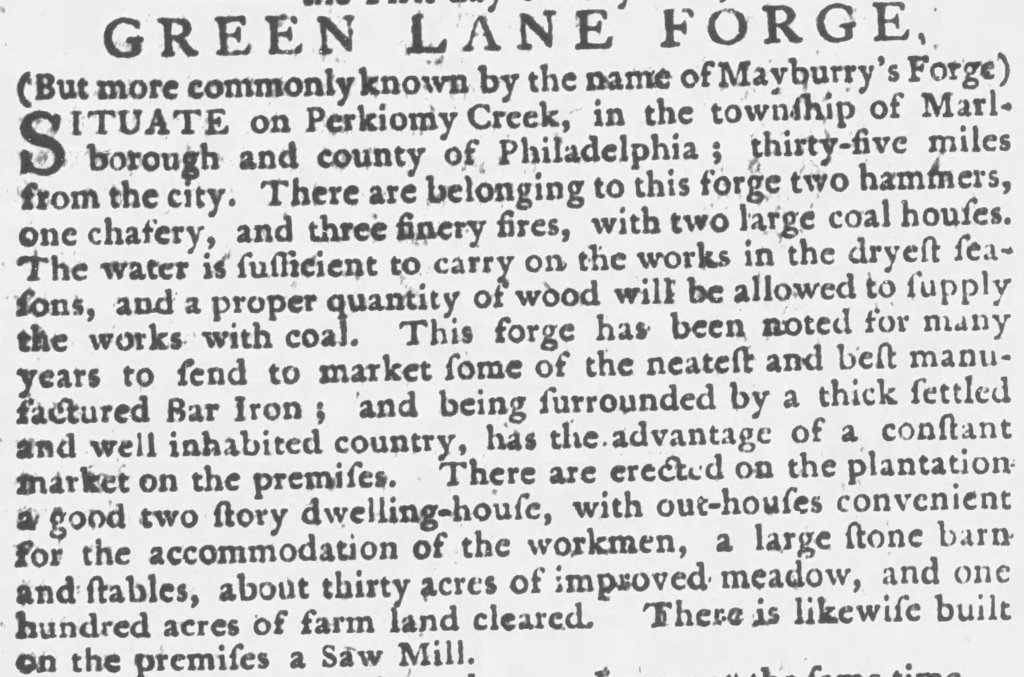
Along the wooded banks of the Perkiomen Creek, in a narrow ravine just above what would become the borough, Thomas Mayburry, Jr.—the son of a blacksmith who arrived in Bucks County in 1716—built what would become Green Lane Forge. The exact year depends on which record you trust. Some accounts say 1733; others point to 1742, when he formally purchased the land and secured his place along the creek. The property eventually totaled roughly 1,200 acres, supplying nearly all the charcoal the forge required.
Every part of the site was chosen with care. The creek, hemmed in by steep banks, powered waterwheels and bellows, while the surrounding forests fed the charcoal fires that burned white-hot inside the forge. Lacking local ore, Mayburry hauled pig iron from places like Durham Furnace in upper Bucks County, some twenty-five miles away. There, under the weight of heavy trip hammers, rough iron was shaped into bars, nails, hinges, farm implements, and wagon parts—the steady necessities of colonial life.
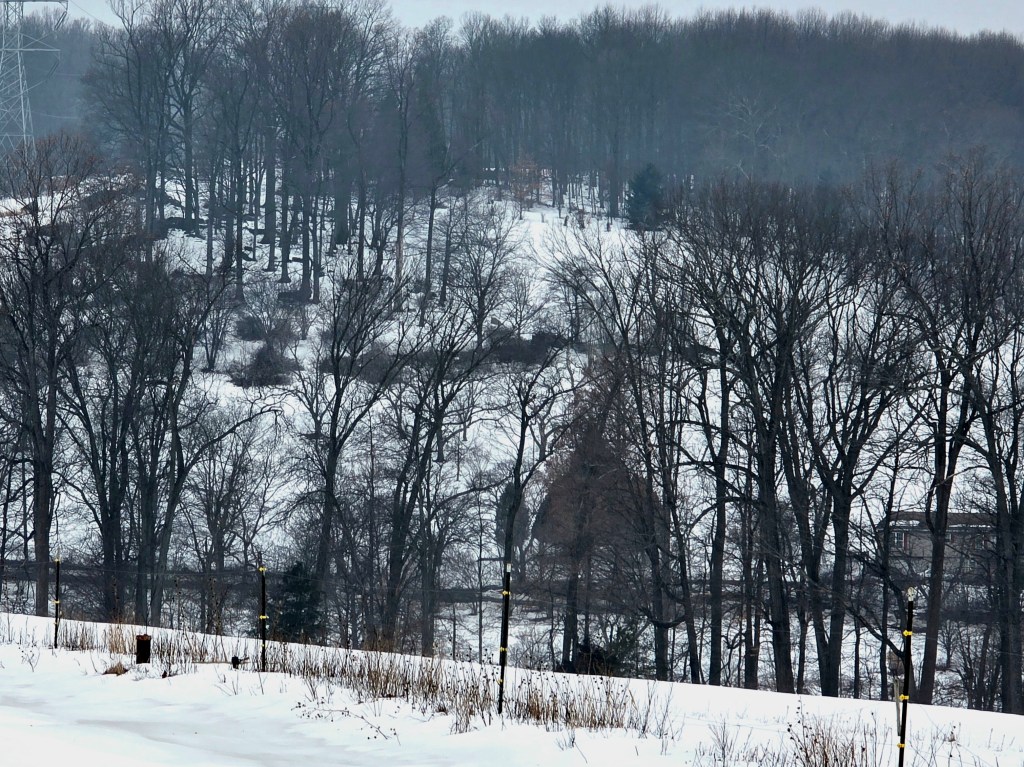
Thomas Mayburry, Jr. died on March 2, 1747, leaving behind his wife Sophia and their four young children. He left no will, and for a time the forge went quiet. Sophia later secured the land warrant and held the property until their eldest son, William, took up the family enterprise around 1757. William bought out his siblings and ran the operation until his death in 1764.
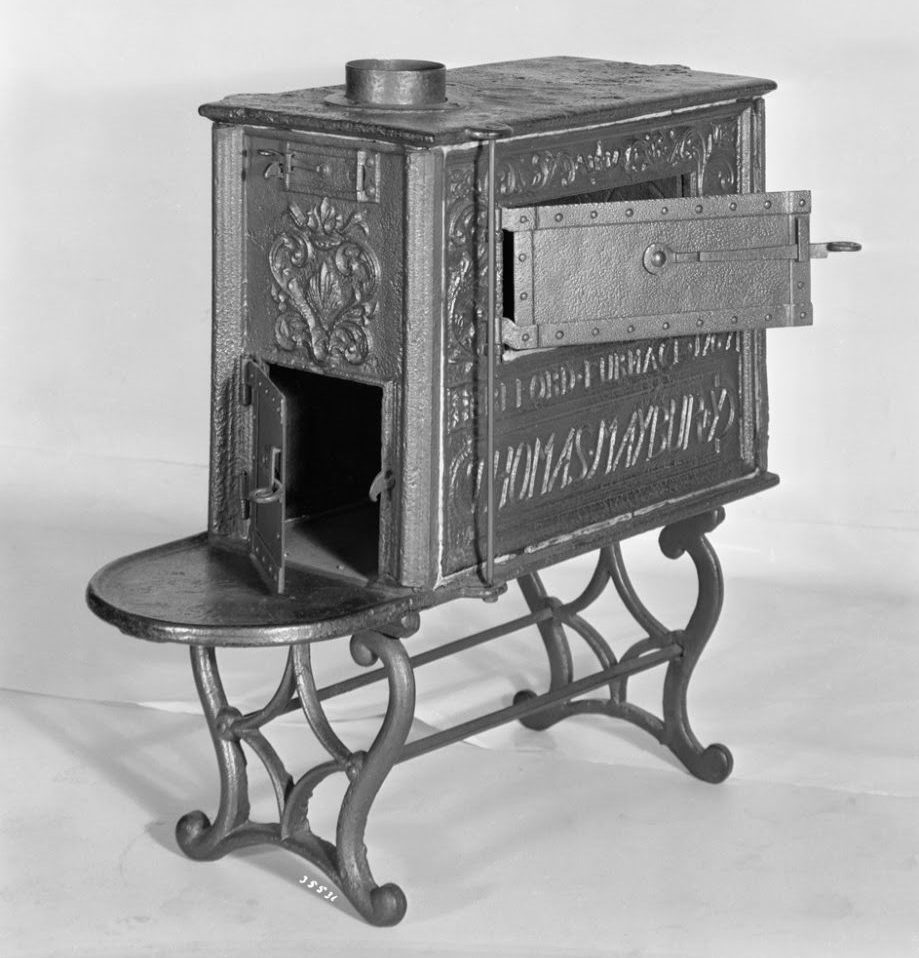
A third Thomas—the grandson—became sole owner and continued the work until 1797, living through decades of change in the young Pennsylvania settlements. Accounts describe him as generous, reportedly tossing coins to the children of his workers—a small mercy in a world defined by relentless labor. Despite this reputation, he died poor and was said to have been buried on his own land, beneath a tree he might once have cut for charcoal. In 1767, he designed an iron hearth that would become known as the Mayburry stove—one of the earliest American innovations for cooking and heat. A replica appeared at the 1893 Chicago World’s Fair.
The Mayburrys managed lands beyond the forge, including a 208-acre tract in what is now Upper Saucon and Lower Milford, likely reserved for charcoal production. Yet ironmaking was never secure. Floods and droughts could halt production without warning. Timber depletion and the long haul of ore gradually strained nearby operations such as Hereford Furnace, in which they held an ownership interest. By 1783, the furnace had gone cold.
In 1872, the Perkiomen Railroad finally reached Green Lane, opening the once-sleepy valley to the wider world. What had been little more than a waystation to the forge was transformed into a connected community. By the turn of the 20th century, Green Lane supported banks, carriage works, mercantile shops, cigar factories, ice manufacturers, and clothing mills. The town’s name, officially adopted in 1875, recalled the forge that had once stood at its heart.
Today, Green Lane Park stretches across land that once rang with iron. Rolling hills, wetlands, and reservoirs have replaced smoke and hammer blows. Montgomery County’s largest park spans roughly 3,400 acres of forested uplands, meadows, and three bodies of water—Green Lane Reservoir, Deep Creek Lake, and Knight Lake. The borough itself remains small, just over 500 residents within three-tenths of a square mile.
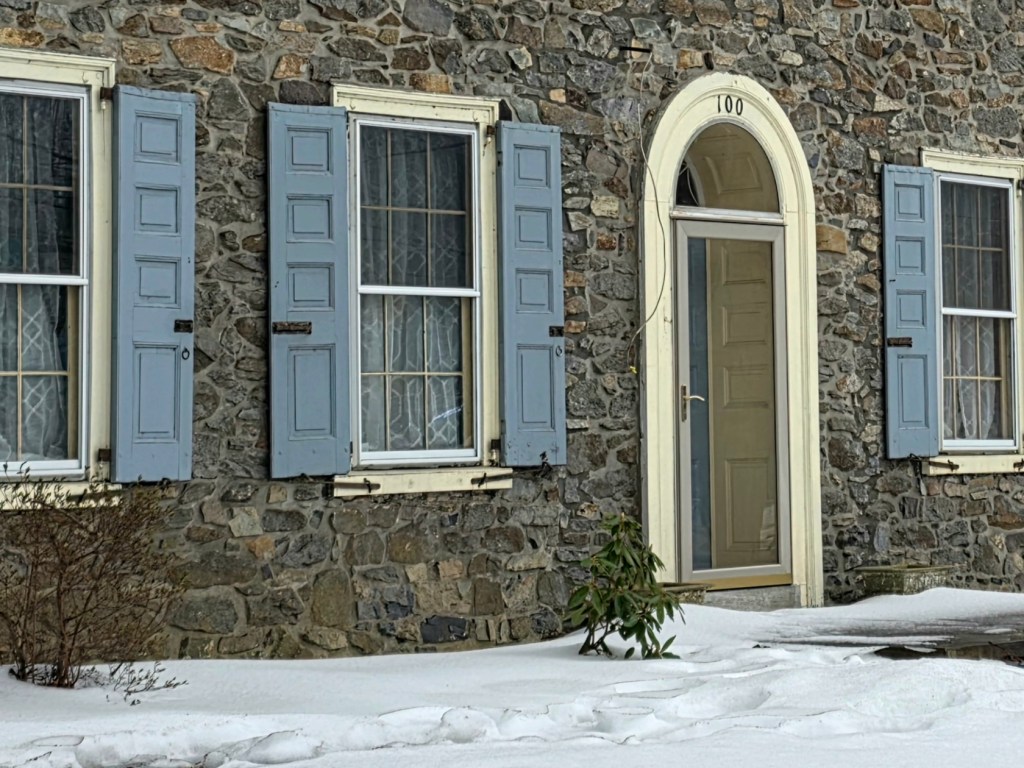
Time has softened the edges of that earlier world. The wheel is gone. The hammer silenced. The forge survives only in records and memory. But the ironmaster’s house at Main and Gravel Pike remains—solid and composed. I often say of the trees surrounding my old house that they overlooked it all; this house must have done the same. It watches in silence, never shouting about its history.
Maybe this week you will follow a curve in the road simply because it feels like it holds an answer. Every so often, on a quiet stretch of forgotten pavement, I find one: a place that has waited centuries to be noticed. And when I do, I don’t just slow down. I stop—and listen.
A heartfelt thank you to Cynthia Seip for welcoming me into her 1700s home to talk about Thomas Maybury. She shared that his gravestone—once vandalized—has since been stolen, though he still rests atop the hill across from the farm she has called home since 1960.
The Iron Mayburrys of Bucks, Berks, and Montgomery Counties, Eastern Pennsylvania tells the story of three generations of ironmasters—Thomas Mayburry Sr., Thomas Mayburry Jr., William Mayburry, and Thomas Mayburry III. At 110 pages, with color illustrations and an index, it’s a portrait of an era you can almost hear—the clang of the hammer, the hiss of the bellows, the quiet resilience of the people who made it all possible.

 Keystone Wayfarer
Leave your thoughts