The idea of a muse has fascinated people for centuries. In Greek mythology, the Muses were nine goddesses—daughters of Zeus and Mnemosyne. Each inspired a different art or science. Over time, the word has broadened, often describing someone whose presence quietly fuels imagination. Some appear as larger-than-life figures; others are everyday individuals whose steady strength leaves a lasting mark.
You can see this complexity portrayed in films like Almost Famous (2000) and Girl with a Pearl Earring (2003). Though very different, both acclaimed stories explore how unspoken connections can spark both art and transformation.
And so it was with Andrew Wyeth, one of the most celebrated American painters of the 20th century, and the woman behind him—his wife, Betsy. As he told his biographer Richard Meryman, “Betsy made me into a painter I would not have been otherwise.” It’s a simple statement that speaks volumes—not just about her influence on his art, but about how she shaped his experience of the world.
This week, Keystone Wayfarer explores the legacy of Betsy James Wyeth as part of our year-long series on inspirational Pennsylvania women—a celebration of lives defined by quiet strength, deep insight, and lasting impact. Her story reveals not only the art she enabled but also the hidden forces behind creativity and the often-unseen individuals who bring great work to life.
Betsy Merle James was born on September 26, 1922, in East Aurora, New York. She was the youngest of three daughters. Her mother, Elizabeth “Maga” Browning, was a Cornell-educated Latin teacher. Her father, Merle Davis James—known to most as Jim—worked at the Buffalo Courier-Express, overseeing the printing of photographs and illustrations. Their home was filled with books, art, and quiet encouragement—the kind that fosters curiosity.
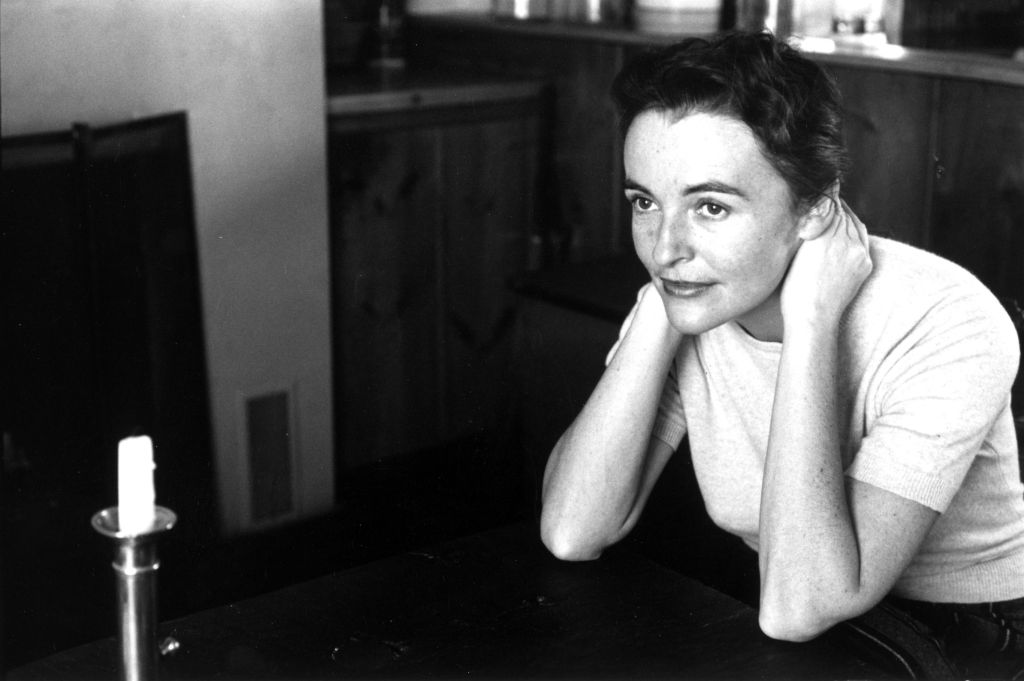
Each summer, the James family traveled to coastal Maine, staying with relatives near Bird Point in the town of Cushing. The salty air, the creak of the dock at low tide, and the distant call of gulls became woven into Betsy’s earliest memories. Nearby stood the weathered farmhouse of siblings Christina and Alvaro Olson, neighbors whose rugged perseverance fascinated Betsy—especially Christina, paralyzed from the waist down yet moving with stubborn grace across uneven fields. That house—and that woman—would become central to American art history.
In 1939, Betsy met Andrew Wyeth, a shy twenty-two-year-old painter visiting Maine. Their introduction wasn’t chance—her father arranged it. Drawn to solitude, nature, and subtle details, their connection sparked quickly. Legend says they were engaged within a week. Though Betsy left for Colby Junior College, they nurtured their bond through letters, marrying in 1940 and settling in an old schoolhouse on the Wyeth family property in affluent Chadds Ford near Brandywine Creek.


From the start, their partnership defied convention. Betsy was far more than Andrew’s wife or muse—she was his anchor and collaborator in every sense: editor, business manager, protector, and above all, his most trusted advisor.
Born into an artistic dynasty, Andrew was the youngest son of N.C. Wyeth, a celebrated illustrator who balanced freedom with discipline. Homeschooled due to health issues, Andrew began formal art study at fifteen under his father’s guidance, developing the technical skill and emotional sensitivity that later defined his style.
Betsy instinctively introduced Andrew to the Olsons and their hilltop home. Andrew soon painted the house, stark landscape, and Christina’s quiet strength—most famously in Christina’s World (1948), a painting that might never have existed without Betsy. She even named it.
With a keen eye and narrative sense, Betsy told Andrew when a painting needed adjustment, and he trusted her completely. “Betsy galvanized me when I needed it,” he said. “She made me see more clearly what I wanted.”
Her influence extended far beyond the studio. While Andrew painted, Betsy worked quietly behind the scenes—managing exhibitions, dealer negotiations, correspondence, and the ways his work reached the world. She drew inspiration for this work from Josephine Hopper, wife of the renowned American realist Edward Hopper. Josephine’s steady support of her husband provided Betsy with a direct model for her own essential and unwavering dedication.
After N.C. Wyeth’s tragic death in 1945, Andrew’s work deepened, blending realism with haunting quietude. His paintings—winter landscapes, muted earth tones, and solitary figures—evoke feelings that are at once personal and universal. His art is not just what you see, but what you feel.


Betsy’s passion extended beyond managing Andrew’s art to include old houses and historic architecture. In 1958, she and Andrew purchased a dilapidated 18th-century gristmill by the Brandywine River, transforming it into a warm, functional space where art and life could coexist. She didn’t just renovate—she revitalized.
Throughout her life, Betsy’s love for Maine endured. Together, she and Andrew acquired three islands—Southern, Allen, and Benner—imagining them as both creative retreats and heritage preserves. Guided by her keen eye, the homes and buildings they cared for took on new life, many immortalized in Andrew’s paintings.
Perhaps her greatest legacy is the Brandywine River Museum of Art. In the late 1960s, she encouraged neighbor and conservationist George “Frolic” Weymouth to buy and restore the local gristmill. She lent Wyeth artworks to start the museum’s collection. When it opened in 1971, the museum quickly became a cultural cornerstone. Today, it proudly houses works by N.C., Andrew, and son Jamie Wyeth.
Betsy authored several books on Andrew’s work. In 1976, she published Wyeth at Kuerners, the first book devoted to his art. She followed this with Christina’s World in 1982, further exploring his work and vision. She also compiled The Wyeths: The Letters of N.C. Wyeth, 1901–1945, offering readers a rare glimpse into the creative mind of Andrew’s father. Beyond publishing, she played a vital behind-the-scenes role in the 1995 documentary Andrew Wyeth Self-Portrait: Snow Hill, helping bring his story to the screen.
In 1968, Betsy and Andrew Wyeth founded the Wyeth Endowment for American Art to support exhibitions, fellowships, and projects that preserve and celebrate the country’s artistic heritage. The foundation provides grants, funds scholarly research, and helps bring important exhibitions and publications to the public. One of its standout programs, the Wyeth Predoctoral Fellowship, partners with the Smithsonian American Art Museum to support doctoral research in American art. Thanks to their vision, projects like N.C. Wyeth: Catalogue Raisonné of Paintings have ensured that the family’s extraordinary artistic legacy continues to inspire generations.
After Andrew’s passing in 2009, Betsy gifted his Chadds Ford studio to the Brandywine Museum. Preserved much as he left it, the space remains a quiet sanctuary—offering visitors a rare glimpse into the world where his art was imagined and brought to life.
Betsy Wyeth passed away in 2020 at the age of 98. Her life spanned nearly a century—through wars, cultural shifts, and revolutions in art. Throughout it all, she remained a grounding force: rooted, devoted, and brilliant in ways that shaped not only her husband’s art but the world around her.
Her legacy lives on in museums, letters, restored buildings, her sons Nicholas and Jamie, and the many artists and scholars she supported. Two years after her death, Andrew’s painting Day Dream sold for $23 million—a subtle tribute not to wealth or fame, but to a woman who nurtured a creative flame burning for generations.
To call Betsy Wyeth a muse is true, but it falls short. She was the quiet force behind the curtain—the one who didn’t just spark creativity, but built the fire and kept it burning.

 Keystone Wayfarer
Leave your thoughts