“In the Mood,” that toe-tapping big band classic, was on the setlist when my mom, her youngest sister, and brother-in-law caught a recent show at the Sellersville Theater. They were in town celebrating my aunt and uncle’s forty-fifth wedding anniversary, and the concert—full of swing, brass, and nostalgia—felt like the perfect soundtrack for the occasion.
From the first blast of the impressive horn section, the energy in the auditorium shifted. Couples in the sold-out audience grinned and swayed like they’d stepped into a time machine bound for a 1930s sock hop. Weeks later, my mom was still raving—especially about that one song.
She’s not wrong. Glenn Miller’s 1939 recording of “In the Mood” didn’t just top the charts—it became a cultural touchstone. Originally written by saxophonist Joe Garland and first recorded by Edgar Hayes, it was Miller’s smooth, driving arrangement that came to define the swing era. Miller’s recording was inducted into the Grammy Hall of Fame in 1983 and added to the Library of Congress’s National Recording Registry for its cultural significance.
Miller himself had quite the story. Before becoming a household name, he arranged for swing giants like the Dorsey Brothers and Benny Goodman. In 1935, he formed his own band—one that would become one of the most successful of its time.
And then, just like that, he vanished. In December 1944, at the height of World War II, Miller boarded a flight across the English Channel to entertain U.S. troops. The plane disappeared mid-flight. No wreckage. No remains. Just gone. To this day, the mystery remains unsolved.
Before that tragic end, Miller’s music filled dance halls across the country. And those halls weren’t just places to dance—they were community hubs, escape valves, and cultural pressure-release points. For many, especially working-class and immigrant communities, they offered relief from long hours, family obligations, and societal expectations. Sometimes, they even allowed people to push the boundaries of gender roles and courtship norms.
One of those historic ballrooms still stands just ten miles from my front door. Every time I drive past it—usually en route to Home Depot for something “urgent”—I swear I can almost hear echoes of trumpets and laughter from nights long gone.
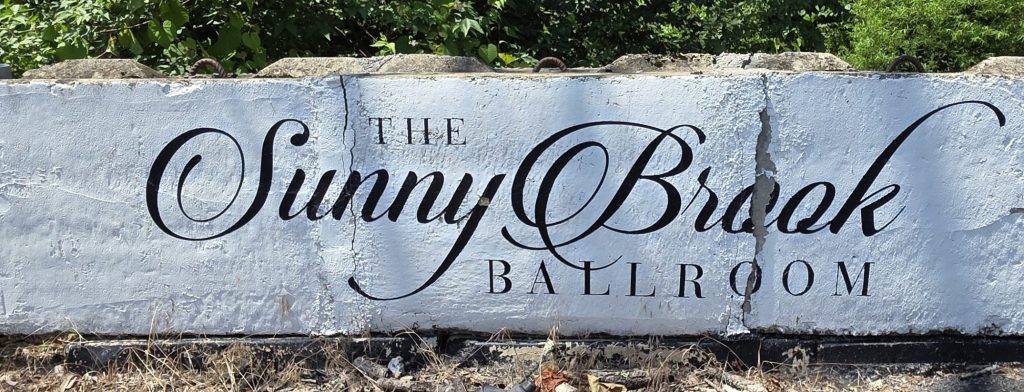
Sunnybrook Ballroom, tucked just east of Pottstown, is one of the few remaining grand dance halls from the pre–World War II era—and impressively, it’s still in operation. Back in the day, it drew crowds from across the region, including the Main Line. Nearly all the top big band acts played there.
The man behind Sunnybrook was Raymond C. Hartenstine, a local builder and World War I veteran. Born in 1894 in nearby Sanatoga, Ray served at Camp Meade, where he worked as a carpenter. After the war, he returned home and launched a successful construction business, credited with building many local homes and storefronts—including the original Pottstown Mercury building.
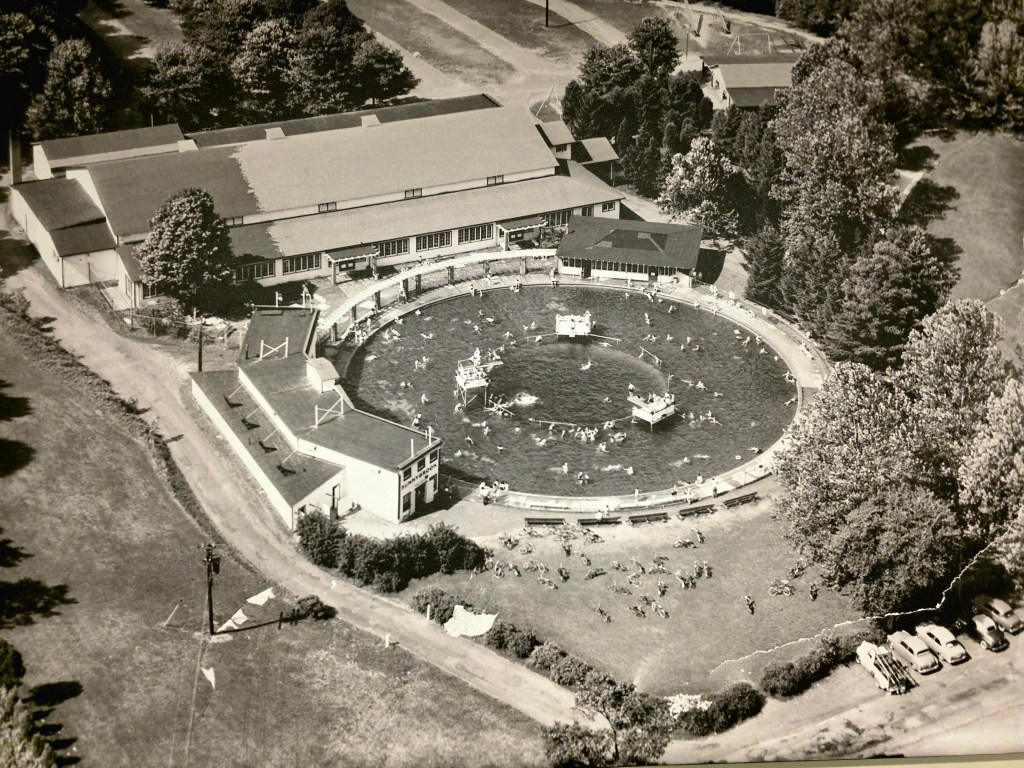
While still in the service, Ray married Sara Rebecca Kepler at her family’s homestead, Sunnybrook Farm. The land had been in the Kepler-Bickel family since colonial times. In 1926, Ray and his brother-in-law built a swimming pool and picnic grove on the property, which quickly became a popular summertime destination.
But Ray had bigger plans. In the depths of the Great Depression, he dreamed of creating a space that would bring joy and connection to the community—a place for music, dancing, and gathering. That dream became a 26,000-square-foot ballroom that soon attracted the biggest names in swing, jazz, and big band.
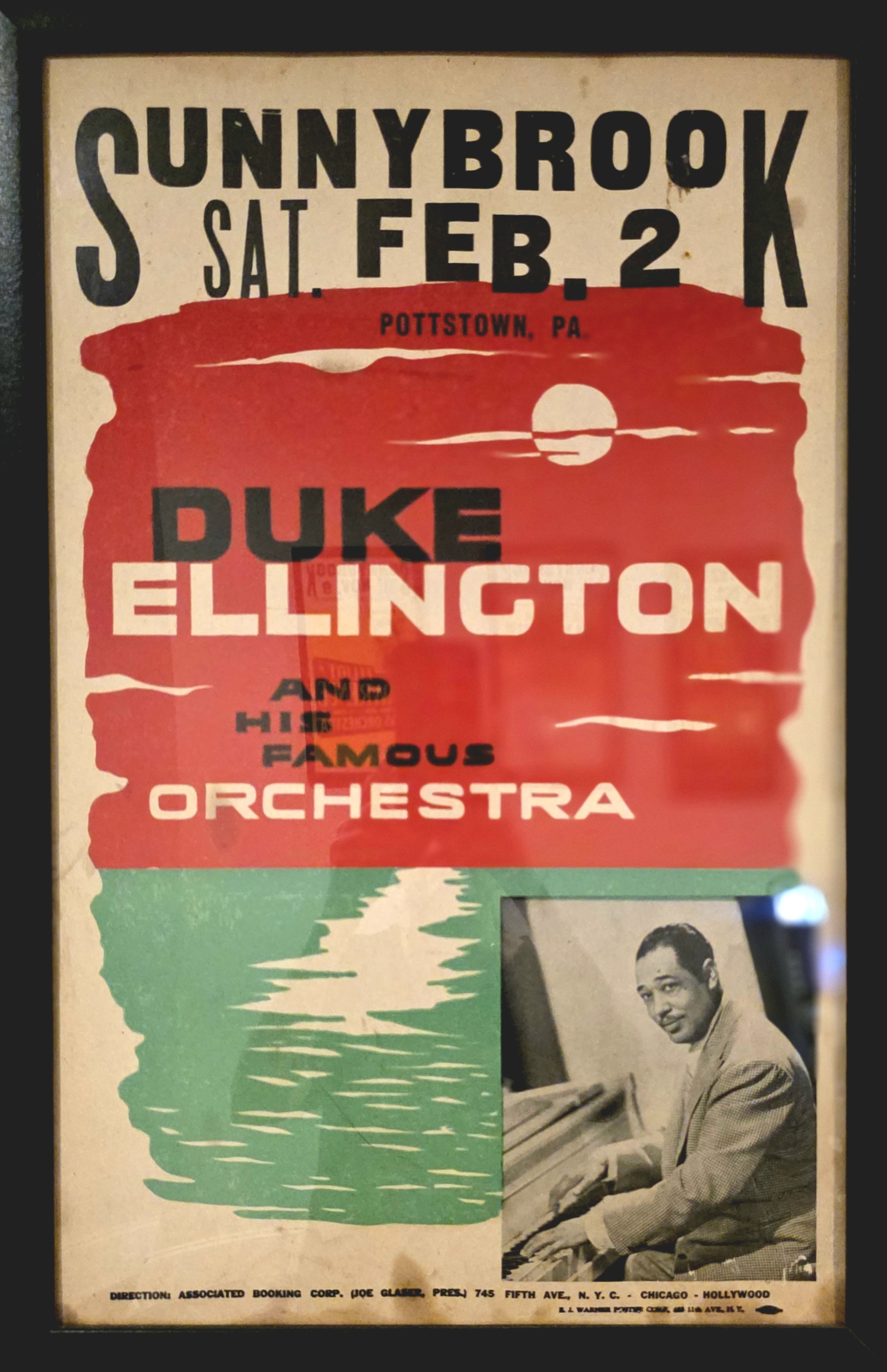
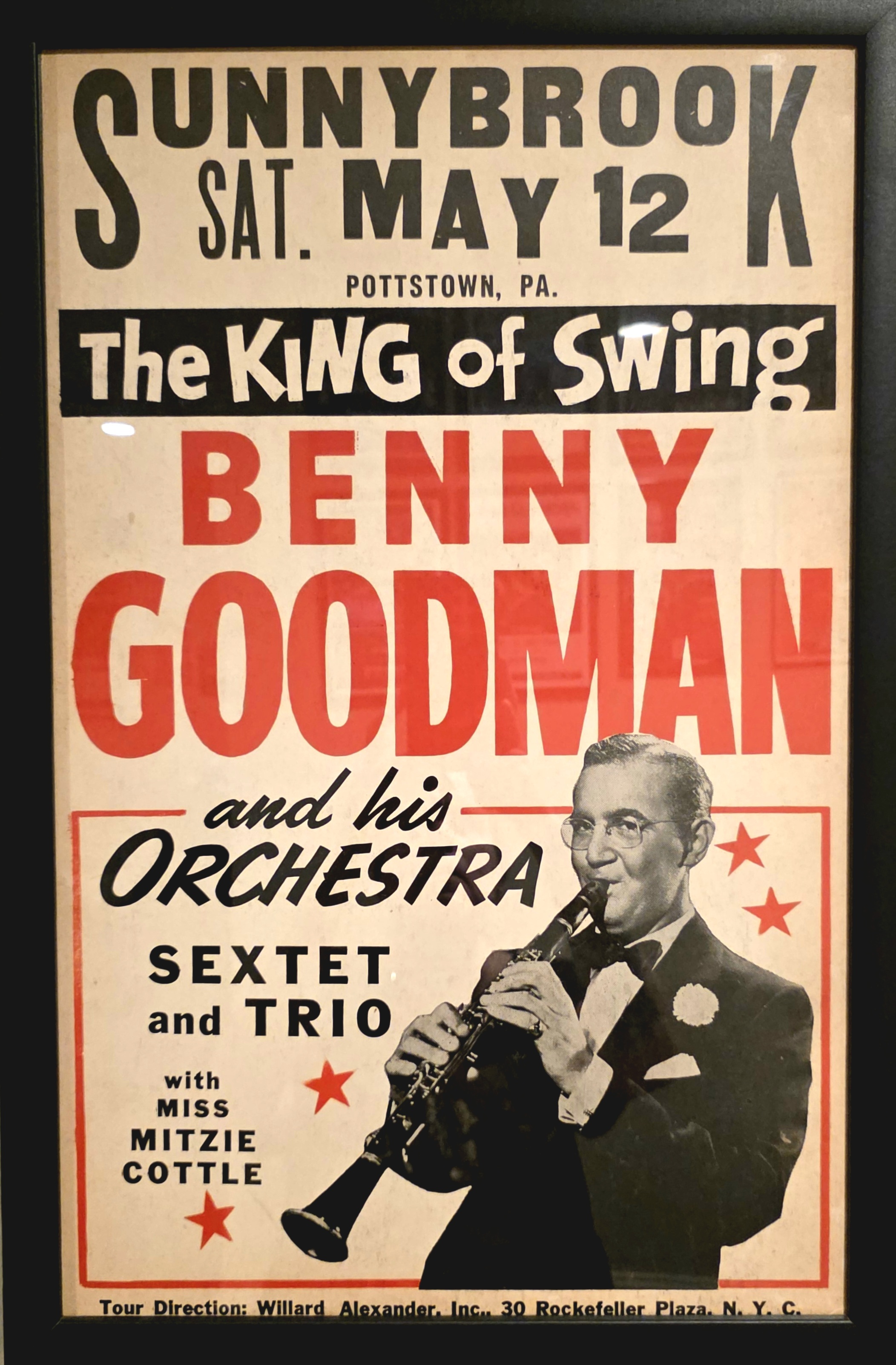
Sunnybrook officially opened over Memorial Day weekend in 1931, with Joe LaFrance and his Bosch Radio Band as the first act to take the grand stage. Over the next three decades, it welcomed a who’s who of American music: Cab Calloway, Fletcher Henderson, Count Basie, Duke Ellington, Benny Goodman, the Dorsey Brothers, Louis Armstrong, Artie Shaw, Paul Whiteman, Lawrence Welk, Lionel Hampton, Frank Sinatra—and yes, Glenn Miller himself.
During a time when black bands were often excluded from white venues, many of these artists found a platform at Sunnybrook—highlighting the venue’s notably inclusive legacy. In its first thirty years, more than 345 bands performed on its expansive, elevated stage.
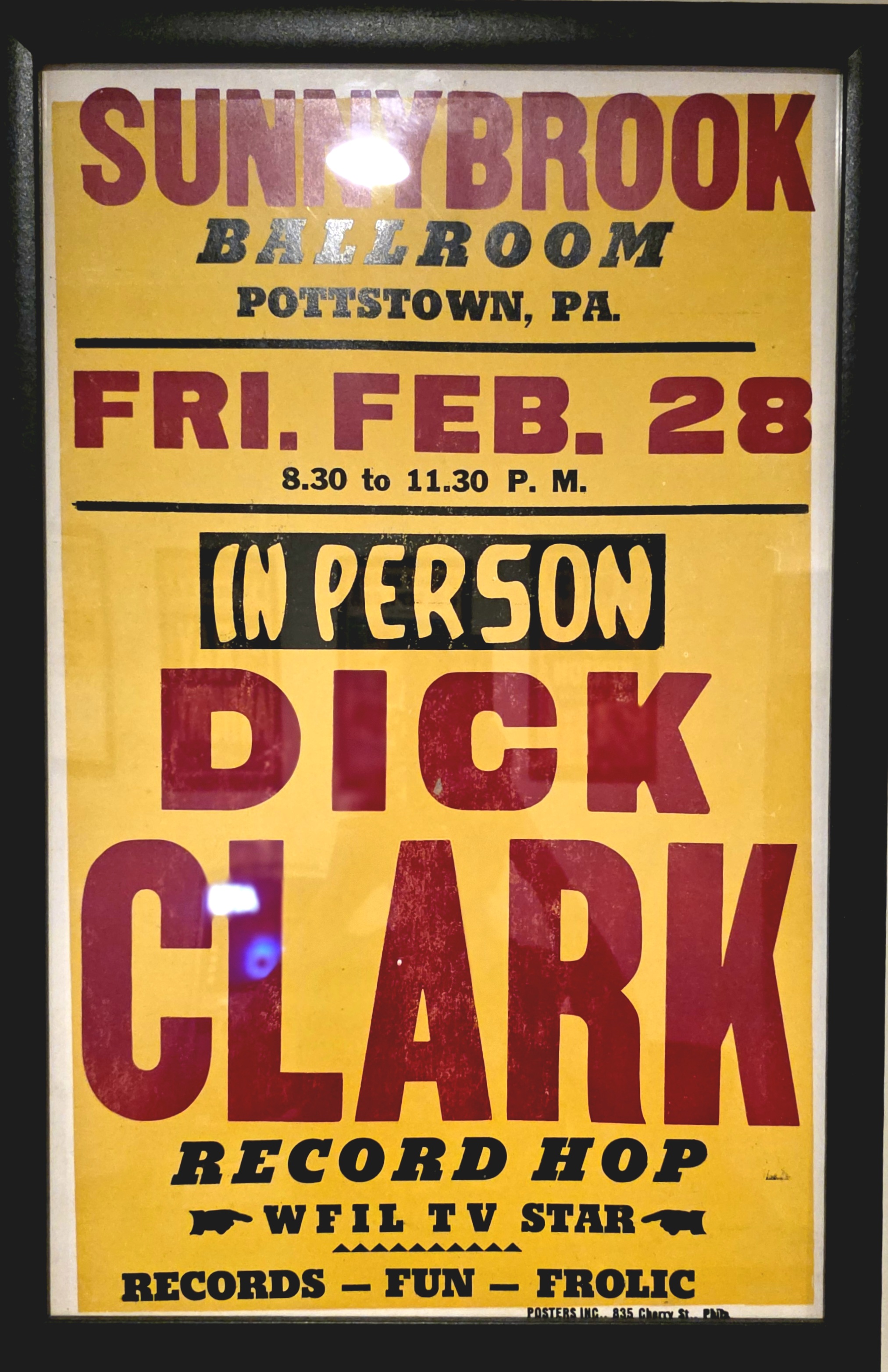
The 1930s and ’40s were marked by economic devastation and global upheaval. The Wall Street Crash of 1929 erased personal savings overnight and triggered the Great Depression. Millions lost their jobs and struggled just to get by. Amid the uncertainty, extremist ideologies gained traction. In 1933, Adolf Hitler rose to power in Germany, ushering in an even more ominous chapter of global history. Yet in the face of chaos, Sunnybrook offered a vibrant escape.
Sunnybrook’s peak came in February 1942 when the Glenn Miller Orchestra drew a record-breaking crowd of over 7,300—a record that still stands. But by the end of that year, World War II forced the ballroom to close temporarily. Gas was rationed, men were drafted, and many musicians joined the war effort.
As rock and roll surged in the 1950s, big band music faded. Television overtook radio, and live broadcasts from places like Sunnybrook Ballroom dwindled. In 1963, things began to change. Rising costs for entertainment, utilities, and staffing made once-a-week dances unsustainable. Sunnybrook’s owners adapted by adding the Colonial Inn and Tavern and securing a liquor license. By 1964, Sunnybrook had become a daily social destination, with local bands breathing new life into its grand ballroom.
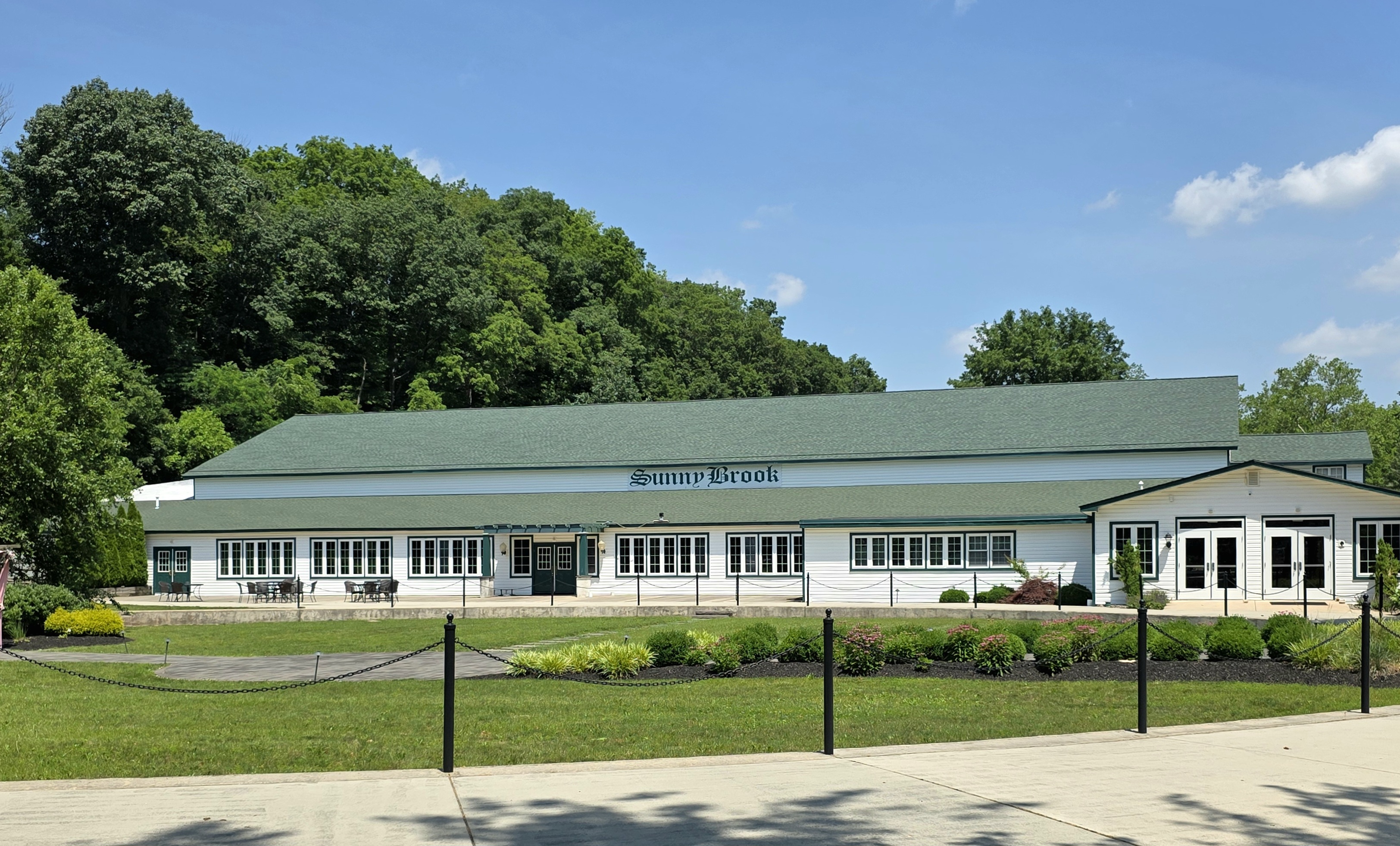
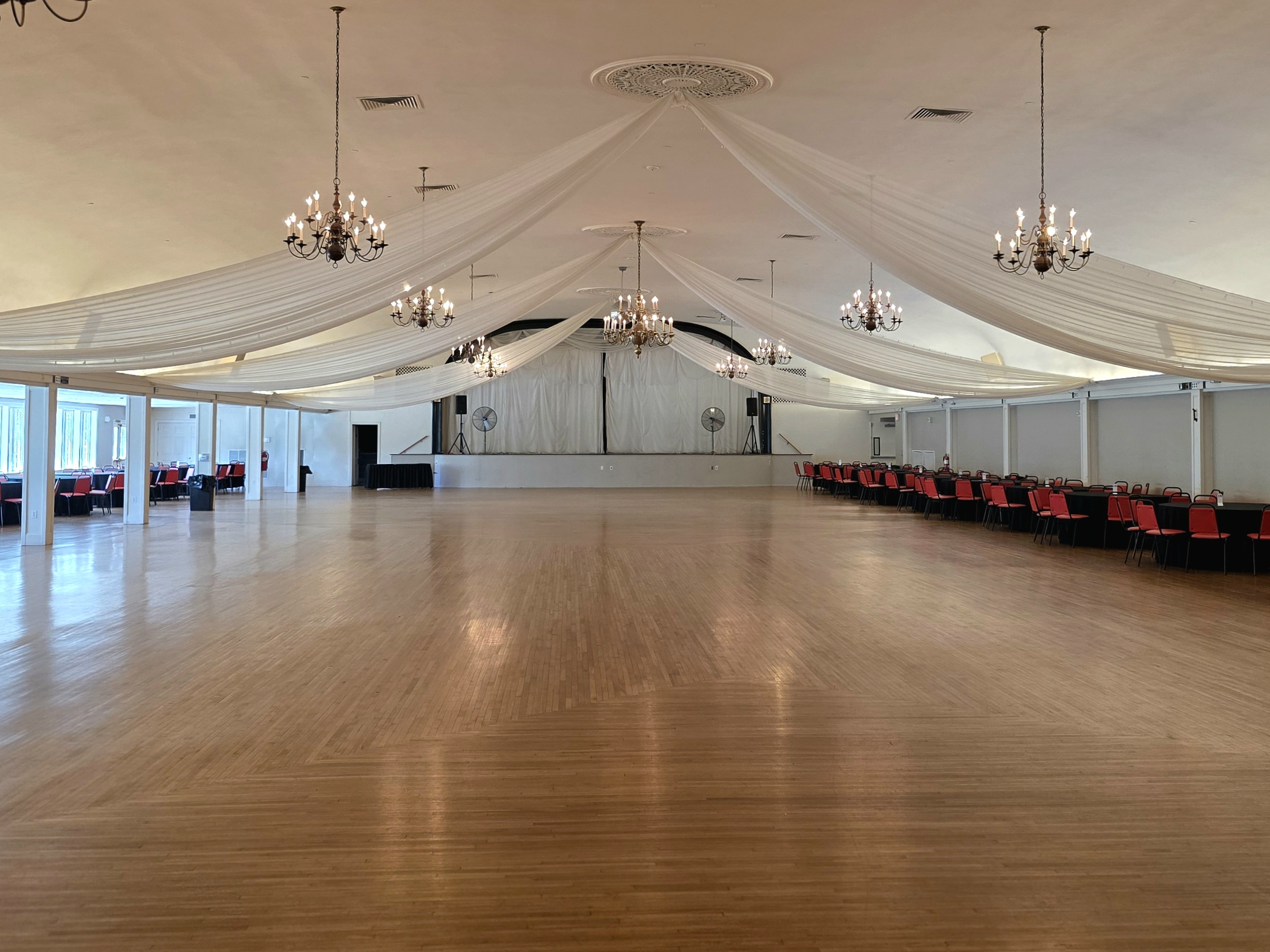
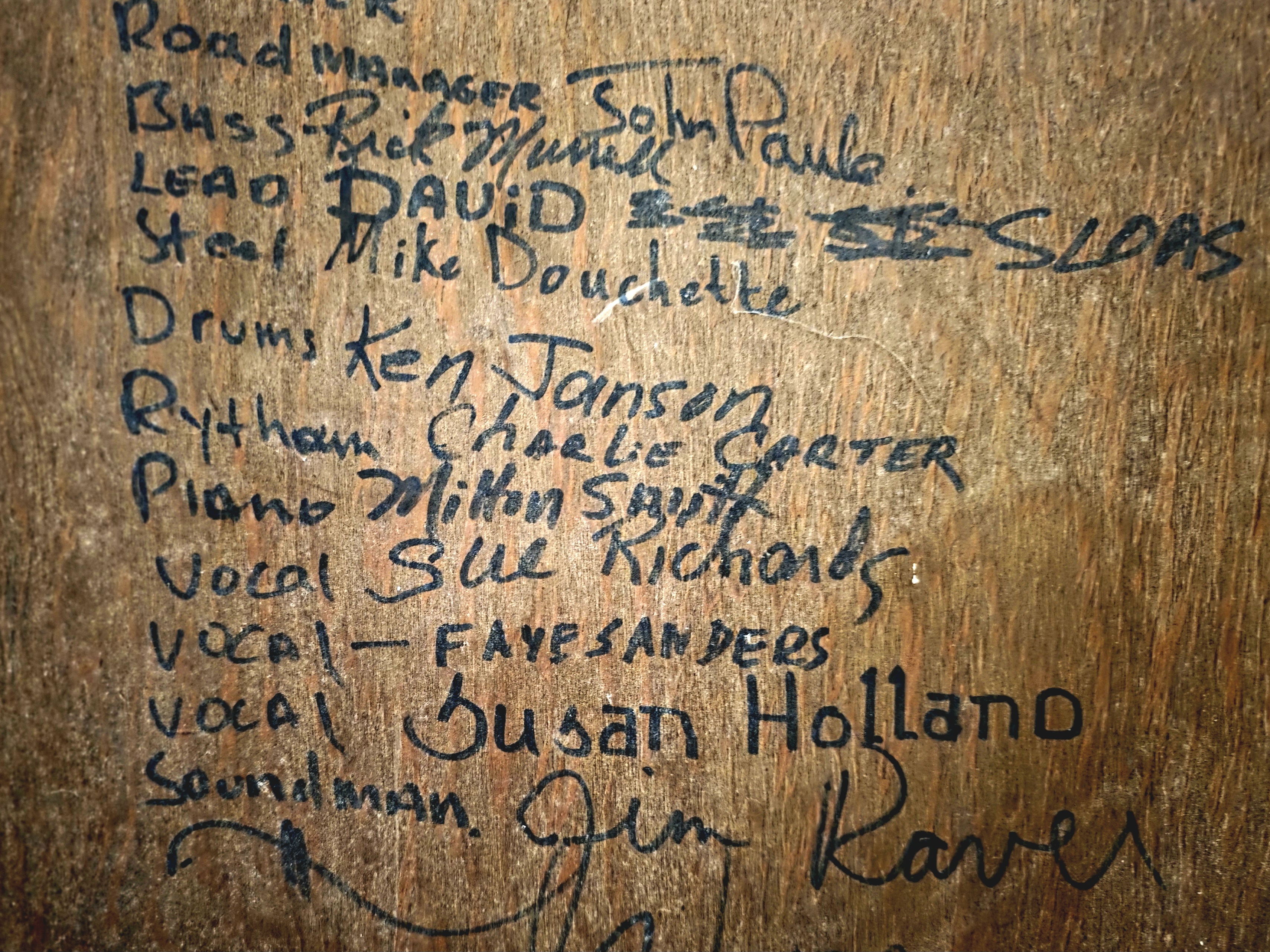
After Ray Hartenstine passed away in 1972, his children—Robert, Ray Jr., and Doris Drumheller—took over, carrying forward the family’s legacy.
Joel Richardson, Sunnybrook Ballroom’s current owner and founder of SoulJoel’s Comedy Club, is leading Sunnybrook’s revitalization. After earning an MBA in business management, Richardson began performing at comedy clubs in 2006 and left a successful career in pharmaceutical sales in 2009 to pursue entertainment full-time. Today, nearly his entire family is involved in restoring Sunnybrook.
“We’ve painted the entire building, including the ceiling of the ballroom, and installed a new roof,” he says. “This place was built in 1931—there’s always something to maintain. But we’re committed to preserving this community gem.”
Richardson feels a deep personal connection to the space. “I love the era Sunnybrook was built. It was designed so music could carry all the way to the back of the ballroom—long before microphones and speakers. My grandparents would have loved the place. I know they’re guiding me on this journey.”
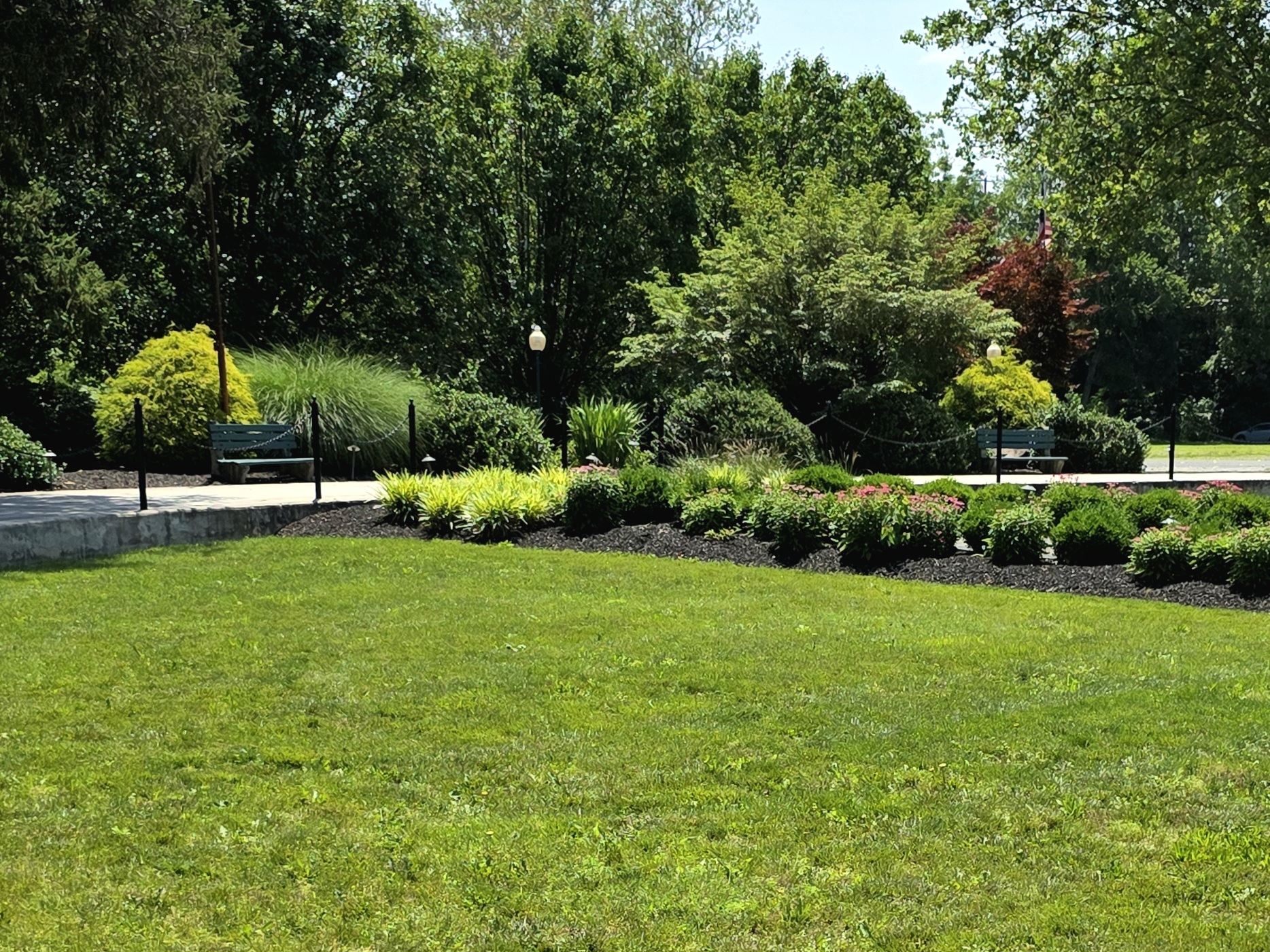
Even remnants of the original 1926 pool have been repurposed. “The old spot is now our wedding garden,” Richardson explains. “The pool was circular and fed by two natural springs—it was always freezing. It didn’t meet modern safety standards, so it had to be filled in, but the site remains a special part of Sunnybrook and its history.”
Each fall and spring, Sunnybrook offers guided tours—usually on the first Sunday of the month, coinciding with its First Sunday Swing Dance. The tour begins in the historic pool area, led by Amy Daniels–granddaughter of Ray Hartenstine Sr.–before Richardson takes over to share Sunnybrook’s next chapter.
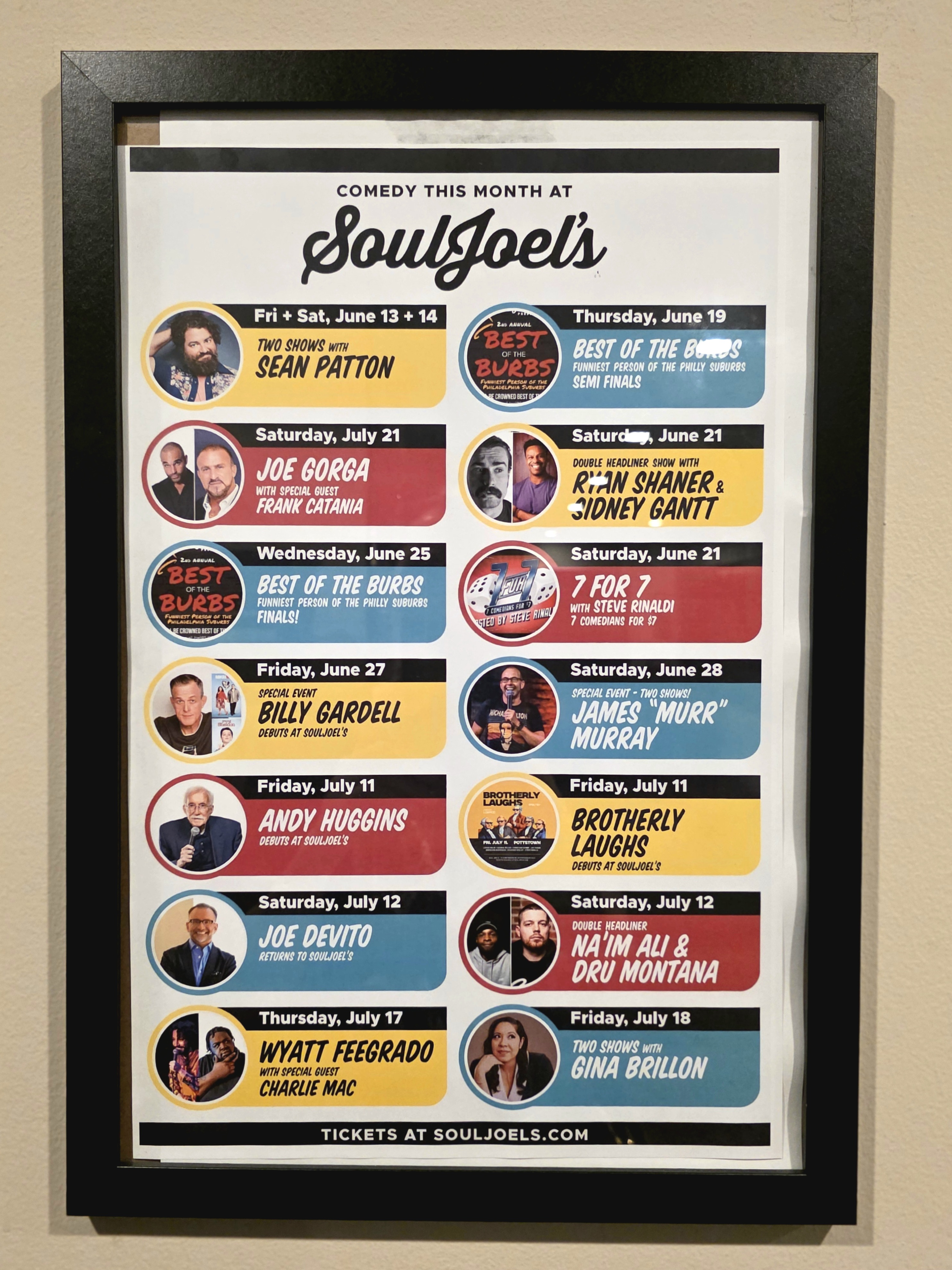
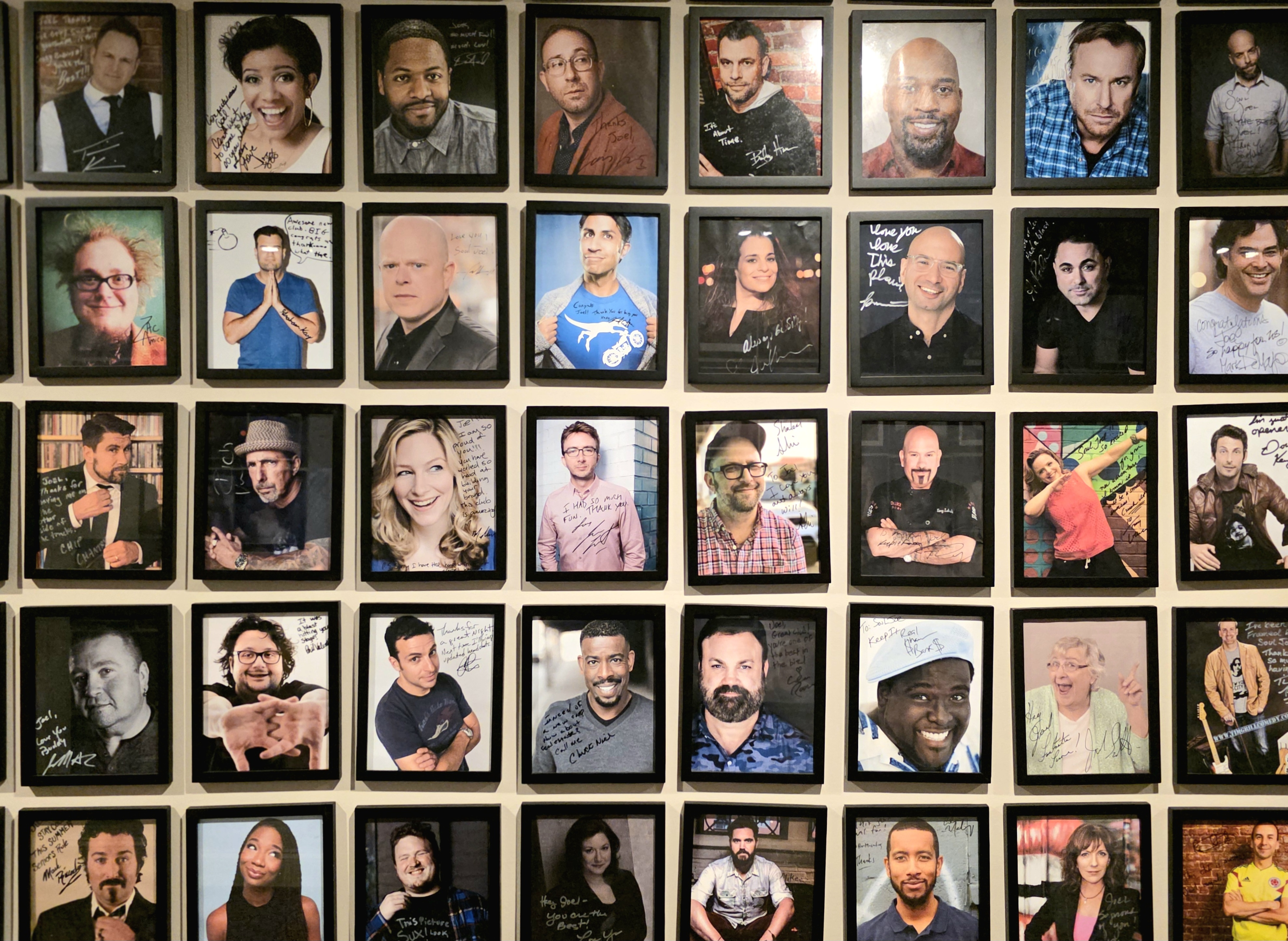
“This October marks three years for us,” he says. “We’ve hosted nine high school proms, countless weddings, baby showers, anniversaries, bingo, comedy shows, live music—you name it. On any given weekend, you’ll find acoustic music in Gatsby’s Pub, a comedy show in The Melody Room, and dancing in the ballroom. There’s something for everyone.”
Glenn Miller and his band played Sunnybrook only three times over eight years—but those nights left echoes. Every time I drive past, I can almost hear them: horns blaring, heels clicking on polished wood, laughter rising through the rafters. The big bands may no longer play every weekend, but the spirit endures.
To my mom, hearing “In the Mood” brought back memories of those easy, swing-filled nights. For me, it opened a door to a story I’d driven past a hundred times, hidden in plain sight. The ballroom, the music, the people—it’s not just history. It’s legacy. Maybe, if we’re lucky, Sunnybrook is setting the stage for the next big thing still to come.
To view and purchase tickets for upcoming events, simply click here.

 Keystone Wayfarer
Leave your thoughts