My first big trip was to California when I was fourteen, give or take a year or two. I was both excited and scared—never having flown on a commercial airplane before. My mom, her partner Jon, my brother, and I flew from Logan Airport to Los Angeles International.
We stayed at Jon’s older brother Stephen’s house in Arcadia, a city nestled in the San Gabriel Valley. His home was beautiful, surrounded by cascading flowers in every imaginable color. I remember peacocks roaming the neighborhood like they owned the streets.
During that week-long trip, I made lemonade every day, picking fresh lemons from the trees in Stephen’s backyard. One of the biggest highlights was visiting Disneyland for the first time—a place I’d return to many times years later when I lived in Hollywood for nearly thirteen months. That’s when I finally rode Space Mountain, the rollercoaster that had once been off-limits because I was too short.
One of the most fascinating parts of that trip was learning about Stephen’s work. He was a cinematographer. I didn’t fully understand the artistry then, but that early spark of curiosity grew into what is now a deep love for film.
Today, movies are a huge part of my life. My husband—the mad collector—has nearly three thousand films in his personal library. We’re regulars at the AMC in Pottsgrove. There’s something extraordinary about sitting side by side with my friend-for-life, watching stories unfold on the big screen. We laugh, cry, and disappear into those movie worlds. Fellow film buffs will understand the magic.
The roots of American cinema go back to the late 1880s, when Thomas Edison and his assistant, William Dickson, invented a series of devices that made short films possible. These early “actualities,” as they were called, gradually evolved into scripted dramas. That shift marked the true birth of cinema as an art form.
One of the most advanced early film studios in the world once stood on the banks of the Schuylkill River, not far from my beloved Schwenksville. Betzwood Motion Picture Studio produced more than a hundred films before fading into obscurity.
Its founder, Siegmund Lubin, immigrated to the United States from Poland in 1876. A graduate of Heidelberg University—one of the world’s oldest institutions of higher learning—he first made a living selling eyeglasses. His expertise in lenses and optics would prove invaluable in the early motion picture era.
After discovering Edison’s motion picture camera, Lubin saw an opportunity. He began filming in the back room of his optical shop, with a rooftop studio on Arch Street—a place I lived near when I first moved to the city of brotherly love in 2000.
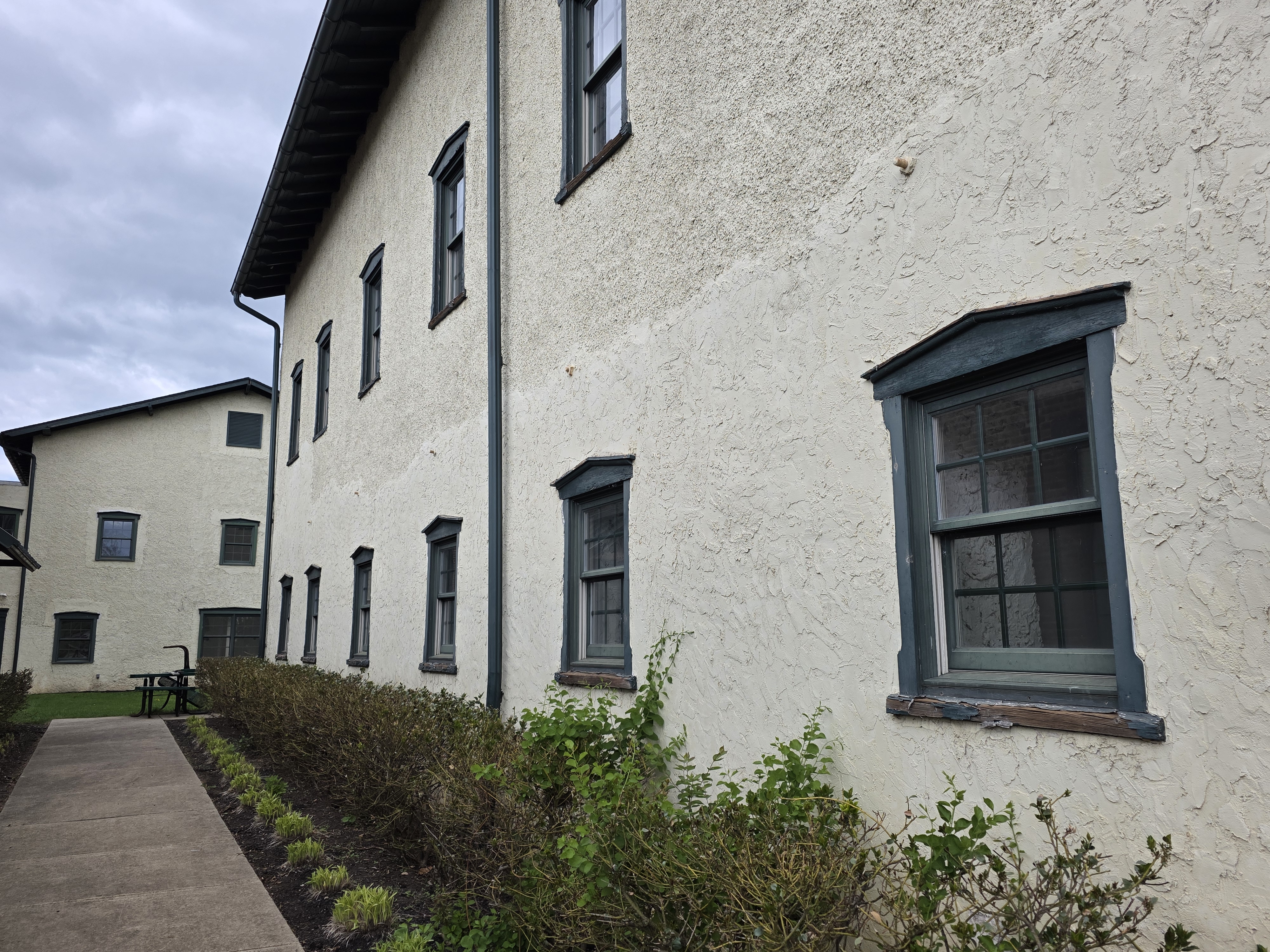
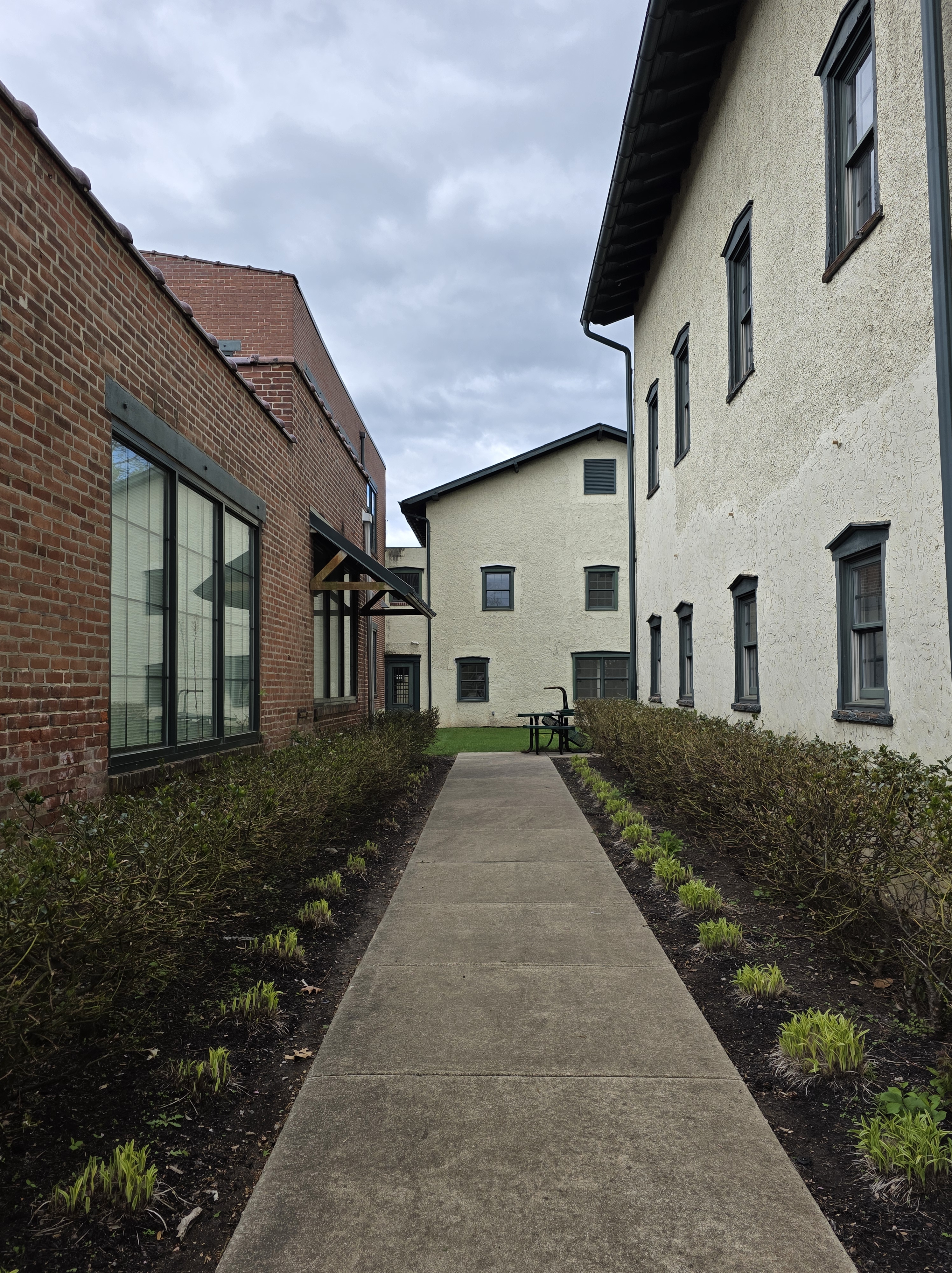
Lubin Manufacturing Company began producing films for commercial release, stamped with a Liberty Bell logo that became a symbol of early American cinema. To meet growing demand, he built a massive studio complex at Indiana Avenue and 20th Street in Philadelphia. “Lubinville” featured artificially lit stages, editing rooms, laboratories, and workshops that supported multiple productions at once.
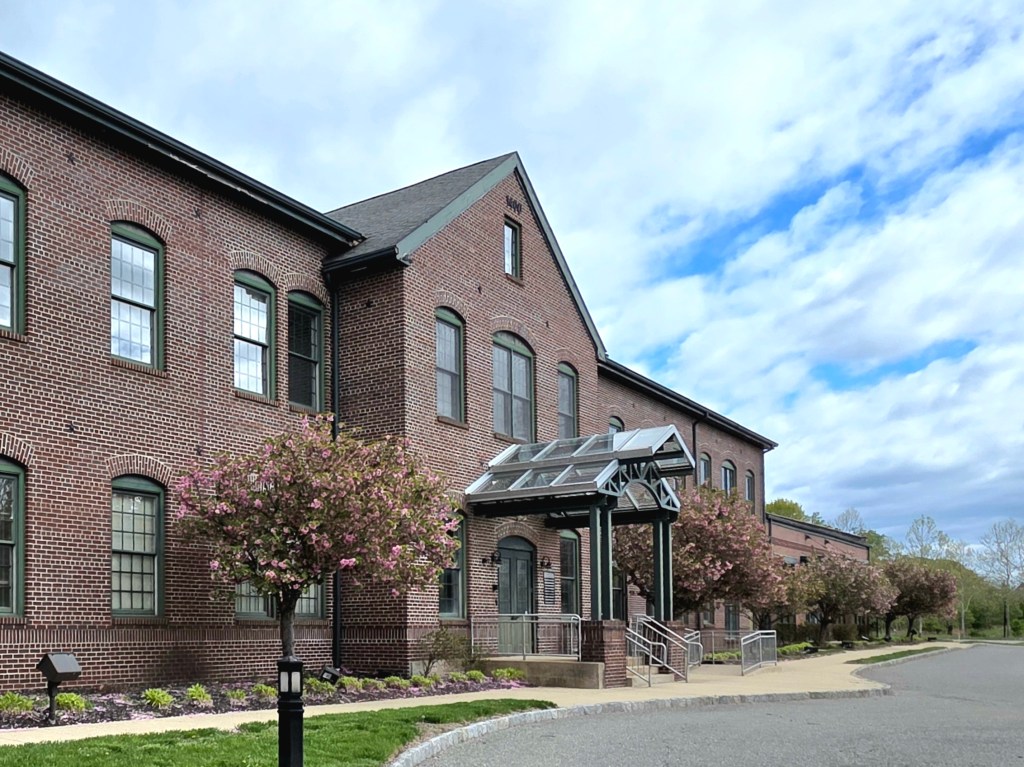
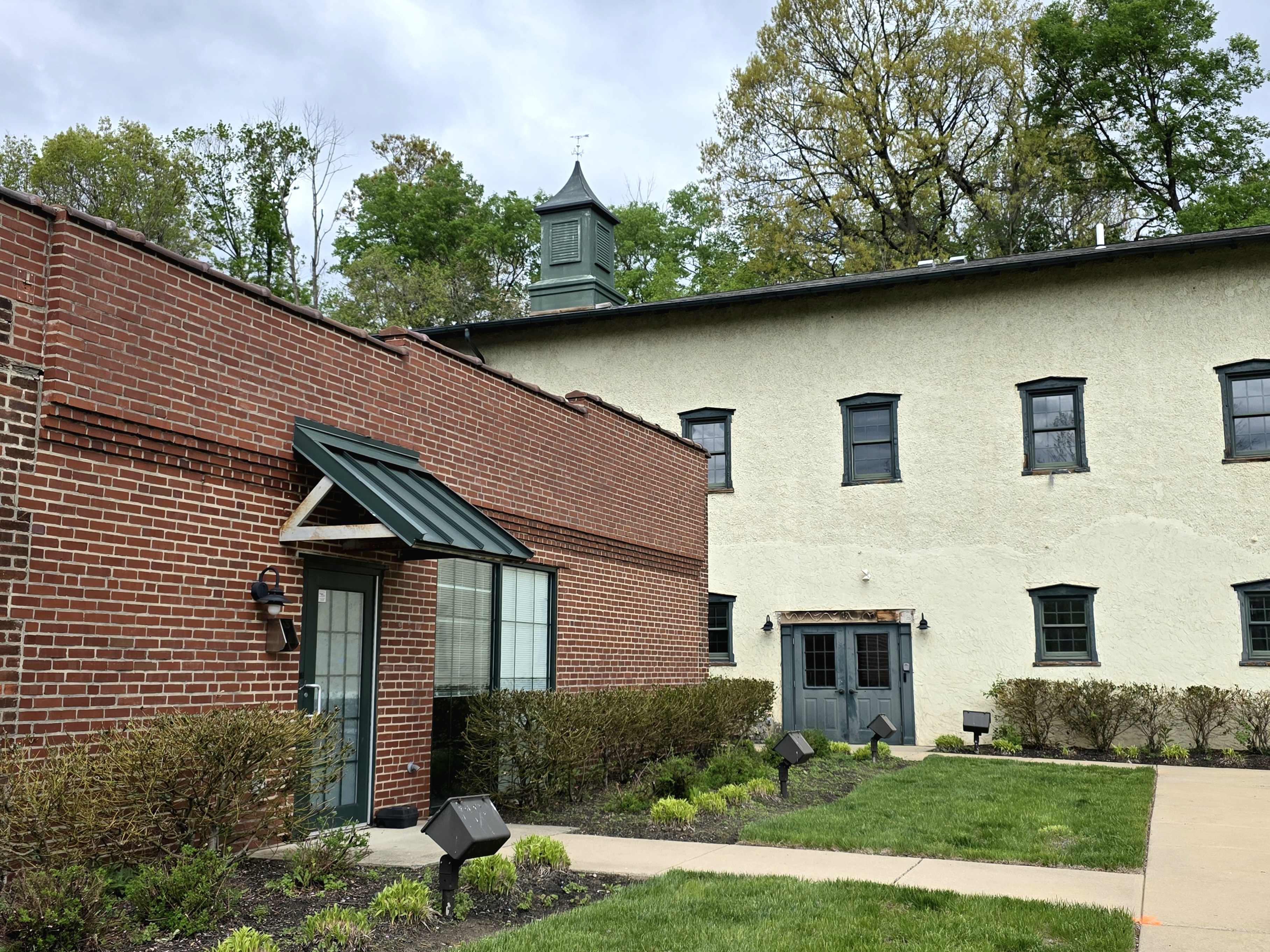
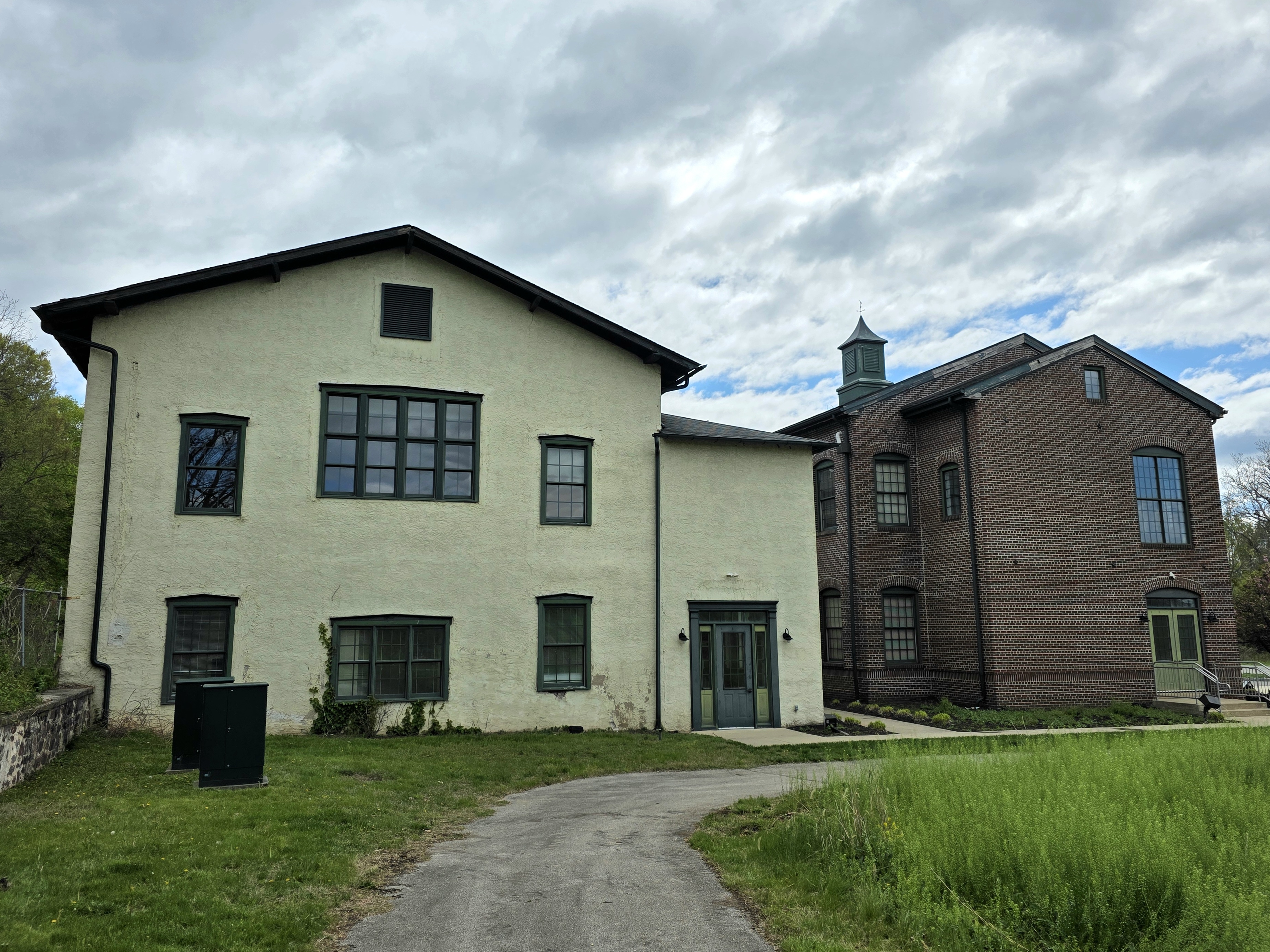
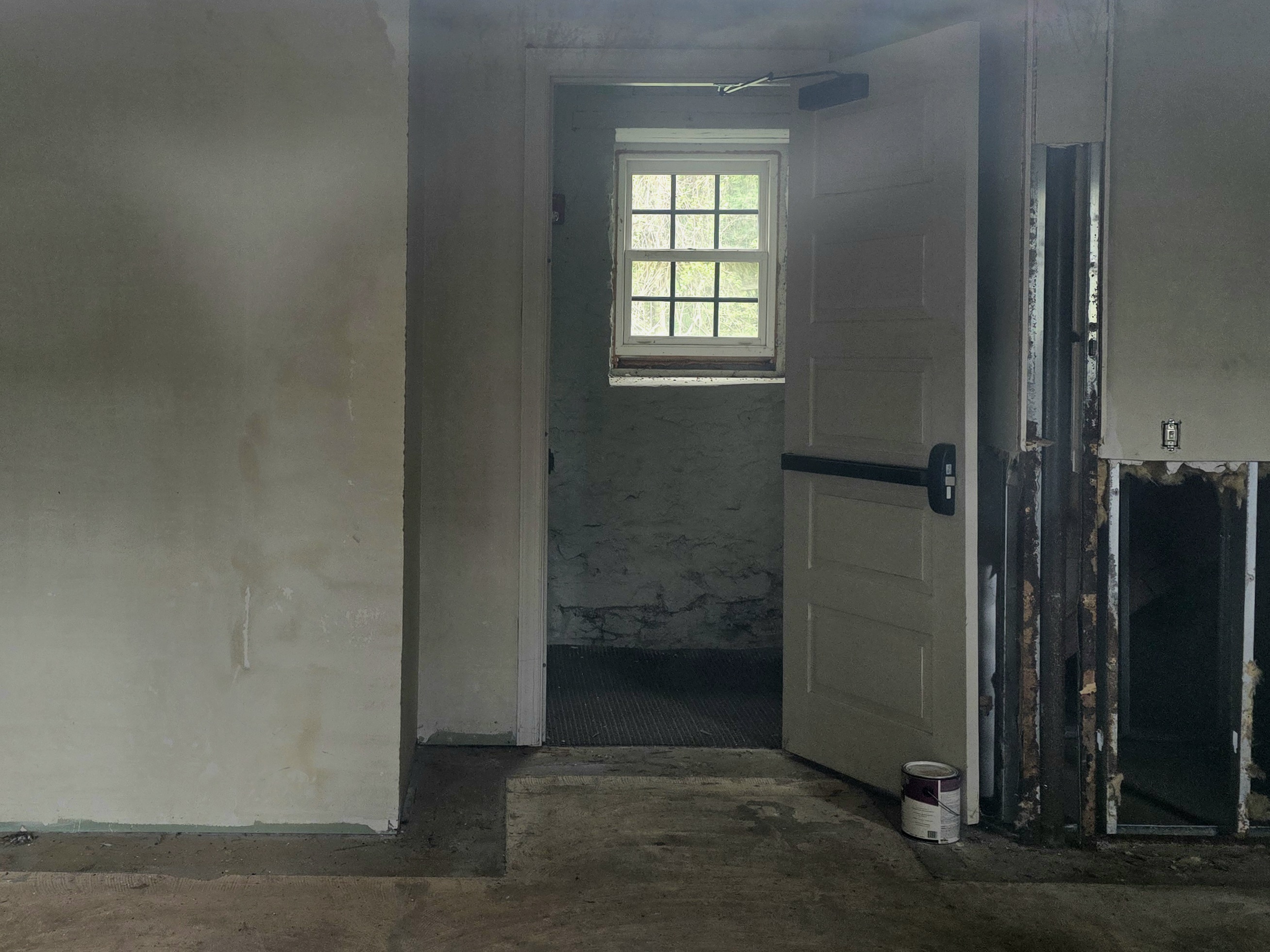
By 1912, Lubin had branch studios in Florida and California. But his crown jewel was Betzwood—a 350-acre estate he purchased from Philadelphia brewmaster John F. Betz. Lubin and his team repurposed a string of 19th-century buildings on property that would become known as Betzwood Motion Picture Studio in Port Kennedy—a small industrial village located along what is now Route 422, about twenty miles northwest of Philadelphia. The full-scale studio campus had its own power plant, stages, processing lab, and employed more than seven hundred people: costume makers, editors, publicity staff, kitchen workers, and more. It was even air-conditioned and humidity-controlled—a rarity for the time.
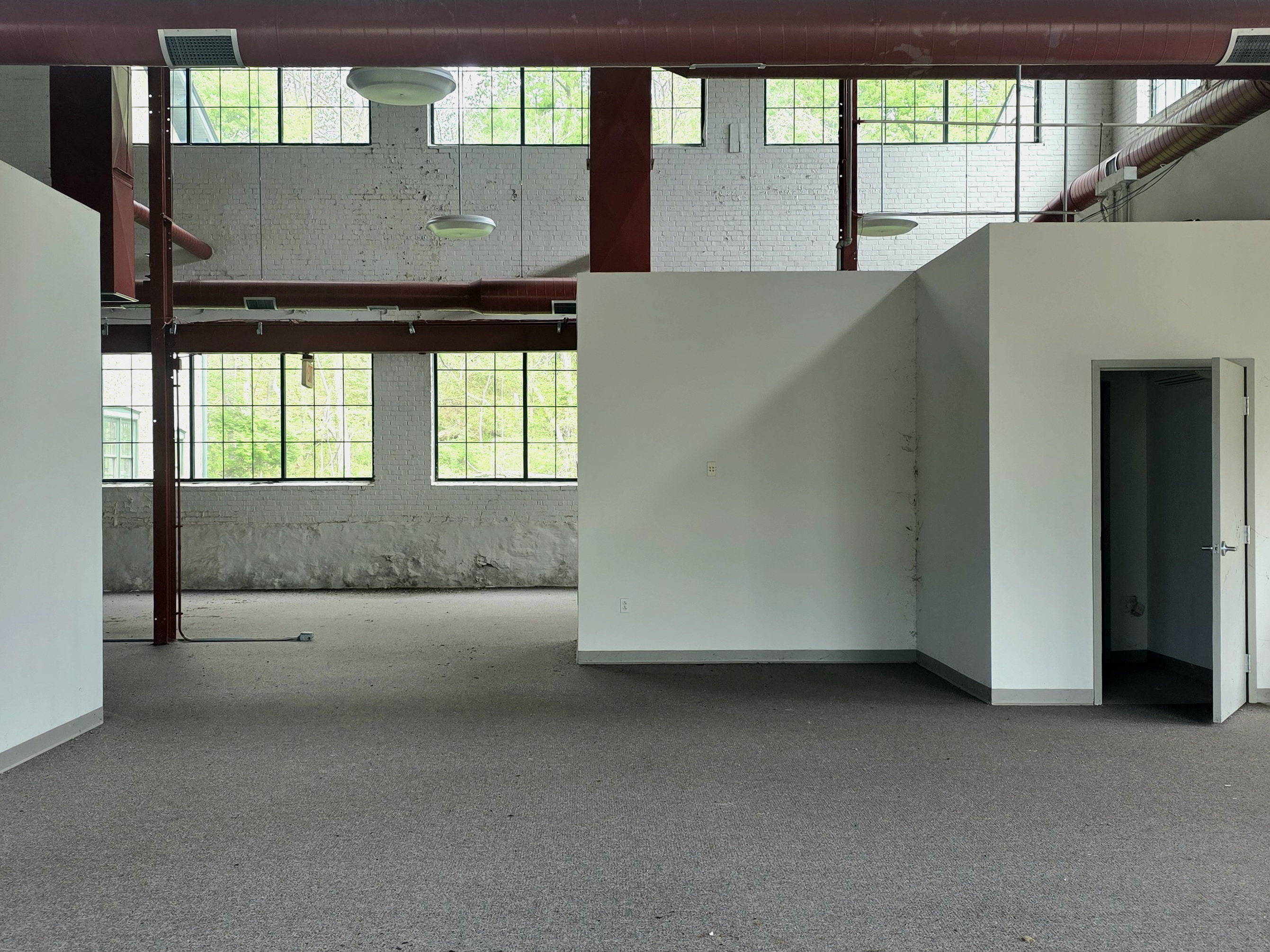
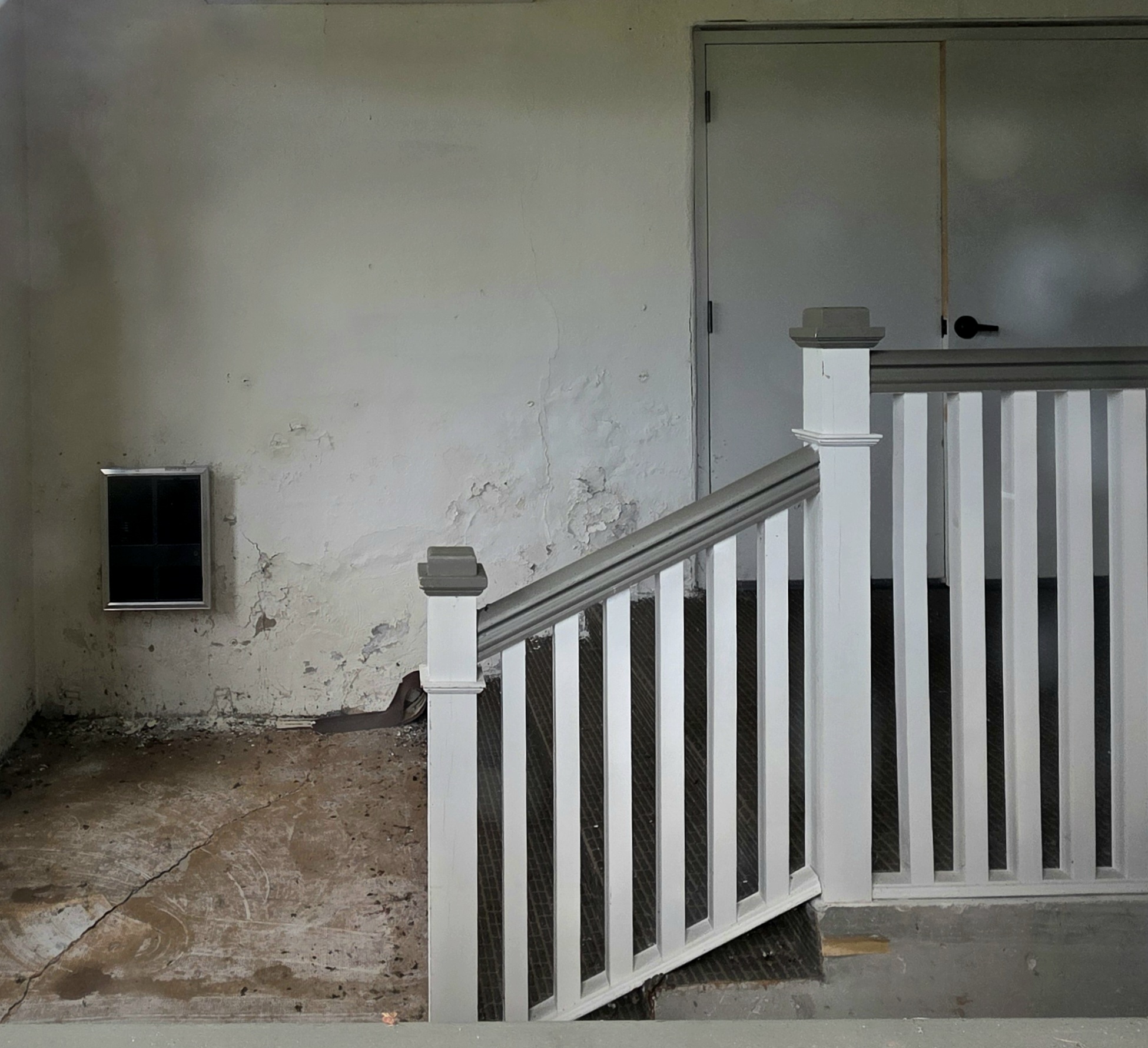
Lubin’s films featured silent screen stars like Romaine Fielding, Florence Hackett, and Pearl White. A young Oliver Hardy got his start there, first appearing in Outwitting Dad (1914), billed as “O. N. Hardy.” By 1915, he had already appeared in about fifty short films for Lubin.
But the success didn’t last. Lubin struggled to transition to feature-length films. In 1914, a devastating fire at Betzwood destroyed buildings and film negatives for several unreleased films. World War I cut off foreign markets, and ongoing patent battles with Edison drained his resources. Though Lubin briefly joined Edison’s Motion Picture Patents Company, the courts ruled against the trust.
In 1915, Lubin tried to regroup through a partnership with Vitagraph, Selig Polyscope, and Essanay Studios, forming V-L-S-E, Inc. But it was too late. By September 1, 1916, Lubin was bankrupt and owed Drexel Bank half a million dollars. Two years later, the bank foreclosed on Betzwood. Lubin returned quietly to work as an optometrist.
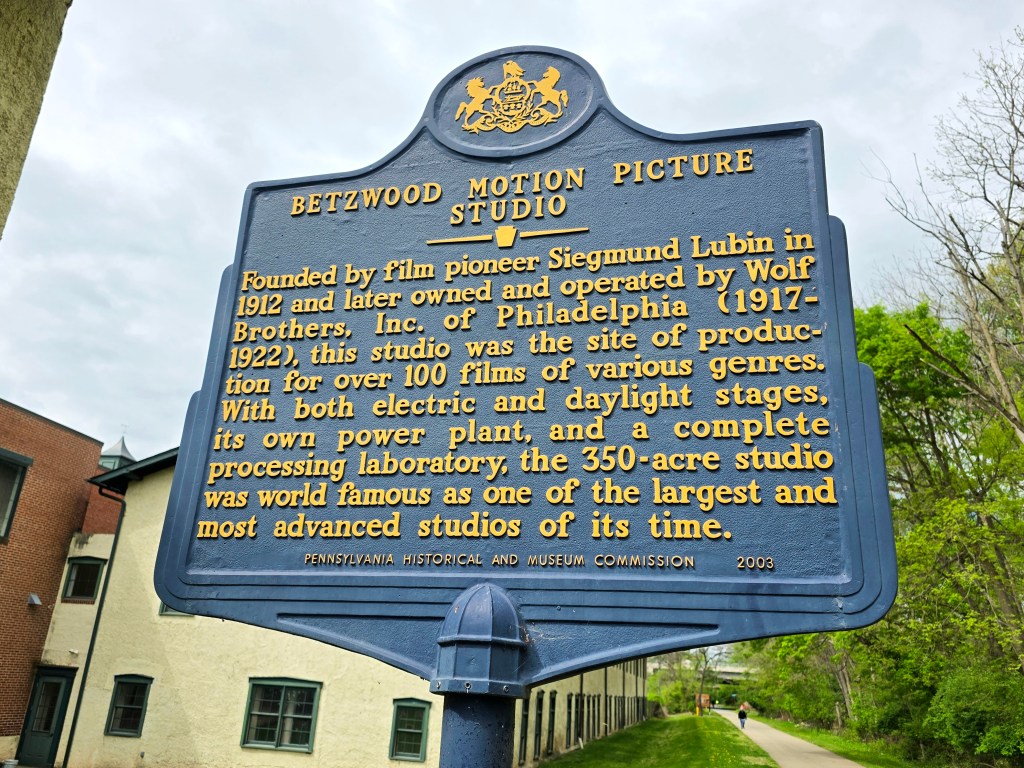
He died deeply depressed at his home in Ventnor, New Jersey on September 11, 1923. He was buried three days later at Beth Israel Cemetery in Egg Harbor Township. Today, a historical marker at 21 South 8th Street in Philadelphia honors his contributions. In 1960, he was awarded a star on the Hollywood Walk of Fame.
In 1989, Montgomery County Community College established the Betzwood Film Archive. A commemorative plaque was placed in 2003 along the bike trail near the Betzwood Bridge in Valley Forge Park, marking the two remaining studio buildings. Retired MCCC History Professor Joseph Eckhardt—author of The King of the Movies: Film Pioneer Siegmund Lubin—played a vital role in preserving this forgotten piece of cinema history.
Each day, as cars rush past on Route 422 toward their morning destinations, they pass the site of Lubin’s once-great studio—without even knowing it. Just like this blog, Lubin’s story began with a spark. A quiet beginning that, even now, refuses to be forgotten.


 Keystone Wayfarer
Leave your thoughts