
History is often shaped by the accomplishments of prominent men, whose legacies have been immortalized in the names of towns, streets, and corporations. Take, for instance, Schwenksville, my adopted hometown. The town was named after George, an early pioneer who played a pivotal role in its establishment. Without him, Schwenksville might have been called Bromerville, after Albert, a prominent local manufacturer who helped shape the town’s economy and infrastructure. However, this raises an important question: What about the women whose contributions have shaped history? The wives, mothers, and daughters who, often behind the scenes, also drove progress and change?
Women have long been at the heart of societal advancements, overcoming immense obstacles to make their mark. Figures like Susan B. Anthony, who led the suffrage movement, Clara Barton, the founder of the American Red Cross, Harriet Tubman, who bravely led enslaved people to freedom, and Ruth Bader Ginsburg, a trailblazer for gender equality in the legal system, exemplify this spirit. These women, though celebrated, represent just a few of the countless others whose efforts were instrumental in shaping the world we know today.
While nationally recognized figures became symbols of progress, there are many others whose contributions, though quieter, were equally impactful. Locally, the legacy of three sisters stands as a testament to the power of quiet perseverance. Growing up in a forward-thinking household under the guidance of their father, Samuel Pennypacker, a businessman and politician who served as Governor of Pennsylvania from 1903 to 1907, the Pennypacker sisters—Josephine, Eliza, and Anna Maria—were encouraged to challenge the gender expectations of their time. With the support of their mother, Virginia Earl Broomall, they were empowered to pursue knowledge and personal growth, each following a unique path in art, healthcare, and social reform. Defying convention, they made lasting contributions to the social and cultural fabric of their era.
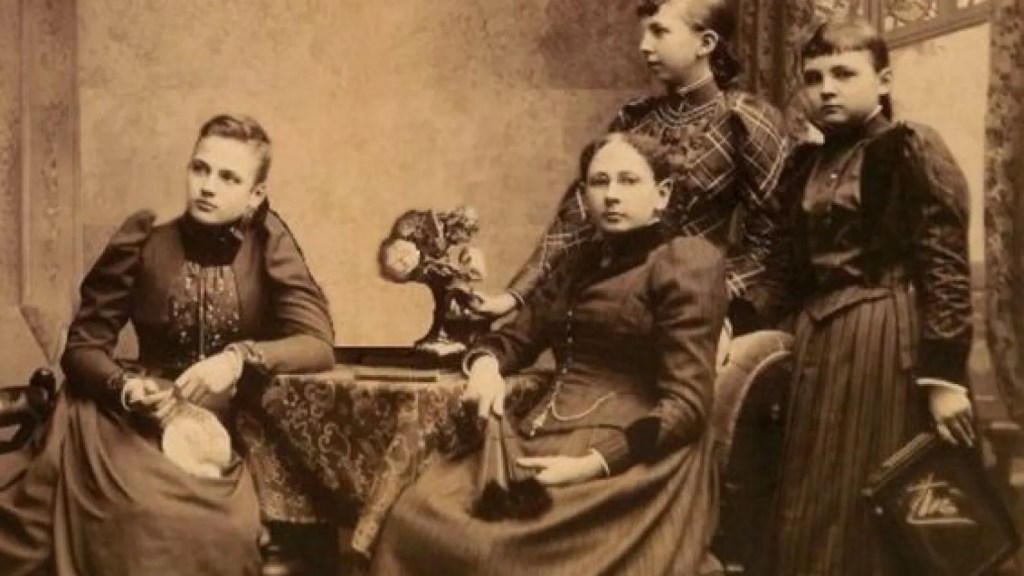
Josephine “Josie” Whitaker Pennypacker, the eldest of the Pennypacker sisters, was educated at Friends Central School in Philadelphia. Renowned for its progressive approach to learning, this inspiring environment led her to pursue private lessons in both art and music. Often considered her father’s favorite, Josephine’s still life and landscape paintings—created in watercolor, charcoal, and oil—depicted the region’s rolling hills and scenic vistas. She was known to travel with her father, artistically capturing the landscapes they encountered during their journeys.
However, Josephine faced significant emotional and mental health struggles in her twenties, including a nervous breakdown that led to her stay at Cromwell Hall in Cromwell, Connecticut, a facility founded to care for soldiers after the Civil War. Despite these challenges, Josephine’s resilience never faltered. With the unwavering support of her family—particularly her sister Eliza—she eventually returned to her artistic pursuits and regained her focus.
In her later years, Josephine lived with her sister Eliza in Sellersville, where she bravely battled breast cancer. She passed away at Grand View Hospital on June 8, 1962, at the age of 89, just months after her beloved sister.
Eliza “Lida” Broomall Pennypacker, a graduate of Bryn Mawr College, defied societal norms by pursuing a career in occupational therapy—an uncommon path for women at the time. Her work focused on supporting mental health patients during a period when mental health care was often overlooked and underfunded. Eliza dedicated herself to improving the lives of those facing mental health challenges, particularly her sister, in an era when such issues were often misunderstood or inadequately addressed.
In addition to her professional work, Eliza became the first president of the Women’s Civic Club of Schwenksville, where she led initiatives aimed at improving local infrastructure, promoting education, and fostering a stronger sense of community and civic responsibility. She also taught Sunday School, embodying the changing roles of women in the early 20th century.
Eliza, like her sister Josephine, passed away at Grand View Hospital on April 13, 1962, after a prolonged battle with cancer. She was 87 years old.
“My life has been “off the beaten track” as one might say. I lived before the time when women went into earning their living in business as a matter of course, and I never kept house.” – Eliza Broomall Pennypacker
Anna Maria “B.A.” Whitaker Pennypacker, the youngest sister, attended Friends Central and Bryn Mawr College before completing her training at the Pennsylvania Hospital Training School for Nurses. For thirty years, she worked as a school nurse in Philadelphia, earning the affection of the community as the “Worker’s Angel.” Anna Maria’s compassion extended beyond healthcare needs—she supported families in navigating economic and social challenges.
In her later years, Anna Maria’s commitment to social reform deepened. A passionate advocate for progressive political causes, she became a co-owner of The Daily Worker, a controversial left-wing newspaper. Through this platform, she championed free speech, workers’ rights, and the social and economic challenges facing marginalized communities. After a prolonged battle with illness, Anna Maria passed away from heart failure at her residence on Chester Avenue in Philadelphia at the age of 75, leaving behind a legacy of advocacy for the underserved.
“…I was born with a love of liberty and hatred of injustice…and the principles enunciated in the great Declaration seem to me immensely worth living and striving for.” – Anna Maria Whitaker Pennypacker
The history of women’s education in the U.S. has undergone significant transformations. Over time, higher education evolved from an exclusive privilege for men—focused on preparing them for leadership roles in religion, politics, and society—to a system that allowed women to pursue intellectual and professional opportunities. In the 19th and early 20th centuries, women began attending women’s colleges, and by the late 1800s, co-education became more common, despite resistance. After World War II, the focus shifted toward gender equality, with women increasingly enrolling in a wider range of fields. Today, women outpace men in obtaining bachelor’s and master’s degrees, particularly in education, health sciences, and the humanities.


The Pennypacker sisters’ lives reflect the early stirrings of the feminist movement. Their stories illustrate how education, determination, and a desire to make a difference propelled women into roles once unimaginable for their gender. Their legacy continues to inspire, reminding us that progress is built on the shoulders of those who dared to dream beyond the boundaries of their time. The three sisters, who never married, now rest alongside their parents at Morris Cemetery in Phoenixville—an enduring symbol of their quiet yet powerful influence on the world around them.
March is designated as Women’s History Month each year by presidential proclamation to honor women’s contributions to American history. The celebration began in 1978, aligning with International Women’s Day on March 8. In 1980, President Jimmy Carter issued the first proclamation for National Women’s History Week. In 1987, Congress passed Public Law 100-9, officially recognizing March as Women’s History Month.
Each year, the National Women’s History Alliance selects a theme. The theme for Women’s History Month 2025 is “Moving Forward Together! Women Educating & Inspiring Generations.”
Pennypacker Mills, the sister’s family home, showcases archives of the three women’s extraordinary lives. Free guided tours are available year-round. For hours, call (610) 287-9349.

 Keystone Wayfarer
Leave your thoughts