
I regularly pour drinks behind the bar at Sellersville Theater, a popular music venue, alongside my good friends Ricky and Karl. Recently, as I was pouring rounds for a long line of thirsty patrons, I thought back to the first time my mom saw me in action. She and my stepdad were surprised to see me—the girl who doesn’t drink—expertly pouring ales with ease. Moments like these always send me down my now quasi-famous “rabbit hole” of reflection, especially on days like tomorrow, December 5, which marks the 91st anniversary of the repeal of Prohibition.
Prohibition, which lasted from 1920 to 1933, was an ambitious social experiment aimed at improving public health and reducing crime by banning alcohol. However, the reality was quite different. Instead of improving society, it gave rise to underground economies and organized crime syndicates, like those led by famous gangster Al Capone, who profited immensely from the illegal production and distribution of alcohol.
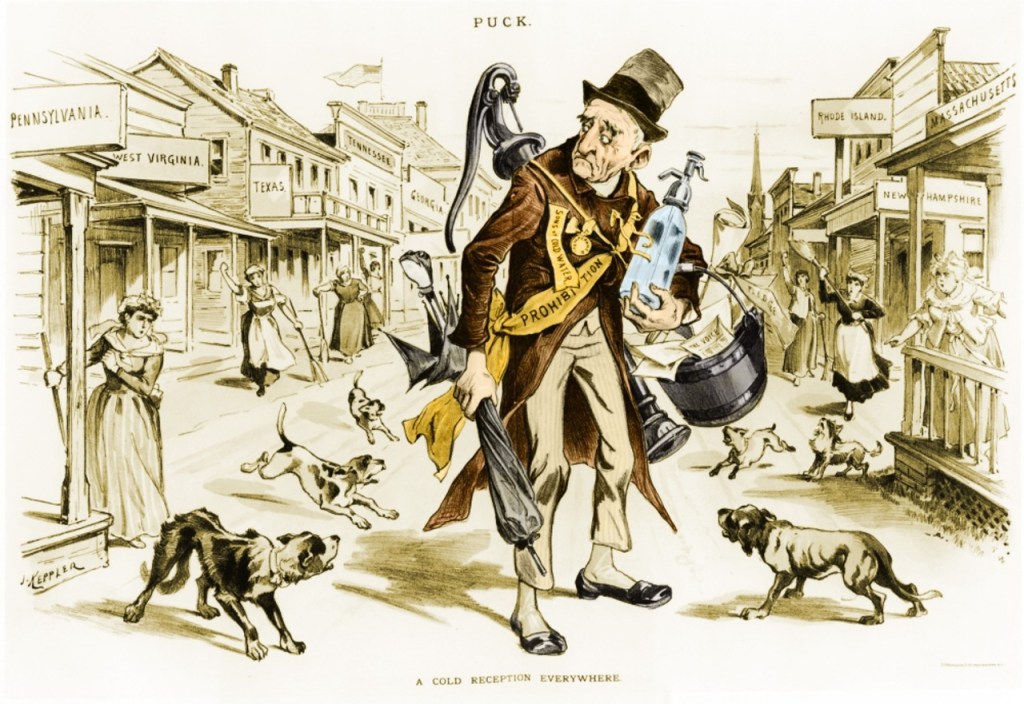
The 18th Amendment, passed in 1919, established Prohibition. It mandated that the production, sale, importation, and transportation of alcoholic beverages be illegal. For the amendment to be enacted, it required ratification by thirty-six of the nation’s forty-eight states. This process revealed sharp regional divides in attitudes toward alcohol. Southern states like Mississippi and Virginia, which were more aligned with the temperance movement, acted quickly. In contrast, many Northern states—including Pennsylvania—were slower to adopt the measure. New Jersey didn’t ratify until 1922, and two states, Connecticut and Rhode Island, famously defied the federal government by never ratifying the amendment, even as Prohibition took effect nationwide.

Before the national ban, Pennsylvania had already enacted the Wartime Prohibition Act of 1918, restricting grain production for the war effort. This early measure foreshadowed the economic upheaval to come, particularly in a state so deeply intertwined with the brewing industry. The effects of this early ban, coupled with Prohibition, were severe: Keystone breweries closed, distilleries shut down, and thousands of workers lost their jobs.
Prohibition laws fueled the rise of organized crime. Regional figures like Angelo “The Gentle Don” Bruno and Max “Boo Boo” Hoff became infamous for their involvement in bootlegging operations. These criminals ran underground networks that distributed alcohol, often using bribery and violence to protect their operations. Speakeasies, also known as “blind pigs,” became a refuge for those seeking a drink despite the legal restrictions. These illegal establishments were central to urban life, particularly in cities like Pittsburgh and Philadelphia, where the defiance of Prohibition laws fostered a culture of rebellion.
Prohibition’s cultural impact ran deep, especially in Pennsylvania, a key battleground for the cultural and political debates surrounding alcohol. Governor Gifford Pinchot, a Progressive Republican and staunch anti-alcohol advocate, played a prominent role in shaping alcohol law. Pinchot believed that alcohol eroded family values, contributing to societal ills like crime, poverty, and domestic violence. His stance on Prohibition was in line with the broader Progressive movement, which sought to regulate behaviors they saw as harmful to society. Pinchot argued that maintaining the alcohol ban in Pennsylvania would curb crime, improve public health, and protect families from alcohol’s negative effects. In addition to supporting national Prohibition, he advocated for state-level policies to help reinforce the ban.
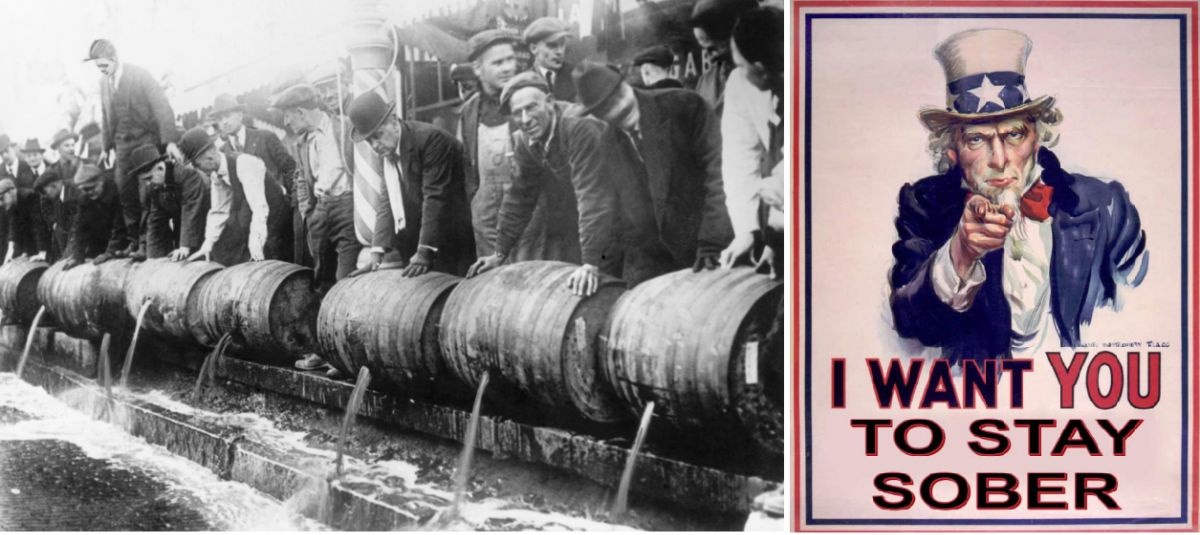
When the 21st Amendment repealed Prohibition in 1933, Pinchot quickly moved to ensure Pennsylvania retained strict control over alcohol. His efforts led to the creation of the state’s Liquor Control Board, which still governs alcohol distribution today. While intended to reduce crime, the PLCB has become a significant revenue source for the state, reporting over $3 billion in sales last year.
Beyond its legal implications, Prohibition profoundly transformed America’s drinking culture. Many credit the era with popularizing cocktails, though these drinks were born out of necessity, not refinement. Much of the alcohol available during Prohibition was industrial-grade, originally intended for inks, perfumes, or even stove fuel. Bootleggers found ways to neutralize harmful chemicals, turning it into drinkable—though dangerous—liquor. Bartenders masked the harshness of locally distilled spirits with mixers, fruits, and herbs. Classic cocktails like the Old Fashioned and Manhattan—my dad’s personal favorite—gained new popularity, while drinks like the Bee’s Knees and Gin Rickey were invented to make bootleg spirits more palatable. Even after Prohibition ended, the speakeasy traditions lingered, like those at Brinton Lodge in Douglasville, where I also work as one of three tour guides.
So, the next time I pour a pint for a lively theater patron, I’ll remember how far we’ve come. From the underground bars of the Prohibition era to the thriving social scenes of today, alcohol has shaped our culture in ways we may not even realize. And while the laws have changed, the creativity and rebellion that once defined speakeasies live on—whether in cocktails or in the way we come together to enjoy a drink. As for me, the girl who doesn’t drink, I’m just happy to play a small part in that enduring story—one pour at a time.
Interesting Facts:
While Pennsylvania’s liquor policies remain rooted in Prohibition-era reforms, the 20th century saw major shifts in alcohol regulation nationwide. The 21st Amendment, which repealed Prohibition, gave states the authority to set their own alcohol laws. Later, the 26th Amendment lowered the voting age to 18, prompting many states to reduce their legal drinking ages during the 1970s. By 1975, every East Coast state but Pennsylvania had lowered the legal drinking age for beer and wine. It wasn’t until the passage of the National Minimum Drinking Age Act in 1984—tying federal highway funding to a minimum drinking age of 21—that Pennsylvania aligned with the rest of the nation.
Legislation & Amendments
18th Amendment: The only constitutional amendment repealed to date, overturned by the 21st Amendment on December 5, 1933.
Volstead Act: Passed in 1919, this law provided the legal framework for Prohibition, defining intoxicating liquors and setting penalties for violations. President Woodrow Wilson vetoed it, but Congress overrode his veto.
Alcohol Consumption: While the 18th Amendment banned the sale and transportation of alcohol, it did not outlaw consumption or private use in homes.
Key Figures
Herbert Hoover was president when Prohibition was in effect. He called it, “a great social and economic experiment, noble in motive and far-reaching in purpose.”
Franklin D. Roosevelt: Called for the repeal of the 21st Amendment during his 1932 presidential campaign, a stance widely credited with aiding his election.
Carrie Nation: A leader of the Woman’s Christian Temperance Union (WCTU), became infamous for wielding a hatchet to smash saloons in support of temperance.
Mayor Freeland Kendrick recruited Marine Corp Brigadier General Smedley Butler to serve as Philadelphia’s Director of Public Safety. During Prohibition, Butler was responsible for closing thousands of Philadelphia speakeasies and confiscating large amounts of illegal liquor.
Al Capone: America’s most notorious Prohibition-era gangster, dominated Chicago’s organized crime scene from 1925 to 1931. He was a Schwenksville neighbor, imprisoned in Graterford Prison, now SCI Phoenix, in 1930.


Cultural & Social Impacts
Ratification: Nebraska became the 36th state to ratify the 18th Amendment, making Prohibition federal law on January 16, 1919.
Public Attitudes: Prohibition reshaped Americans’ views on government regulation and personal freedom. Its repeal spurred debates about the balance between morality and individual rights.
Philadelphia earned the nickname “bootlegger’s Elysium” during Prohibition as it was considered one of the “wettest” cities in the U.S., alongside Chicago and New York. As many as 16,000 speakeasies operated across the city during the 1920s.
Today, Pennsylvania remains one of only two states, along with Utah, where alcohol is sold only through state-run stores.

 Keystone Wayfarer
Leave your thoughts