Most of my stories focus on the areas around my home in Montgomery County. Yet for more than eight years, I’ve worked at the Sellersville Theater, just over the line in Bucks. Long before it became the nationally respected venue it is today, the theater was a neighborhood cinema — one locals still remember fondly. It was a world of its own — first kisses stolen in the back row, secrets whispered during the matinee, the collective gasp of a packed house when the screen went dark. Even now, those memories linger.
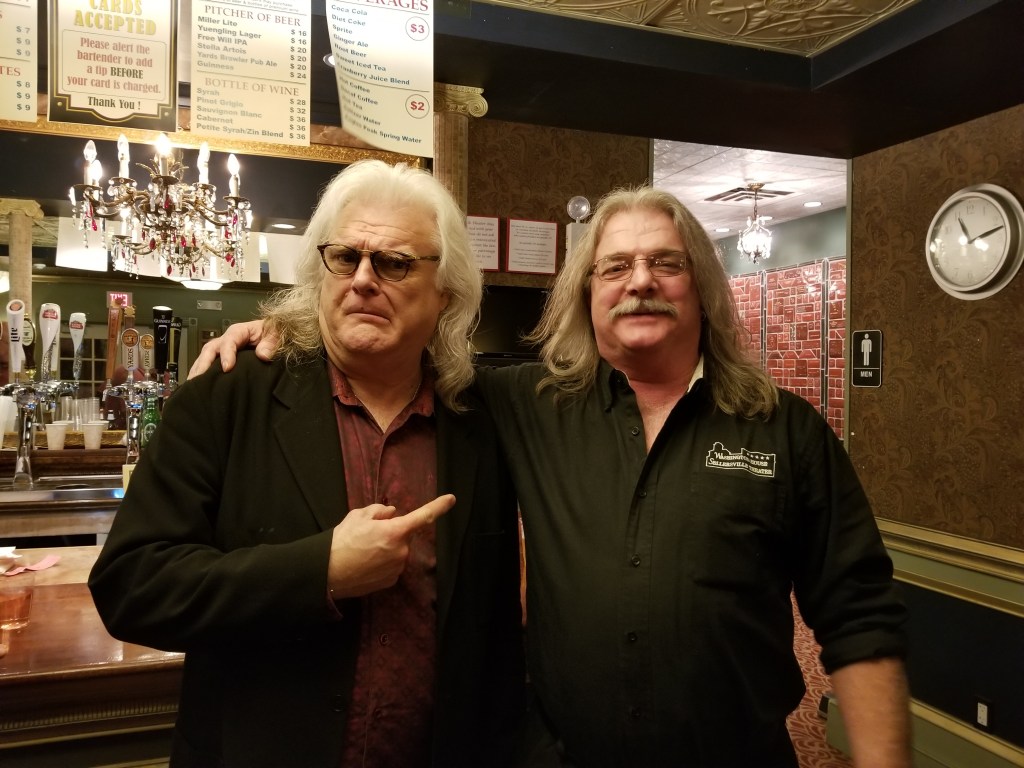
Step inside, and the theater’s rhythm unfolds. The box office greets you to the right, while double doors to the left open onto a deck that fills quickly on summer nights. Straight ahead stands the bar—a simple counter offering beers on tap, bottled specials, wine, soda, coffee, and a few locally sourced snacks.
Ricky D., our longtime bartender, is as much a fixture as the stage lights. On select nights, we feature his signature highball—crisp Canadian Club topped with ginger ale. It’s the kind of drink that doesn’t try too hard, which is why it fits the room so well. One sip, and you settle in.
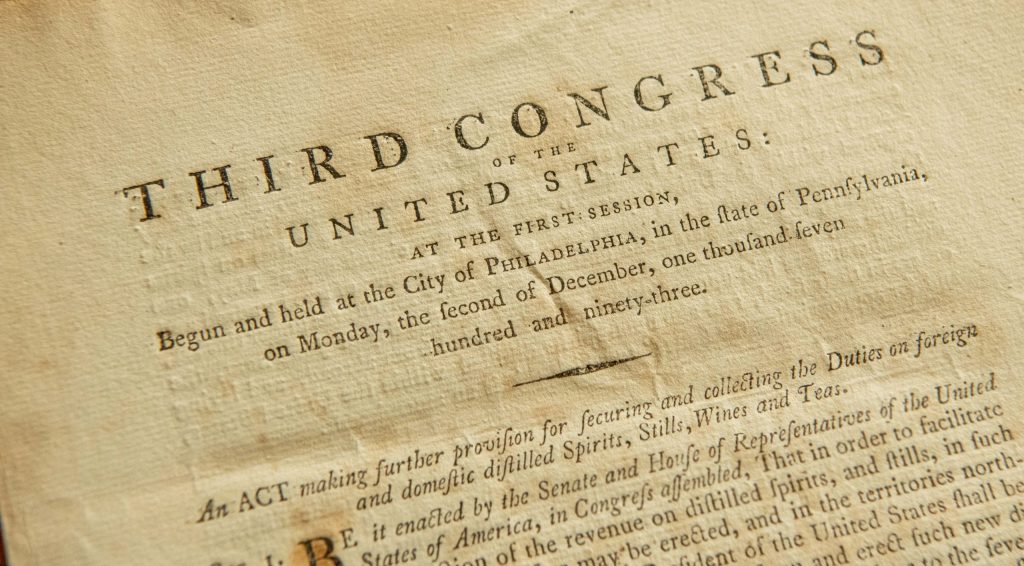
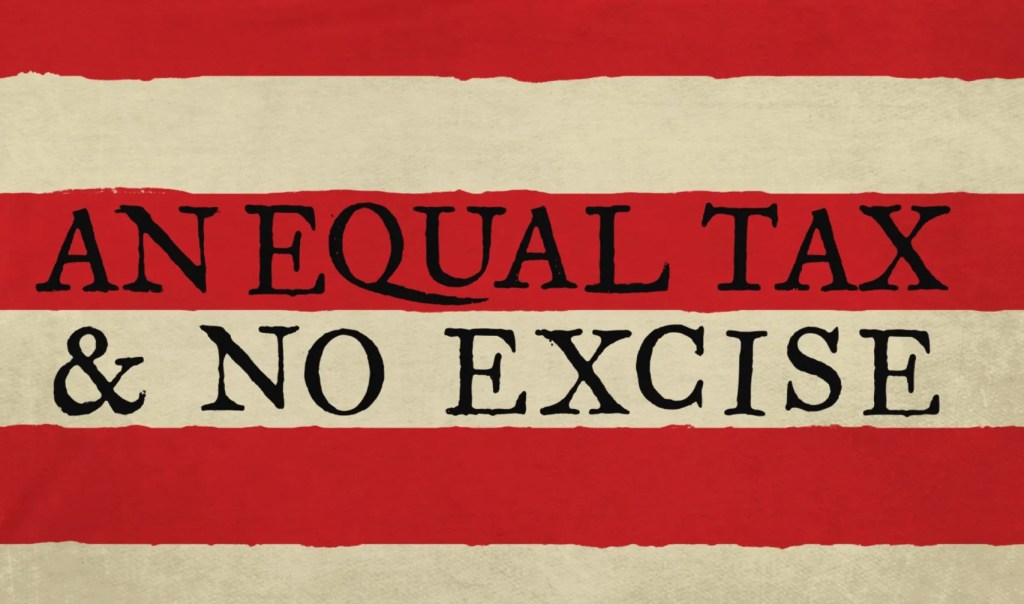
Two hundred years ago, whiskey carried far more than flavor — it was both currency and comfort. For frontier farmers, rye was as essential as the land itself, traded and bartered to survive. So when Congress imposed an excise on spirits on March 3, 1791, that everyday whiskey became a flashpoint, sparking the resistance history remembers as the Whiskey Rebellion.
The years after the Revolution were uneasy. The war had been won, but debts remained. To raise revenue, Congress introduced a levy on distilled spirits. Designed by Alexander Hamilton, George Washington’s Secretary of the Treasury, the measure seemed reasonable—at least on paper. In practice, it fell heaviest on those least able to bear it.
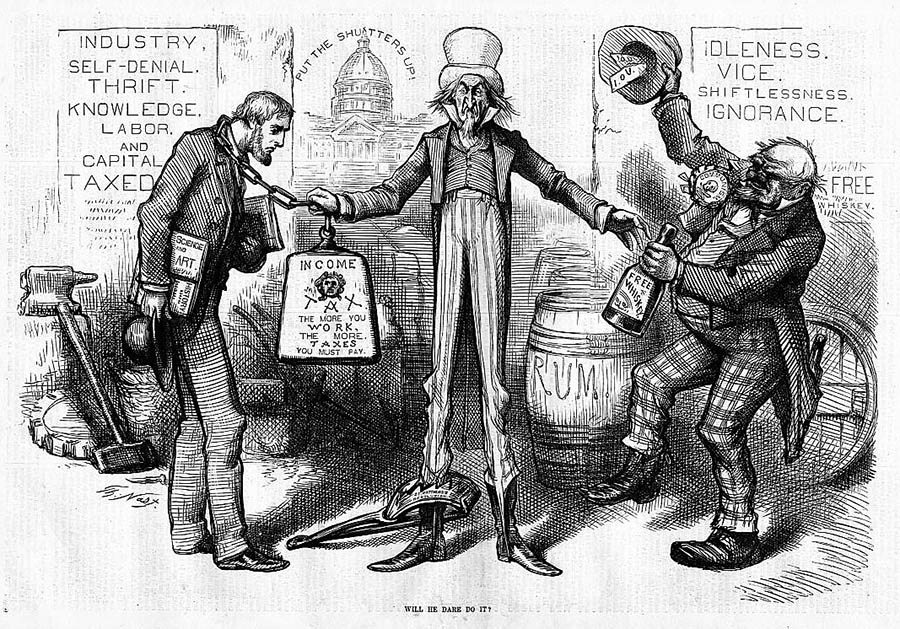
The tax ranged from six to eighteen cents per gallon. For many frontier stills, nine cents was typical — more than eastern producers paid and a sharp strain on cash-poor farmers. In the western hills of Pennsylvania, that nine cents felt painfully personal, as though distant officials were taxing the very sweat of men who had only just won their freedom.
You see, whiskey was more than commerce — it carried the spirit of life in these hills. Rye had become a quiet declaration of independence, an American answer to British rum. It ran through daily life — poured at harvest tables, shared after barn raisings, tallied in debts between neighbors. “Old Monongahela,” the bold, peppery rye distilled from western Pennsylvania grain, was not simply a drink but a symbol of place and pride.
In response, farmers quickly organized, especially in Allegheny, Fayette, Washington, and Westmoreland counties. By July 1791, local leaders convened at Redstone Old Fort near present-day Brownsville along the Monongahela River. These early meetings laid the foundation for a broader convention in Pittsburgh that September.
Moderate voices, including Hugh Henry Brackenridge, counseled caution, seeking to channel opposition through legal and political means by petitioning both the Pennsylvania General Assembly and the United States House of Representatives. They hoped formal protest might resolve the dispute peacefully, avoiding the violence many feared could erupt on the frontier.
On September 11, 1791, Robert Johnson, the newly appointed tax collector for Washington County, discovered how perilous enforcement of the federal excise could be. He was seized by a crowd and tarred and feathered — a warning to others who might attempt to carry out the law. The attack underscored how deeply resistance had taken hold in western Pennsylvania.
In the weeks that followed, the whiskey excise functioned more as a symbol of federal authority than an enforceable statute. Farmers guarded their stills and kept wary watch over their communities, knowing that cooperation with federal officials could provoke retaliation. Those who opposed the tax claimed they were defending the principles of the American Revolution, arguing that distant lawmakers had imposed an unfair burden on frontier communities. Supporters of the measure rejected that analogy. The excise, they insisted, had been enacted by representatives duly elected under the United States Constitution, making it fundamentally different from British parliamentary taxation before independence.
By 1794, unrest had turned violent. When John Neville, the federal tax supervisor, rented an office from William Faulkner, men quickly ransacked Faulkner’s home and drove Neville out. Rebels attacked houses, intercepted mail, and destroyed property, while mass meetings at Braddock’s Field meeting pulsed with defiance and unease.
Lives were lost — among them Oliver Miller and James McFarlane. Neville’s house was burned. U.S. Marshal David Lenox was captured, though he later escaped. Amid the tension, leaders like David Bradford and Albert Gallatin moved between towns, urging calm and seeking representation as western Pennsylvania smoldered with unrest.
Montgomery County, perched on the edge of the unrest, played a quiet but crucial role. The Montgomery Light Horse, a mounted militia under Captain William Henderson, drilled and marched west with Brigadier General James Morris, joined by men from Philadelphia, Bucks, Chester, and Lancaster counties. Most never saw combat, but their readiness reinforced federal authority and the government’s resolve. Among them was Captain John Fries of Hatfield Township, whose footsteps once traced the same hills and roads I walk today—linking my curiosity to the Whiskey Rebellion. Only a few years later, Fries would lead his own uprising, Fries’s Rebellion of 1799, a reminder that tensions between local citizens and distant authority were far from resolved.
Faced with overwhelming force, President Washington acted decisively, issuing a proclamation calling on the rebels to disperse and invoking the Militia Act of 1792. He personally led a militia of nearly 13,000 men from Carlisle over the Allegheny Mountains to Bedford—the only sitting president ever to lead troops in the field. After returning to Philadelphia, he left General Henry “Lighthorse” Lee and Alexander Hamilton to enforce the law and support civil authorities.
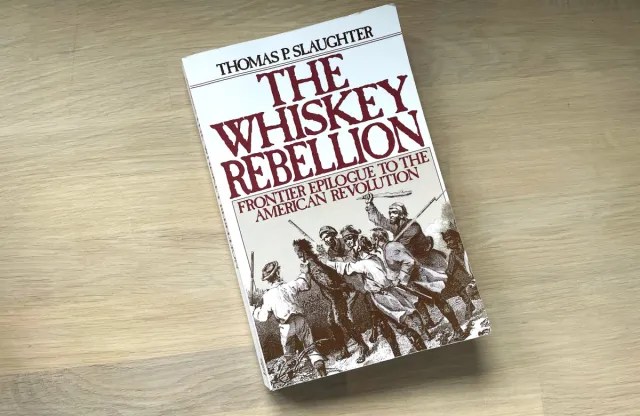
The show of force worked. Most rebels dispersed, and roughly 150 were arrested, including 20 prominent leaders. General Lee pardoned nearly all participants, leaving only 33 men to face consequences. Ten were tried for treason, with John Mitchell and Philip Vigol becoming the first Americans convicted under federal law — though even they were later pardoned. David Bradford, a key leader who had fled to Spanish-controlled New Orleans, was officially pardoned when he eventually returned, part of President John Adams’s effort to close the chapter on the Whiskey Rebellion.
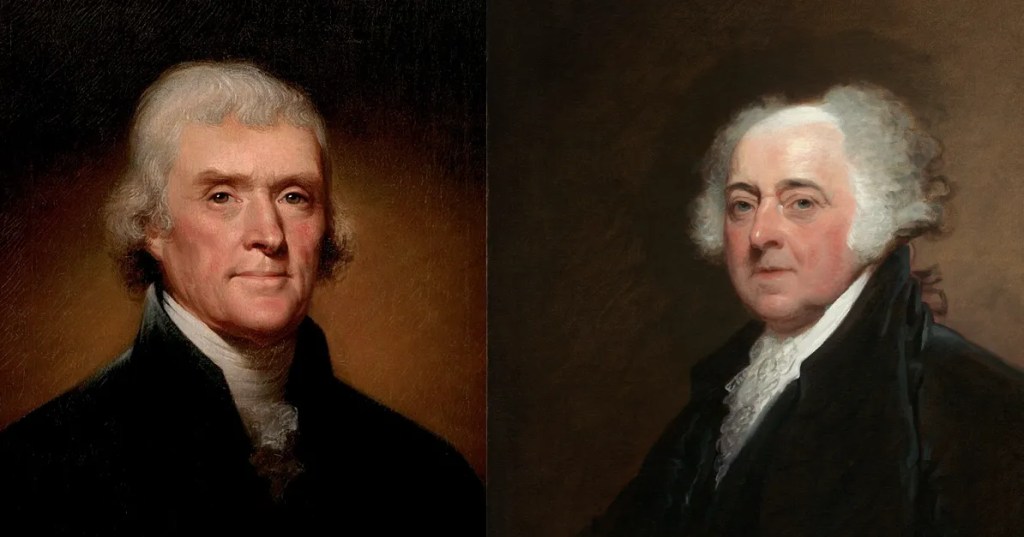
The political aftershocks lasted longer than the violence. Opposition to internal taxes helped propel Thomas Jefferson to victory over John Adams in 1800. By 1802, Congress repealed the whiskey excise tax, relying instead on import tariffs until the War of 1812.
The story didn’t end with law and politics — it sparked art and theater. Actress-playwright Susanna Rowson wrote a stage musical, The Volunteers, with music by Alexander Reinagle. Though the play is lost, surviving songs suggest a pro-Federalist view, celebrating the militiamen as American heroes. George and Martha Washington even attended a performance in January 1795, lending the event presidential approval. Centuries later, W. C. Fields recorded The Temperance Lecture in Les Paul’s studio, joking about Washington’s role in suppressing the rebellion and wondering whether “George put down a little of the vile stuff too.”
Today, the legacy of the Whiskey Rebellion lives on in history and culture. The Whiskey Rebellion Trail links Philadelphia and surrounding communities to the frontier sites of resistance, preserving the stories of farmers, rebels, and militias. Modern bartenders raise a glass to the era with thematic drinks — from the Whiskey Rebellion Cocktail to maple-based bourbons and playful creations like the General’s Orders. Pennsylvania’s whiskey heritage continues at distilleries reviving Monongahela Rye, including Liberty Pole Spirits in Washington, Wigle Whiskey in Pittsburgh, Dad’s Hat in Bristol, West Overton in Scottdale, and Stoll & Wolfe in Lititz. Montgomery County’s craft distilleries, such as Boardroom Spirits in Lansdale, honor the frontier farmers and rebels whose spirits shaped both local culture and American history.
Heritage events keep the memory alive. This year’s Conshohocken Rebel Crawl, scheduled for Saturday, March 21, blends historical storytelling with social gatherings, letting participants literally taste the past. Later in the year, the 2026 Whiskey Rebellion Festival in Washington, PA, on July 10–11, brings history to life with reenactments, period exhibitions, heritage music, and live performances. Visitors can sample spirits along Main Street during the Whiskey & Spirits Walk, explore the Bradford House Museum, and experience firsthand the legacy that shaped both local and national history.
From the packed rows of a Bucks County theater to the tense frontier of western Pennsylvania, the echoes of rebellion, loyalty, and human struggle flow like liquid gold through American history. The barrels have emptied, the militias disbanded, yet the stories — of courage, resistance, and the cost of governance — remain, waiting to be experienced anew. Just as each audience member carries a memory from the theater, these frontier tales continue to live on in the people, the places, and the drinks that still bring us together today.
So next time you’re at the Sellersville Theater, soak it all in—the music, the laughter, the stories carried in every shadowed row. Raise a glass and tip your bartender generously.

 Keystone Wayfarer
Leave your thoughts