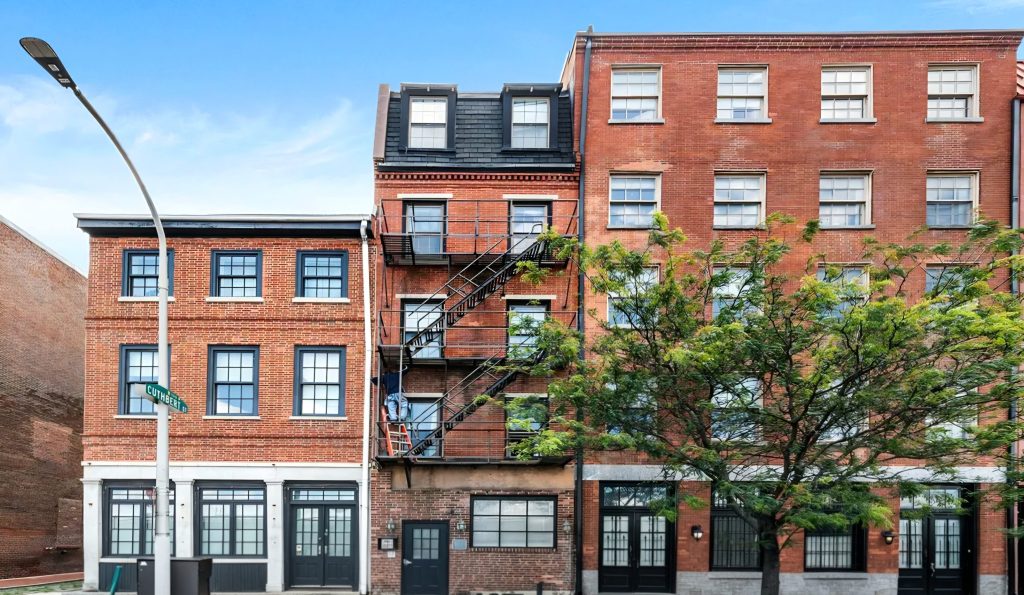
When I first moved to Pennsylvania, I lived in a renovated industrial loft on the second floor. Light poured in through floor-to-ceiling windows at the front, while the back of the space fell into shadow. I tucked my bedroom there, building a wall of bookshelves piece by piece for privacy. Wide-plank wooden floors, rough underfoot and surely in need of sanding, ran alongside exposed red brick. The apartment wasn’t polished, but it felt honest, alive—a space that reflected the life I was trying to build.
I was surrounded by history. Walking through Elfreth’s Alley at least twice a day—four times if I went home for lunch—I felt the city pressing in on all sides: uneven cobblestones, leaning brick walls, whispers of generations past. The weight of it all gave me a quiet charge, an energy I carried to the record label I had relocated to run, entrusted with guiding it through its next phase. The loft, the city, the work—they all stood as proof that the risks I had taken were finally paying off, that I was building something lasting. Even in the shadowed corners of the apartment, I felt the light of accomplishment.
This part of Philadelphia is called Olde City, no doubt a nod to its span of years and legacy. In every direction, something remarkable had unfolded. Here, the streets seem to breathe history, weaving their aged threads into the present. At the heart of it all stands Independence Hall, its red brick façade and white clock tower instantly recognizable. Inside, the air hums with the voices of men who debated and signed the Declaration of Independence and the Constitution, shaping a fledgling nation from scratch. Standing there, it is impossible not to feel small—and at the same time, part of something vast and enduring.
A short walk from that apartment lies the Liberty Bell. Its cracked surface bears witness to generations of celebration, protest, and reflection. Seeing it up close, I imagined the countless hands that had touched it, the eyes that lingered on its bold inscription, the way it came to symbolize ideals bigger than any one person, yet belonging to all of us.
Just a few blocks farther is Carpenters’ Hall. Inside, the First Continental Congress convened in 1774. Its wooden floors and simple walls hold the echoes of revolutionary debates and plans for self-government. There is no fanfare here, no throngs of tourists—only the sense of decisions made in earnest, of ordinary people rising to extraordinary responsibility.
Tucked into what was then my daily life stood a quiet, modest house on Arch Street. Against the bustle and grandeur of present-day Olde City, it might have seemed unremarkable—but within its walls lay a story emblematic of a nation shaping its identity.
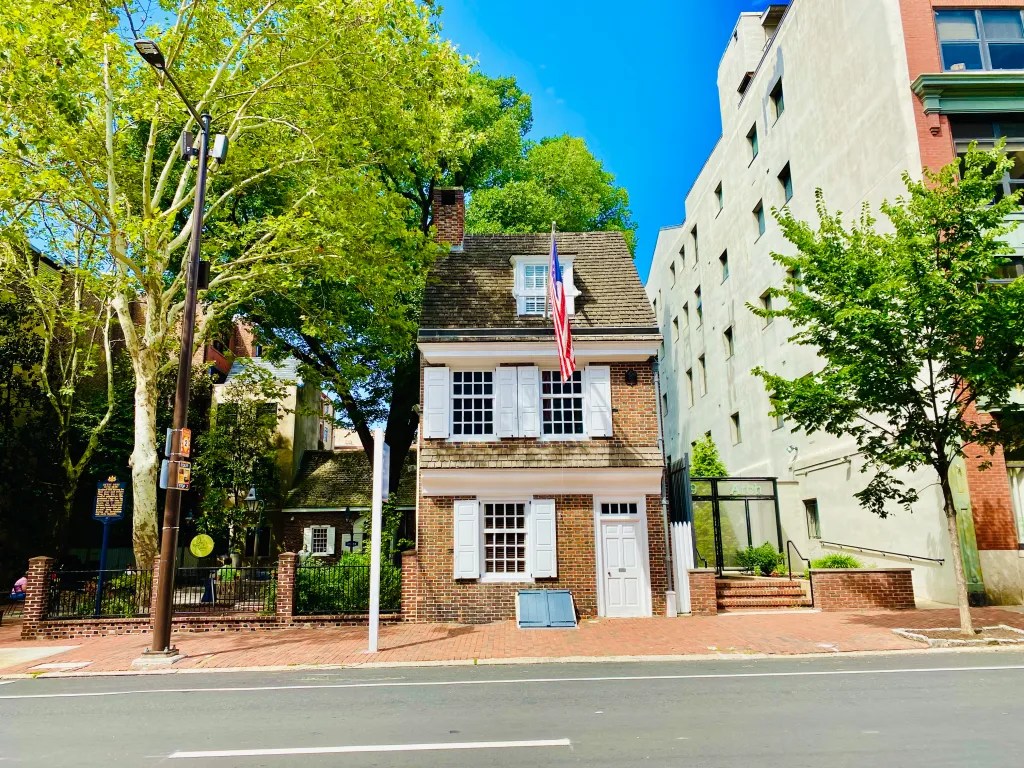
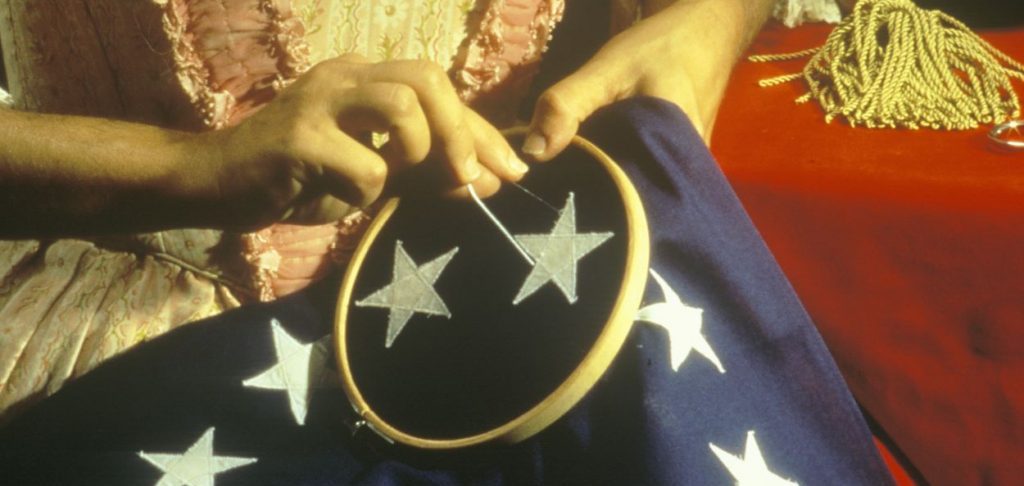
Betsy Ross is forever linked to the house at 239 Arch Street, a colonial brick home built sometime between 1740 and 1750. Tradition holds that she called it home from around 1776 until her death in 1836. There, she ran an upholstery and flag-making business, quietly shaping her life and craft amid Revolutionary Philadelphia. It is said to be the place where she stitched the first American flag.
Betsy Ross is a natural choice for Keystone Wayfarer’s first prominent woman of Pennsylvania for 2026. Her name is inseparable from the American flag, her life deeply rooted in Philadelphia, and her story a remarkable blend of craftsmanship, resilience, and legend. She embodies the spirit of Pennsylvania itself: industrious, inventive, and unafraid to shape history with her own hands. And while the legend of the first flag has captured imaginations for centuries—even as historians continue to debate its veracity—her real life is every bit as compelling.
Elizabeth “Betsy” Griscom was born on January 1, 1752, in what is now Gloucester City, New Jersey, the ninth of seventeen children in a Quaker family. Immersed in Quaker life from a young age, she learned to sew from a great aunt. As a teenager, she apprenticed to an upholsterer, honing the skills that would shape her adult life.
At twenty-one, Betsy married John Ross, a nephew of George Ross, a signer of the Declaration of Independence. John wasn’t a Quaker, and when Betsy eloped with him in 1773, her community disowned her. No church, no support system, no spiritual home—love had cost her everything she had ever known.
By the mid-1770s, Betsy was living and working on Arch Street, at the heart of Philadelphia’s busiest commercial district. The area was a mosaic of artisans, traders, taverns, churches, and workshops. Ships docked at nearby wharves brought goods and gossip from across the Atlantic, while merchants’ carts, wheelwrights, and horse traffic rattled over the cobblestones. The streets weren’t just thoroughfares—they were living workplaces where neighbors traded goods, shared news, and watched the city unfold around them. Immersed in this world, Betsy refined the skills that would carry her through the challenges to come.
John died in 1775—some accounts say in a gunpowder explosion while serving in the local militia. At just twenty-four, Betsy was a widow with a young family. She pressed on, running the business herself: making uniforms, tents, and paper cartridges for the Continental Army. She remarried, this time to Joseph Ashburn, who was captured by the British and died aboard a prison ship. By thirty, Betsy Ross had buried two husbands, raised children, and kept her business alive in a city under occupation—a quiet testament to her resilience, skill, and determination.
Women weren’t voting or serving in Congress, of course, but they played vital, hands-on roles in the Revolutionary cause—sewing uniforms, making bandages, raising funds, and organizing aid. Betsy Ross was very much part of this effort. While the story of her meeting George Washington may lean more toward legend than fact, records show she made flags and banners for official military use, contributing her skills directly to the war effort.
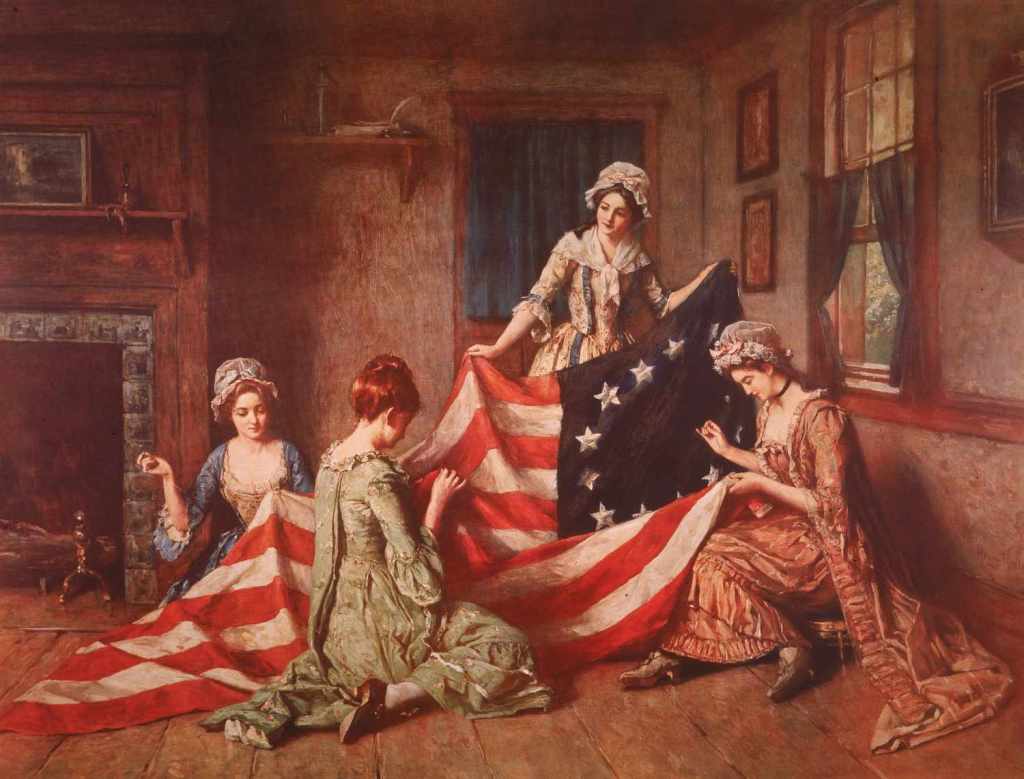
In 1776, she is said to have stitched the first American flag for General Washington, suggesting five-pointed stars instead of six for practicality—a small, legendary detail that became part of her enduring narrative. Historians debate the accuracy, but the story captures her ingenuity and practicality: a woman thinking like a craftsman, not a symbol.
Legend even suggests her house may not have been hers; she may have lived next door. By the time preservationists saved the historic site, however, the story mattered more than the address. America wanted a place to stand and say, this is where it began.
Betsy Ross wasn’t famous in her lifetime. Not for flags, not for patriotism. She was known as a capable businesswoman, a survivor, a woman who kept going when the world kept taking from her. Her lore grew later, painted into existence during anniversaries and centennials, when the country wanted a woman at the founding table—but not one who demanded too much space.
By the end of her life, Betsy was completely blind, spending her final years with her middle daughter in a Philadelphia that was rapidly industrializing. She died on January 30, 1836—sixty years after the Declaration of Independence was adopted. She was 84. Today, her story ripples across the landscape—from the Betsy Ross Bridge spanning the Delaware River to schools and commemorative stamps that bear her name.
As biographer Marla Miller argues, Betsy Ross’s true legacy is not a single flag, but what her story reveals about the working women and men who kept a fledgling nation moving. She may have become a symbol, but her life speaks to something far more substantial.
As America approaches its 250th birthday, remembering Betsy Ross and her role in our shared history feels especially important. Like the other women we’ve written about, her story shows how women throughout history have played vital, often underrecognized roles—and continue to do so today.
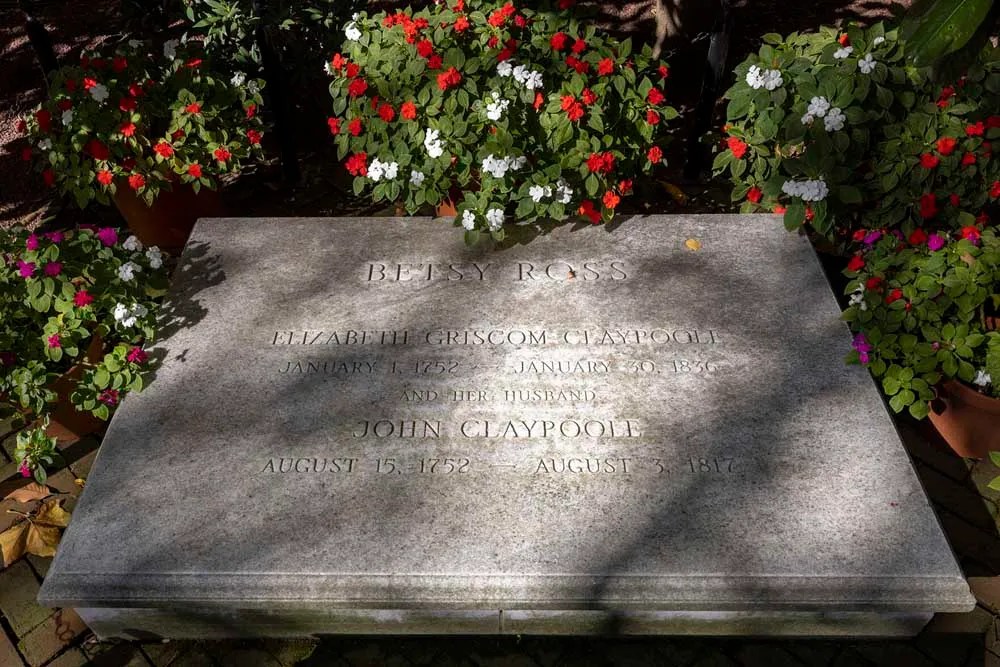
Betsy Ross’s final resting place has a story as layered as her life. She was first interred at the Free Quaker burial grounds on North Fifth Street. In 1856, her remains—and those of her third husband, John Claypoole—were moved to Mount Moriah Cemetery, part of a then-common practice of attracting visitors by housing the graves of notable figures. The Daughters of the American Revolution later added a flagpole at the site in her honor.
In 1975, ahead of the American Bicentennial, city leaders moved the remains to the courtyard of the Betsy Ross House. But when workers opened the tomb, they found nothing beneath the gravestone. Later, bones discovered elsewhere in the family plot were deemed hers and reinterred in the current grave—the one visitors see today. It stands as a quiet reminder that history, much like memory itself, can be layered, elusive, and sometimes only partially knowable.
Step into history at the Betsy Ross House, open 10:00 AM to 5:00 PM most days. From March through November, the house is open daily, with extended hours on First Fridays, June through October. From December through February, it’s open Wednesday through Monday, closed only on Tuesdays.

 Keystone Wayfarer
Leave your thoughts