
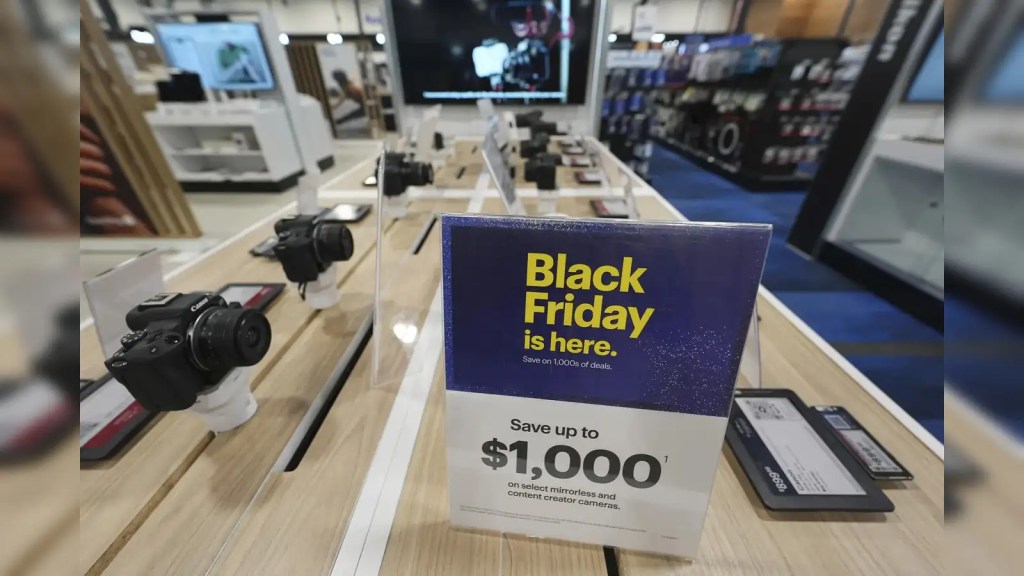
My first real taste of Black Friday came when I was 21, give or take a year. I was home from college, tagging along with my mom—an early riser long before I ever became one. Half-asleep, I trailed behind her into our local mall. Even in those pre-dawn hours, the place was buzzing: shoppers spilling into every corner, carts rattling over freshly polished floors. If memory serves, holiday music blared from the speakers while the rich aroma of freshly brewed coffee drifted through the air. I have to admit, I’ve never been a coffee drinker, but I’ll always love the smell.
We pushed our way through the crowds with that strange blend of determination and giddy excitement, swept up in the thrill of chasing deals that felt almost mythical in the moment. The mall pulsed around us—voices rising, bags rustling, bursts of laughter echoing through the corridors. Breakfast at the food court was free, a small but welcome reward for diving headfirst into the chaos.
By the time we finally stepped back outside into the sharp midday light, arms aching and eyes a little bleary, something clicked. This wasn’t just shopping. It was initiation—my first true immersion into the wild, restless current that officially kicks off the holiday season. It was a moment of shared adventure with my mom, tucked inside a day I didn’t realize I’d remember so clearly all these years later.
Each year, the day after Thanksgiving marks Black Friday, the unofficial kickoff to holiday gift buying. But it hasn’t always been synonymous with long lines and doorbuster deals. The term has a surprisingly winding history. It first appeared in 1869 to describe a financial panic triggered when gold prices suddenly collapsed. By the 1950s, it had slipped into retail circles, referring to workers calling in sick after a day of parades, Thanksgiving dinner, and back-to-back football games. Philadelphia police eventually gave it the meaning we know today, using “Black Friday” to describe the overwhelming crowds and traffic jams created by holiday shoppers. By the 1980s, the phrase evolved again—this time becoming a symbol of success, marking the moment retailers finally went “into the black,” shifting from loss to profit.
For me, that Black Friday journey with my mom brought back memories of Christmas as a kid—the excitement of tearing open the perfect present and hours of joy playing with it. I would glance at my pile in the strategically chosen corner, checking to see if I got everything on my list—or at least more than my brother, the one Santa surely would have put on the “bad” list (I’m biased, of course). Like so many kids, we were big fans of board games: Parker Brothers versus Milton Bradley. To a kid, these weren’t just products—they were kingdoms of imagination. Parker Brothers promised strategy, cunning, and quiet triumph, while Milton Bradley offered chaos, laughter, and unpredictable fun. Each box felt magical, a promise of adventure waiting to be unleashed.
The Battle of the Boards began in my home state of Massachusetts long before holiday sales and shopping frenzies, yet its legacy would shape them both. Though Parker Brothers and Milton Bradley shared the same shelves, their worlds couldn’t have been more different. Parker Brothers rewarded careful planning and quiet triumph, with every move calculated and every strategy tested. Milton Bradley, by contrast, thrived on unpredictability—sudden twists, wild laughter, and chaos that left everyone gasping and giggling. Together, they didn’t just sell games—they shaped what it felt like to grow up in America, turning holiday mornings and family game nights into stages for imagination, competition, and unforgettable memories.
The story of Parker Brothers began in 1883, when a determined 16-year-old named George S. Parker designed his first game, Banking. After a rocky start with Boston publishers, he took a leap of faith, investing $40 to print 500 copies—nearly all of which sold. When his older brothers, Charles and Edward, joined him, the small venture grew into a household name, producing classics like Clue, Risk, Sorry!, and Trivial Pursuit. It is said that George drew inspiration directly from the world around him: Klondike captured the excitement of the Gold Rush, War in Cuba mirrored the looming Spanish–American War, and in the depths of the Great Depression, Parker Brothers took a daring gamble on Monopoly—a risk that became legendary.
Over the decades, the company didn’t just expand its catalog—it reinvented play itself, branching into puzzles, Nerf toys, electronic games, and even a record label, all while staying true to its core mission: sparking imagination, laughter, and connection. Ownership shifted—from the Parker family to General Mills in 1968, then to Kenner, Tonka, and ultimately Hasbro in 1991. When the Parker Brothers name was finally retired in 2009, it wasn’t an ending. It was a legacy firmly etched into living rooms, classrooms, and childhoods around the world.
The story of Milton Bradley began in 1860 in Springfield, when a curious young printer discovered a passion for games while experimenting in his color lithography shop. His first hit, The Checkered Game of Life, combined moral lessons with fun, guiding participants from infancy to happy old age. Like Parker, Bradley believed games could both entertain and educate. He created travel games for soldiers during the Civil War and embraced the kindergarten movement, developing paints in six iconic colors that became a standard for children’s art supplies.
Through the decades, Milton Bradley kept childhoods spinning with delight, offering enduring classics like Chutes & Ladders, Candy Land, and a modernized Game of Life, while television-inspired games such as Concentration and cultural sensations like Twister ensured the company stayed in the spotlight. In the 1970s and 1980s, Milton Bradley embraced electronic play, releasing Simon and pioneering handheld consoles. Hasbro acquired the company in 1984, later merging it with Parker Brothers in 1998 to form Hasbro Games. When the Milton Bradley name was retired in 2009, alongside Parker Brothers, its spirit lived on—in every roll of the dice, every spin of the spinner, and every moment of shared play.
Parker Brothers and Milton Bradley didn’t just make games—they shaped the way families like mine spent time together. Countless households across the country have surely spent afternoons crowded around the dining room table, dice in hand, laughing, arguing over rules, and celebrating tiny victories. The games were more than cardboard and pieces; they were a chance to connect, to share excitement and frustration, and to create memories that linger long after the board was put away. That same feeling of anticipation and shared joy carried into that first Black Friday, trailing behind my mom through the pre-dawn crowds of our local mall. The thrill of discovery, the little victories, and the laughter we shared in those chaotic hours felt like a grown-up echo of the game nights I had loved as a child.
Today, Black Friday isn’t just an American tradition—it’s gone global. Online shopping and events like Cyber Monday have stretched the frenzy over days, sometimes even weeks, creating a holiday season bigger and more profitable than ever. In many ways, Black Friday, like those board games, is still about discovery, shared experiences, and memories that linger long after the last piece of wrapping paper is gone. While smartphones and modern gadgets now dominate the holidays, the magic of Black Friday once lived in simple boxes of cardboard, dice, and colorful boards. Gifts may have evolved, but the thrill of discovery, the laughter shared, and the joy of connection—just like around a family game board—remain timeless.
Parker Brothers’ Most Iconic Games

Monopoly (1935) – The classic real estate trading game where players buy, sell, and develop properties in a bid to bankrupt their opponents. Arguably Parker Brothers’ most famous game, Monopoly has become a cultural icon, inspiring movies, special editions for cities around the world, and even competitive tournaments.
Clue (Cluedo in the UK, 1949) – A classic murder-mystery deduction game where players gather clues to solve the “whodunit.” Still widely played today, Clue has inspired countless themed editions and remains a lasting icon in pop culture.

Risk (1959) – A strategy game of global conquest where players control armies and compete to dominate territories. As one of the most famous strategy games in the world, Risk has introduced generations of players to tactical planning and strategic thinking.
Ouija (1930) – Though often controversial, this talking board became a cultural phenomenon and remains a lasting icon, frequently referenced in movies, books, and stories about the supernatural.

Trouble (1965) – Famous for its “Pop-O-Matic” dice roller, Trouble is a fun race-and-luck board game that has entertained families for generations and remains a nostalgic favorite.
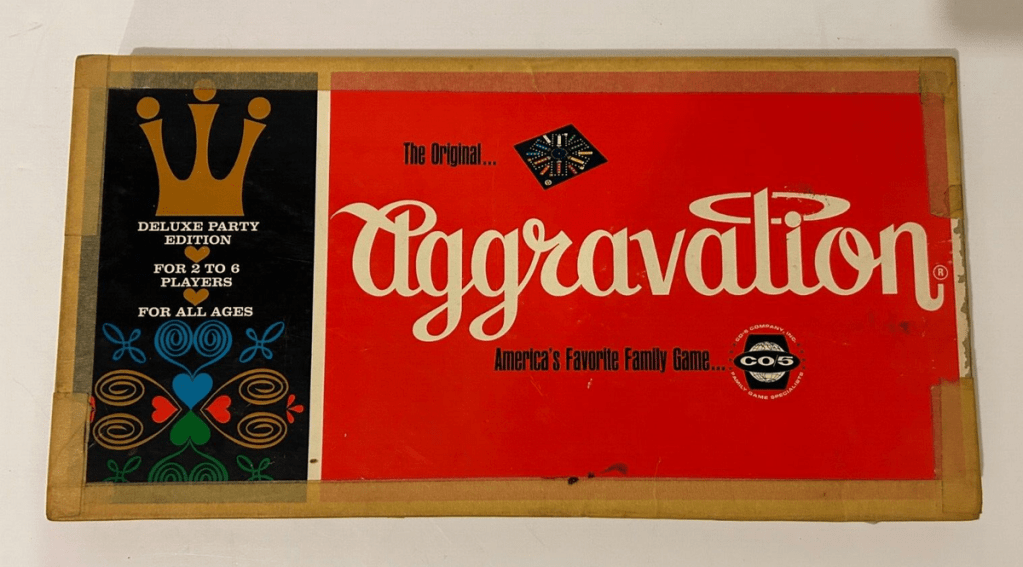
Aggravation (1962) – A race-to-the-finish game often compared to Sorry!, but featuring a unique board design. Popular in the 1960s and ’70s, Aggravation offered a slightly edgier twist on the classic race-and-bump gameplay.
Mystery Date (1965) – A lighthearted game aimed at young girls, reflecting mid-century dating culture. Today, it’s remembered mainly as a quirky collectible with nostalgic mid-century charm.
Classic Milton Bradley Games Everyone Remembers

The Game of Life (1960) – Perhaps Milton Bradley’s most iconic creation, this game simulates life events, including careers, family, and finances, and has remained a staple of family game nights for generations.
Candy Land (1949) – Designed for young children, Candy Land is a simple race-to-the-finish game known for its colorful board and easy-to-follow gameplay. Its charm and simplicity have made it one of the most enduring children’s games in history.
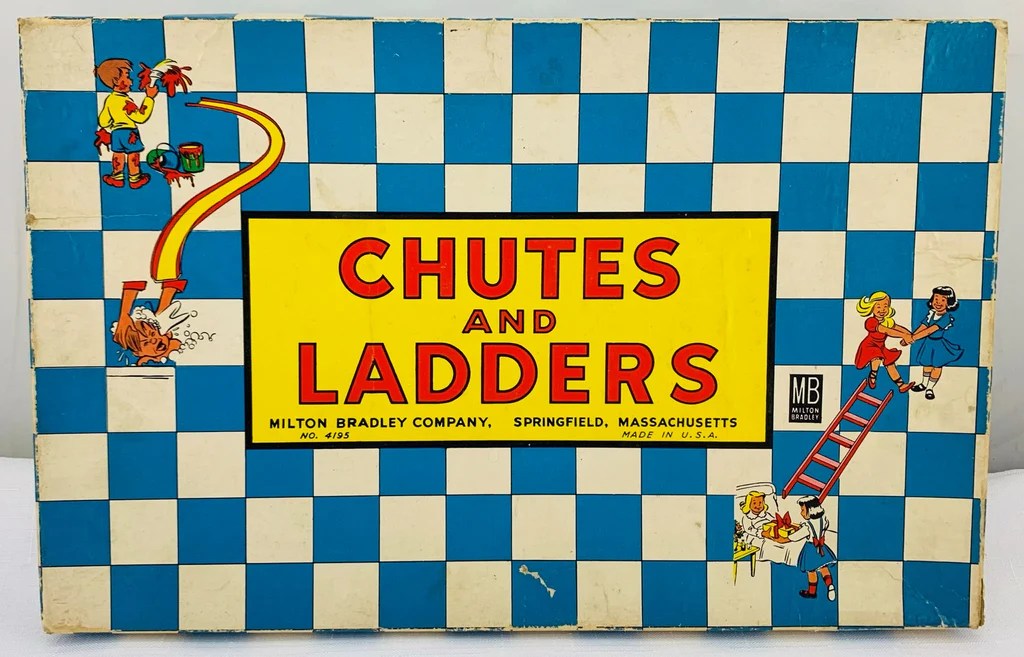
Chutes and Ladders (Snakes and Ladders, U.S. version, 1943) – A classic children’s board game that teaches counting and the ups and downs of life through slides and ladders. Its simple, fun gameplay has made it a favorite for generations of young players.
Operation (1965) – A dexterity game where players remove body parts without setting off the buzzer, testing hand-eye coordination and patience. A cultural icon, Operation remains a favorite among children and adults alike.

Connect Four (1974) – A two-player strategy game where players aim to line up four discs in a row. Simple to learn but surprisingly deep, Connect Four remains widely played and enjoyed today.
Simon (1978) – An electronic memory game in which players repeat increasingly long sequences of lights and sounds. Simon became a pop-culture phenomenon in the late ’70s and ’80s, introducing a generation to electronic gameplay.

Yahtzee (1956) – A fast-paced dice game where players roll five dice to create scoring combinations. Easy to learn and endlessly replayable, it’s remained a family favorite for generations. The thrill comes from balancing luck and strategy to hit the highest-scoring combinations.
Games That Thrived at Both Parker Brothers & Milton Bradley

Sorry! (1934) – Based on the ancient game of Pachisi, players race their pieces around the board while trying to send opponents’ pieces back to start. While Parker Brothers produced the flagship version, Milton Bradley also offered editions that kept this classic bump-and-race game popular, combining strategy and luck to remain a family favorite for decades.
Battleship (1967) – A classic strategy and guessing game in which players attempt to sink each other’s fleet of ships. Originally produced as a board game by Parker Brothers, Milton Bradley later popularized it with electronic editions, enhancing the strategic gameplay and making it accessible to a wider audience. Its enduring appeal has inspired video games and even a movie adaptation.

Twister (1966) – A physical, balance-based game in which players place their hands and feet on colored circles, testing flexibility and coordination. Co-branded and popularized by both Parker Brothers and Milton Bradley, Twister became a household name and a pop-culture staple, thanks in part to its appearances on TV and in movies.

 Keystone Wayfarer
Leave your thoughts