
A single flash can make a star. A thousand can unmake one. The paparazzi live for that moment—the shot that blurs admiration with intrusion. At first, it feels thrilling, even flattering: a smile caught, a nod returned, the illusion of connection. But soon the flashes multiply, trailing from red carpets to quiet streets, until every gesture, every glance, belongs to the public. In those moments, privacy dissolves into performance—a reality Grace Kelly understood better than anyone.
They called her the “girl in white gloves,” a name inspired by the prim evening accessory she so often wore. On set, every eye sought her out, yet she remained composed beneath the relentless glare of cameras hungry for even the smallest moment—including those that should have stayed hers alone. Throughout her life, she moved through fame with quiet elegance—poised, dignified, seemingly untouchable. And from the soundstages of MGM to the palace halls of Monaco, the world’s gaze followed her: always enchanted, never satisfied.
Today, Keystone Wayfarer proudly continues its celebrated series on prominent Pennsylvania women, honoring their extraordinary legacies and returning their remarkable stories home.
Before the world knew her as a princess, she was simply Grace, a girl shaped by her Philadelphia roots. Born on November 12, 1929, at the now-shuttered Hahnemann University Hospital, Grace Patricia Kelly grew up in a family of remarkable accomplishment. Her father, John B. Kelly Sr., was a three-time Olympic gold medalist in rowing, a successful businessman, and a civic leader. Her mother, Margaret Majer Kelly, a former model and competitive swimmer, became the first woman to teach physical education at the University of Pennsylvania. Talent rippled through the family: Grace’s uncles included vaudeville star Walter C. Kelly and Pulitzer Prize–winning dramatist George Kelly.
The East Falls neighborhood she grew up in mirrored Philadelphia’s broad contrasts—a place where modest millworkers’ row houses stood in the shadow of grand estates. Once defined by its thriving textile industry, fortunes shifted when Dobson Mills, a major employer, closed during the Great Depression, leaving many residents out of work. Yet even amid hardship, East Falls retained pockets of affluence along School House Lane and Henry Avenue, home to prominent families like the Kellys.
It is said Grace often felt like an outsider in her athletic family, preferring to read and play privately. Her father initially viewed acting as an unserious pursuit. He reportedly remarked that her sister Peggy would have made a better star. Yet shyness didn’t stop Grace from exploring the performing arts. She attended Saint Bridget’s parish school and later the distinguished Catholic girls’ school Ravenhill Academy, where she played the lead role in Don’t Feed the Animals. She continued her education at the prestigious Stevens School in Chestnut Hill, performing as both a dancer and an actress. Her yearbook predicted she would become “a famous star of stage and screen”—a prophecy she would soon fulfill.

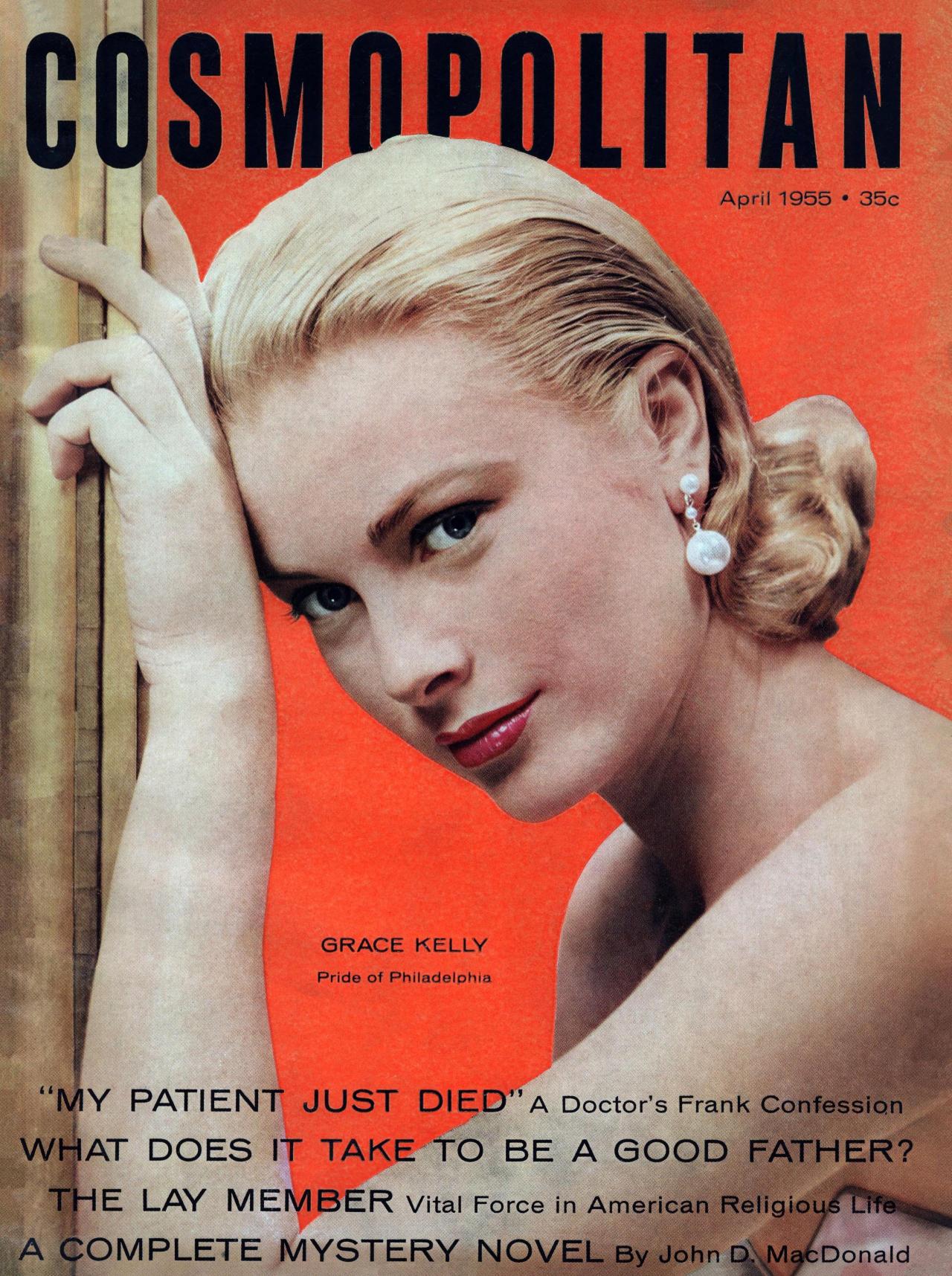
She took voice lessons to soften her accent, refining her speech to match the sophisticated image she would later cultivate in Hollywood—and, eventually, in Monaco. She launched a modeling career with the Walter Thornton Model Agency, appearing on magazine covers and advertisements, which gave her both exposure and confidence. Seeking broader opportunities to pursue her passion for acting, Grace moved to New York City, where she began honing her craft on stage and in live television, performing in nearly sixty productions and gaining the experience that would define her early career.
Building on this foundation, in 1949 she made her Broadway debut as the daughter in The Father alongside Raymond Massey, despite casting directors considering her 5’6” height too tall for the stage. Television offered rigorous training, honing the confidence, poise, and stage presence that would carry her through the next steps of her career.
Grace made her film debut in Fourteen Hours (1951) with a brief appearance as a bystander, followed by a role as Gary Cooper’s wife in the Western High Noon (1952), which went on to win four Oscars. Her growing presence on screen caught the attention of MGM, who signed her to a seven-year contract, paying $750 a week and allowing her to continue pursuing stage work in New York. Her breakthrough came the following year with John Ford’s Mogambo (1953), earning her first Academy Award nomination and firmly establishing her as a rising star in Hollywood.
Alfred Hitchcock soon elevated Grace to cinematic stardom with Dial M for Murder (1954), Rear Window (1954), and To Catch a Thief (1955), the last cementing her image as his quintessential “cool blonde.” She famously turned down the lead in On the Waterfront to take the role in Rear Window, a decision that reflected her instinct for parts that balanced sophistication with emotional depth, showcasing her tact, intelligence, and understated independence. Remarkably, she appeared in only eleven feature films during her brief acting career, yet each performance left a lasting impression on Hollywood.
In 1955, her talent was formally recognized when she won the Academy Award for Best Actress for The Country Girl, narrowly defeating Judy Garland in the closest vote in Academy history—decided by just six ballots. By this time, Grace had become the highest-earning female actor in Hollywood, a testament to both her skill and her rising prominence.
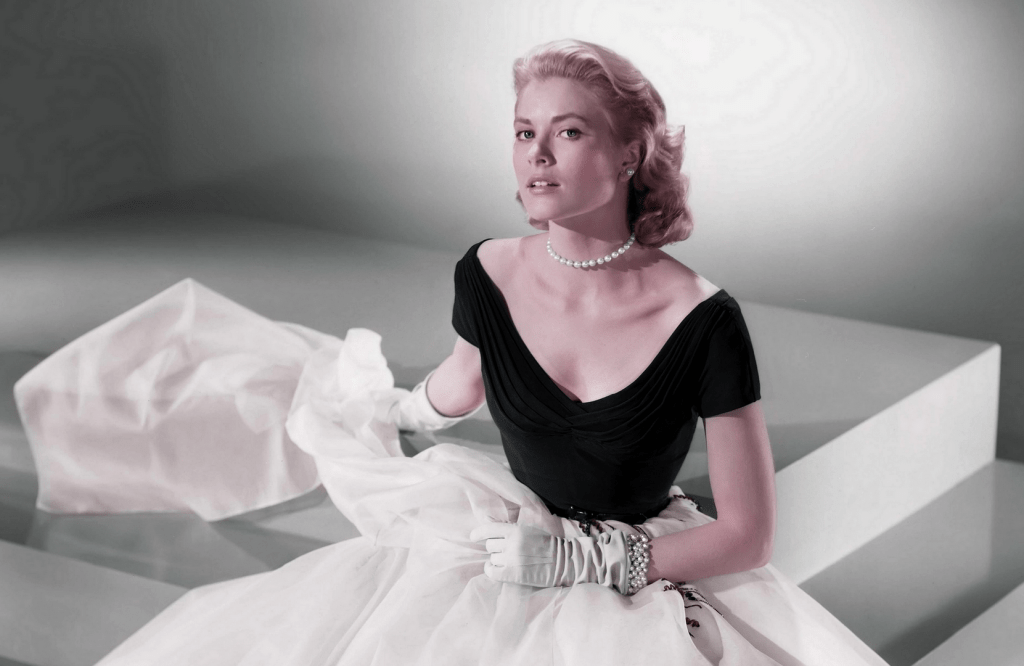
Her life in Hollywood brought her into the orbit of some of the era’s most famous men, including Gary Cooper, William Holden, Clark Gable, Oleg Cassini, and Bing Crosby. Yet these relationships were merely chapters leading up to the love that would define the rest of her life.
That love arrived unexpectedly during a photoshoot at the Cannes Film Festival, where Grace met Prince Rainier III of Monaco. Their connection was immediate, and within a year, they were engaged—a surprise to many. The announcement on January 6, 1956, made the front page of The New York Times, capturing the public’s imagination.
They married on April 19, 1956, in a ceremony widely called “The Wedding of the Century” at St. Nicholas Cathedral in Monaco. Grace traveled with an entourage of 66, nearly 2,000 reporters covered the event, and MGM filmed it live for European audiences. Her family provided a $2 million dowry, and her films were reportedly banned in Monaco to preserve her new role as princess. Brides still look to her silk taffeta and old-lace gown for inspiration.
At twenty-six, Grace retired from acting to devote herself to her family—Princess Caroline, Prince Albert, and Princess Stephanie—and to charitable work. She endured several miscarriages but remained steadfast in her commitment to both motherhood and philanthropy. In 1964, she established the Princess Grace Foundation-USA to support emerging artists in film, theater, and dance, and she was also deeply involved with AMADE Mondiale, an organization dedicated to protecting children’s rights. Her influence extended beyond philanthropy, as she later made history as the first actress to appear on a U.S. postage stamp.
Yet even as she embraced her new roles, fame and royalty offered little refuge from public scrutiny. The paparazzi were ever-present, their lenses following her every step, every smile, every gesture. Even small acts became symbols of muted defiance: in 1956, to shield her pregnant belly from intrusive cameras, she famously used a Hermès handbag—a practical gesture that transformed into the iconic “Kelly bag.” Aware of the relentless media culture later immortalized in La Dolce Vita, Grace faced it all with composure, confiding in close friends, including First Lady Jacqueline Kennedy, about the challenges of safeguarding her family amid the constant demands of attention and duty.
Even with careful attention to her family’s safety, fate intervened tragically. On September 13, 1982, Grace Kelly’s life came to a sudden end. While driving along the steep, winding Moyenne Corniche near her country home in Monaco, she suffered a stroke, causing her to lose control of the car. The vehicle plunged off the same road featured in To Catch a Thief. Her youngest daughter, Princess Stephanie, who was in the car with her, survived with a cervical fracture, but Grace’s injuries proved far more severe. Rushed to Monaco Hospital, she fought valiantly, yet a cerebral hemorrhage proved fatal. She passed away the following day at the age of 52, leaving the world stunned by the loss of a woman who had carried both celebrity and royalty with grace and dignity. Prince Rainier never remarried.
The circumstances of the crash sparked immediate speculation. The palace initially cited brake failure, though later investigations found no evidence to support that claim. Regardless of the uncertainty, the heartbreak was unmistakable: a life defined by vitality, elegance, and fortitude had ended far too soon.
Yet Grace’s influence did not end with her passing. Her legacy lives on through her films, her charitable foundations, and her enduring impact on fashion and culture. In her memory, her son, Prince Albert, established the Princess Grace Awards in 1984 to recognize emerging talent in film, theatre, and dance—ensuring that her commitment to artistry, sophistication, and excellence would continue to inspire generations.
Grace and Prince Rainier’s family continued to shape Monaco’s history. Their first child, Princess Caroline, born during their honeymoon, secured the Grimaldi succession and helped safeguard Monaco’s independence from France. Caroline married three times and has four children; her second husband, Stefano Casiraghi, tragically died in a high-speed boating accident in 1990. Their son, Prince Albert, ascended the throne in 2005 and is father to twins Jacques and Gabriella with Princess Charlene, as well as two older children from previous relationships. Grace and Rainier’s youngest, Princess Stéphanie, pursued careers in modeling, singing, and fashion design, while navigating a personal life that included three marriages and three children.
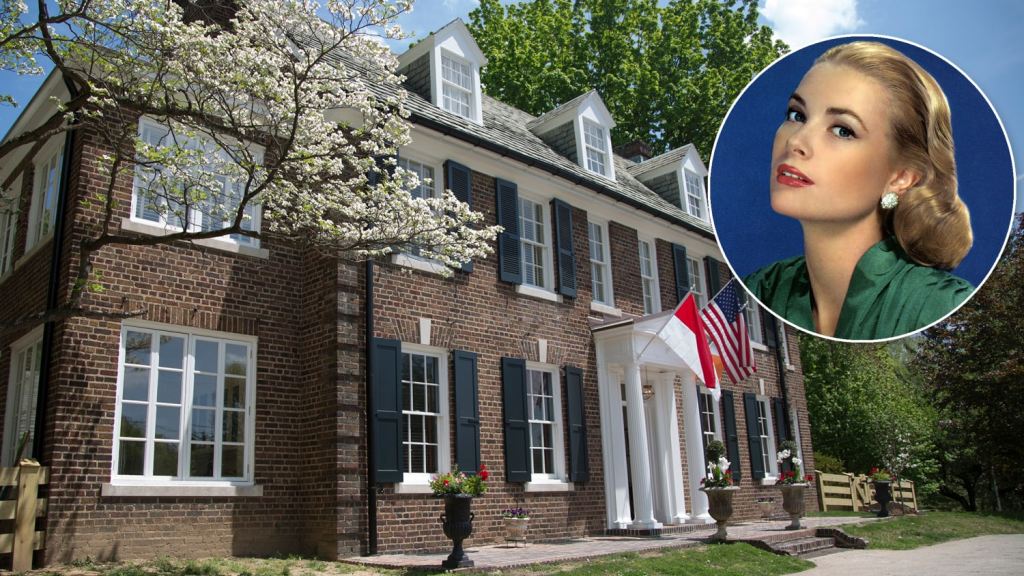
Today, the East Falls home where Grace Kelly grew up stands as a quiet reminder of the Kelly family’s prominence. Located at 3901 Henry Avenue, the 4,000-square-foot brick Georgian features six bedrooms and five bathrooms. In 2012, the Pennsylvania Historical & Museum Commission placed a marker in front of the home to commemorate its significance. The house later made headlines due to a prior owner, Marjorie Bamont, who purchased the property in 1973 from Grace Kelly’s mother and was found guilty of 16 counts of animal cruelty in 2013. In 2016, the house was sold for $775,000, quietly closing the chapter on Grace Kelly’s Philadelphia beginnings.
From her Philadelphia childhood to Hollywood stardom and Monaco royalty, Grace Kelly embodied splendor and understated strength. She navigated the glare of attention and the duties of royalty with dignity, always striving to protect the private moments that mattered most—peace, family, and love. Her life was a delicate balance of talent, sophistication, and quiet defiance, leaving a legacy that continues to inspire. Decades after her untimely death, Grace Kelly remains a timeless icon, her beauty, style, and presence enduring far beyond the spotlight.

 Keystone Wayfarer
Leave your thoughts