This story contains accounts of real-life violence and murder. Reader discretion is advised.
Every Halloween, my husband queues up John Carpenter’s classics, one after another. Shadows twist and crawl across our living room walls while Chef Mike—the microwave with a personality all his own—pings and hums, delivering snacks that feel both comforting and a little absurd in the dark. The film’s hypnotic theme winds through the room, cold and relentless, making the hair on our arms rise—well, mine anyway.
When it comes to serial killer movies, “most popular” can mean many things. Box-office hits like Se7en (1995) and The Silence of the Lambs (1991) captivated audiences with chilling stories and unforgettable villains. Classics such as Psycho, the meticulously haunting Zodiac, and the bone-chilling Sinister linger long after the credits fade. Recently, we watched Black Phone 2 at our favorite theater, with the hubby bringing along his trusty refillable popcorn bucket. While it can’t match the impact of the first film, it follows Gwen and her brother Finn to a winter camp, where they once again confront the Grabber—a killer who has grown even more powerful in death.
And yet, no screen can fully capture the true terror of real-life killers. They move silently among us, their actions calculated, deliberate, and utterly devoid of audience applause. Unlike mass murderers, who erupt in a single violent frenzy, serial killers operate methodically, leaving patterns of fear that ripple through communities long before anyone realizes the danger is real.
Serial murder isn’t new. Some historians suggest tales of werewolves and vampires were inspired by real killers. In 9th-century Baghdad, a strangler buried his victims in his own home. Centuries later, Gilles de Rais, companion to Joan of Arc, allegedly killed dozens of children. And in 17th-century Transylvania, Elizabeth Báthory was said to have tortured young girls, bathing in their blood before her arrest in 1610.
By the late 19th century, fascination with killers had intensified. Jack the Ripper terrorized London in 1888, murdering women and carving the first widely publicized trail of horror into modern history. His crimes would shape investigative techniques and capture imaginations far beyond England. Across the Atlantic, H. H. Holmes terrorized Chicago in the early 1890s, operating his gruesome “murder castle” and claiming at least nine victims. Newspapers, fueled by William Randolph Hearst’s sensational coverage, cemented his notoriety.
In a grim twist of fate, Pennsylvania became the final stage of Holmes’s story. His reign of terror came to an end in Philadelphia in 1896, when justice finally caught up with him. Reports say his death was far from quick—he dangled from the noose for nearly fifteen minutes before finally succumbing, a chilling reminder that even the law can’t always erase horror instantly.
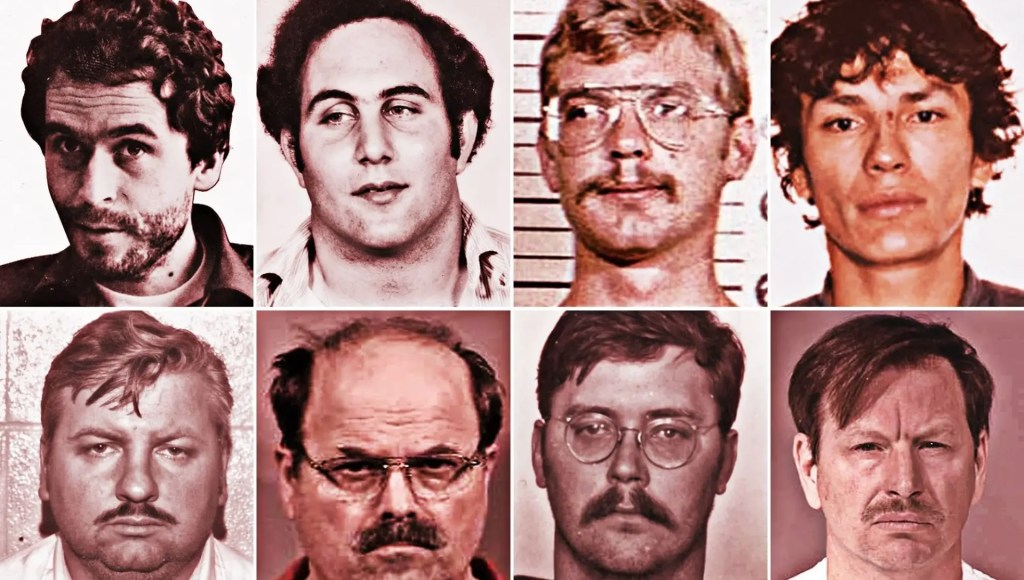
Across the country, killers have left trails of fear that linger to this day—you know the names: Jeffrey Dahmer, Ted Bundy, John Wayne Gacy. Pennsylvania has its own dark legacy, ranking among the top ten states for serial killers. Here, terror wasn’t distant—it lived next door. Some struck overnight, their names splashed across headlines; others lurked in the shadows, their crimes hidden until they could no longer be ignored.
Before we meet the individuals who terrorized the state, remember this: monsters don’t always hide under the bed. Sometimes, they’re closer than you think.
Charles Cullen didn’t lurk in alleys—he wore scrubs. Across hospitals in New Jersey and Pennsylvania, he slipped lethal doses of digoxin and insulin into IV bags, targeting elderly, sick, and defenseless patients. He called it “mercy,” but his actions were anything but.
Cullen blended in perfectly: polite, attentive, unassuming—watching life drain quietly from those who trusted him most. Overworked hospitals let him move undetected from facility to facility for years.
It wasn’t until 2003, at Somerset Medical Center, that computers flagged his unusual activity. Arrested, he confessed to dozens, possibly hundreds of murders. Charged with 22 in New Jersey and 7 in Pennsylvania, he now serves 18 consecutive life sentences in Trenton.
On the surface, Harrison Graham seemed harmless: tall, soft-spoken, even childlike, charming neighbors and entertaining children with puppets. But behind the door of his North Philadelphia apartment, a nightmare awaited.
In the summer of 1987, neighbors complained of a foul smell. Police expected trash or a dead rat. Instead, they found seven women’s bodies—some hidden in closets, others in duffel bags or beneath the floorboards—amid garbage, dirty mattresses, and drug paraphernalia.
Graham lured women, mostly acquaintances or sex workers, with promises of drugs or companionship, strangling them during or after sex, sometimes interacting with their corpses. One victim was his longtime girlfriend, Robin DeShazor.
When police came, Graham slipped out through the fire escape, clutching his Cookie Monster doll, the one thing he couldn’t leave behind. Over a week later, his mother convinced him to surrender. He confessed calmly, admitting to killings between 1986 and 1987. Convicted in 1988, he received six death sentences plus life in prison; the death sentences were later commuted.
For a few terrifying years, North Philadelphia became a place where nightmares overlapped. Less than a mile from Graham’s home, Gary Heidnik was running his own house of horrors.
Gary Michael Heidnik wasn’t just another neighbor—he was a nightmare hiding behind a normal facade. On the surface, Heidnik seemed ordinary: a licensed practical nurse, businessman, husband, and father who mingled in the community. Behind closed doors, he ran a house of horrors in North Philadelphia.
He kidnapped six women, imprisoning them in a pit he dug in his basement. Two died under his hands, while the others endured beatings, rape, starvation, and electrocution. He controlled them with chains and intimidation, even forcing some victims to torment the others. One, Sandra Lindsay, died from starvation and abuse; Heidnik allegedly dismembered her, storing body parts in a freezer labeled “dog food.”
His reign ended when a captive escaped and alerted police. Arrested in April 1987, he was convicted of two murders and multiple kidnappings, rapes, and assaults. He was sentenced to death and executed by lethal injection in July 1999—the last person executed in Pennsylvania.
Harrisburg’s quiet streets hid Joseph “Joey” Daniel Miller’s terror for years. Born in 1964 into an abusive, chaotic household, he struggled with intellectual disabilities and trauma that shaped a darkness erupting in devastating ways.
Miller preyed on Black women and girls, luring victims with promises of rides or companionship before raping and strangling them in secluded areas. His killings were calculated, leaving bodies discovered—or hidden—long after the fact. In 1992, evidence caught up with him; he confessed to multiple murders and led police to burial sites. Over the years, he admitted to additional killings.
Convicted in 1993, Miller was sentenced to death, but appeals and questions about his intellectual disability stretched the process. His sentence was commuted to life imprisonment in 2002. Nearly thirty years after his first known murders, he confessed to two more victims in 2016, earning additional life sentences.

Harvey Miguel Robinson grew up amid abuse and chaos. Born in Allentown in 1974, his father, an alcoholic musician, beat his mother and later murdered his mistress. Robinson himself showed violent tendencies early, arrested at nine and escalating in aggression as he aged.
By the early 1990s, his rage turned deadly. Between 1992 and 1993, he killed three people and injured two others, targeting victims from a 15-year-old newspaper carrier to a 47-year-old grandmother. He also attacked a five-year-old girl, who survived, and another survivor, Denise Sam-Cali, later helped police trap him. Robinson was arrested after a shootout, wounded and apprehended.
Sentenced to death in 1994, some of Robinson’s sentences were later reduced to life imprisonment because he was only 17 at the time of his crimes. One death sentence remained; in 2019, he was resentenced to 35 years to life. Today, he sits behind bars at SCI Phoenix, not far from my own home—a chilling reminder that evil can spark early, and sometimes, it doesn’t end until it’s locked away.
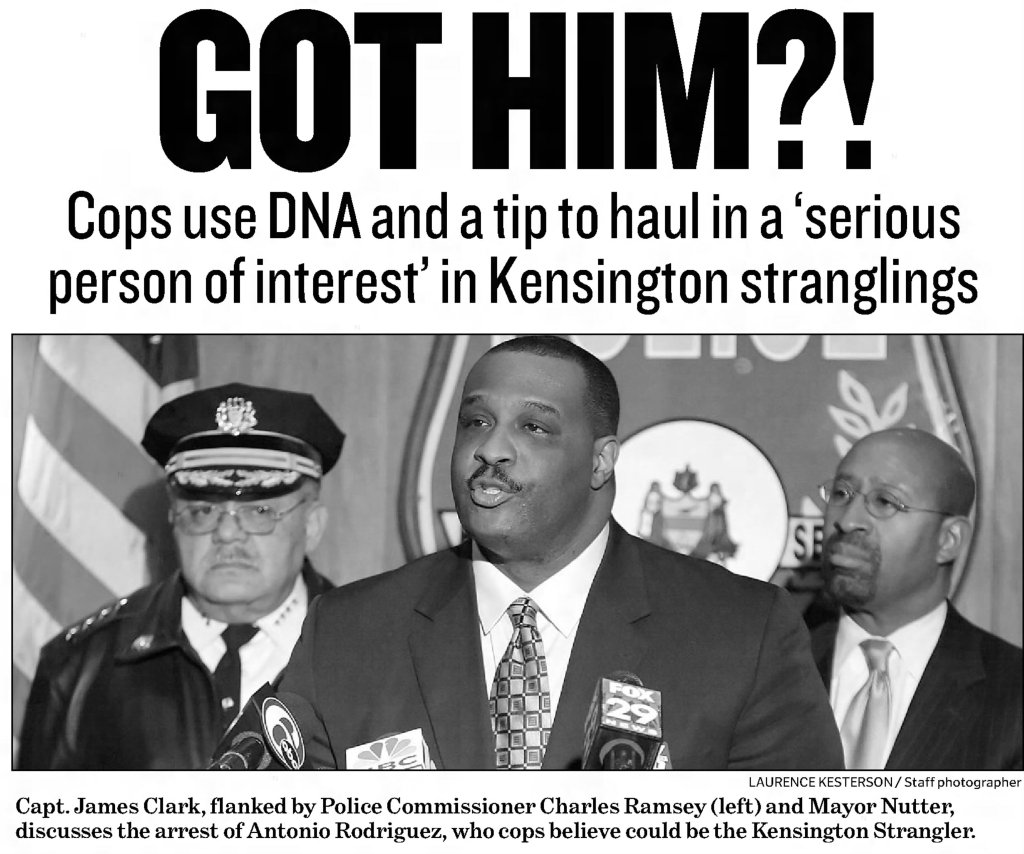
Antonio Rodriguez became known as the Kensington Strangler after a six-week spree terrorized a North Philadelphia neighborhood. Long scarred by poverty, abandoned buildings, and the relentless grip of the drug trade, the area offered him cover. Within a tight 10-block radius, he raped and murdered three women, inflicting his abhorrent crimes on the area’s most vulnerable residents.
His attacks were brutal and intimate: he strangled and beat his victims, continuing to violate their bodies after death. Fear rippled through the streets as rumors of a serial killer spread. Just two days after Barbara Mahoney’s murder, police released CCTV footage showing a man named “Anthony” assaulting a nearby woman. An anonymous tip soon led investigators to Rodriguez, who had recently been released from prison.
Rodriguez confessed to the killings, but prosecutors opted not to seek the death penalty because of his mental health history. He was convicted on all counts and sentenced to three consecutive life terms. Today, he remains behind bars at SCI Rockview.
Edward Arthur Surratt’s turbulent life began in an abusive household and quickly spiraled into petty crime. Many believe a brief, troubled stint in Vietnam left deep psychological scars that would haunt him—and, before long, everyone around him—for years to come.
By the late 1970s, while driving his rig across Pennsylvania, Ohio, and South Carolina, Surratt became linked to a string of grisly murders: couples beaten, women sexually assaulted, and bodies left in shocking disarray. Though convicted of only one murder and several rapes in 1978, investigators suspected him in at least 27 killings, a chilling trail of violence that haunted multiple states.
Surratt was captured following a violent Florida home invasion and the sexual assault of a teenage girl. Sentenced to multiple life terms plus 200 years, he later confessed to additional murders, revealing a chilling pattern of calculated violence. Now imprisoned in Florida, he stands as a haunting reminder that some predators leave terror far beyond the towns where they strike.
Richard Scott Baumhammers appeared destined for a life of accomplishment. The son of a successful Latvian immigrant dentist, he grew up in the Pittsburgh suburb of Mt. Lebanon, attended Kent State University, and eventually earned a master’s degree in international law. But beneath the polished exterior lurked a mind unraveling.
Baumhammers was diagnosed with delusional disorder—a mental health condition marked by persistent false beliefs not grounded in reality. Obsessed with racial hatred and fixated on conspiracies, he openly admired Hitler and Timothy McVeigh and planned “lone wolf” attacks driven by ideology and paranoia. On April 28, 2000, his obsession erupted into violence. He began by fatally shooting his Jewish neighbor, Anita Gordon, then drove across Allegheny County, targeting people of Asian, South Asian, and African American descent. Over two hours and 15 miles, he killed five, paralyzed another, vandalized synagogues, and left communities reeling.
Baumhammers was arrested hours later. A search revealed a manifesto calling for violence against non-white immigrants. In 2001, he was convicted on 19 charges—including five murders, ethnic intimidation, and arson—and sentenced to death.
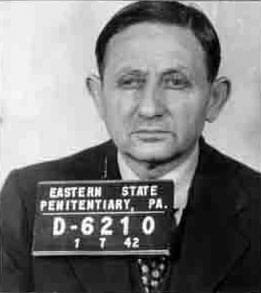

Morris Bolber turned quiet cruelty into calculated murder. He was part of a widespread murder-for-hire and insurance fraud scheme—today known as the Philadelphia Poison Ring. Using poison as his weapon of choice, he killed between 30 and 50 people, often acquaintances or those who trusted him. His murders were slow, excruciating, and initially went unnoticed, blending seamlessly into the fabric of everyday life.
Eventually, the law caught up. Bolber turned himself in and was sentenced to life in prison. He died in 1954 while incarcerated at Eastern State Penitentiary. His story remains a haunting reminder that ordinary lives can conceal monstrous intent—and that quiet, methodical killers can operate in plain sight until their crimes are uncovered.
Keith Gibson grew up in a fractured Philadelphia home, drifting through poverty, crime, and mounting violence. By his teenage years, he was already showing early signs of anger and instability.
In 2008, he fatally shot Stanley Jones during a robbery in Delaware and served over a decade in prison. Paroled in 2020, he defied supervision orders, returning to Philadelphia and launching a deadly spree. Between January and June 2021, he murdered two to six people—including his own mother—often during robberies, executing his victims methodically and leaving communities gripped by terror.
Gibson was finally apprehended on June 8, 2021, heavily armed and clad in body armor. Surveillance footage, stolen property, and eyewitness testimony left little doubt of his guilt. In November 2023, a Delaware jury convicted him of two murders and multiple felonies, handing down seven life sentences plus 296 years. He now awaits extradition to Pennsylvania to face the remaining charges, as the communities he terrorized try to reckon with the devastation he left behind.
In the sweltering heat of July 2017, a quiet Bucks County field concealed a secret far darker than anyone could have imagined. Cosmo DiNardo and his calculating cousin and accomplice, Sean Michael Kratz, lured four young men under the guise of a harmless cannabis deal. Beneath the easy smiles and casual conversation pulsed a chilling, meticulously crafted plan. One by one, the victims were shot and buried in shallow graves across a ninety-acre farm owned by DiNardo’s family.
The horror wasn’t just in the killings—it was in the deception. Charm and affluence masked cold-blooded intent. The killers moved unnoticed, blending into the suburban landscape as terror unfolded quietly and methodically in plain sight. Families, friends, neighbors—everyone was forced to confront a chilling truth: evil doesn’t always hide in the shadows. Sometimes it wears a familiar face, waiting for the perfect moment to strike.
And finally, born in Bethesda, Maryland, William Dean Christensen wasn’t a Pennsylvania native—but he left the state soaked in blood. A ghost in plain sight, he slipped silently between states and countries, leaving a trail of rapes, murders, and dismemberments few could trace. Between 1981 and 1982, his violence spanned from Canada to Pennsylvania and New Jersey, striking young women with sudden, brutal ferocity. Authorities suspect he may have claimed as many as thirty lives.
Using aliases to vanish from one scene to the next, Christensen eluded capture until 1983, when his killing spree finally ended in Pennsylvania. Police constable Bill McAndrew dubbed him “The American Jack the Ripper,” a label reflecting the same cold, methodical, and sexually violent tendencies that had horrified London a century earlier. Sentenced to life without parole, Christensen would spend the rest of his days imprisoned in the state he had once terrorized..
Pennsylvania’s history of serial killers is more than a catalog of crimes—it is a stark reminder that darkness can dwell in the most ordinary places. These killers struck without warning, leaving communities forever changed. Today, law enforcement monitors patterns and trends through programs like Pennsylvania’s Uniform Crime Reporting (UCR) Program, analyzing years of data to prevent future tragedies.
If you want to explore the histories of some of the world’s most infamous murderers, Keystone Wayfarer recommends Serial Killers by Parcast—a gripping true-crime podcast that delves into the twisted minds and chilling methods of history’s most notorious, and sometimes forgotten, killers. Each episode unravels a killer’s backstory, motivations, and eventual downfall with a mix of psychological insight and haunting storytelling. New episodes drop every Monday on Spotify.

 Keystone Wayfarer
Leave your thoughts