
It should be no mystery why history has captured my heart so completely. All it takes is a slow drive through the winding roads of the small towns tucked into this provincial pocket of Pennsylvania, and the past begins to speak. Weathered barns lean into golden fields, old churches cast long shadows across quiet streets, and every crumbling stone wall seems to whisper a story. The beauty may catch your eye — but it’s the soul of these places that lingers.
That spirit lives on in the small towns that dot the landscape — places like Sumneytown, Red Hill, Green Lane, Woxall, and Pennsburg. Together, they form the heart of what was once known as Old and New Goschenhoppen. Despite the name’s biblical sound, it carries no religious meaning. Instead, it reflects a legacy built by waves of German-speaking settlers who began arriving here in the early 18th century.
Most of these immigrants came from the Palatinate region of the Holy Roman Empire, bringing with them a blend of trades, dialects, and deeply rooted cultural values. Over generations, their traditions mingled and evolved into what we now call Pennsylvania Dutch folk culture.
And just to clear up a common point of confusion: “Dutch” in this context has nothing to do with the Netherlands. It’s a twist on Deitsch, the German word for “German.” Locals have called themselves “Dutch” for centuries, and historians continue to honor the term — dialect and all.
Traces of that early German influence are still visible across the region, but one of its most remarkable legacies stands quietly between Pottstown and Perkiomenville: the Henry Antes House.

Built in 1736, this two-story rubblestone home just off Colonial Road is one of the best-preserved examples of early German colonial architecture in the region—particularly the Moravian style. What sets it apart isn’t just its age, but the survival of rare original features like wooden partition walls, beamed ceilings, and its impressive liegender dachstuhl trusses—a type of timber framing that’s almost never seen today. A massive central fireplace and a traditional three-room floor plan reflect the practical, enduring beauty of the era.
But this was more than just a home. The Antes House became a center of community and learning. In fact, it housed one of Pennsylvania’s earliest interracial, nonsectarian schools—a remarkable accomplishment in the 18th century. And during the Revolutionary War, in September 1777, General George Washington briefly used the house as his headquarters during the Philadelphia Campaign.
So who was Henry Antes?
Born in 1701 in Freinsheim, in the war-torn Palatinate, Henry came from a once-noble family whose fortunes were erased by the Thirty Years’ War. He learned carpentry and millwrighting from his father and brought those skills to Pennsylvania when he immigrated in 1720. He helped build one of North America’s first paper mills near Philadelphia, married into the De Wees family, and eventually fathered eleven children.
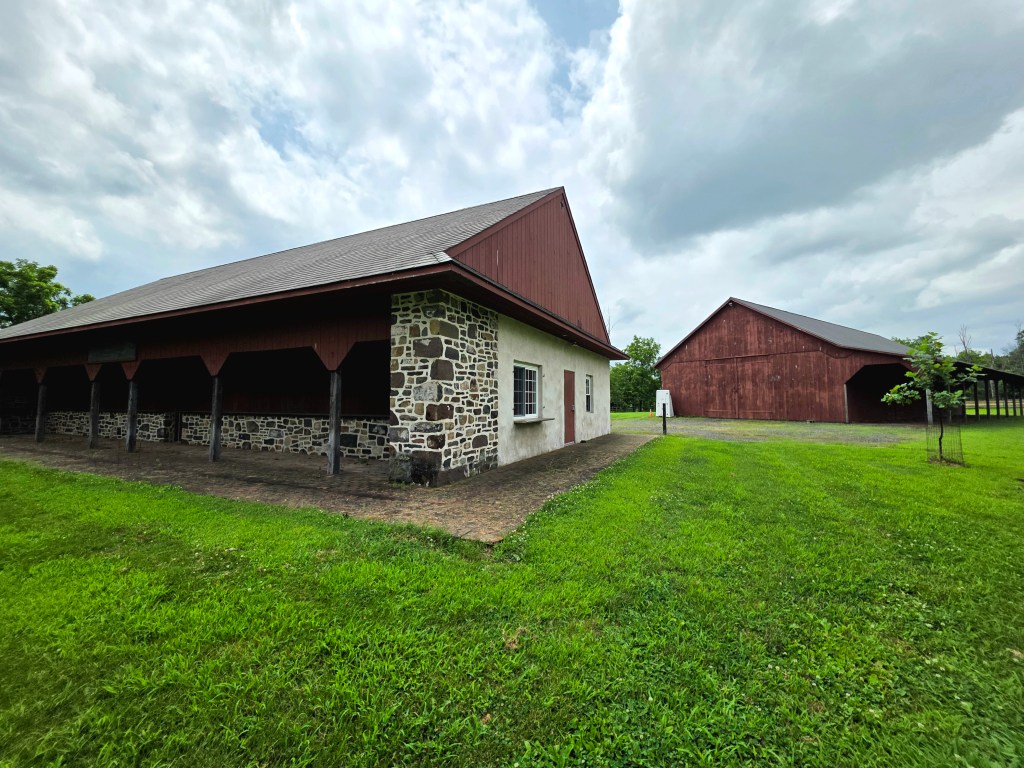

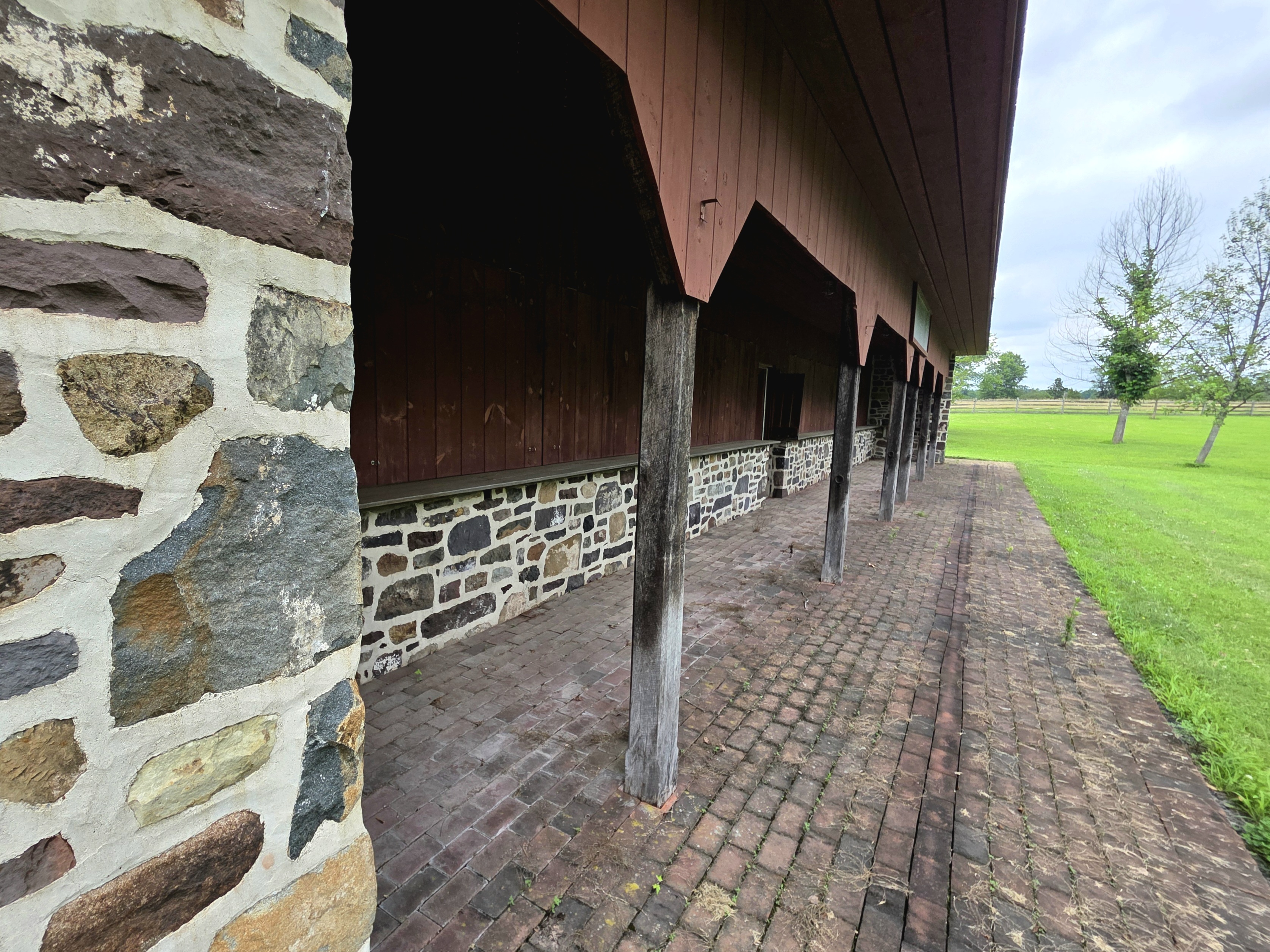
By the 1730s, he had settled in what is now Upper Frederick Township, where he built mills, raised his family, and constructed his stone house. Though not a Moravian himself, Henry worked closely with Moravian leaders like Count von Zinzendorf and Bishop Spangenberg, even helping to plan the settlement of Bethlehem. He donated land for the progressive school mentioned earlier—a school that welcomed Native American and Black students at a time when such inclusion was nearly unheard of.
He was a member of the Associated Brethren of Skippack, a spiritual fellowship that sought unity beyond sectarian lines. Yet despite his close ties with the Moravians, tensions eventually arose over doctrine and leadership titles. Still, when Spangenberg asked him to help establish Moravian missions in North Carolina, Henry agreed. The labor and southern climate took a toll on his health, and he died shortly after returning home in 1755, at the age of 54.
Henry’s legacy lived on through his children. His eldest son, Philip Frederick Antes, served as a colonel in the 6th Philadelphia Militia during the Revolution and later became a judge in Pennsylvania’s frontier counties. Other descendants became gunsmiths, missionaries, composers, and even builders—one played a part in shaping the very architecture of the U.S. Capitol.
Fearing British retaliation after Washington’s brief stay, the Antes family sold the property. Over the years, it passed through many hands—including a stint as a Girl Scout camp—before being rescued by a group of locals determined to preserve what remained.
In 1961, those locals formed the Goschenhoppen Historians, an organization dedicated to preserving the region’s folk culture. They restored the Henry Antes House and now care for it lovingly. By 1967, they launched the Goschenhoppen Folk Festival—a vibrant, living history event that brings the old world to life each August through food, music, and over 150 traditional demonstrations.

Held on the grounds of the Antes Plantation, the festival offers a chance to step into the rhythms of an earlier time. More than 500 volunteers, dressed in authentic period clothing, demonstrate nearly-lost trades and home skills: blacksmithing, ropemaking, tinsmithing, hearth cooking, spinning, gardening, and more. Children can dip candles, roll barrel hoops, make rag dolls, or pet friendly farm animals.
Of course, no festival is complete without the food. Guests can enjoy handmade sausage sandwiches, fastnachts, shoofly pie, peaches & ice cream, and fresh root beer. All, of course, prepared using traditional recipes passed down for centuries.
Throughout the day, the main stage features folklife presentations, Pennsylvania Dutch dialect singing, and concerts by local musicians. Lectures and demonstrations—offered in both English and dialect—strike a perfect balance between education and entertainment.

If you’ve never been, I invite you to come. Whether you’re a devoted history buff or just someone who loves a good story, it’s an experience that stays with you. It honors not only Henry Antes, but all those who came after him—generations who built something quietly enduring in this corner of Pennsylvania. It’s a story worth remembering. And it’s one worth celebrating.
And as for me — I could write every day and still never run out of stories to tell. This land holds them like seeds in the soil, waiting for the right moment to bloom. And every time I stumble upon another one, I can’t help but smile.
This year’s Goschenhoppen Folk Festival will be held rain or shine on Friday, August 8 (noon to 8 p.m.), and Saturday, August 9 (10 a.m. to 6 p.m.). For tickets and details, visit www.goschenhoppen.org.


 Keystone Wayfarer
Leave your thoughts