
In some ways, my archival journey began the moment I first stepped through the front door of my house—though I didn’t realize it at the time. There was a quiet pull inside me, a yearning to uncover the stories hidden within its walls. But life, as it tends to do, filled the space with its own demands. So the past was left untouched, set aside for years. Still, something persistent within me whispered that this path was inevitable. It was never a question of if, but when the right moment would arrive.
I remember walking into the third-floor office of the Recorder of Deeds, my heart racing with a mix of excitement and something else—anticipation, maybe even awe. The air felt heavier, charged with the promise of discovery. It was the first true step in a long-overdue journey. As soon as I crossed that threshold, I sensed the weight of history beneath my feet. I wasn’t just there to collect old documents—I was there to reconnect the fragments of a forgotten narrative, piecing together the lives that shaped the place I now called home.
You see, a home is more than four walls and a roof. It’s a living, breathing space where memories are made and where we’re allowed to be ourselves without pretense. At home, I can wear ridiculous outfits, sneak forbidden snacks, and binge guilty-pleasure TV shows I’d never admit to publicly. It’s the place where I feel safest, where my guard is down, and where I find peace. But it’s also where I’ve come to understand that the past lingers—where every creak in the floorboards and every crack in the walls tells a tale.
This house—that two-story colonial I’ve mentioned in so many of my past writings—was the twenty-sixth I visited in my search for a place to call home. The others were fine, but none of them felt right. I was looking for something with character, something with soul. Nothing fancy—just real. Sure, it needed work, but the moment I stepped inside, I knew.

I still remember the day of settlement. I arrived with a handful of pens, pencils, and markers, stretching like an athlete before signing my life away. I joked with the realtors about the mountain of paperwork ahead. They all laughed—probably wondering if I’d lost my mind.
Over the past eighteen years, I’ve left my mark on this house—renovating, updating, breathing new life into old bones. I’ve repaired worn fixtures, refinished floors, and added personal touches to nearly every room. But more than that, the house has left its mark on me—quiet, lingering reminders of the lives that came before.
This past creeps into the present in subtle, unexpected ways: a handcrafted medicine bottle unearthed in the garden, a rusted bridle bit buried in the soil, fragments of broken brick hinting at a forgotten summer kitchen. They appear without warning, like old friends reaching out—reminding me that this house has a long memory. And I’m only just beginning to understand its language.

So, more than a decade after moving in, I finally walked into that office and logged onto one of the public computers tucked into a quiet back corner. It didn’t take long to trace the land my house now stands on back to a deed recorded in the archives of Montgomery County. According to the handwritten records, the once-forty-acre tract was owned by the Ziegler family—whose legacy still echoes in the nearby town that bears their name.
The Zieglers had deep roots in the region, and their story is intricately tied to the early development of Schwenksville. In 1794, Andrew K. Clemens Ziegler married Catherine Clemmer Lederach. One of their daughters, Magdalena L. “Lena” Ziegler, later married Jacob Bauer Schwenk. In 1816, Jacob—central to the town’s formative years—built Schwenk’s Store, a pivotal moment in Schwenksville’s growth. By 1838, the store had become the town’s first post office. Jacob’s influence extended far beyond local commerce. He played a key role in constructing the Perkiomen and Sumneytown Turnpike, boosting regional trade, and helped fund a two-story stone building for the Lutheran church—an enduring cornerstone of community life.
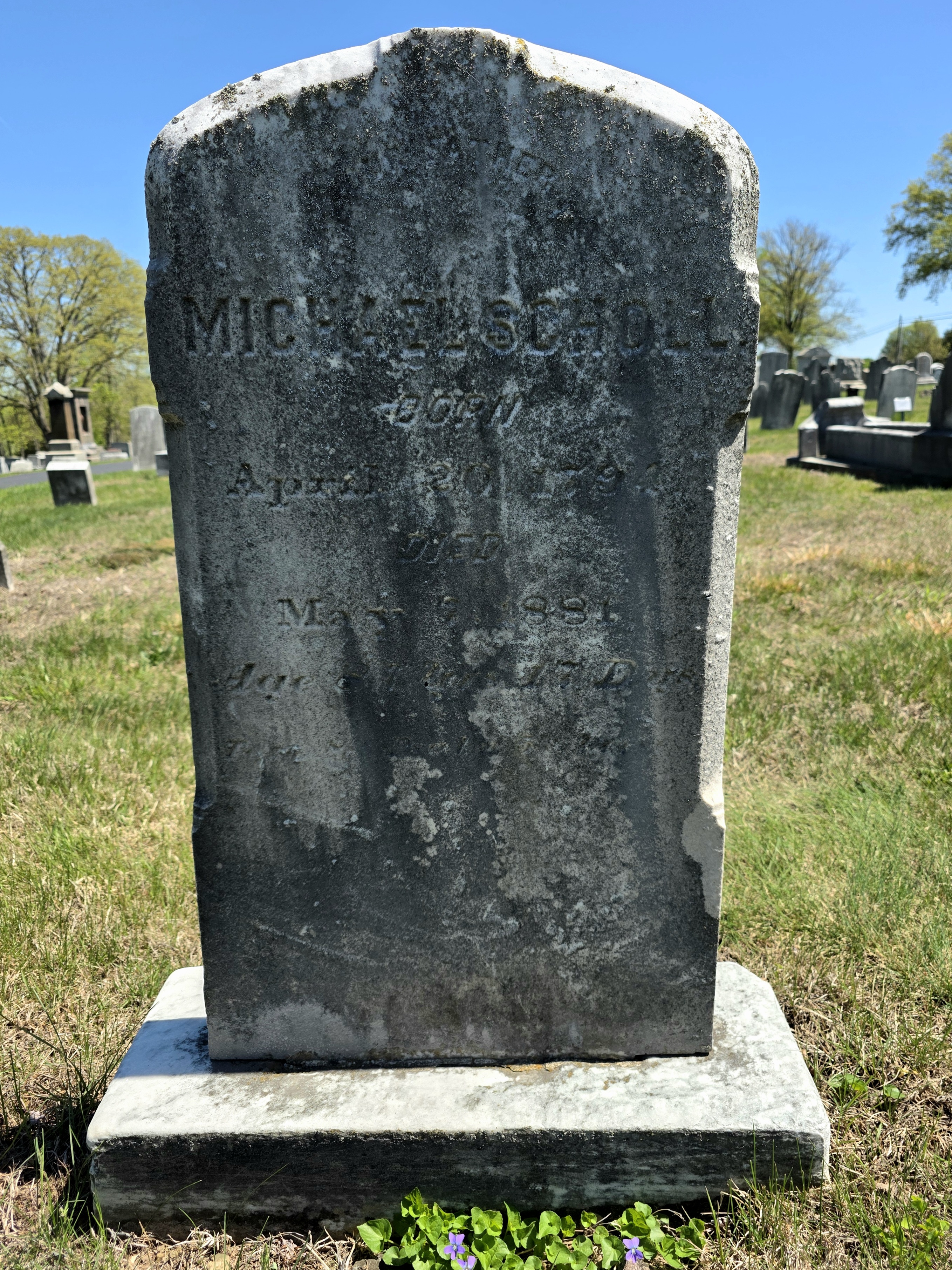
In 1834, portions of the Ziegler land passed to Michael Scholl, and in the years that followed, a house—my house—was likely built to accommodate his growing family. Michael, born in 1794, came from a family steeped in tradition and faith. He married Susanna Keeler in 1820, and together they had at least six sons and three daughters. Their youngest, Peter K. Scholl, was born in 1837 and likely grew up in the house. He purchased it from his father for seventy dollars in 1867. A Union Army veteran, Peter served alongside a brother under Provost Marshall John Freedley in 1863. A skilled carpenter, Peter contributed significantly to Schwenksville’s development, most notably through his work on Industrial Hall—a historic landmark still standing at the center of town.

Another trip to Norristown brought more discoveries. The deeper I dug, the clearer it became: this wasn’t just a passing interest—it was a calling. It was no longer simply about the house; it was about the people who had once called it home, their lives intricately woven into its very structure. Every deed, every record, every yellowed scrap of paper became a key, unlocking something deeper—an unseen thread tying me to a history I hadn’t realized was so close.
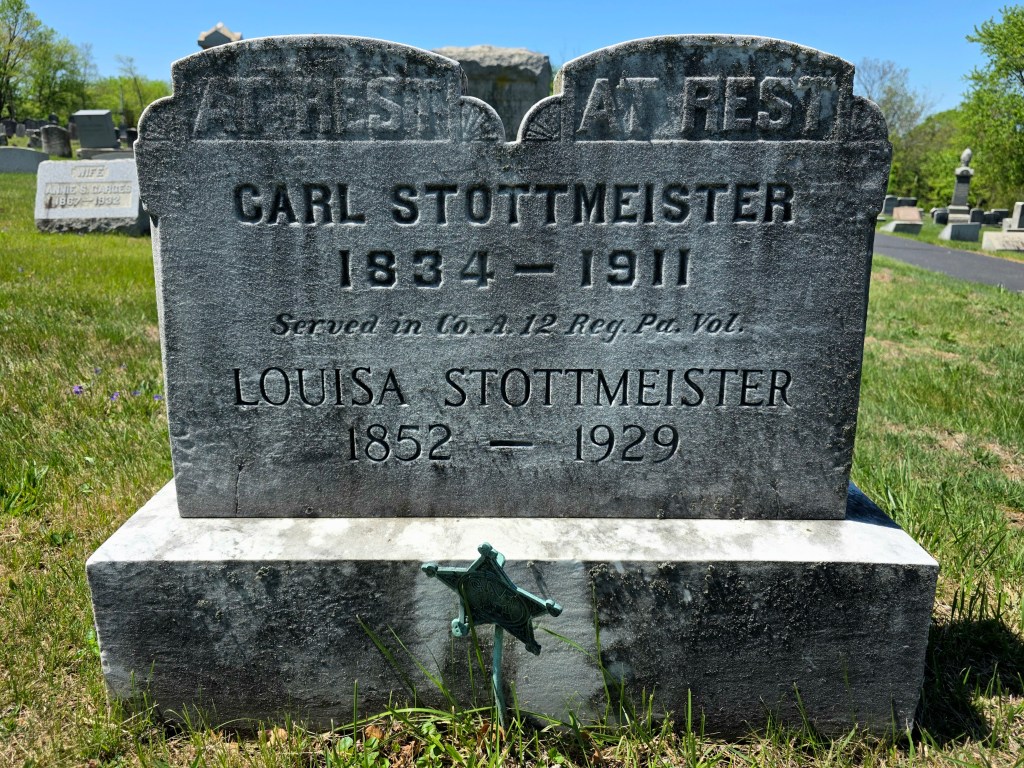
On this visit, I learned that the property was sold in 1913 to the Stottmeister family. Charles “Carl” Stottmeister immigrated to the U.S. in 1870 and married Louisa Schlitte in 1875. Carl had served in the Union Army, honorably discharged in 1865. Like the Scholls before them, the Stottmeisters left their mark on the house, contributing to its evolving history. Today, Carl and Louisa rest side by side at Keely’s Church Cemetery, just a short drive from my home. Every time I pass by, I’m reminded that they—and those before them—are part of the very soil beneath my feet.
The Erb family owned the home from 1920 until its sale in 1980. Eden Erb worked first as a cigar maker, later becoming a painter. His wife, Jennie K. Tagert Erb, was a seamstress who eventually became a supervisor at Spring Mountain House. Schwenksville Borough now owns approximately thirty-one acres of conservation land that once housed the former resort. Eden died in 1943 after battling pneumonia and typhoid fever. He and Jennie are buried together at Swamp Lutheran Church Cemetery in New Hanover Township, just up Big Road.
After Jennie’s death in 1973, the house passed to her children, Eden Jr. and Sarah Verna Derr. Eden Jr. worked as a truck driver for a local construction company, while Sarah married Ralston “Red” Derr—a World War II veteran and inductee into the Kutztown State College Football Hall of Fame.

More recently, the house came into the hands of Claude W. and Dorothy K. Conrad. Claude served as a Radar Crew Chief in World War II, eventually attaining the rank of Sergeant. He later worked in steel fabrication at Frank M. Weaver & Co. Dorothy worked in a local boarding house, and her father, Orlando Kolb, reportedly lived just a few doors away. Claude passed away in 2010 and is buried at Limerick Garden of Memories, another short drive from my house.
These names, these lives, are more than dates and facts—they’re echoes of laughter, perseverance, and love. They represent the heartbeat of families who lived through times of great change and whose legacies are etched into every beam and brick. With each new discovery, my connection to this home grows stronger. And with every page I turn, I’m reminded that we are all part of something much larger than ourselves—a shared history that stretches far beyond our lifetimes.
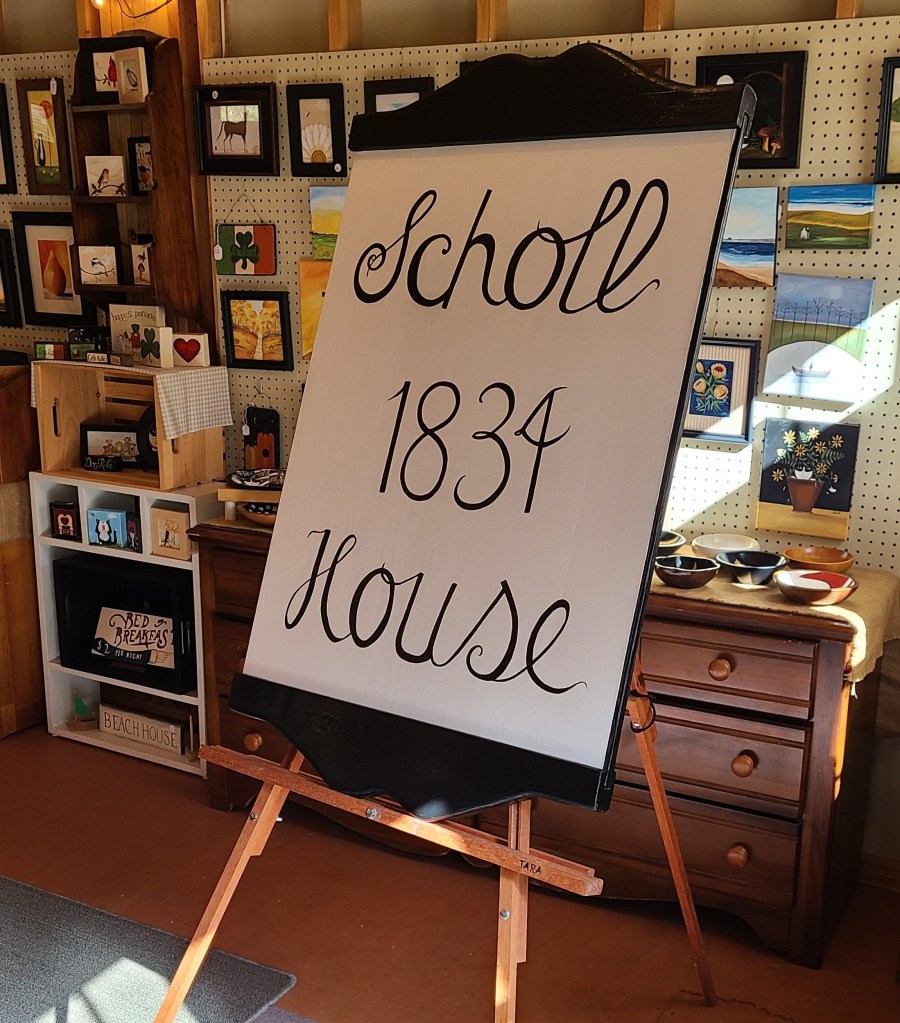
One of the most meaningful tributes to this shared legacy was created by my dear friend and local folk artist, Pamela Smith. She crafted a simple yet striking wooden name plaque that now hangs on the front of the house. Painted in classic black and white, it reads: “Scholl House 1834,” honoring the first family to call this place home. Every time I glance at it, I feel grounded—not just in place, but in time. I’m living in a story that spans generations. Maybe, someday, someone else will stand where I now stand—curious, hopeful, and drawn to the whispers in the walls. Maybe they’ll find traces of me, too.
Pamela Smith Gallery is open by appointment only. To schedule a visit, please email: pampsmithcrafts@gmail.com. You can view her latest work on her Flickr page HERE.


 Keystone Wayfarer
Leave your thoughts