There’s a certain magic in laughter—a kind of alchemy that transforms even the most ordinary moments into something unforgettable. Charlie Chaplin once said, “A day without laughter is a day wasted,” and I can’t help but agree. It’s not just about the jokes or the funny moments, but the connection they bring. They remind us that not everything needs to be taken so seriously—and sometimes, it’s those whimsical moments that matter the most.
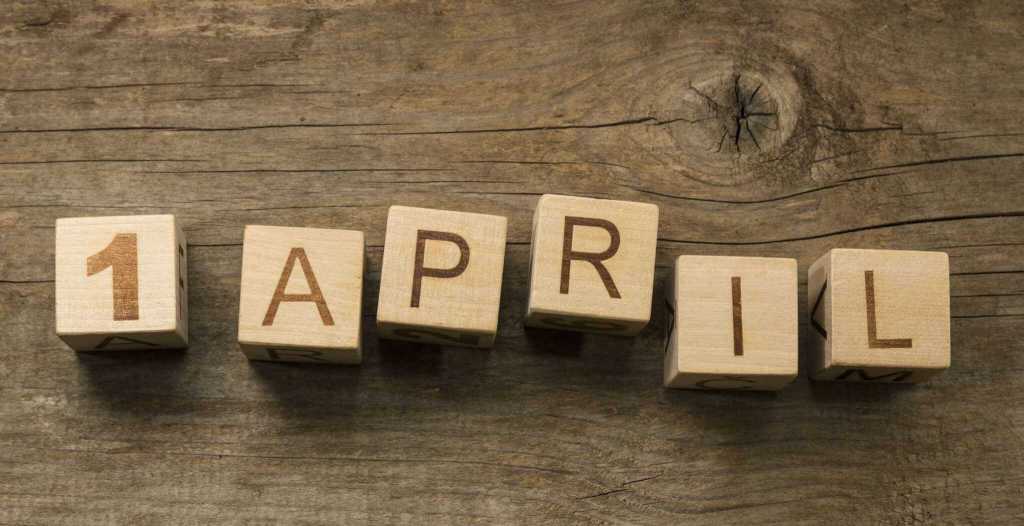
But laughter isn’t just about the present moment; it has deep roots in history. Take April Fools’ Day, for instance. One theory suggests that the origins of the day lie in the confusion surrounding New Year’s celebrations in the Middle Ages. Some towns celebrated the New Year on March 25, and festivities often stretched into April 1. When January 1 became the official New Year’s Day, those still observing the old calendar were seen as outdated and became the targets of playful pranks. It’s almost like a historical version of trying to stay current with the times—a reminder of the tug-of-war between tradition and progress.

Another early reference to April Fools’ Day appears in Geoffrey Chaucer’s Nun’s Priest’s Tale. In the story, a vain rooster named Chauntecleer is tricked by a fox. Chaucer mentions “32 days after March,” which corresponds to April 1st. While some scholars argue this could be a manuscript error and might have been intended to refer to May 2nd, the connection to April Fools’ Day remains a topic of debate.
Some suggest the origins of April Fools’ Day can be traced to ancient festivals like Hilaria, a Roman celebration held in late March by the followers of the Great Mother of the Gods, Cybele. During this festival, people would dress in disguises, mock each other, and engage in playful deception. The spirit of this celebration—a playful trickery—may have evolved into what we now know as April Fools’ Day.
An even more unusual theory links April Fools’ Day to the biblical story of Noah’s Ark. According to this theory, Noah made a mistake by sending the dove out of the ark too soon, and this event, which supposedly happened on the first day of the Hebrew month, would match up with April 1 on today’s calendar. While it’s an intriguing idea, not many historians support this theory, and solid proof is lacking. But it’s still fun to imagine how something so monumental might connect to a day devoted to pranks.

April Fools’ Day has always been a time for mischief, but in modern times, it has evolved into a global phenomenon, with people and organizations going to great lengths to pull off elaborate pranks. For instance, in 1957, the BBC aired one of the most iconic pranks in broadcasting history. The network showed footage of Swiss farmers harvesting a record spaghetti crop, with women picking strands of spaghetti from trees. It was so convincingly done that many viewers called in to ask how they could grow their own spaghetti trees—proving just how powerful humor, when delivered with authority, can fool even the most skeptical.
In 1985, Sports Illustrated pulled off a memorable April Fools’ prank with an article by George Plimpton about a fictional rookie pitcher named Sidd Finch, who could supposedly throw a fastball at one hundred sixty-eight miles per hour. Plimpton’s mock interview, complete with a photo of the pitcher, had sports fans debating whether such a player could really exist. It wasn’t until later that people realized they’d been duped, but by then, the prank had already gone viral.

Fast forward to the 1990s, and pranks took on a political flavor. In 1992, National Public Radio (NPR) aired a segment featuring former President Richard Nixon declaring he was running for president again. Many listeners were caught off guard, not realizing that the voice wasn’t Nixon’s but an actor’s—that is until the punchline revealed it was all part of the joke.
Corporate pranks also took center stage in the ’90s. In 1996, Taco Bell announced it had purchased Philadelphia’s Liberty Bell and planned to rename it the “Taco Liberty Bell.” The stunt caused an uproar, with some Americans outraged by what seemed like a cultural misstep, while others laughed at the absurdity of it all.
Burger King launched its own April Fools’ trick in 1998 that left many customers scratching their heads. The fast-food chain advertised a “Left-Handed Whopper” designed specifically for left-handed people, like me. The sandwich, they claimed, would be assembled with all the ingredients rotated one hundred eighty degrees to make it easier to eat with the left hand. Many unsuspecting customers, unaware of the joke, ordered the sandwich, leading to confused employees and puzzled customers. It was a masterclass in subtlety—playing on the everyday experience of eating while poking fun at the concept of a “special” version of something that’s essentially universal.
Google, too, has become synonymous with April Fools’ Day hijinks. Over the years, the tech giant has delighted the world with outlandish announcements—from the creation of Pac-Man on Google Maps to a telepathic search feature. Google’s pranks serve as a reminder that a good joke is timeless, and even in the tech world, a little bit of humor goes a long way.
So, what started as a simple jest among friends has evolved into a global phenomenon. Today, whether you’re a seasoned prankster or just dipping your toes into the world of mischief, there’s plenty of fun to be had. Classic pranks like hiding a whoopee cushion under a chair or secretly placing bubble wrap under the carpet never get old.
But remember the cardinal rule of April Fools’ Day: Keep it fun! After all, the best pranks are the ones that have everyone in stitches—whether you’re the prankster or the prank-ee. With a bit of creativity and a dash of history, here’s hoping your April Fools’ Day will be full of laughs, surprises, and maybe even a moment that makes history of its own.

 Keystone Wayfarer
Leave your thoughts