
The word “charity” originates from the Old French charité, carrying with it the Latin and Greek ideals of kindness and benevolence. Originally, charity was viewed primarily as a religious virtue—focused on helping the less fortunate through material aid. However, over time, its meaning has evolved. Today, charity extends beyond mere giving, encompassing efforts to create lasting change through social responsibility and community engagement.
It’s fascinating to reflect on how far charitable endeavors have come, though we often overlook the depth of that progress. As early as 1736, Americans demonstrated a commitment to volunteerism when Benjamin Franklin founded the first volunteer organization in the United States. This spirit of collaboration was later noted by French political philosopher Alexis de Tocqueville, who marveled at how deeply volunteerism was embedded into American culture.
The late 19th century saw a significant expansion in charitable giving, with figures like Andrew Carnegie and John D. Rockefeller using their vast fortunes to establish philanthropic organizations that laid the foundation for the modern nonprofit. This surge reached new heights during World War I, when over four hundred million dollars was raised for the Red Cross, uniting people across socioeconomic lines for a common cause. The Revenue Act of 1909 laid the groundwork for tax exemptions, further solidifying the nonprofit sector. Later, the Tax Reform Act of 1969 introduced stricter regulations and formally recognized private foundations, such as the Ford Foundation, under the oversight of the Internal Revenue Service.
Today, as shifts in democracy, social justice, and technology continue to reshape society, nonprofits have become more essential than ever. Many organizations step in where government services fall short, helping to address complex issues like homelessness, poverty, and mental health. One such organization making a significant impact locally is Better Days Ahead (BDA). Since its founding, BDA has been more than just a nonprofit—it has been a lifeline for people experiencing homelessness. Over the past five years, BDA has provided essential aid to those in need, reaching from its base in Phoenixville to neighboring communities like Pottstown, Norristown, Spring City, Royersford, and even Philadelphia.

Executive Director Chris Brickhouse knows firsthand what it feels like to be invisible. Growing up in a financially struggling family, he moved frequently, living mostly in trailer parks from Florida to South Dakota. “Moving from place to place, I always felt the weight of being different,” he recalls. “I remember being a kid, embarrassed because I didn’t have new clothes like everyone else. It stuck with me, and that experience shaped who I am today.”
Brickhouse’s passion for giving back deepened at just thirteen when he witnessed homelessness firsthand in Philadelphia. “I saw people living on the streets—sleeping on heating grates, on benches. It was eye-opening. I’ll never forget an old man who had no legs, and no one would help him. The desperation in his eyes stuck with me.” This experience, among others, ignited his drive to make a difference. “When I finally got to a point where I could give back, I knew I had to.”
Homelessness is a complex and pervasive issue affecting hundreds of thousands of individuals and families across the country. It’s not just a lack of shelter; it results from a range of social, economic, and health-related factors. Consider, for instance, the impact of losing a job. Without a paycheck, there’s little money for food or rent.
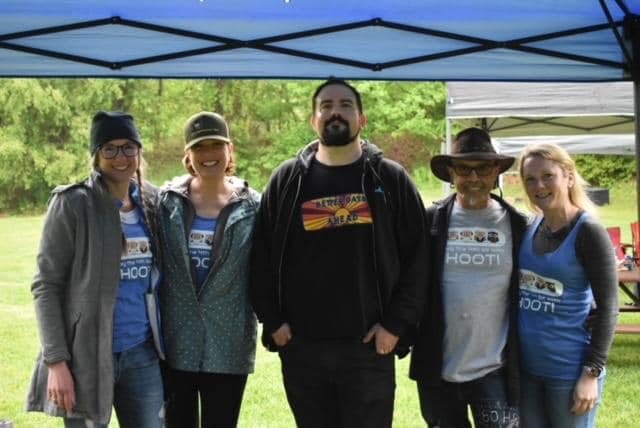
“People don’t realize how easy it is to get evicted and how quickly it can lead to a downward spiral in someone’s life,” says Brickhouse. “Once evicted, how are they supposed to find a cheaper place if they couldn’t afford the last one? Evictions stay with you like a criminal record and are one of the leading causes of homelessness. But there’s no one-size-fits-all cause,” he adds. “Some people face homelessness because they have no support systems, struggle with addiction, or are elderly with no family. Others are single mothers with nowhere to go. When someone has been homeless for a while, it becomes even harder—who’s going to hire someone who can’t take a bath or keep their clothes clean? That’s when arrests start to pile up for unpaid fines, loitering, trespassing, or camping on public land. The cycle of poverty just continues to build. And on top of all that, many who didn’t come to the streets with addiction issues end up turning to drugs or alcohol because they lose hope. It’s a self-perpetuating cycle that just keeps getting worse.”
The stigma surrounding homelessness can make it hard for individuals to seek help. “One of the largest obstacles that we and other groups face is the negative public reaction to our work,” Brickhouse says. “Even on a good day, things aren’t great for homelessness in this country because it’s not just a problem—it’s a feature of the system. The best things we can offer, aside from time and money, are raising awareness and committing to never stop talking about these issues until they’re solved.”
In 2024, Better Days Ahead opened a brick-and-mortar location in Phoenixville, a dream made possible by the generous support of the Phoenixville Community Health Foundation. This expansion allowed the group to provide more comprehensive services, including a van for street outreach, a home base with a computer lab, and free clothing and food on client nights. “We also host multiple mobile outreach events in other towns and have raised over $200,000 in donations,” Brickhouse comments. “This proves that with passion, spare time, and transparency, anyone can make a difference in their community.”


The Department of Housing and Urban Development (HUD) reported that nearly 800,000 people experienced homelessness in the United States as of January 2024—an all-time high, marking an 18% increase from the previous year. This surge highlights the growing challenge of affordable housing, economic instability, and systemic issues that continue to affect vulnerable populations across the country. The increase underscores the need for comprehensive policies and interventions to address homelessness and its root causes, such as rising housing costs, mental health support, and access to social services. BDA does its best to provide much-needed support, delivering aid to locals struggling. The work is unrelenting and, as Brickhouse shares, “this work definitely causes burnout and exhaustion because there’s a large emotional investment. I keep in mind that doing something is better than doing nothing, even if sometimes that something seems inadequate.”
Grants, private donations, and regular fundraising are essential for organizations like Better Days Ahead to keep their operations running. For years, many nonprofits have built their budgets around federal grants, applying with the hope that funding will come through to keep their vital programs running. Things got even more complicated recently. On January 27, 2025, the Office of Management and Budget (OMB) temporarily halted all federal grants and loans. For nonprofits, the immediate effect was chaos.
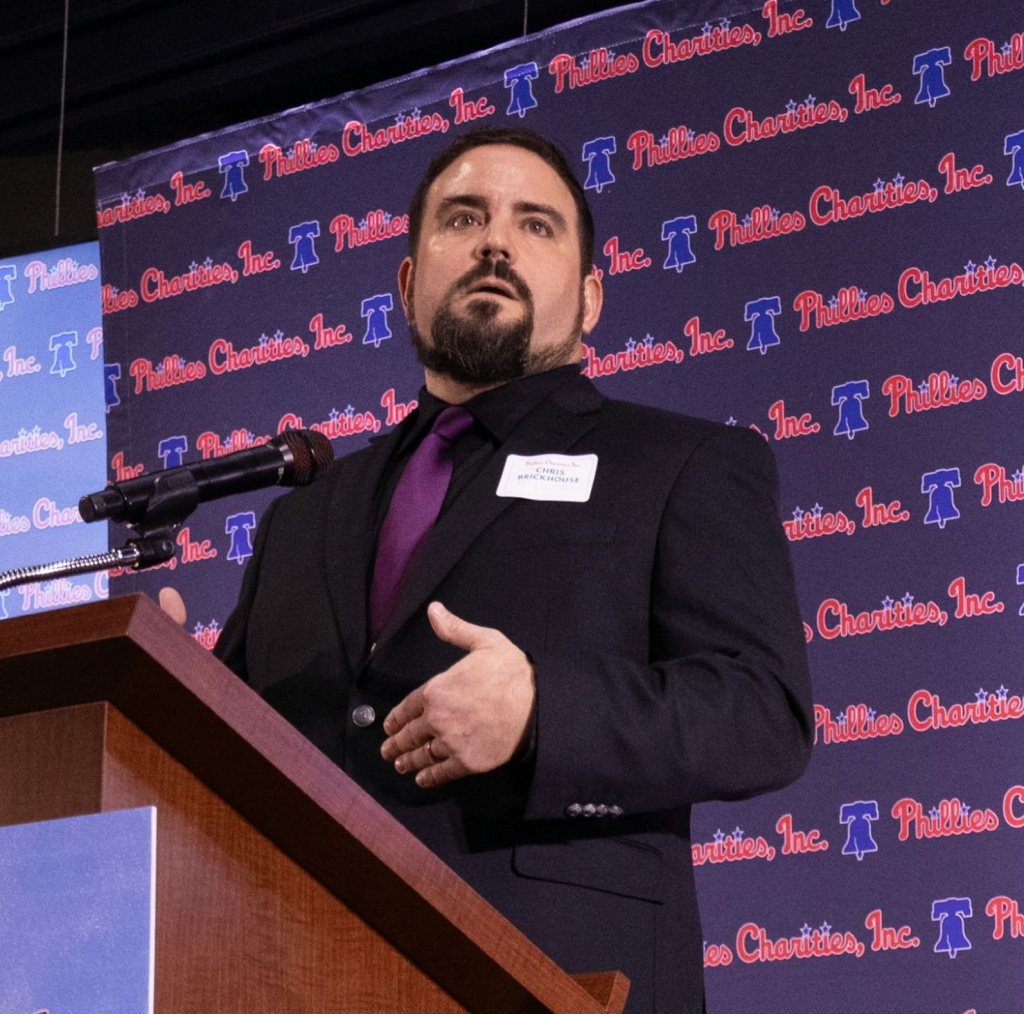
As the landscape of philanthropy shifts and funding becomes more uncertain, the need for community-driven initiatives and individual contributions has never been more critical. Organizations like Better Days Ahead continue their vital work, reminding us that lasting change begins with the collective effort of an entire community—not just one individual. As Brickhouse notes, “the community plays a role, donating to fundraisers and notifying us when someone is living outside. All of the organizations we work with form a solid social safety net. It takes everyone involved, and more are always welcome because this place has a lot of problems.”
To support Better Days Ahead in continuing its mission to provide essential services to those in need, you can make a donation by mailing checks to Better Days Ahead Outreach Inc, 145 South Main Street, Phoenixville, PA 19460, or by visiting http://www.BDAOutreach.org.
Brief Overview of Key Charitable Figures in US History
Charity in the United States has deep roots, dating back to the Puritans of New England and the Quakers of Pennsylvania, who established charitable institutions, schools, and philanthropic organizations before 1700. Religious denominations soon followed suit, founding their own charitable organizations, seminaries, and colleges. The Scots Charitable Society of Boston (1657) was the first ethnic group to engage in charitable work, setting a model for future groups. In 1754, the Episcopal Charitable Society of Boston helped recent English immigrants, and in 1768, the Charitable Irish Society of Boston supported Irish Protestants.
Benjamin Franklin (1706–1790) was a pivotal figure in American philanthropy. He believed individuals should contribute to the common good according to their means, and promoted direct solicitation for donations. His philanthropic initiatives in Philadelphia included establishing the first subscription library (1731), a volunteer fire association, and a fire insurance organization (1752). He also helped create the Philadelphia Academy (1751), which later became the University of Pennsylvania, and the American Philosophical Society (1743). Franklin’s work laid the foundation for organized civic engagement and charity.

Andrew Carnegie (1835–1919) was the most influential philanthropist of the 19th century. After selling his steel company in the 1890s, he gave away ninety of his fortune, totaling $350 million, with his largest contribution being the Carnegie Corporation of New York. His major legacy was the establishment of nearly three thousand public libraries across the U.S. and the British Empire. Carnegie’s libraries helped shape the model for American public libraries, though his designs sparked debates between practical functionality and grand architecture.
Other notable philanthropists of the early 20th century, such as John D. Rockefeller Sr. (1839-1937), his son John D. Rockefeller Jr. (1874-1960), Julius Rosenwald (1862-1932), and Margaret Olivia Slocum Sage (1828-1918), contributed to advances in medicine, education, and scientific research. Rockefeller’s systematic approach to philanthropy included funding the General Education Board, which supported rural schools and modernized farming practices. Additional work included efforts to eradicate diseases like hookworm in the South. His substantial donations, alongside his advisor Frederick Taylor Gates (1853-199), redefined large-scale philanthropy.

The Ford Foundation, founded in 1936, became a significant philanthropic force after the deaths of Edsel (1893-1943) and Henry Ford (1863-1947), who transferred their non-voting shares of the Ford Motor Company to the foundation. The foundation’s work included supporting urban renewal, public broadcasting, and civil rights, with a focus on minority leadership development. By the 1970s, its work in promoting Black Power and black studies programs led to some controversy. Internationally, the Foundation supported human rights, democracy, and offered fellowships for young leaders to study in the U.S.
In recent years, Microsoft co-founder Bill Gates and billionaire investor Warren Buffett have donated billions to charity and encouraged other wealthy individuals to pledge half of their assets to philanthropic causes. The Bill and Melinda Gates Foundation has led initiatives to eradicate diseases like malaria and river blindness, with Buffett contributing $31 billion to the foundation in 2006. In August 2010, controversial financier Ronald Perelman joined the Gates-Buffett Pledge, committing up to half of his assets to charity after ensuring his family’s financial well-being. Additionally, he donated $70 million to charitable causes in 2008.

 Keystone Wayfarer
Leave your thoughts