A quick glance at my lifetime calendar confirms that I was ten years, four months, and four days old on Sunday, February 5, 1978. The Dallas Cowboys were still celebrating their recent 27-10 victory over the Denver Broncos in Super Bowl XII—the first to be played indoors. The game had been watched by over one hundred million fans, setting a record at the time for any televised event. Meanwhile, my hometown, a small suburb just north of Boston, was in the midst of a storm that would forever etch itself into my memory: The Blizzard of ’78.
The storm dumped a record-breaking 27.1 inches of snow, blanketing New England for thirty-three straight hours. My younger brother and I spent days carving out intricate snow forts, linking them together like a maze. We played in our icy kingdom, savoring what we considered a gift of winter. With all transportation halted and schools closed, it was heaven for a kid.

As winter stretches on this year, I can’t help but think back to that historic storm of my youth. Just over two weeks ago, Punxsutawney Phil made his annual appearance, seeing his shadow and predicting six more weeks of winter. Since then, Schwenksville and its surrounding boroughs have been hit by a series of winter storms, as if Mother Nature herself agreed with Phil’s prediction. This extension of winter’s grip brings to mind another major storm that ravaged this area forty-six years ago today: The President’s Day Storm of 1979.
The holiday weekend storm delivered heavy snowfall from Washington D.C. to Philadelphia, remaining one of the worst storms to hit the region. Dropping twelve to eighteen inches of snow, with higher accumulations in elevated areas, the storm paralyzed major cities and claimed several lives, including a 48-year-old factory worker in Brooklyn, a 62-year-old man thrown from his mobile home in Philadelphia, and a man in Washington D.C. killed by a falling tree.
Winter storms need the right conditions to form: below-freezing temperatures, lift to raise air and trigger cloud formation, and moisture to produce precipitation. Below-freezing temperatures are essential to create the snow or ice. Lift occurs when warm air collides with cold air, creating a front—the boundary between the two air masses. Moisture is provided by air blowing across bodies of water like lakes or oceans, fueling the formation of clouds and thus precipitation.
The National Weather Service (NWS), part of the National Oceanic and Atmospheric Administration (NOAA) under the U.S. Department of Commerce, is responsible for weather forecasting in the U.S. Its mission is to protect life and property while supporting the national economy by providing accurate forecasts and warnings.

Locals recall the historic storm as occurring in two parts. Four inches of snow fell with the initial front in the early morning hours. As the snow weakened, a brief break led forecasters to mistakenly lift the warnings. But soon after, the worst of the storm arrived. Had the storm been predicted accurately, its impact would have been far less severe. One of the most iconic images of the storm is a satellite photo taken on February 19th, which showed the storm adopting tropical characteristics. The low-pressure system took on the appearance of a tropical storm’s ‘eye,’ creating a striking image that has since become an iconic representation of this momentous event.
The President’s Day Storm of 1979 highlighted the limitations of weather prediction models. At the time, models like the LFM (Limited Fine-Mesh Model) failed to capture critical pressure patterns and precipitation distribution. Key factors such as atmospheric dynamics and warmer ocean temperatures were not adequately accounted for, catching forecasters off guard. This shortcoming prompted a reevaluation of forecasting methods, leading to improvements in models like the GFS (American Model) and the ECMWF (European Model).
While this storm was one of the region’s most memorable, it wasn’t the only Presidents’ Day blizzard. Another massive storm hit in 2003, known as President’s Day II. Advances in forecasting meant the second storm came with fewer surprises. However, storms still slip past meteorologists, such as the January 25, 2000, “no surprise” storm. It hit just after the NWS announced its goal of becoming the nation’s most accurate weather service, spurring further research into forecasting improvements.
In the forty-four years since, weather forecasting has made significant strides. Today, many of the advancements in forecasting technology can be traced directly to the lessons learned from the 1979 storm.
The President’s Day Storm of 1979 remains one of the six most snow-intensive nor’easters to ever impact Pennsylvania. In 2003, “Snowmageddon” shattered Boston’s snowfall record, dumping 27.6 inches of snow on the city.
Congratulations to our Philadelphia Eagles on their impressive 40-22 victory over the Kansas City Chiefs in Super Bowl 59 on February 9.
Historic Winter Storms

The Great Blizzard of ’88
In March of 1888, the Northeast experienced one of the worst blizzards in American history. Known as the Great White Hurricane, it dumped as much as fifty-five inches of snow in some areas, leaving devastation in its wake. The entire region, from D.C. to Maine, was battered by brutal winds and massive snowdrifts, causing catastrophic damage. More than four hundred people were killed during the three-day event. Cities like New York and Boston came to a halt as their railways and telegraph lines were buried or destroyed. This storm inspired Boston to build the first underground subway system in the U.S. to prevent future disruptions caused by severe weather.
The Knickerbocker Storm
On January 28, 1922, Washington, D.C. was hit by more than two feet of snow. The heavy snow caused the roof of the Knickerbocker Theatre to collapse, killing ninety-eight people. This tragedy led to stricter building codes in D.C. to prevent similar incidents. The Knickerbocker Storm holds the record for the most snowfall in the city, and the theater collapse remains the deadliest disaster in D.C.’s history.
The Great Appalachian Storm
During Thanksgiving weekend in 1950, the central Appalachians were hit by up to sixty-two inches of snow. In addition to the snow, intense windstorms and frigid temperatures plagued the region. Once the storm passed, unseasonably warm temperatures caused flooding as the snow melted. At least one hundred sixty people lost their lives, and the region spent weeks recovering from the effects of the storm.
The Storm of the Century
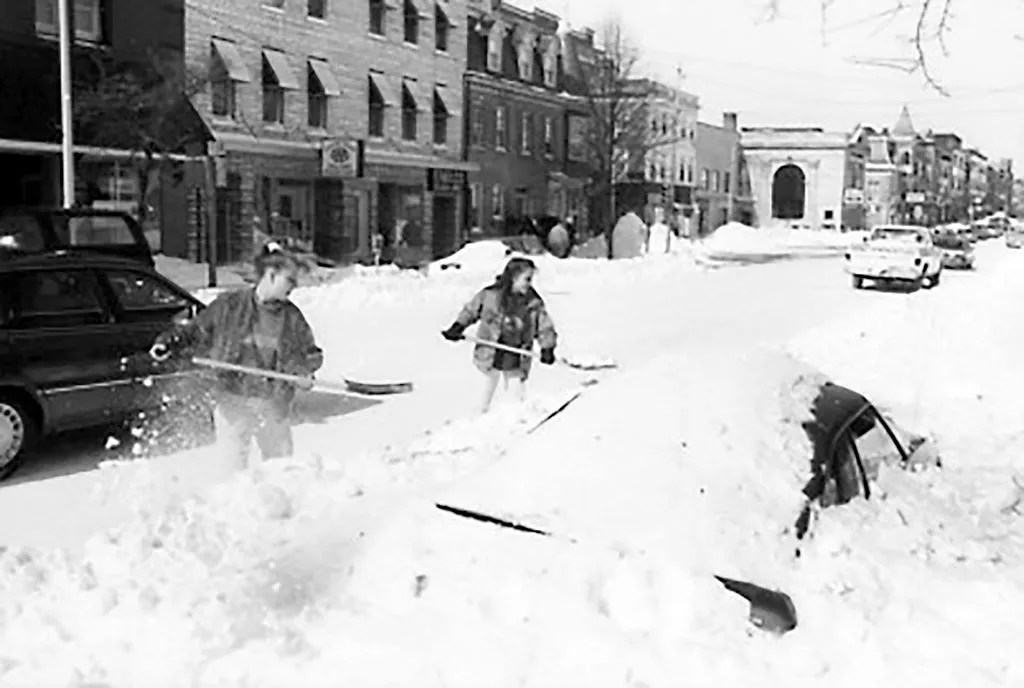
In March of 1993, a massive cyclonic storm formed in the Gulf of Mexico, eventually stretching from the Southern U.S. to Canada. Snow fell as far south as Alabama and Georgia, with up to sixty inches reported in some areas. The storm caused widespread power outages, halted transportation, and closed airports along the East Coast. Despite several days of warning due to new forecasting models, it claimed three hundred eighteen lives, making it one of the deadliest storms of the 20th century.
The Great Blizzard of 2003
From Valentine’s Day through February 19, 2003, the Great Blizzard of 2003 blanketed the Mid-Atlantic and Northeast with up to two feet of snow. Major cities like Washington, D.C., New York City, and Boston were paralyzed, as the storm claimed twenty-seven lives. It brought the entire region to a standstill, highlighting the vulnerability of urban areas to severe winter weather.
Snowmageddon
In February 2010, two blizzards hit the East Coast within days of each other. The first, from February 4-7, was dubbed “Snowmageddon.” It caused widespread disruptions, including icy roads and a federal government shutdown in Washington, D.C. The second storm, from February 9-11, intensified the chaos. Together, they led to power outages, transportation shutdowns, and at least forty-one deaths.
Snowzilla
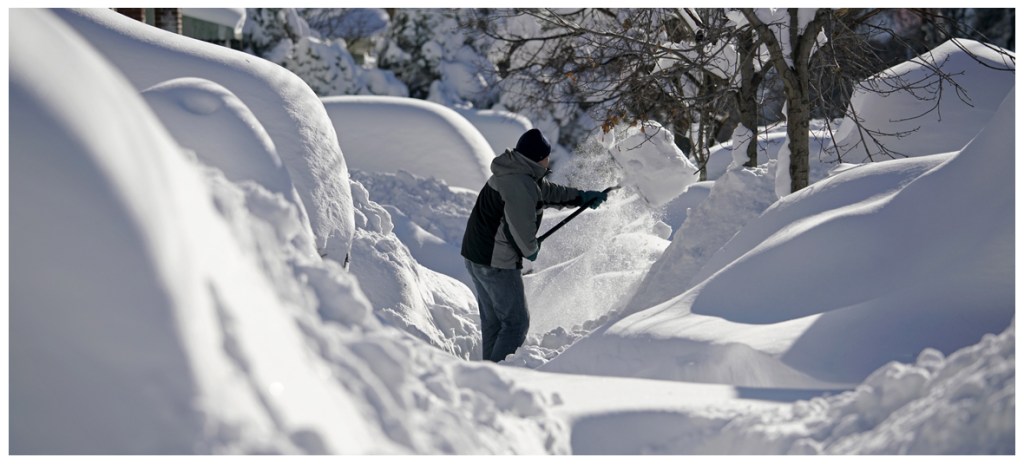
In January 2016, Snowzilla paralyzed the East Coast, leaving hundreds of thousands without power. Snow fell as far south as Georgia and the Florida Panhandle, with the storm claiming fifty-five lives across the region. The snow reached a maximum height of forty-two inches in Glengary, W.V.
December 2022 North American Winter Storm
The December 2022 storm, a bomb cyclone, brought blizzard conditions to the Midwest and Great Lakes, with Buffalo, NY, receiving up to fifty-five inches of snow. It affected sixty percent of Americans and caused widespread travel disruptions during the Christmas season, claiming one hundred six lives across the U.S. and Canada.

 Keystone Wayfarer
Leave your thoughts