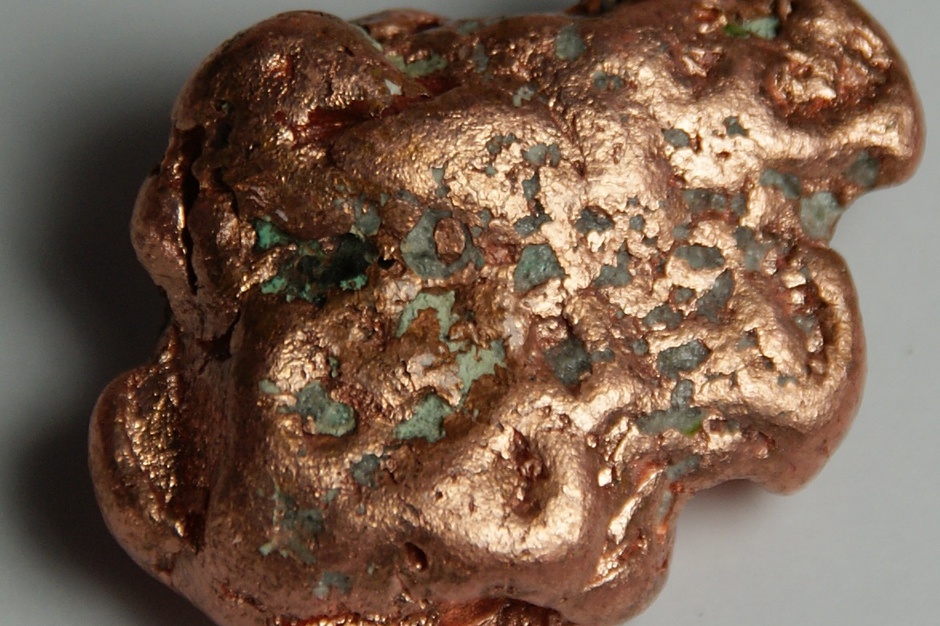
It’s easy to lose oneself in the natural beauty surrounding my home, where winding creeks and streams meander through a landscape adorned with a rich canopy of mature oak and walnut trees. In summer, this area bursts into color with wild trumpet vine and low-lying wildflowers, while free-roaming animals thrive in a vibrant and harmonious ecosystem.
Years after purchasing my two-century-old home on Game Farm Road, I still find myself occasionally sitting on the front porch with a cup of Earl Grey, savoring the serene views and timeless charm. The house overlooks part of Stone Hill Greenway, a vast region extending across Lower Frederick, Limerick, New Hanover, Lower and Upper Pottsgrove, and Douglass Townships. Nestled within the rolling acres is a key chapter in the history of the small town.
Before William Penn began negotiations with the local Native American tribes for the lands surrounding Perkiomen Creek, English prospectors had already discovered valuable copper ore deep within the hills between Mine Hill and Meng Roads. Historical evidence suggests that small-scale mining may have started as early as 1695. Known as The Old Perkiomen Mine, this site could be among the oldest copper reserves in the country, predating both the Granby Mine (1705) in Connecticut and the Schuyler Mine (1715) in New Jersey.
The mine is noted on Nicholas Scull’s famous 1759 map of Pennsylvania. Scull, a Philadelphia native and apprentice to Thomas Holme, William Penn’s surveyor, documented the location in what is now part of the Piedmont Lowlands of the Appalachian Highlands—a region renowned for its geological diversity.

Copper, easily recognized by its pinkish-orange hue, is a soft, malleable metal with excellent thermal and electrical conductivity. It’s used extensively in heat conduction, building materials, and various metal alloys, including jewelry and coins. Its value often rises when the U.S. dollar weakens, making copper trading a key economic indicator.
By 1703, Nathaniel Puckle, one of the few Englishmen in a region settled primarily by German immigrants, was leading mining operations at The Old Perkiomen Mine. His efforts, however, were interrupted by legal disputes and logistical challenges. Eventually, the mine was sold to satisfy “certain debts,” and a new mining operation was formed by an association of sixteen, among them Andrew Hamilton, then Pennsylvania’s Attorney General.
Local workers, whose skills were crude and primitive, labored in the mines, but the extracted ore quantities remained disappointingly low. In 1740, expert mineralogist Christopher Geist was brought in from Wurttemberg, Germany. He arrived with a team of experienced miners from the Harz Mountains, a region known for its mining expertise. This new team dug a 2,000-foot tunnel connecting three existing shafts–an immense undertaking–with tunnels rising to ten feet high and six feet wide. George Schwenk, a blacksmith and the town’s namesake, likely worked alongside his countrymen to support the extraction efforts.
Mining activities resumed in 1742 and continued until the onset of the American Revolutionary War. One local legend tells of British loyalists during the war who allegedly hid the mine’s entrance to prevent its capture by the Continental Army.
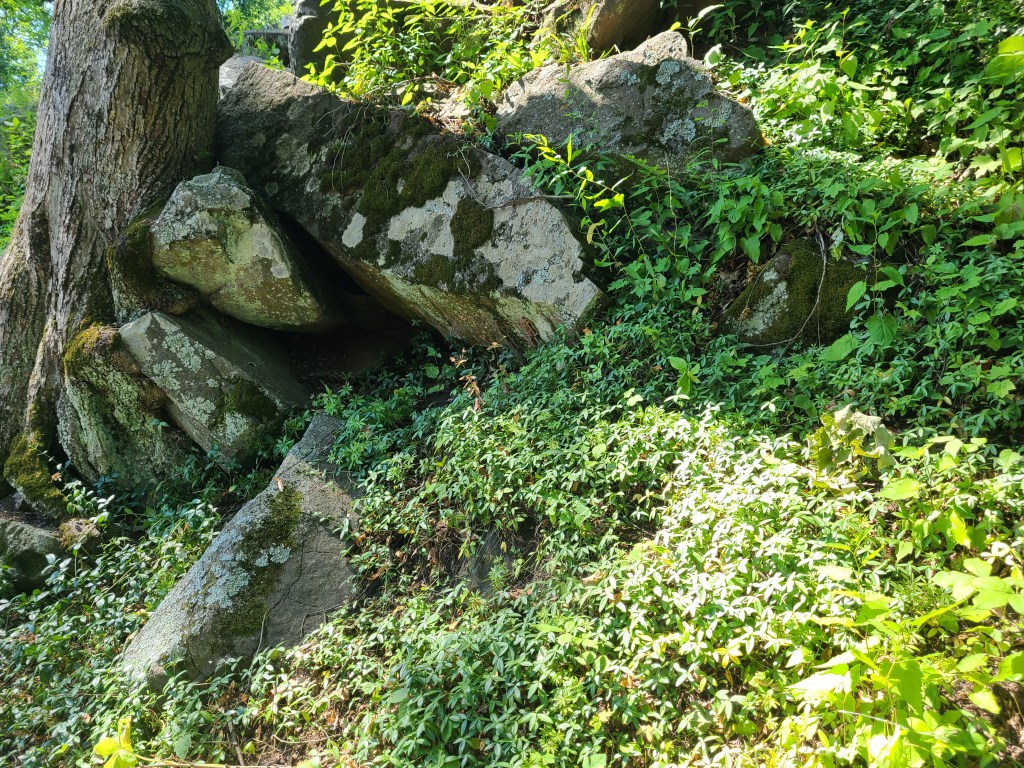
Later operations at the mine were managed by the Schwenksville Mining Company but were abandoned around 1916. Despite renewed interest, including attempts during World War I to mine ore for the war effort, the operations were ultimately unsuccessful.
By 1930, the tunnels had become a playground for local boys and a storage space for farmers’ harvests. In 1970, the great tunnel was explored, and the findings were archived at the Historical Society of Montgomery County.
No story is complete without a ghost, and The Old Perkiomen Mine is said to have its own spectral guardian. Legend has it that two city-dwellers, lured by the promise of treasure, ventured into the old tunnels. After carefully marking their path, they discovered a skillfully constructed masonry wall—a barrier rumored but never confirmed. Suddenly, their candles extinguished with a hiss of rushing air. Seized with terror, they fled, bruised and bleeding, and swore they would never return, even if every rock were solid gold.
Today, the remnants of The Old Perkiomen Mine are sealed, and its stories lie buried beneath the earth. As I sit on my porch, I feel a profound connection to those who once labored in the tunnels below—a reminder that concealed within this tranquil landscape lies a history as rich and enduring as the land itself.


 Keystone Wayfarer
Leave your thoughts